Best Cooling Mats for Dogs in Summer: A Buyer's Guide
Selecting the best cooling mats for dogs in summer requires balancing heat dissipation technology with durability and your dog's specific chewing habits.
petsupplies.co earns a commission if you buy through the product links on this page, and the price you pay is the same either way.

Maintaining a safe body temperature for dogs becomes difficult when the ambient environment exceeds 80 degrees Fahrenheit. Because dogs lack the ability to sweat efficiently through their skin, they rely on panting and conduction: the transfer of heat from their body to a cooler surface. A dedicated cooling mat gives a consistent thermal heat sink that can prevent heat stress during peak afternoon hours.
Understanding Cooling Technologies
Gel-based mats are the most common commercial option. These use a pressure-activated cooling gel that absorbs body heat for a period of two to four hours before requiring a short recharge time without pressure. No electricity or refrigeration is usually required. Still, the chemical makeup of the gel varies, and while most manufacturers claim non-toxicity, a dog that chews may still face digestive distress if the lining is punctured.
Water-filled mats function similarly to a waterbed. The water acts as a heat sink, drawing warmth away from the dog and dispersing it into the air or floor. These are highly effective for large dogs due to the high heat capacity of water, but they are heavy once filled and pose a significant flood risk if the dog has sharp claws or a habit of digging.
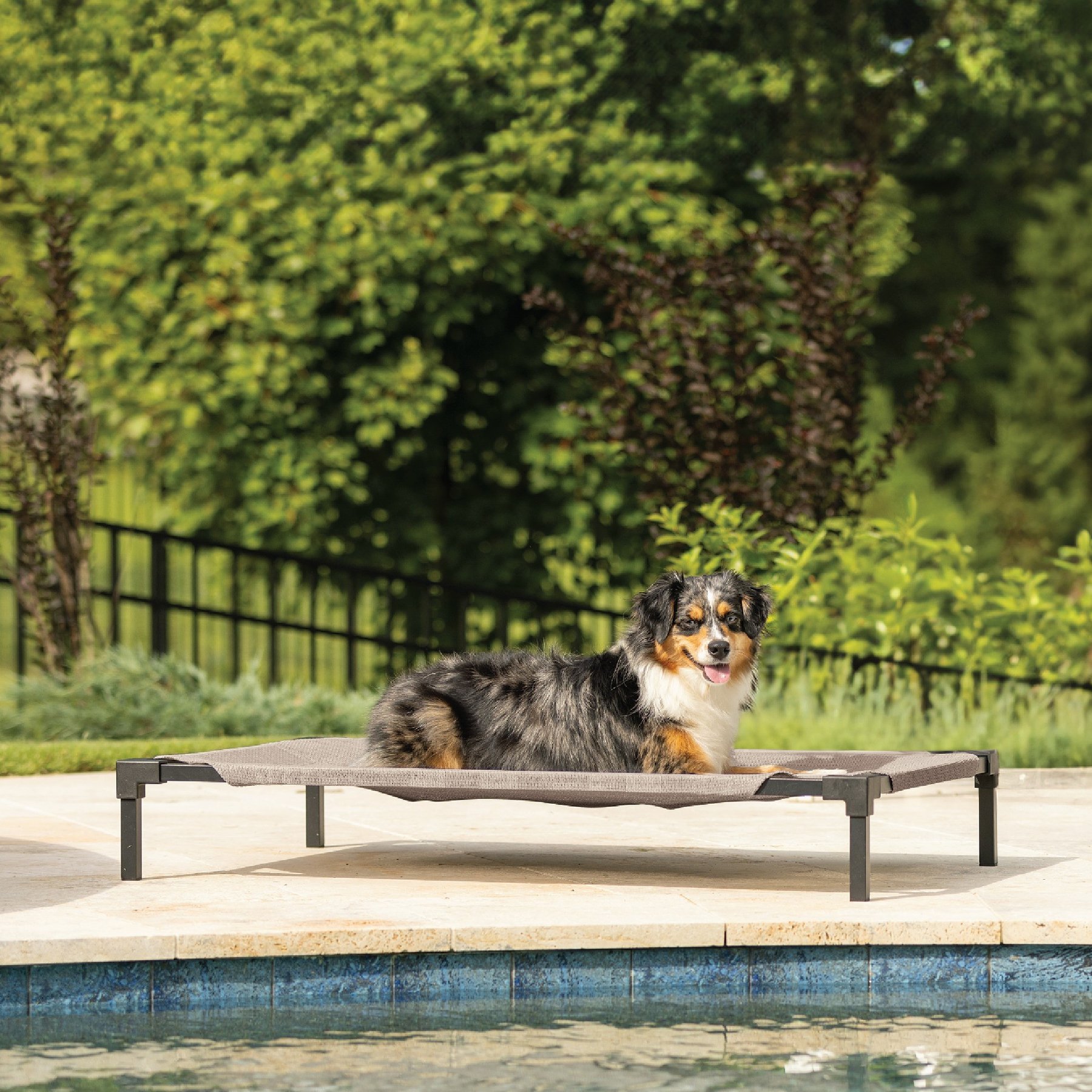
Elevated cots provide a passive cooling solution without the use of liquids or chemicals. By lifting the dog several inches off the ground, these beds allow 360-degree airflow around the body. These are often the most durable choice for outdoor use and for dogs that tend to destroy softer bedding. They do not cool the dog as rapidly as a gel mat but provide a sustained, breathable sleep surface.
What to Look For
When evaluating the best cooling mats for dogs in summer, prioritize function and safety over aesthetics. A mat is only useful if it remains intact and maintains a temperature lower than the dog’s skin.
- Material Durability: Look for ballistic nylon or reinforced PVC for the outer shell to resist punctures and clawing.
- Portability: Determine if the mat needs to fold for travel or if it will remain stationary in a crate or on a patio.
- Ease of Cleaning: Surfaces should be wipe-clean or waterproof, as cooling mats often accumulate sweat, hair, and outdoor debris.
- Recharge Time: For gel mats, check how long the unit must be left unoccupied to regain its cooling properties.
- Non-Slip Backing: Check that the mat does not slide when the dog attempts to lie down, particularly on hardwood or tile floors.
Comparing Cooling Options by Use Case
For indoor crate use, a thin gel mat is often the best fit. These mats have a low profile that does not significantly reduce the vertical space available to the dog. Choose a mat sized to cover only half of the crate floor so the dog can move to a non-cooled surface if they become too cold.
For outdoor decks and patios, elevated mesh cots are superior. Gel and water mats can actually absorb heat from direct sunlight, making them dangerously hot if left in the sun. An elevated cot remains cooler by avoiding contact with the hot ground and facilitating wind flow through the fabric.
For heavy chewers, avoid gel and water-fill mats entirely. Plastic ingestion or the consumption of cooling chemicals presents a high risk. A metal-framed elevated bed with a replaceable mesh cover is the safest tier for dogs with destructive habits. Owners should also consider their dog's weight; water-based mats provide more cushioning for senior dogs with joint pain compared to thin gel pads.
Common Mistakes
- Leaving mats in direct sunlight: Most gel mats will absorb environmental heat if left in the sun, rendered ineffective or even dangerously warm.
- Improper sizing: A mat that is too small will not provide enough surface area to lower a large dog’s core temperature effectively.
- Ignoring the puncture risk: Using a water-fill mat for a dog with unclipped nails can lead to leaks and potential floor damage.
- Total floor coverage: Covering a dog's entire resting area with a cooling surface prevents them from self-regulating if they get too chilled.
When to Talk to Your Vet
While cooling mats generally help prevent overheating, they are not a substitute for clinical intervention during a heat stroke event. If your dog exhibits excessive panting, bright red gums, lethargy, or vomiting, contact a veterinarian immediately. Dogs with thick double coats or brachycephalic breeds (flat-faced) are at a higher risk for heat exhaustion and should be monitored closely even when using cooling accessories. For more guidance on summer safety, use the Pet Supply Picker to find tools suited for your specific breed.
Authoritative references
- American Veterinary Medical Association: Hot weather safety for pets
- American Veterinary Medical Association: Preventing overheating in dogs
- ASPCA: Hot weather safety tips
FAQ
Frequently asked
Do cooling mats need to be refrigerated?
Most pressure-activated gel mats do not require refrigeration or electricity to function. Still, placing a mat in the refrigerator for a few minutes can provide a more intense initial cooling effect for the dog.
How long do gel cooling mats stay cold?
Most gel-towers provide active cooling for two to four hours of continuous use. Once the gel has absorbed maximum heat, it requires roughly 15 to 30 minutes of non-use to reset.
Are cooling mats safe for all dogs?
While generally safe, they can be hazardous for dogs that chew their bedding. The internal gel or water can be messy or harmful if ingested, so supervision is required for known chewers.
Can I use a cooling mat outdoors?
Gel mats should only be used outdoors in shaded areas. If exposed to direct sunlight, the materials can heat up and the gel may break down, reducing the lifespan of the product.
Featured in this guide
The picks referenced above—priced and in stock at time of publication.
Affiliate links. Prices and availability change—we filter unavailable items nightly, but the retailer's page is source of truth.
Keep reading
summer
Dog Heatstroke First Aid: What To Do in the First 15 Minutes
summer safety travel
Dog Booties for Hot or Rough Ground: When Boots Beat Paw Wax
summer safety travel
Portable Dog Beds for Camping: Cots, Pads, and Travel Beds
summer safety travel
Hydration Tips for Senior Dogs in Heat: Intake, Warning Signs, and Gear
summer safety travel
Tick Prevention Buying Guide: Preventives, Daily Checks, and Gear
summer safety travel
Dog Life Jackets by Size: How to Pick One That Fits
Discussion
Talk about Best Cooling Mats for Dogs in Summer: A Buyer's Guide
Real questions from real pet owners. Add yours—signed-in members only, first three posts held for review.
Loading threads…