Dog Booties for Hot or Rough Ground: When Boots Beat Paw Wax
The seven-second rule tells you when the ground is too hot to walk. When you cannot change the walk, a rubber sole or a wax barrier is the difference between a normal evening and a raw pad at midnight.
petsupplies.co earns a commission if you buy through the product links on this page, and the price you pay is the same either way.

Dogs do not tell you their pads are burning. They limp two blocks later, or lick raw pads at 2 a.m., and by then the damage (thermal burn, split pad, embedded grit) is already done. Two things prevent it: reading the ground before you walk, and putting something between the pad and the ground when the ground is hostile.
The seven-second rule (and its limits)
The AVMA and AKC both cite the same field test: press the back of your hand flat to the pavement for seven seconds. If you cannot hold it, your dog cannot walk on it. Air temperature is not a proxy. On an 87°F afternoon, blacktop in full sun runs above 140°F, easily hot enough to cause second-degree contact burns on paw pads within a minute.
The rule fails in two directions:
- Late-day asphalt can hold heat for hours after the sun moves off it. A shaded stretch at 6 p.m. is still hot underneath.
- Rocky trails and desert grit are not picked up by the hand test at all. Sharp shale, decomposed granite, foxtails, and cactus spines injure pads at ambient temperatures.
Reach for a barrier when the ground is either too hot or too abrasive, not both at once.
Boots vs. paw wax: what each actually does
Boots and paw wax are not interchangeable. They solve different problems.
Boots put a full rubber sole between the pad and the ground. They are the correct tool for thermal insulation on hot pavement, for sharp trail debris, and for hot sand. Their failure mode is fit: too loose and they twist off in a block, too tight and they cut circulation. Most dogs need one or two indoor acclimation sessions before they will walk normally in them. Do not buy boots the morning of a hike.
Paw wax deposits a thin layer of beeswax, shea, and plant oils onto the pad. It reduces friction, adds moderate protection against ice melt, salt, and rough terrain, and speeds recovery of pads that are already scraped. It does not meaningfully insulate against 140°F asphalt. Treating hot pavement with paw wax is a common mistake. Use boots or, better, change the walking time.
For rough trail, warm-but-not-hot pavement, and post-walk pad recovery, wax is the pragmatic choice, and our current network stocks it far more consistently than well-fitting boots.
The pragmatic budget pick
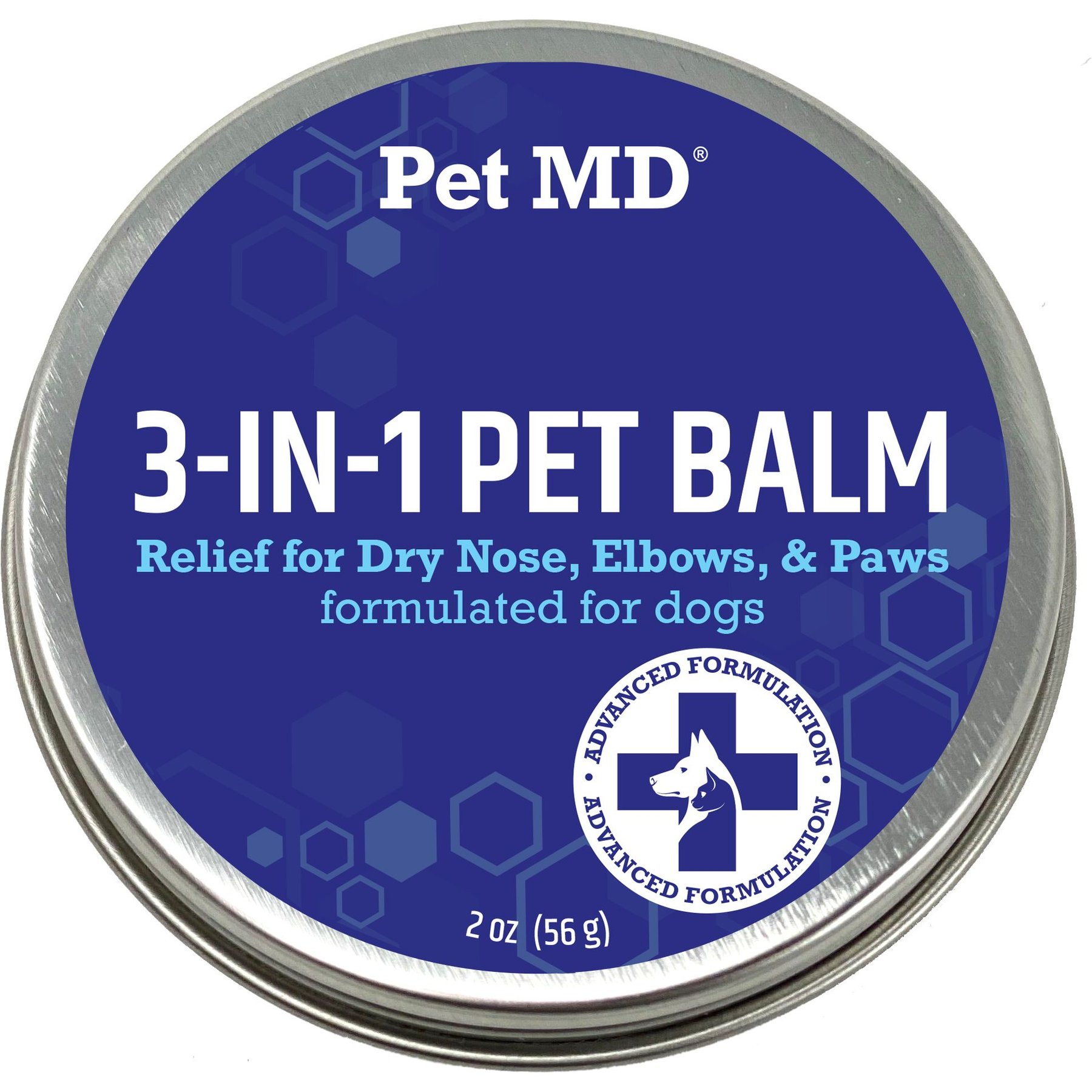
Pet MD's 3-in-1 is beeswax, shea butter, and coconut oil in a 2-oz jar: the standard formula at the standard price for a functional paw wax. It is the usual answer when someone asks for "one thing to keep in the walk bag." Rub it into clean, dry pads before the walk; a second application after rinsing off grit is not a bad habit for trail-heavy weeks.
When pads are already scraped
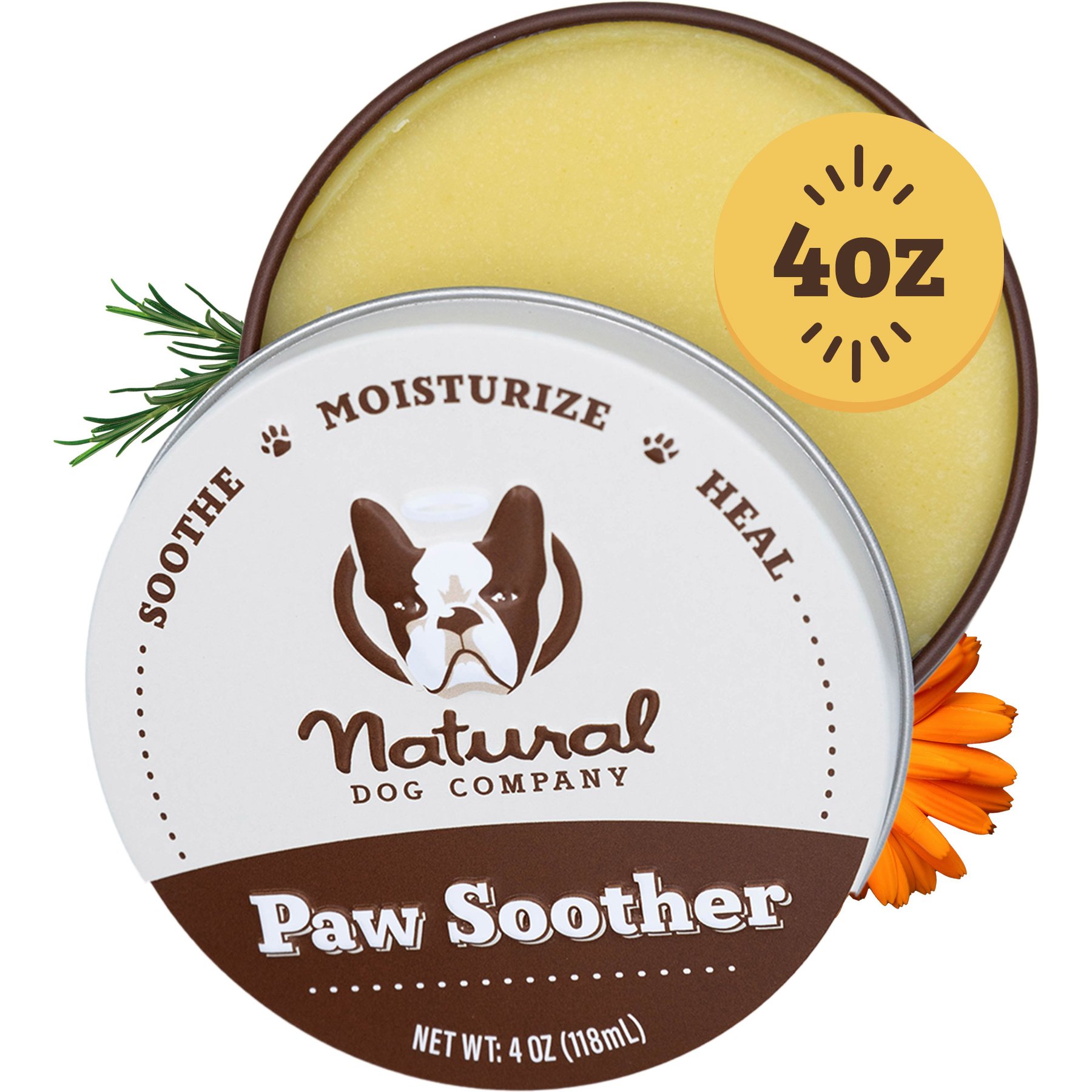
If you are reading this after finding a raw pad, the priority shifts from prevention to healing. Natural Dog Company's Paw Soother is a heavier, more emollient formulation: the same category of ingredients (organic shea, mango butter, cocoa butter, rosehip and jojoba oils) at higher concentration, in a 4-oz tin that lasts a large dog through a season. Apply after rinsing debris out with plain water, then keep the dog occupied for two or three minutes so it absorbs rather than gets licked off. A cone is not overkill for the first hour.
Deep cuts, pad avulsions (skin peeled off), or bleeding that does not stop within a few minutes are not a wax problem. That is a same-day vet visit.
For the ingredient-cautious owner
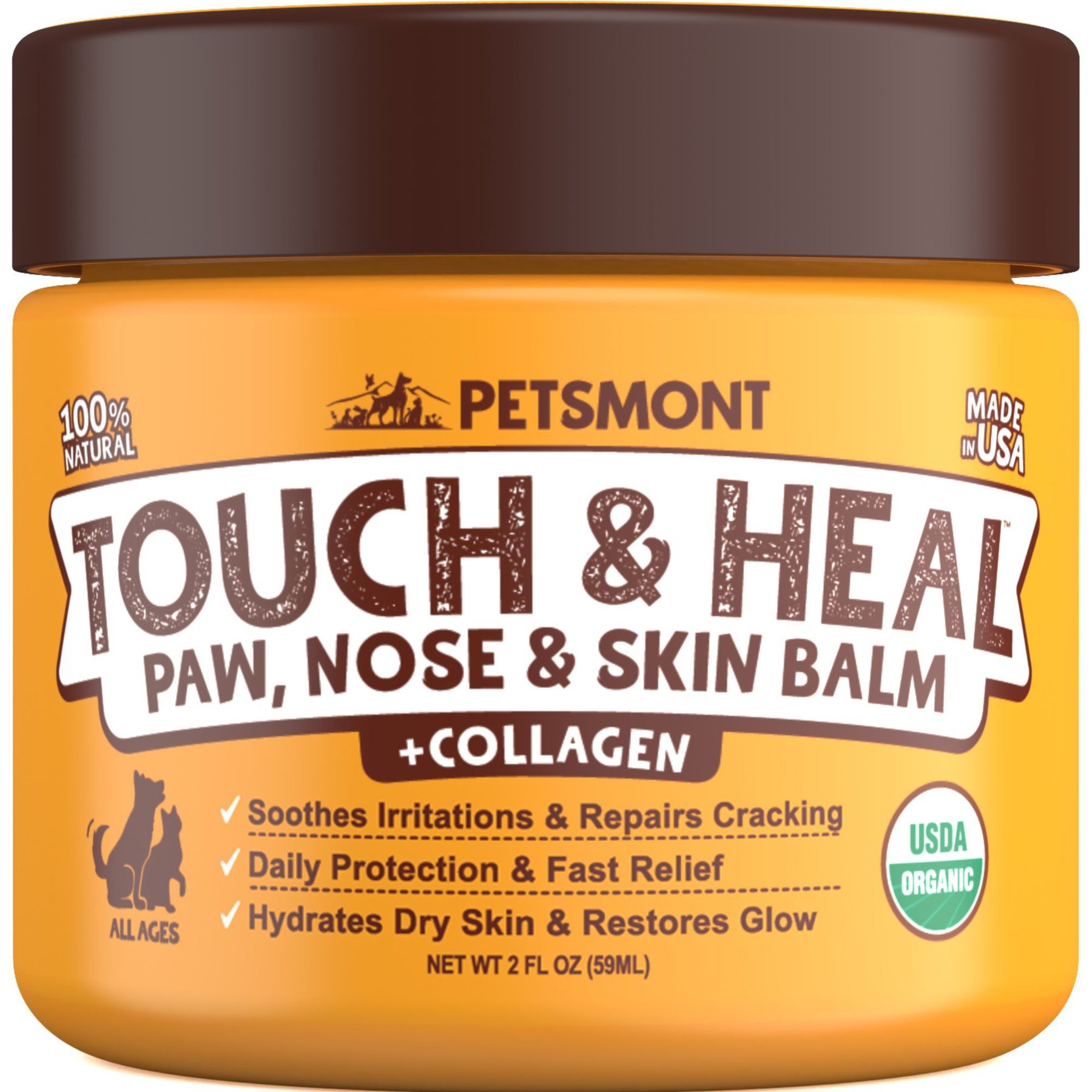
Petsmont's Touch & Heal uses USDA-certified organic ingredients (organic beeswax, shea, hempseed and calendula oils) and skips the fragrance blends some of the mainstream waxes rely on. It is priced above the category median and the 2-oz jar is smaller than Natural Dog Company's tin, but for owners with a dog that licks compulsively (or a household allergy concern), the shorter, cleaner ingredient list is worth the higher price. It is not a magic formulation. It is a well-executed one.
What actually beats hot pavement
Quiet part, out loud. For a July asphalt walk in a US metro, the highest-return move is not a product purchase. It is walking before 7 a.m. or after 9 p.m., choosing grass and dirt over sidewalks, and shortening the loop. Boots are the fallback when timing and terrain cannot shift. Paw wax is the fallback when boots do not fit or the dog refuses to acclimate.
If you really need boots (snow country in winter, desert trails in summer, working dogs on job sites), buy from a brand with a clearly published sizing chart, measure paw width with the dog standing (weight loaded on the pad, not lifted), and expect to return the first pair. Our current catalog is honest about a thin selection in true dog boots; we would rather stock zero misfits than pad the list with generic imports we cannot stand behind.
Signs your dog's pads are in trouble
- Sudden limp mid-walk, especially on hot surfaces. Stop and check pad color; pink darkening to red is early burn.
- Persistent licking of one paw once home. Rinse first, inspect second.
- Dark, waxy discoloration or a peeling top layer. Full or partial thermal burn. Vet call today, not tomorrow.
- Small bleeding punctures with no debris visible. Likely a foxtail or thorn migrating deeper. Do not dig with tweezers; book a same-day appointment.
Healthy paws are dry, matte, and pink-to-black pigmented. Shiny, red, or split pads are already past the point where a wax rescues them.
For a broader look at seasonal gear, our guides library filters by summer safety and travel.
FAQ
Frequently asked
How hot is too hot for a dog's paws?
If you cannot hold the back of your hand flat on the pavement for seven seconds, it is too hot. On an 87°F afternoon in direct sun, asphalt frequently exceeds 140°F, which is hot enough to cause thermal burns on paw pads within a minute. The AVMA and AKC both use this hand test as the practical threshold.
Are dog boots better than paw wax?
They solve different problems. Boots put a rubber sole between the pad and the ground, which is the right tool for thermal insulation on hot pavement and for sharp trail debris. Paw wax deposits a thin barrier that reduces friction and speeds pad healing but does not meaningfully insulate against 140°F asphalt. Wax is the right pick for rough terrain and post-walk recovery, boots for thermal or puncture hazards.
How do I introduce boots without my dog high-stepping?
Acclimate indoors. Put boots on, run 60 to 90 seconds of a high-value treat game or short tug session, remove, repeat across three or four short sessions over a couple of days. Most dogs walk normally by the third session. Never put boots on for the first time at a trailhead.
Can I use human sunscreen or lip balm on my dog's paws?
No. Many human sunscreens contain zinc oxide, which is toxic to dogs if licked. Petroleum-based lip balms do not create the wax barrier a paw balm does. Pet-labeled paw wax uses food-safe ingredients (beeswax, shea butter, plant oils) because it is expected to be licked.
Featured in this guide
The picks referenced above—priced and in stock at time of publication.
Affiliate links. Prices and availability change—we filter unavailable items nightly, but the retailer's page is source of truth.
Keep reading
summer safety travel
Portable Dog Beds for Camping: Cots, Pads, and Travel Beds
summer safety travel
Hydration Tips for Senior Dogs in Heat: Intake, Warning Signs, and Gear
summer safety travel
Tick Prevention Buying Guide: Preventives, Daily Checks, and Gear
summer safety travel
Dog Life Jackets by Size: How to Pick One That Fits
summer safety travel
Best Cooling Mats for Dogs in Summer: A Buyer's Guide
summer safety travel
Travel Water Bottles for Dogs: How to Choose the Best One
Discussion
Talk about Dog Booties for Hot or Rough Ground: When Boots Beat Paw Wax
Real questions from real pet owners. Add yours—signed-in members only, first three posts held for review.
Loading threads…