Calming Products for Car Rides: An Evidence-Led Buyer's Guide
Crash-tested restraints, pheromones, pressure wraps, and prescription anti-nausea options for dogs who panic or vomit in the car: what works, what doesn't, and what to ask your vet.
petsupplies.co earns a commission if you buy through the product links on this page, and the price you pay is the same either way.

Some dogs jump into the car and fall asleep. Others drool, whine, pant, or vomit within five minutes of pulling out of the driveway. Both reactions trace back to the same two underlying causes: motion sickness and anxiety. The fix is rarely a single product; it is usually a stack of physical safety, behavioral conditioning, and sometimes medication. This guide separates the gear that has real evidence behind it from the gear that mostly sells well.
Start with the safety baseline
Before chasing calmness, secure the dog. An unrestrained dog in a crash becomes a projectile, injures itself and others, and can interfere with emergency responders. The American Veterinary Medical Association recommends restraint for every car ride, and the Center for Pet Safety publishes independent crash-test ratings for crates, carriers, and harness-style restraints. Most pet products labeled "crash tested" have not actually passed an independent test; CPS certification is the closest thing to a real standard. A securely restrained dog is also, on average, a calmer dog because the world stops moving unpredictably underneath them.
Pheromone diffusers and sprays
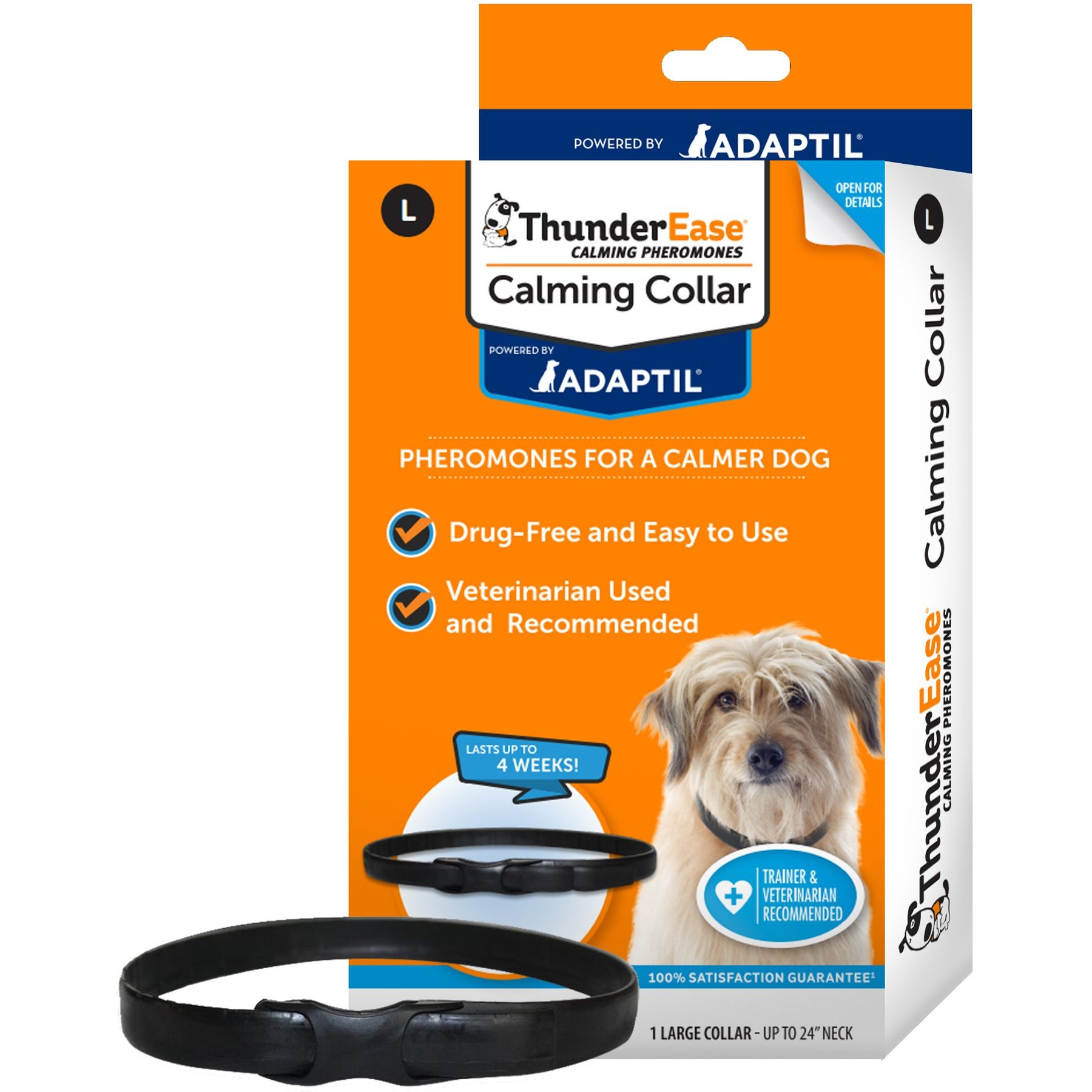
Synthetic dog-appeasing pheromone (DAP), sold under brand names like Adaptil, mimics the calming chemical mother dogs produce while nursing. Spray formulations are meant for use inside a carrier, crate, or on bedding fifteen minutes before travel. Evidence in the veterinary literature is mixed but generally favorable for mild to moderate situational anxiety. Pheromones are odorless to humans, non-sedating, and safe to combine with other interventions. They are not a fix for severe panic, but they are a reasonable first try because the downside is close to zero.
This listing is no longer available.
Pressure wraps
Wraps such as the Thundershirt apply gentle, constant pressure around the torso, a principle borrowed from swaddling and from livestock-handling research. Owner-reported outcomes are positive in roughly half of dogs, with the strongest effect in animals that show low to moderate anxiety. They have minimal effect on severe phobia. Fit matters: too loose and the pressure is absent, too tight and the dog struggles to breathe normally. Introduce the wrap at home during calm moments before pairing it with the car.
Calming chews and supplements
The over-the-counter calming market is crowded and inconsistently regulated. Ingredients with at least some peer-reviewed evidence in dogs include L-theanine, alpha-casozepine, and Zylkene (a milk-derived peptide). CBD products remain a legal gray area and are not FDA-approved for animals; the FDA explicitly warns against unsubstantiated CBD claims for pets. If you try a chew, give it the manufacturer-recommended lead time (often 30 to 90 minutes) and treat it as one input, not a silver bullet.
Prescription options for the dog who actually vomits
Motion sickness is a physiologic problem, not just an emotional one. The drug of choice is maropitant citrate (brand name Cerenia), which is FDA-approved for the prevention of vomiting due to motion sickness in dogs (see the Cerenia tablet label on DailyMed for the official indication and dosing). It is prescription-only and works best when given on an empty stomach at least two hours before travel. For genuine travel anxiety, a vet may prescribe trazodone or gabapentin instead. Acepromazine, once a default, has fallen out of favor because it sedates the body while leaving the mind aware and anxious: the American College of Veterinary Behaviorists discourages its routine use for noise or travel phobia. A short medication conversation with your vet is more valuable than a cart full of supplements.
What to look for when you buy
When evaluating calming products specifically for car travel, prioritize the following:
- Independent crash-test certification (CPS) for any carrier, crate, or harness restraint.
- Pheromone diffusers and sprays from manufacturers that publish ingredient sourcing and dosing data.
- Pressure wraps available in your dog's exact chest measurement, not generic "small/medium/large."
- Supplements with published active-ingredient dosages, not proprietary "calming blends."
- A washable, machine-safe cover on any bed or pad you put in the carrier.
A pre-trip protocol that actually works
Stack the interventions in this order, starting two weeks before a meaningful trip. Practice short, low-stakes drives to a positive destination such as a park. Pair the carrier or seatbelt restraint with food rewards at home. Apply a pheromone spray 15 minutes before loading. Skip the meal before travel to reduce vomiting risk. For known motion-sick dogs, give maropitant on the schedule your vet specifies. Open a window slightly for airflow. Keep the cabin cool; heat amplifies nausea. If your dog still panics after a structured two-week conditioning effort, the next step is a veterinary behavioral consult, not another product.
Common mistakes to avoid
- Buying a "crash-tested" carrier without verifying independent certification.
- Feeding a full meal in the 90 minutes before departure.
- Letting the dog ride loose in the front seat or on a lap; airbags injure or kill dogs in low-speed collisions.
- Layering five calming products at once with no baseline, so you cannot tell what helped.
- Assuming a puppy will "grow out of it"; many do, but conditioning during the puppy phase makes adult travel dramatically easier.
When to talk to your vet
If your dog vomits on every trip, refuses to enter the car, hyper-salivates, or shows signs of panic such as uncontrolled urination or destructive behavior, this is a medical and behavioral issue. Your vet can rule out vestibular disease, prescribe targeted medication, and refer you to a credentialed veterinary behaviorist (DACVB) when warranted. For gear shortlisting by size and use case, you can start with the Pet Supply Picker and filter by travel scenarios. For the underlying behavior question, our guide to crate training without crying covers the same conditioning principles that apply to car-carrier acceptance.
Bottom line
Calming car-ride solutions work best in layers: a properly restrained, crash-tested setup, pheromone or pressure support for mild anxiety, and prescription anti-nausea or anxiolytic medication for the cases that need it. Skip the supplements with vague labels, verify any crash-test claim independently, and treat your vet as the most important product in the stack.
Authoritative references
- American Veterinary Medical Association: Traveling with your pet
- Center for Pet Safety: Crash-test certification results
- U.S. Food and Drug Administration: FDA regulation of cannabis and cannabis-derived products, including CBD
- American Kennel Club: Why dogs get motion sickness and what to do about it
- American College of Veterinary Behaviorists: Find a board-certified veterinary behaviorist (DACVB)
Hero photo by Judy Beth Morris on Unsplash.
FAQ
Frequently asked
Will Benadryl calm my dog in the car?
Diphenhydramine (Benadryl) is sometimes recommended, but its sedative effect in dogs is unreliable and it does not address motion sickness or anxiety in any targeted way. Maropitant for nausea and trazodone or gabapentin for anxiety are evidence-based alternatives that require a veterinary prescription.
Do pheromone sprays really work?
Synthetic dog-appeasing pheromone (DAP) products have mixed but generally favorable evidence for mild to moderate situational anxiety. They are non-sedating and combine safely with other interventions, so the risk of trying one is close to zero, but they are not a fix for severe panic.
Is it safe to give my dog CBD before a car ride?
CBD products for pets are not FDA-approved and the agency has issued warnings about unsubstantiated claims. Quality, dosing, and contamination vary widely between brands. Talk to your vet before using CBD, and treat any non-prescription calming chew as supplemental, not primary.
How long before the trip should I give a calming product?
Pheromone sprays need about 15 minutes. Most calming chews need 30 to 90 minutes. Prescription maropitant should be given at least two hours before travel on an empty stomach. Check the specific product label or your vet''s instructions.
Can I restrain my dog with just a regular harness and a seatbelt?
A standard walking harness is not built to absorb crash forces and can cause serious injury in even a low-speed collision. Use a harness or crate that has passed independent Center for Pet Safety crash testing, anchored with the vehicle''s seatbelt or LATCH system per the manufacturer''s instructions.
Featured in this guide
The picks referenced above—priced and in stock at time of publication.
Affiliate links. Prices and availability change—we filter unavailable items nightly, but the retailer's page is source of truth.
Keep reading
halloween safety
Anxiety Wraps for Fireworks and Noise: What the Pressure Does, and What It Cannot
back to school routine
Calming Aids for Separation Anxiety: What Helps and What Is Just Packaging
travel
Soft-Sided Airline-Approved Pet Carriers: What "Approved" Actually Means
evergreen
Wand Toys for Cats: The Toy Matters Less Than How You Move It
halloween safety
Halloween Candy and Dogs: Which Candies Are Dangerous, How Much, and What to Do
evergreen
Probiotics for Dogs: What the Evidence Supports, and What the Label Has to Say
Discussion
Talk about Calming Products for Car Rides: An Evidence-Led Buyer's Guide
Real questions from real pet owners. Add yours—signed-in members only, first three posts held for review.
Loading threads…