Calming Aids for Senior Cats: In an Old Cat, Restlessness Is Usually Medical
Night yowling and agitation in an elderly cat are far more often a symptom than a temperament. The bloodwork comes first, and the calming product is a distant second.
petsupplies.co earns a commission if you buy through the product links on this page, and the price you pay is the same either way.

An old cat that has become restless, vocal at night, clingy or irritable is usually not a cat that needs calming. It is a cat that is telling you something, and the calming aisle is the wrong place to start looking.
This matters because the products are cheap and easy to buy, and buying one feels like taking action. Meanwhile the conditions most likely to be causing the behavior are progressing, and several of them are both common and very treatable.
So the order here is deliberate. Rule things out first. Then change the environment. Then, if it still seems worth it, consider a product.
What restlessness in an old cat usually means
Hyperthyroidism. Common in older cats and a classic cause of night vocalizing, restlessness and irritability, usually alongside weight loss despite a good or increased appetite. Very treatable. See feline hyperthyroidism.
High blood pressure. Often secondary to thyroid or kidney disease, and frequently missed because it requires someone to actually measure it. Untreated hypertension can cause retinal detachment and sudden blindness, which is a genuinely urgent reason to ask for a reading.
Pain, usually arthritis. Badly under-recognized in cats because they rarely limp. Instead they stop jumping onto things they used to, become irritable when touched, sleep in new low places, and sometimes stop using a litter box that has become painful to climb into. What looks like a personality change is often osteoarthritis, and treating the pain frequently resolves the behavior.
Kidney disease. Nausea and feeling unwell change behavior long before anyone connects the two. See chronic kidney disease.
Sensory decline. A cat losing vision or hearing becomes disoriented, startles more easily and vocalizes more, particularly in the dark and particularly if furniture has moved.
Cognitive decline. Cats develop an age-related cognitive syndrome much as dogs do: disrupted sleep, disorientation, altered social interaction, vocalizing at night, and sometimes house-soiling. It is a diagnosis of exclusion, which means the other things above get ruled out first.
The practical version: a senior cat with new behavioral change needs a physical examination, bloodwork including thyroid, a urine sample and a blood pressure measurement. That is the appointment worth booking. Related reading: why is my cat vomiting and why is my cat peeing outside the litter box.
The environment does more than the products
Once the medical side is underway, the changes that genuinely help an anxious old cat are mostly about access. The AAFP and ISFM feline environmental needs guidelines frame this well: a cat needs safe places and easy access to separated key resources, and aging quietly removes both.
Bring everything within reach. Food, water, litter and a warm resting place on the floor the cat spends most of its time on. An arthritic cat that has to climb stairs to reach a litter box will eventually stop making the trip. Add resources rather than moving them: a second litter box downstairs, a second water bowl.
Lower the litter box. The most common single fix. A high-sided box is a painful climb for an old cat; cut down one side or buy a low-entry design. See litter box sizing and litter box aversion.
Restore the height, safely. Cats feel secure from a vantage point, and losing that is genuinely stressful. Replace the leap with a route: a stool or a step beside the sofa or windowsill turns one impossible jump into two easy ones. See cat tree.
Keep things predictable. Feeding times, furniture positions, and where the litter box is. Predictability matters more to a cognitively declining or partially blind cat than almost anything else you can buy.
Leave a night light on. Cheap, and it helps a cat with failing vision find its way at the hours when it is most likely to be vocalizing.
Warmth. Cold stiffens arthritic joints, and a warm accessible bed in a quiet spot is a real comfort intervention.
Keep some play. Reduced, not removed. Short gentle wand sessions that end in a capture still matter to an old cat, and gentle activity helps the joints and the weight. See prey drive and enrichment. General care basics are covered in the ASPCA's general cat care guidance.
Keep the scratching post. Not a luxury: it is stretching and claw maintenance, and an old cat with overgrown claws can get them caught or grown into the pad. Check the claws regularly. See scratching post.
Where the products fit
With expectations set properly, they are reasonable background adjuncts and poor primary interventions.
The evidence for feline pheromone products is thinner than the packaging suggests: the published trials are small, inconsistent and frequently manufacturer-funded. They are also cheap and close to risk-free, which is why running one alongside the real plan is defensible while relying on one is not.
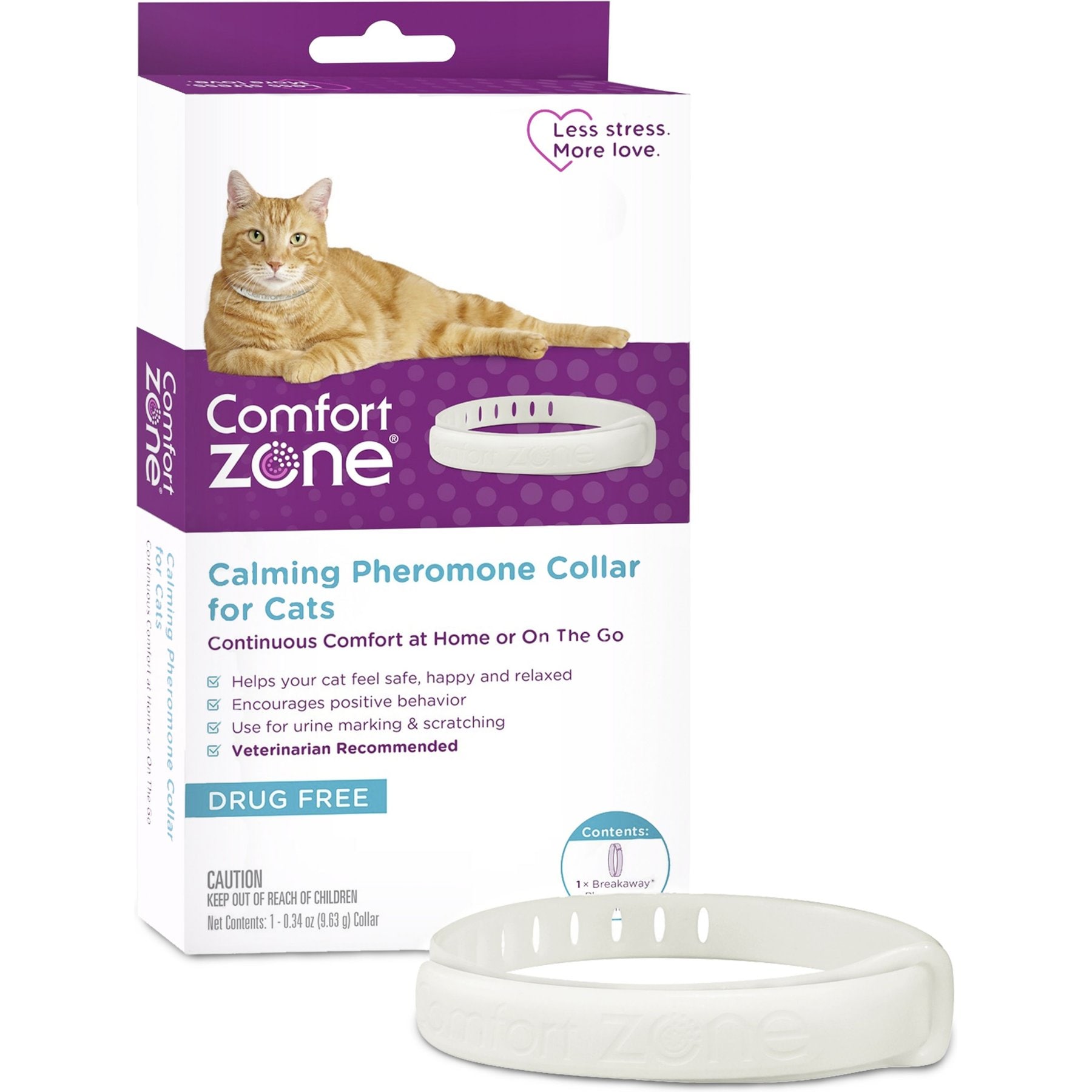
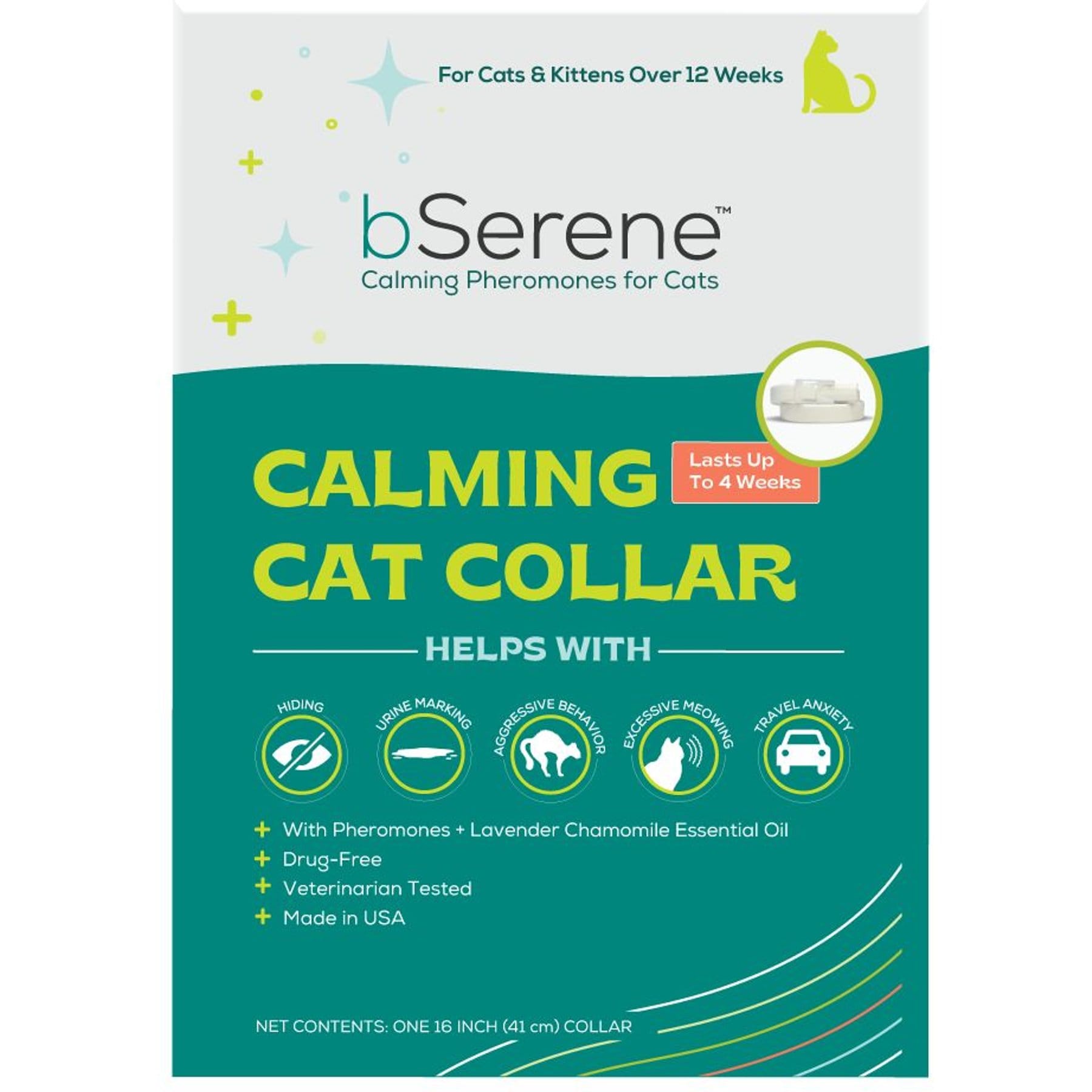
Collars keep the product with the cat rather than with the room, which suits a cat that moves between floors. The non-negotiable requirement is a safety release: any collar on a cat must break away under pressure. See breakaway collar.
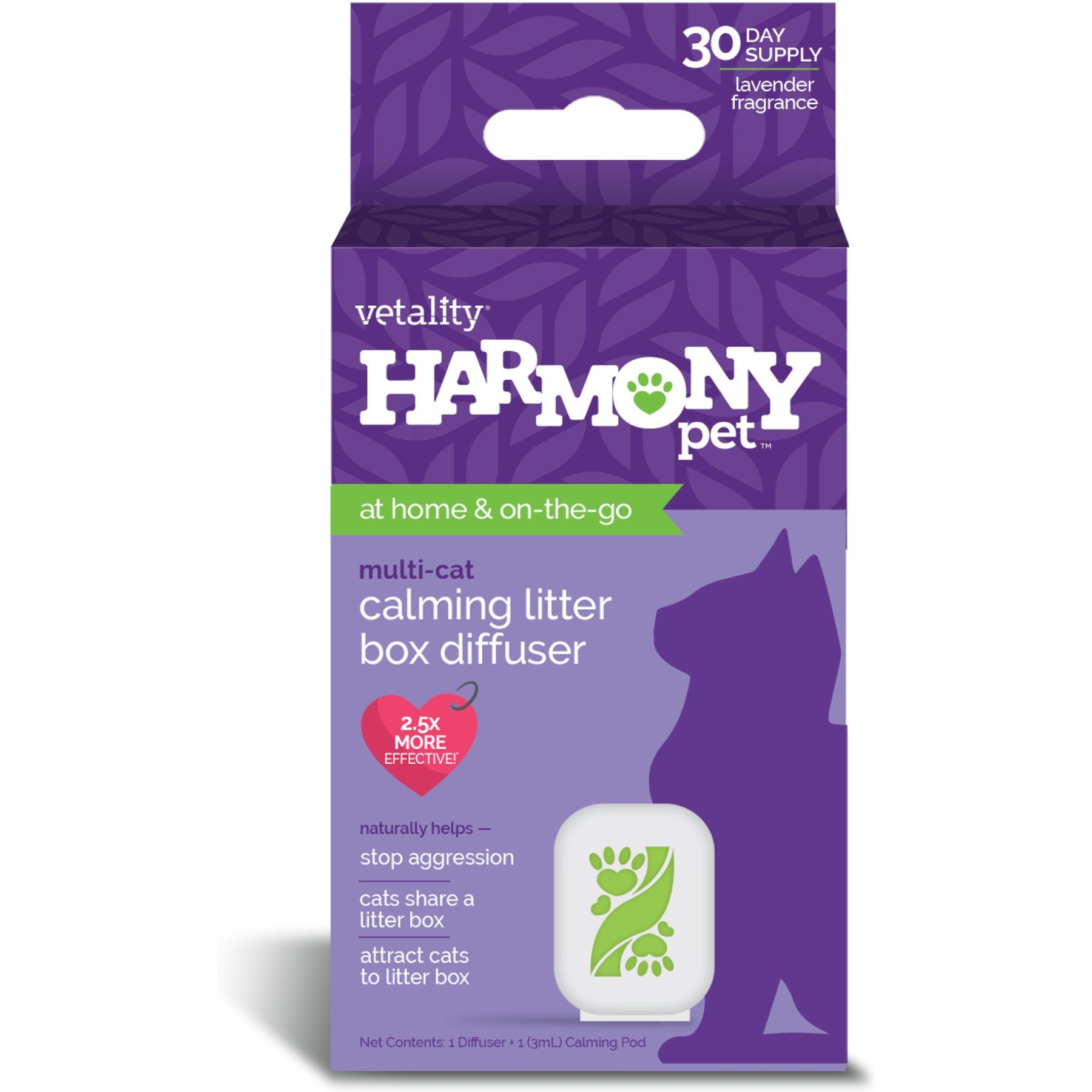
If the trouble is concentrated around the litter box (a cat that has become hesitant or is going elsewhere), a diffuser sited there targets the specific location rather than the whole house. Fix the box height first, then add this if you like.
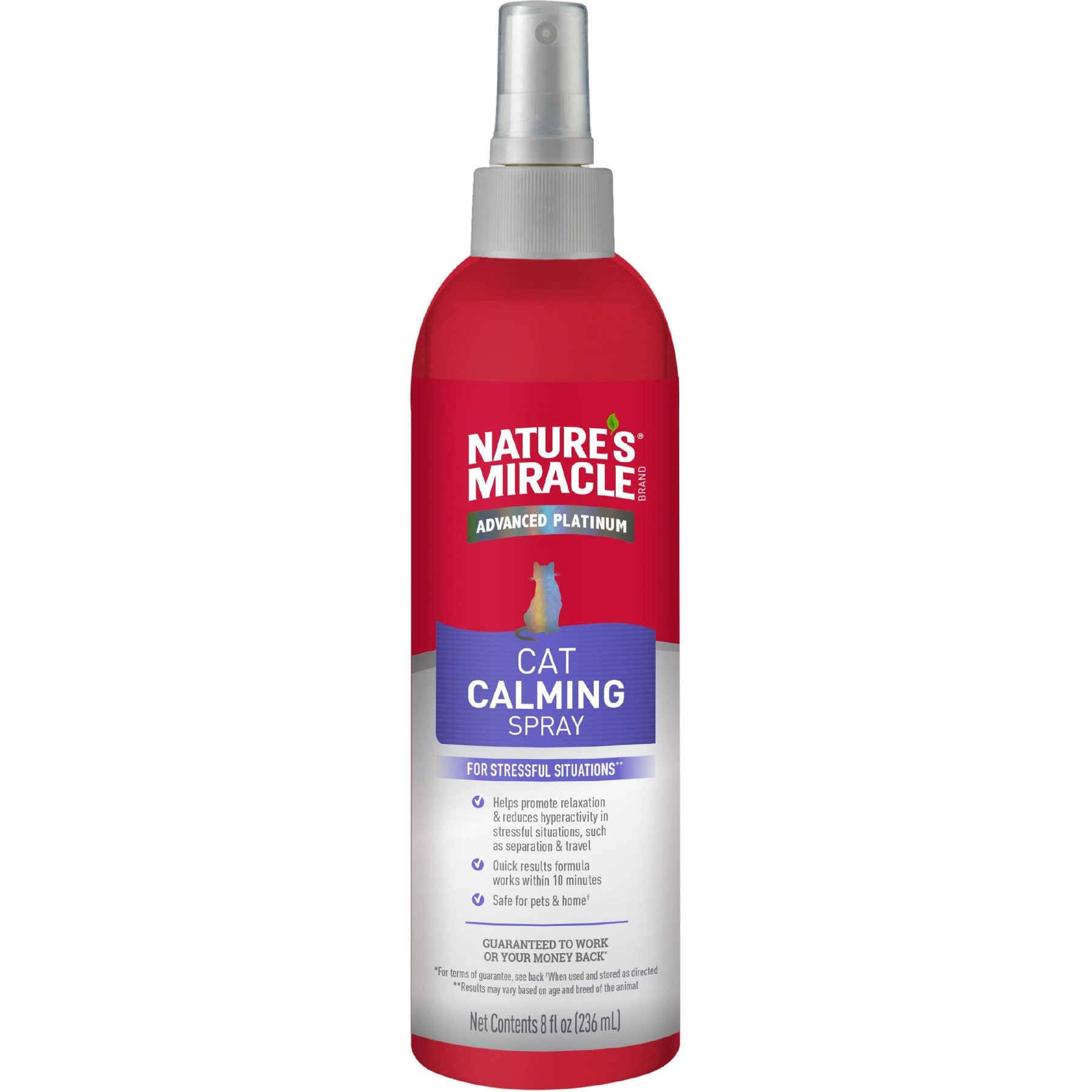
Sprays are the most useful format for a defined stressful event rather than continuous ambient use: a carrier before a vet visit, bedding in a new room, a car trip. Spray and let it dry before the cat goes in, never onto the cat.
How this goes wrong
| What gets bought | Why it disappoints | What to do instead |
|---|---|---|
| Diffuser for new night yowling | Treats the symptom; misses hyperthyroidism or hypertension | Bloodwork, thyroid test, blood pressure |
| Calming collar without a safety release | Cats catch collars; serious injury risk | Breakaway designs only, checked for fit |
| Calming supplement in an old cat | Unproven, and metabolism may be compromised | Ask your vet, who has better options |
| A new bed high up, to encourage jumping | The jump is the problem | Floor level, plus a step to the old spot |
| Rearranging the house to be more stimulating | Disorients a cat with sensory or cognitive decline | Predictability, and a night light |
| Extra litter box upstairs | Still needs stairs | Add one on the floor the cat lives on |
What to skip
- Any product bought instead of an examination for new behavior. The single most costly decision here.
- Fixed collars on cats. Breakaway only, always.
- Scented litter additives to calm a cat. Strong fragrance is a common reason cats avoid a box.
- Punishing night vocalizing. The cat is unwell, disoriented or in pain, and punishment adds fear.
- Restricting water to reduce night trips. Dangerous in a cat with kidney disease, which is a likely candidate at this age.
- Buying several products at once. You will not know what helped, and most of them will have been unnecessary.
How to choose
Book the appointment first, and ask specifically for thyroid testing and a blood pressure reading. Those two are the highest-yield tests for exactly this presentation.
While you wait, move the resources down to the cat, lower the litter box, add a step to the favorite high spot, and put a night light on the landing.
Add a warm accessible bed, which is a comfort measure that always earns its place.
Then, if you want, run a pheromone product in the background at low expectations.
And if the behavior started suddenly, treat it as urgent rather than gradual. Sudden change in an old cat is rarely just age, and sudden blindness from untreated hypertension is the outcome most worth getting ahead of.
FAQ
Frequently asked
My old cat yowls at night. Is it just old age?
Treat it as a symptom until proven otherwise. Night vocalizing in an elderly cat is one of the more reliable pointers to a medical problem, and the usual suspects are hyperthyroidism, high blood pressure, pain, failing vision or hearing, and cognitive decline. Several of those are very treatable, and hypertension in particular can cause sudden blindness if left. Bloodwork, a thyroid test and a blood pressure reading are the right first step, not a diffuser.
Do pheromone products work for cats?
The evidence is weaker than the marketing. Systematic review of pheromone products in companion animals has repeatedly found the trials small, inconsistently designed and often manufacturer-funded. That is not proof they do nothing, but it is a long way from a reliable effect. They are inexpensive and carry almost no risk, which makes them a reasonable background adjunct, provided you are not relying on one instead of finding out what is actually wrong.
Is a calming collar safe for a cat?
Only with a proper safety release. Any collar on a cat must be a breakaway design that opens under pressure, because cats catch collars on branches, furniture and their own jaws, and a fixed collar can cause serious injury. Check the fit regularly (two fingers underneath) and check the skin under it, since older cats have thinner skin and some react to the impregnated product.
Can arthritis make a cat seem anxious?
Very much so, and it is one of the most missed causes. Cats rarely limp visibly. Instead they stop jumping, become irritable when handled, sleep in new places because the old ones are now out of reach, and may start missing the litter box because climbing into it hurts. What reads as a personality change or anxiety is frequently chronic pain, and pain relief often resolves the behavior entirely.
Should I try a calming supplement?
Discuss it with your vet first, particularly for an older cat that may have reduced kidney or liver function or be on other medication. These are regulated as supplements rather than drugs, so efficacy is not demonstrated before sale and label accuracy varies. For genuine anxiety in an elderly cat there are prescription options with better evidence behind them, and your vet can weigh those against the cat's general health.
Featured in this guide
The picks referenced above—priced and in stock at time of publication.
Affiliate links. Prices and availability change—we filter unavailable items nightly, but the retailer's page is source of truth.
Keep reading
Discussion
Talk about Calming Aids for Senior Cats: In an Old Cat, Restlessness Is Usually Medical
Real questions from real pet owners. Add yours—signed-in members only, first three posts held for review.
Loading threads…