Soft Food for Senior Cats: Usually a Symptom Before It Is a Preference
A cat that wants soft food is usually telling you something about its mouth. Soft food is a good workaround and a poor answer to the question of why it became necessary.
petsupplies.co earns a commission if you buy through the product links on this page, and the price you pay is the same either way.

A cat that has started wanting soft food is usually not expressing a preference. It is reporting a symptom.
The most common reason an older cat abandons dry food is that chewing has begun to hurt. Dental disease is extremely common in cats past middle age, and much of it is invisible without an examination: the painful part is frequently below the gumline, where nothing shows in a living room. The second most common reason is that something systemic has made the cat nauseous or dulled its appetite.
Soft food is a good and humane workaround for both. It is not an answer to why either happened, and the gap between those two things is where cats quietly suffer for months.
So this guide has an order to it. Get the mouth looked at. Then choose the texture.
What the change in eating is telling you
Watch how your cat eats rather than only whether the bowl empties. The specific behaviors are informative.
- Approaching the bowl, then walking away. Hunger present, eating unpleasant. Classic dental pain.
- Chewing on one side, or tilting the head to eat. Localized pain or a broken tooth.
- Dropping food, or picking it up repeatedly. Difficulty prehending, often oral pain.
- Swallowing kibble whole without chewing. A workaround the cat has invented, and a reason vomiting may follow.
- Pawing at the mouth, drooling, or a change in facial grooming. Oral discomfort until proven otherwise.
- Bad breath that has got worse. Not normal. Usually disease.
The conditions behind most of this are periodontal disease and feline dental resorption: the latter being a painful condition in which the tooth structure is progressively destroyed, common in cats, and easy to miss without radiographs.
Separately, if the appetite change is accompanied by weight loss, increased thirst, or vomiting, the list widens to chronic kidney disease, hyperthyroidism, diabetes and intestinal disease. Those are bloodwork questions, and several are considerably more manageable found early.
Complete food and complementary food
This is the distinction that matters most once you start buying soft products, and it is easy to get wrong because the packaging is made to blur it.
Complete foods carry an AAFCO statement saying they provide complete and balanced nutrition for a life stage. These can be fed as the whole diet. See AAFCO statement.
Complementary foods (toppers, broths, purees, lickable tubes, most "treats") do not, and will usually say "intended for intermittent or supplemental feeding only" somewhere small. They are genuinely useful, and they are not a diet.
The failure mode is gradual and common. A cat eats poorly, the owner discovers it will vacuum up lickable tubes, and over a few weeks those go from a garnish to most of the intake. The cat is eating, everyone is relieved, and the diet has quietly become unbalanced.
Keep the ratio honest: the bulk of the calories from something complete, the rest doing the jobs complementary foods are good at.
Choosing the texture
Softness is not one thing, and the right format depends on which problem you are solving.
| Format | Best for | Watch out for |
|---|---|---|
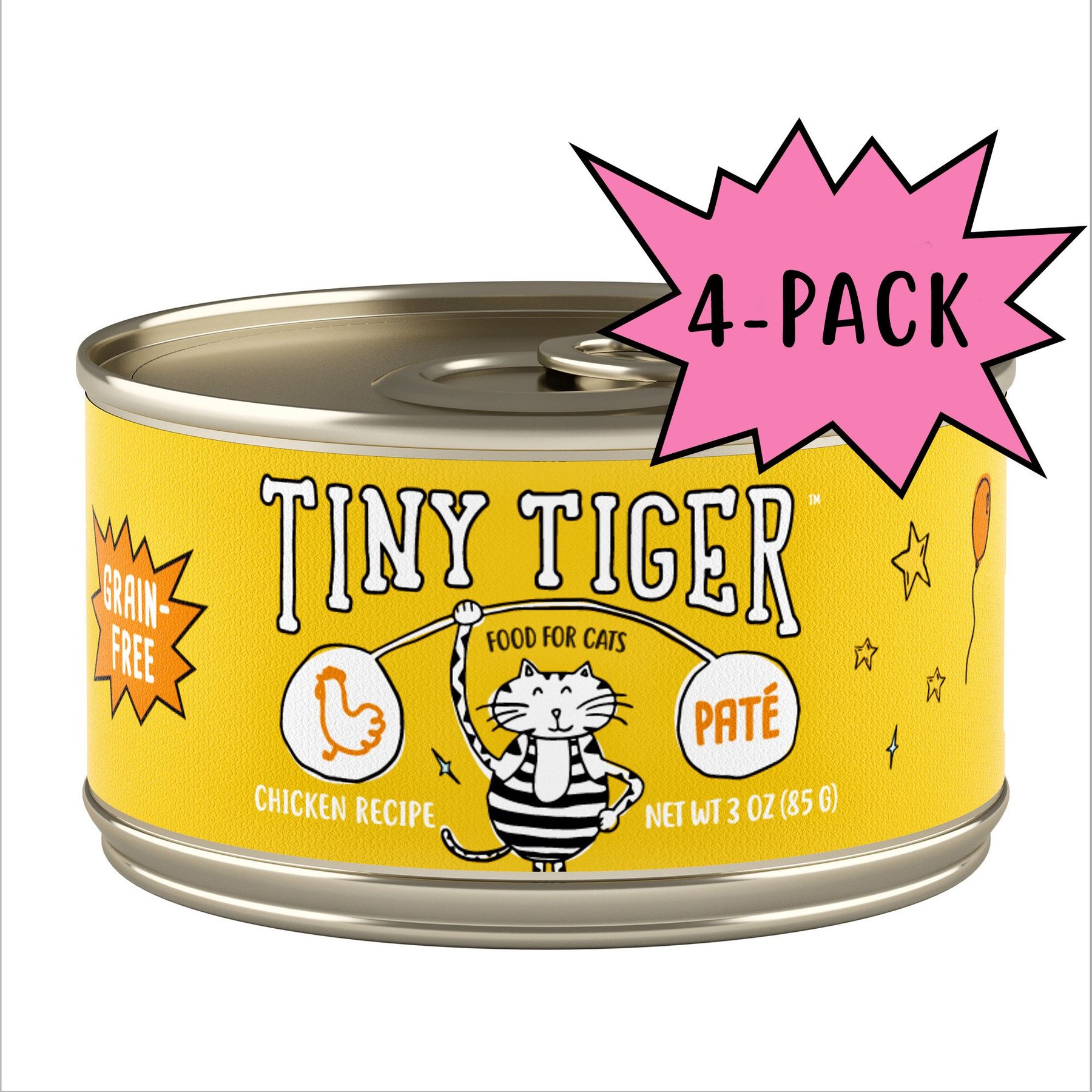
| Smooth pate | Sore mouths, missing teeth, cats that cannot chew | Cats used to chunks may reject the texture at first |
| Chunks in gravy | Cats that still chew comfortably and like variety | The chunks still need chewing; gravy licked, chunks left |
| Mousse and puree | Tempting a poor appetite; hiding medication | Usually complementary, not complete |
| Broth and soup toppers | Hydration, aroma, encouraging a first mouthful | Very low calorie; not a meal |
| Softened dry | Familiar flavor with less chewing | Goes sour quickly; discard within the hour |
Smooth pate is the workhorse for a cat with a compromised mouth, because it requires no chewing at all and still carries full nutrition.
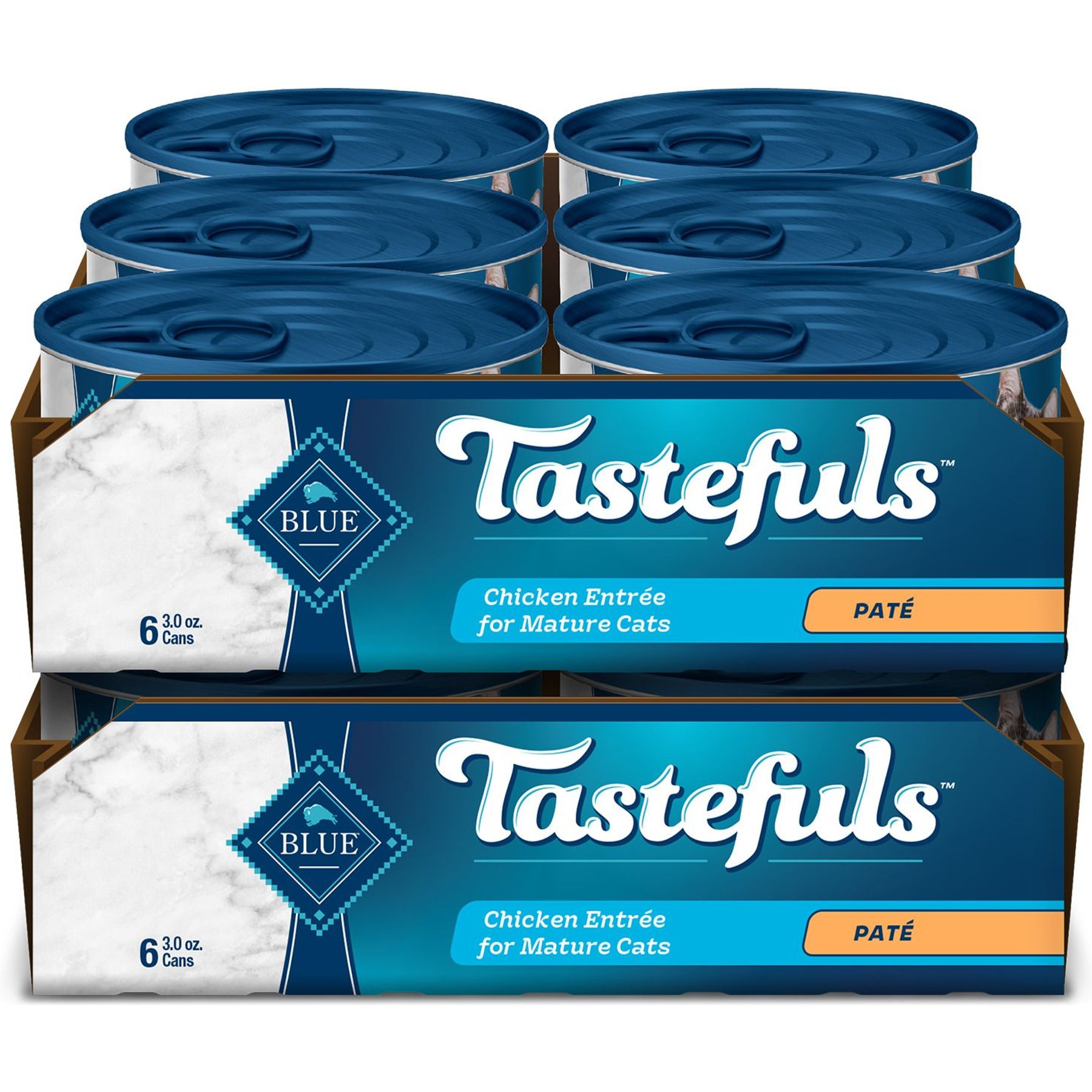
If you would rather feed something formulated with older cats in mind, mature-labeled pates cover the same texture need, with the caveat that senior is a marketing term rather than a regulated life stage, so read the panel rather than the front.
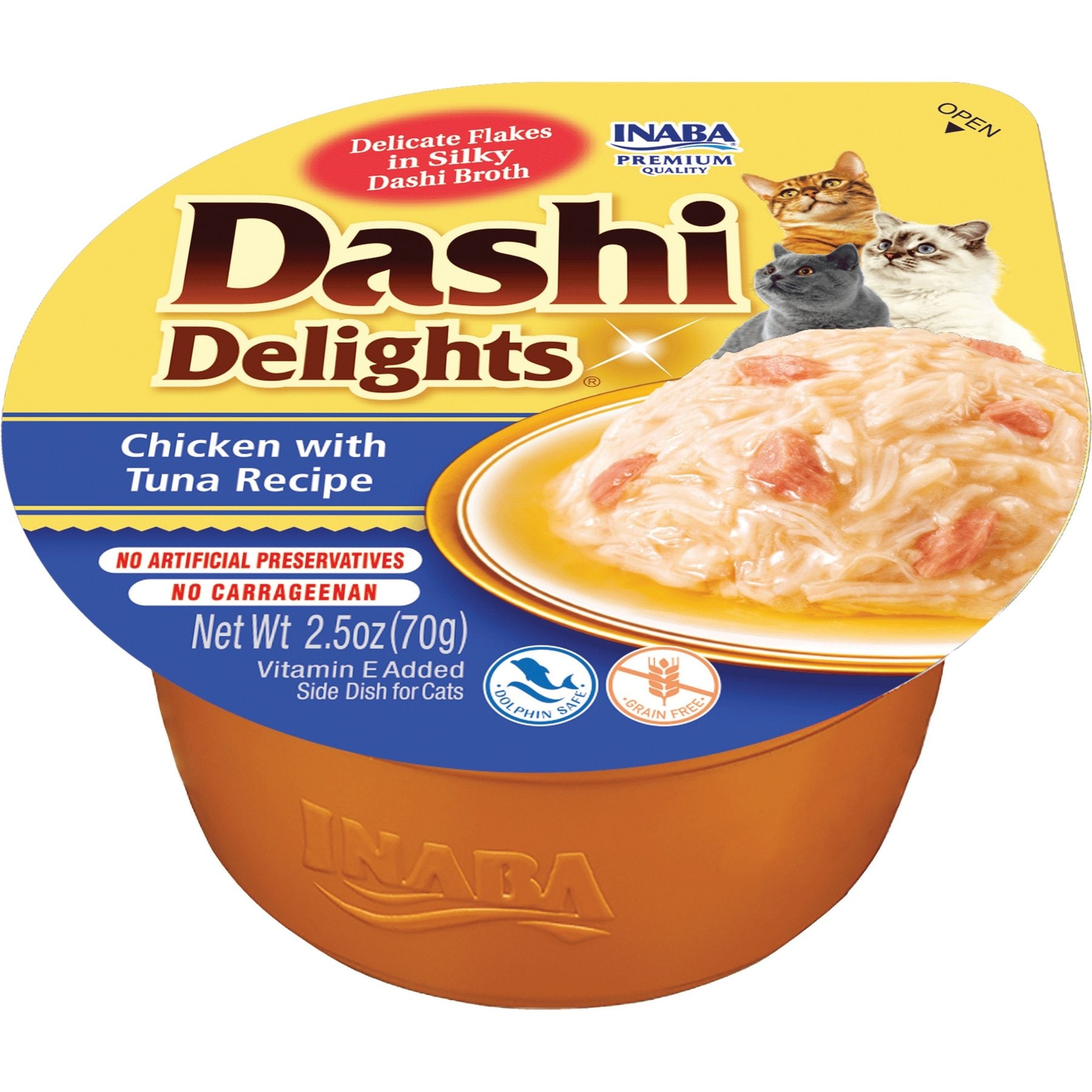
Broth toppers do a specific and useful job: they add moisture, they smell strongly, and they often get a reluctant cat to take the first mouthful, after which it will frequently continue. Moisture matters more in older cats, particularly any with kidney compromise; see wet versus dry and moisture.
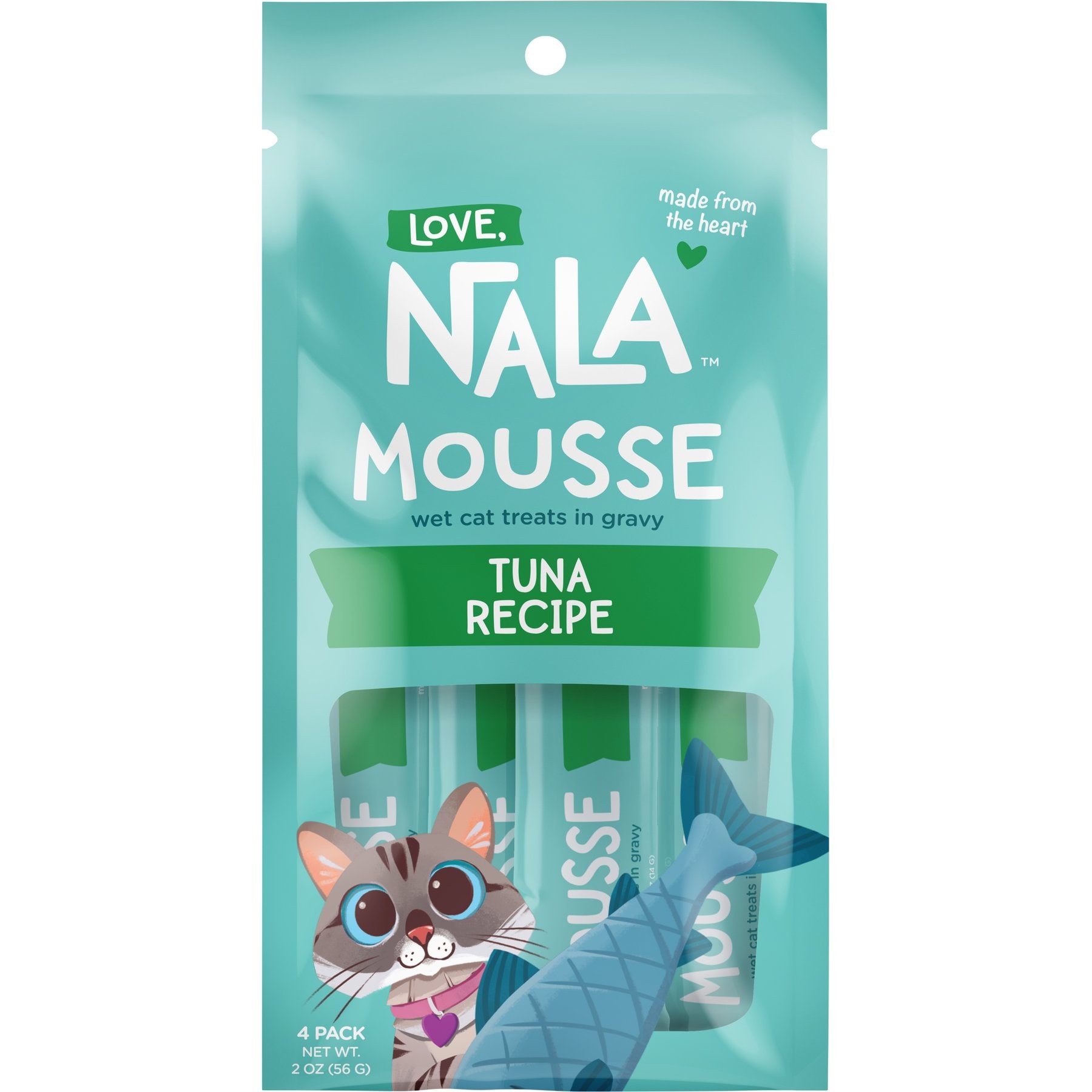
Lickable tubes are the most useful thing in the category for two unglamorous jobs: tempting a cat that has stopped being interested in food, and delivering medication to an animal that has become wise to tablets.
Making food work for an old cat
Small mechanical changes do more here than most product decisions.
Warm it. To roughly body temperature, not hot. Aroma drives feline appetite and it increases sharply with temperature, and a cat's sense of smell fades with age, so this is compensating for a real deficit. Straight from the fridge is the worst version of any food.
Small and often. Wet food goes stale and unappetizing within about half an hour. Four small servings beat one large one that sits congealing.
Wide, shallow dish. Whisker contact against the sides of a deep bowl is a genuine aversion for some cats, and an old cat has less patience for it.
Raise it slightly, if the neck is stiff. A gentle elevation can make eating more comfortable for an arthritic cat. This is safe advice for cats: the raised-bowl caution you may have read applies to deep-chested dogs and bloat risk, which is not a feline concern.
Take it to the cat. An old, arthritic or unwell cat may simply not travel to the kitchen as readily. Food where the cat actually is removes the whole problem.
Elevate the dish slightly if the neck is stiff, and keep it wide. A shallow saucer on a low stand is often more comfortable for an arthritic cat than a deep bowl on the floor, and it avoids the whisker contact that puts some cats off eating entirely.
Count what goes in. Soft foods vary enormously in caloric density, and a switch from dry to wet can halve or double intake without the bowl looking different. Get a body condition score and weigh the cat monthly.
What to skip
- Accepting the texture change without examining the mouth. The single most important point here. Painful teeth are treatable, and cats hide it well.
- A diet built on toppers and lickable treats. Complementary foods, however enthusiastically eaten.
- Milk of any kind. Most adult cats digest lactose poorly, and it displaces balanced food.
- Prescription diets bought without the diagnosis. See prescription diet; the right food for a disease your cat may not have is simply the wrong food.
- Waiting out a cat that has stopped eating. More than a day or so of genuine anorexia in a cat is urgent, not a standoff to win.
- Assuming dry food is cleaning the teeth. It largely is not. See when should I switch to senior food for the related diet question.
How to choose
Book the dental examination first. Everything below is more useful once you know what the mouth looks like.
For a cat with a sore or compromised mouth, feed a smooth complete pate, warmed, in small frequent servings.
Use broths and lickable purees to add moisture, tempt a first mouthful and carry medication, and keep them as a minority of the calories.
Weigh the cat monthly and get bloodwork at least annually past eleven.
And if the appetite change came with weight loss, do that in the other order: bloodwork this week, menu afterward.
FAQ
Frequently asked
My old cat has stopped eating dry food. Is that just age?
Age alone rarely makes a cat abandon a food it used to eat. The usual reason is that chewing has become painful, and dental disease is extremely common in older cats. Other explanations include nausea, a declining sense of smell and systemic illness. A cat that has changed how it eats (approaching the bowl then walking away, dropping food, chewing on one side, swallowing kibble whole) is describing a problem. Have the mouth examined before you accept it as a preference.
Can a cat live on lickable treats and broth toppers?
No. Almost everything in the topper, broth, puree and lickable-treat category is a complementary food, not a complete one, and the label will say so if you look. They are excellent for hydration, for tempting a poor appetite and for hiding medication, and they are nutritionally incomplete as a diet. Whatever else you feed, the bulk of the calories need to come from something carrying a complete-and-balanced AAFCO statement.
Does wet food cause or prevent dental disease?
Neither, to any degree worth acting on. The idea that dry kibble cleans teeth is largely a myth: most kibble shatters on contact without ever scraping the tooth surface, and cats with dental disease are found on every diet. Some specifically formulated dental diets do have supporting evidence, but ordinary dry food is not a dental care plan. Choose the texture on the basis of your cat's mouth and hydration, and manage the teeth separately.
How do I make food more appealing for a cat with a poor appetite?
Warm it to roughly body temperature, which sharply increases aroma and matters a great deal to a cat whose sense of smell has faded. Offer small amounts frequently rather than a full bowl that goes stale. Use a wide, shallow dish so the whiskers are not pressed. And take the food to the cat if it is reluctant to move. If none of that works for more than a day or two, that is a veterinary matter rather than a menu problem.
How do I switch a cat that has only ever eaten dry?
Slowly, and expect it to be harder than with a dog. Texture preferences form early and cats can be genuinely conservative about them. Start by adding a very small amount of the new food beside the old rather than mixed into it, so a rejection of one does not contaminate the other. Warm it. Give it a week or two. And never let a cat go without eating for more than a day or so while you experiment: cats that stop eating can develop serious liver problems quickly.
Featured in this guide
The picks referenced above—priced and in stock at time of publication.
Affiliate links. Prices and availability change—we filter unavailable items nightly, but the retailer's page is source of truth.
Keep reading
Discussion
Talk about Soft Food for Senior Cats: Usually a Symptom Before It Is a Preference
Real questions from real pet owners. Add yours—signed-in members only, first three posts held for review.
Loading threads…