Dog Food Transition Guide: Four Days Suits Most Dogs, Sensitive Stomachs Need Longer
Most stomach upset after a food change comes from switching too fast, not from the new food. The four-day schedule Cornell's canine health center describes, when to stretch it, and five foods sorted by the reason you might be switching.
petsupplies.co earns a commission if you buy through the product links on this page, and the price you pay is the same either way.

A new bag of dog food often gets blamed for the loose stool that follows. Usually the food is fine. The switch was too fast, and the gut had no time to adjust to different ingredients, fat levels and fiber.
A slow, planned transition fixes most of that. This guide covers the schedule, when to stretch it, and five foods sorted by why you might be switching.
The four-day schedule
Cornell's Riney Canine Health Center lays out a simple plan in its article on re-evaluating your dog's diet:
| Day | Old food | New food |
|---|---|---|
| 1 | 75% | 25% |
| 2 | 50% | 50% |
| 3 | 25% | 75% |
| 4 | 0% | 100% |
Cornell says this four-day transition works for most dogs, but dogs with sensitive stomachs may need a longer, more gradual swap. It also notes that a sudden change can cause diarrhea that is usually temporary.
Measure by volume or weight, not by eye. A heaping scoop of the new food and a light scoop of the old one is not a 50-50 mix.
When to go slower
Stretch each step to two or three days when any of these apply:
- A history of loose stool after treats, table scraps or earlier food changes.
- A big change in format, such as dry to fresh, or a much richer food.
- A small dog, where a few extra pieces of the new food make up a large share of the meal.
- A dog recovering from a stomach upset. Wait until stool is normal, then start.
If stool softens at a step, go back to the last mix that worked and stay there for a few days. Then try again with smaller increases.
Keep treats and extras steady during the switch. Changing the food and the treats at once makes it impossible to tell which one caused a problem.
Read the bag before you switch
Two lines on the label matter more than the front of the bag.
The first is the nutritional adequacy statement. It says whether the food is complete and balanced, and for which life stage: growth, adult maintenance, or all life stages. A food labeled for adult maintenance is not meant to be a puppy's main diet.
The second is the feeding guide and the calorie count, usually given per cup and per pound or kilogram of food. Two foods can look similar and differ a lot in calories. Compare them before you start mixing, so portions stay steady through the switch.
Also check the bag size against how fast your dog eats. A large bag of a food your dog refuses is an expensive mistake, and an open bag loses freshness over weeks.
Switching for digestion
Owners often switch foods because of inconsistent stool. A food marketed for digestive care is a reasonable thing to try, but only after a veterinarian has ruled out other causes. Cornell's article recommends an appointment for chronic diarrhea or stomach upset to look for underlying problems.
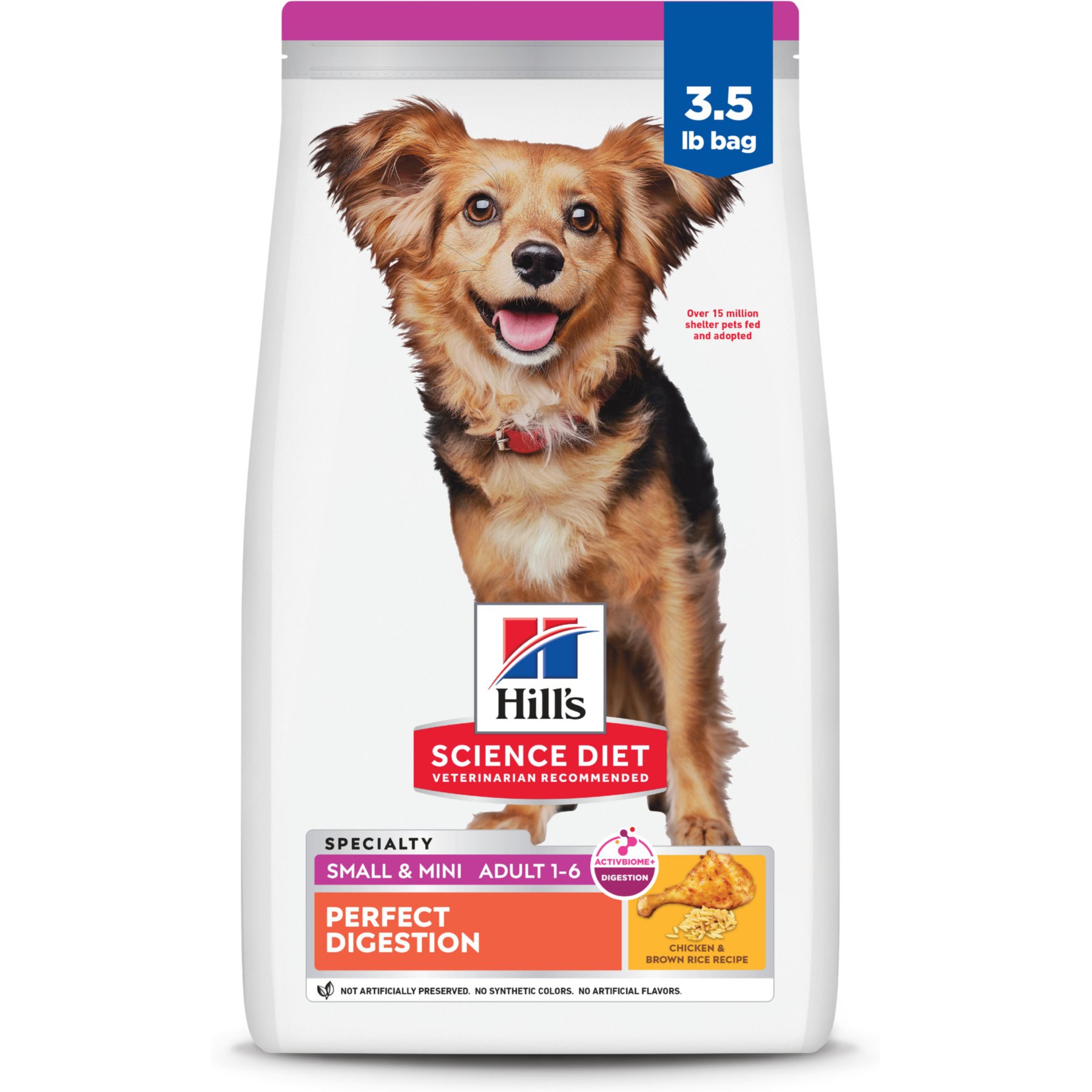
One small-breed digestive formula uses what its maker calls ActivBiome+ Technology, a blend of prebiotics, whole grain oats and pumpkin. The maker claims "perfect poop in as little as 7 days." That is a brand claim, not a treatment promise.
For a sensitive dog, the transition schedule matters as much as the food. A digestive formula switched in over two days can still cause the upset it was bought to prevent.
Switching for weight
The second common reason is weight. Our canine obesity page and the how do I know if my pet is overweight answer explain how to check body condition before changing anything.
A weight-management food only helps if the portion is right. Feed to the target weight your veterinarian gives you, not the current weight, and weigh the dog every few weeks.
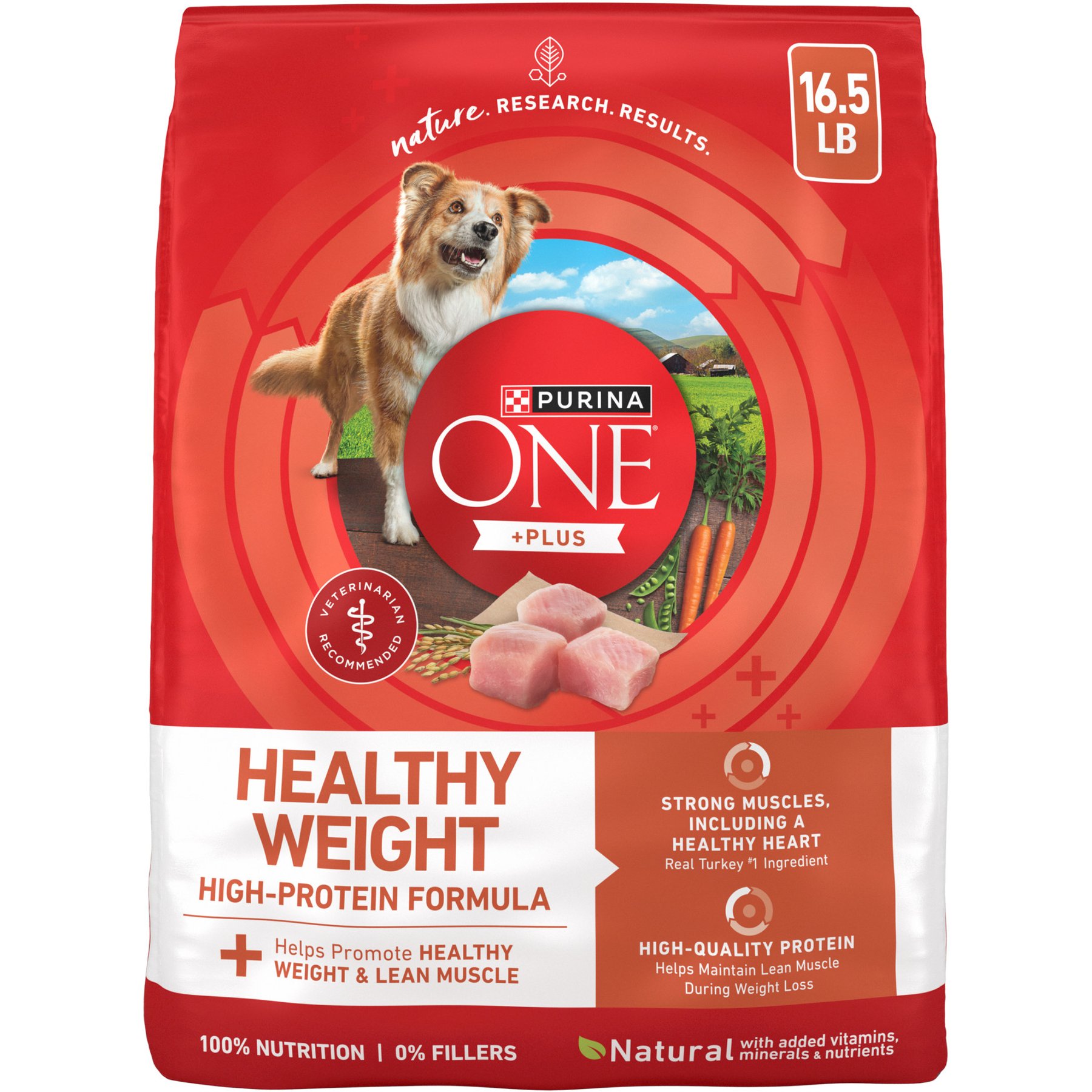
This weight formula lists real turkey as the first ingredient. The maker says it includes glucosamine and four antioxidant sources.
Weight foods can differ in calories per cup from the old food. Check the label and adjust portions as you move through the schedule, not only at the end.
Switching life stage
Puppies grow on puppy food, and the move to adult food is a switch like any other. Ask your veterinarian when to make it, since the timing depends on the dog.
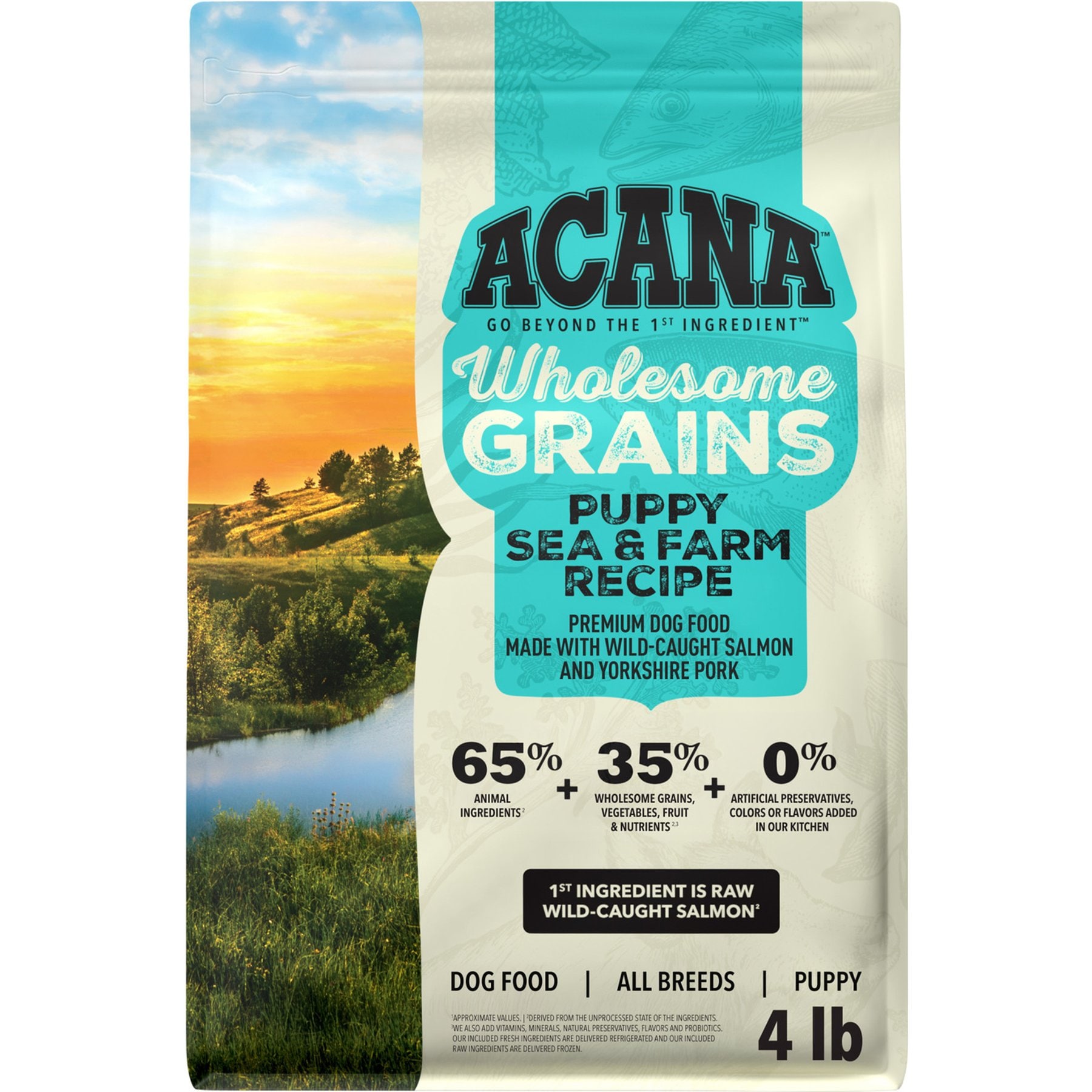
This puppy recipe blends salmon and pork with grains and probiotics. The maker says it contains 65% animal ingredients.
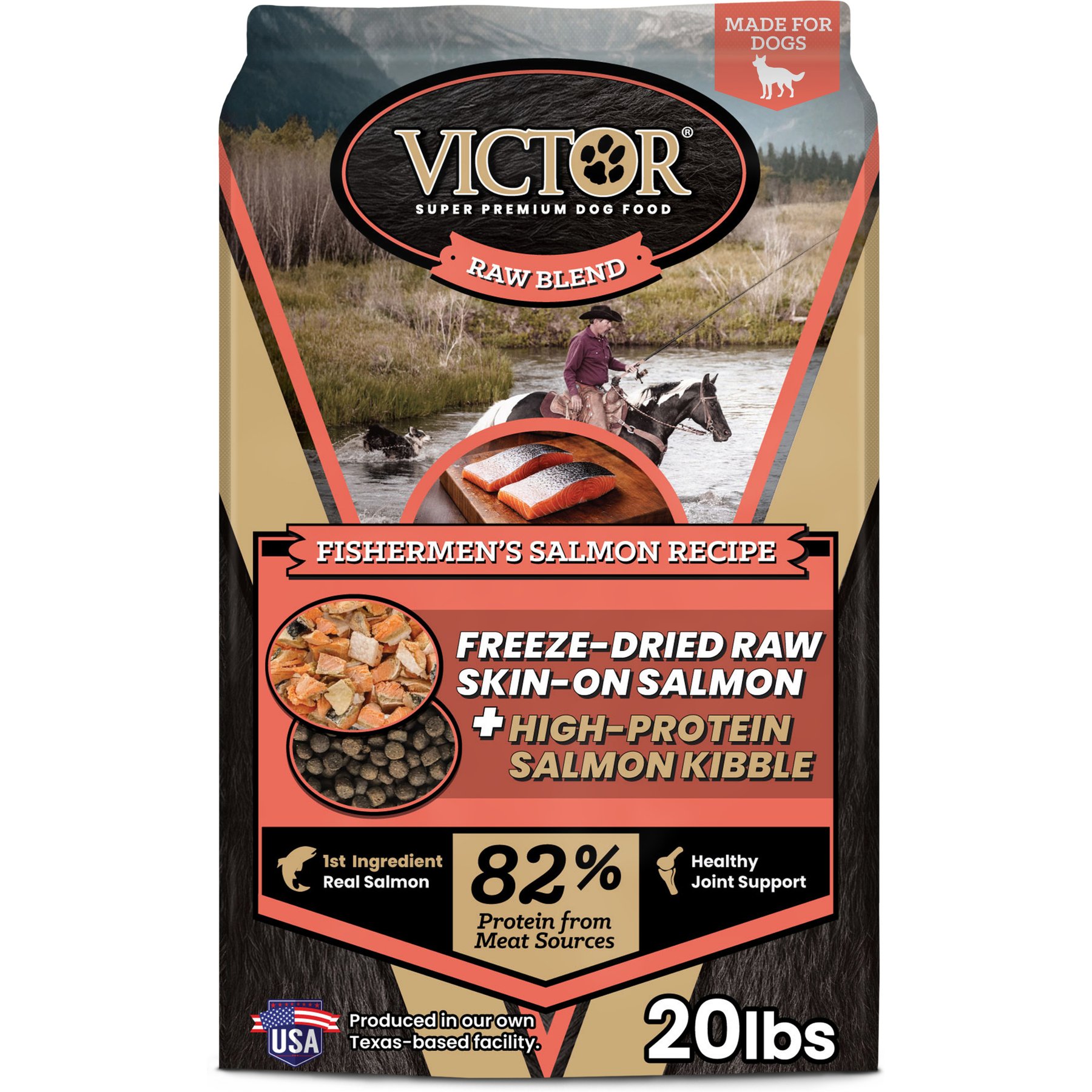
Some foods are labeled for all life stages. This salmon kibble mixed with freeze-dried salmon pieces lists 34% protein. The maker says it is complete and balanced for all life stages, including large-breed puppies.
A food for all life stages suits a home with a puppy and an adult dog. It is not automatically the right food for a senior dog, so check with your veterinarian as the dog ages.
Switching protein or brand
Sometimes the reason is simpler: a dog tired of its food, or a formula change at the store. A small bag lets you check acceptance before committing to a large one.
This adult recipe lists beef as the first ingredient, adds salmon, and states 32% protein. It comes in a 3.8-lb bag.
A higher-protein food is often richer than what the dog ate before. Use the slower schedule if your dog has a history of loose stool.
How this goes wrong
| Mistake | What happens | Better approach |
|---|---|---|
| Switching overnight | Loose stool for a few days | Mix over four days, longer if sensitive |
| Mixing by eye | Ratios drift, upset appears early | Measure each portion |
| New treats at the same time | Cannot tell what caused the upset | Keep treats steady |
| Same cup size for a new food | Weight gain or loss | Check calories per cup on the label |
| Blaming the food for chronic diarrhea | Real cause missed | See a veterinarian |
Signs that need a veterinarian
Mild, short-lived softening during a switch is common. These are not:
- Vomiting more than once, or vomiting with diarrhea.
- Blood in the stool or black, tarry stool.
- Diarrhea in a puppy, which can dehydrate quickly.
- Lethargy, a painful belly, or refusing food for more than a day.
- Diarrhea that lasts beyond a few days despite going back to the old food.
Call the veterinarian the same day for any of these. A dog with a swollen belly that retches without bringing anything up needs emergency care immediately. The Merck Veterinary Manual lists nonproductive retching, drooling, restlessness and a swelling abdomen among the signs of gastric dilation and volvulus, often called bloat.
What to skip
- Overnight switches. Cornell's schedule takes four days for a reason.
- Switching food and treats together. Change one thing at a time.
- Brand claims as diagnosis. A digestive formula does not replace a veterinary workup.
- Guessing portions for a weight food. Read the calories on the label.
- Pushing through repeated upset. Step back to the last mix that worked.
How to choose
Pick the food for the reason you are switching: digestion, weight, life stage, or preference. Buy a small bag first if you are unsure the dog will eat it.
Mix over four days using measured portions, and stretch each step for a sensitive dog. Keep treats the same until the switch is done.
Watch stool, appetite and energy. Call a veterinarian for vomiting, blood, a sick puppy or lasting diarrhea, and go to an emergency clinic for a swollen belly with unproductive retching.
FAQ
Frequently asked
How long should it take to switch dog food?
About four days for most dogs, following the 75/25, 50/50, 25/75, then 100% schedule that Cornell's Riney Canine Health Center describes. Dogs with sensitive stomachs may need each step stretched to two or three days.
What happens if I switch my dog's food too fast?
Many dogs get loose stool or diarrhea for a few days. Cornell notes this is usually temporary. Go back to a mix of old and new food and move more slowly. See a veterinarian if diarrhea lasts beyond a few days, contains blood, or the dog is also vomiting.
Can I switch dog food without mixing?
You can, but the risk of stomach upset is higher. If the old food is no longer available, feed smaller meals of the new food for a few days and keep treats and extras the same.
Is a digestive care dog food worth trying for loose stool?
It can be, after a veterinarian has ruled out other causes of chronic diarrhea. Treat any claim about firmer stool as a brand claim, and still switch the food in gradually.
Should I change portions when switching to a weight management food?
Yes. Weight foods can have a different calorie count per cup than your dog's old food. Check the label, feed for the target weight your veterinarian gives you, and weigh your dog every few weeks.
Featured in this guide
The picks referenced above—priced and in stock at time of publication.
Affiliate links. Prices and availability change—we filter unavailable items nightly, but the retailer's page is source of truth.
Keep reading
Discussion
Talk about Dog Food Transition Guide: Four Days Suits Most Dogs, Sensitive Stomachs Need Longer
Real questions from real pet owners. Add yours—signed-in members only, first three posts held for review.
Loading threads…