Dog Treats: Biscuits, Jerky and Chews Sorted by Calories, Texture and Chewing Style
Treats are sold by flavor and protein claims, but the numbers that matter are calories and chew size. The 10% rule, how biscuits, jerky, soft bars and rawhide differ, and five treats sorted by how your dog eats them.
petsupplies.co earns a commission if you buy through the product links on this page, and the price you pay is the same either way.

Dog treats get sold on flavor, protein percentages and ingredient lists. Those details matter less than two plain numbers: how many calories the treat adds, and whether its size and texture suit the way your dog eats.
This guide sorts treats into biscuits, jerky, soft bars and chews, then picks five from the catalog by who each one suits.
The 10% rule
Treats are extra calories, and most are not complete and balanced. VCA Animal Hospitals' page on dog treats gives the general rule: about 90% of daily calories from a complete food, and no more than 10% from treats and snacks.
A Texas A&M veterinarian gives the same limit in a holiday treats article, with an example. A dog eating 500 calories a day should get 50 calories or less in treats.
VCA adds a useful benchmark: one large milk bone contains about 85 calories. For a small dog, a single large biscuit can use up the whole treat allowance.
Treat calories matter most for dogs that are already heavy. Our canine obesity page explains the health effects, and the how do I know if my pet is overweight answer shows how to check.
Counting treat calories in practice
Start from the daily calorie target your veterinarian gives you, or the feeding guide on your dog's food. Take 10% of that number. That is the treat budget for the whole day, across every person in the house.
Say the target is 700 calories. The budget is 70 calories. If one biscuit is 40 calories, two biscuits exceed it, and any training pieces on top push the total further.
A few habits keep the budget honest:
- Break treats small. A dog responds to the reward, not its size.
- Use part of the meal. Set aside some of the day's kibble for training and feed less at dinner.
- Keep one treat jar. Several people handing out treats from different bags is how budgets disappear.
- Read the calorie line. Many bags list calories per treat or per piece. Skip bags that do not.
When treats go up for a training week, cut the meal a little to match.
Crunchy biscuits
Biscuits are easy to store, easy to portion and slow enough to eat that a dog notices it got something. Large biscuits suit large dogs. For a small dog, break them.
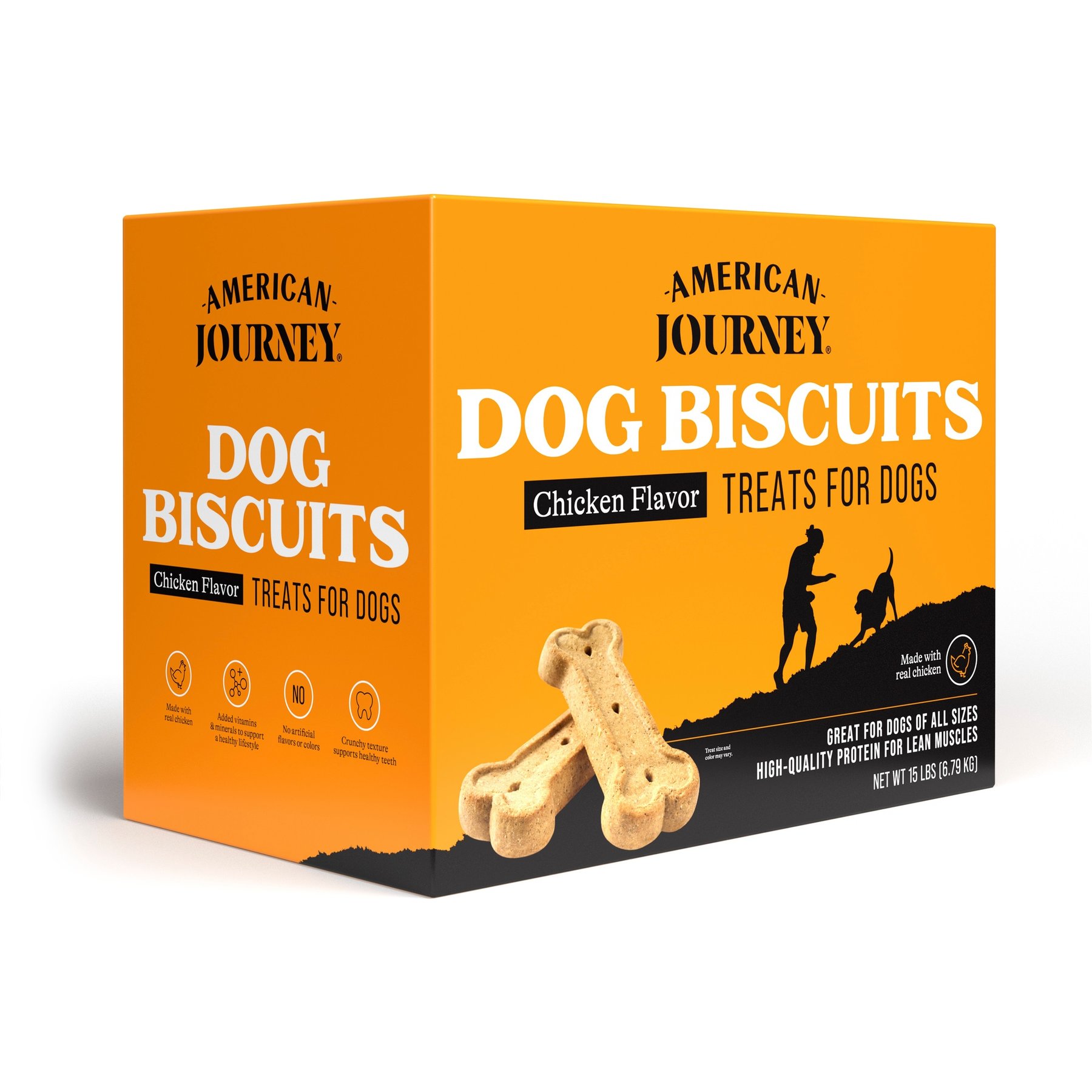
This chicken-flavor biscuit lists chicken as the first ingredient and states 25% protein. The maker says it is free of added corn or soy, with no poultry by-product meals.
The maker also says the crunchy texture helps support dental health. Treat that as a brand claim. A biscuit is not a substitute for tooth brushing or a veterinary dental plan, and our dental chew entry explains what to look for instead.
Soft and chewy or crunchy
Soft treats suit training. They are quick to eat, easy to break into small pieces, and the dog does not stop to crunch between repetitions.
Crunchy treats suit a single reward, such as coming inside or going into a crate. They take longer to eat and hold a dog's attention for a moment.
For training, the piece size matters more than the brand. A pea-sized piece works for most dogs and keeps calories low across a session.
Jerky treats
Jerky is dense, strong-smelling and easy to tear into pieces. That makes it a good high-value reward for recall or a distracting setting.
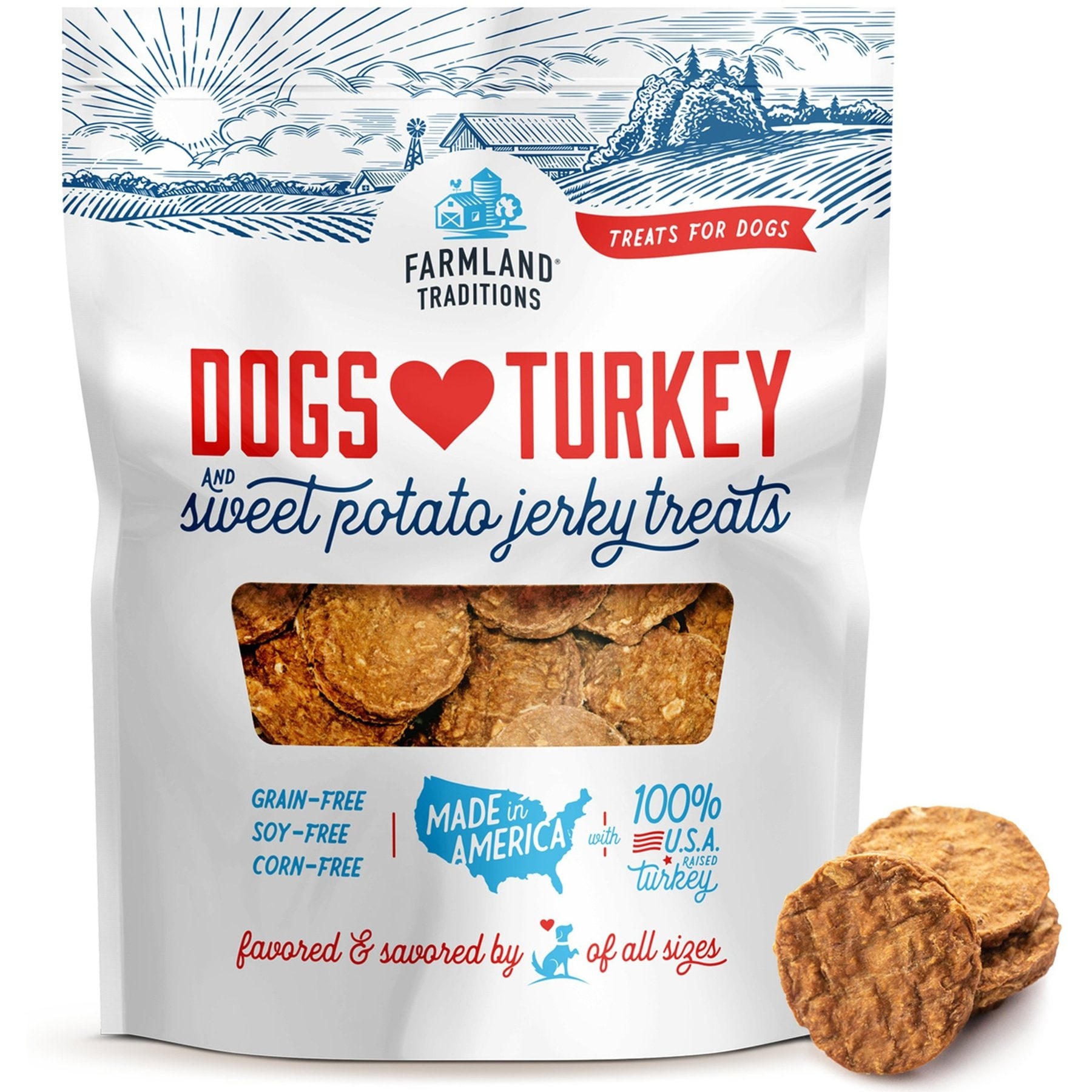
This turkey and sweet potato jerky uses USA-raised turkey, according to its maker. It is oven-baked, grain-free, and the maker suggests breaking it into pieces for training.
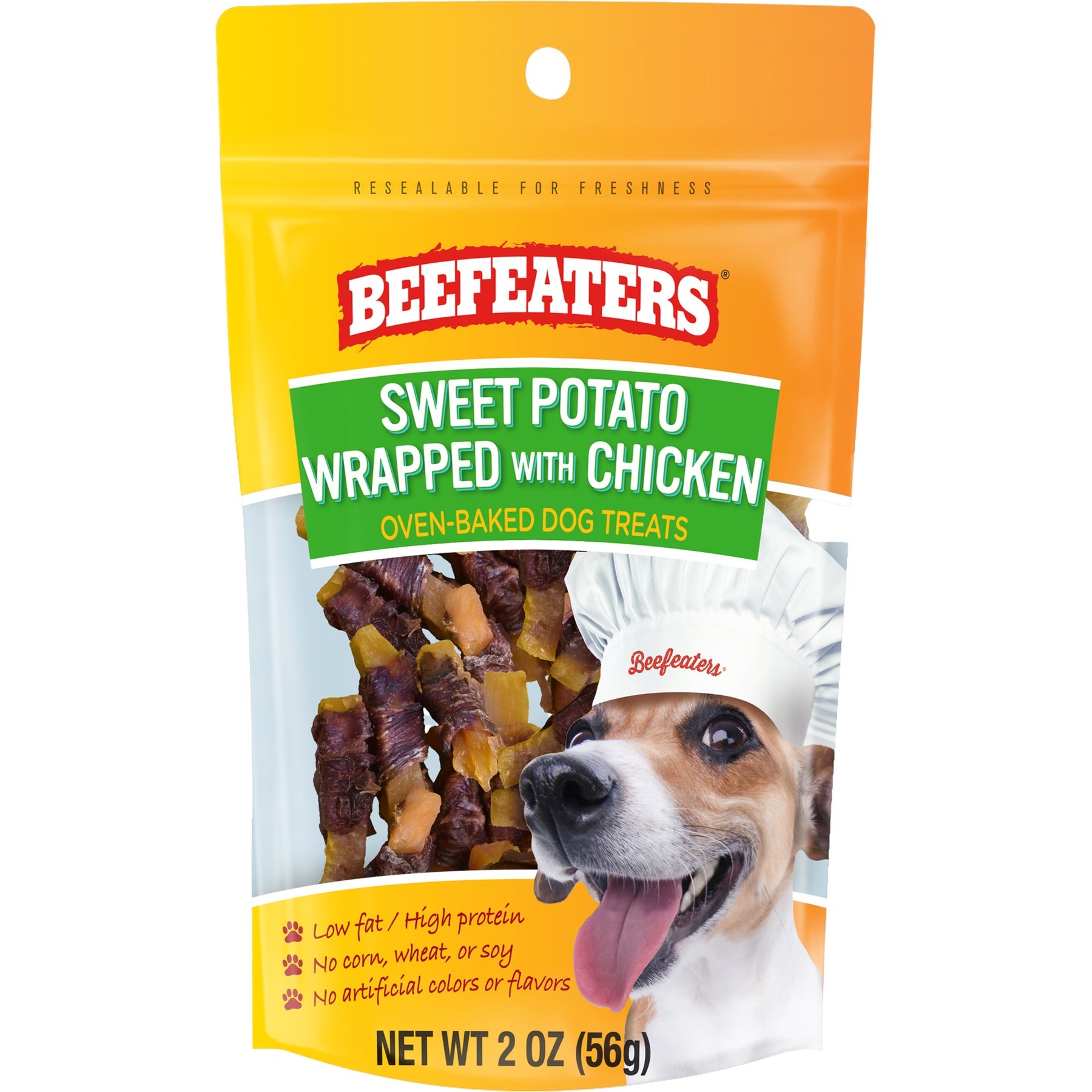
This chicken and sweet potato wrap lists chicken as the first ingredient. The maker describes it as grain-free and oven-baked, with no corn, soy or wheat. It comes as twelve 2-oz bags, which helps keep an opened bag fresh.
Follow the storage directions on jerky bags. The FDA's page on safe handling of pet food and treats recommends washing your hands with soap and hot water for at least 20 seconds before and after handling pet food and treats.
Soft bars for sensitive dogs
Some dogs react to common proteins, and owners look for treats that avoid them. A limited-ingredient treat can help, but only if the rest of the diet avoids the same ingredients.
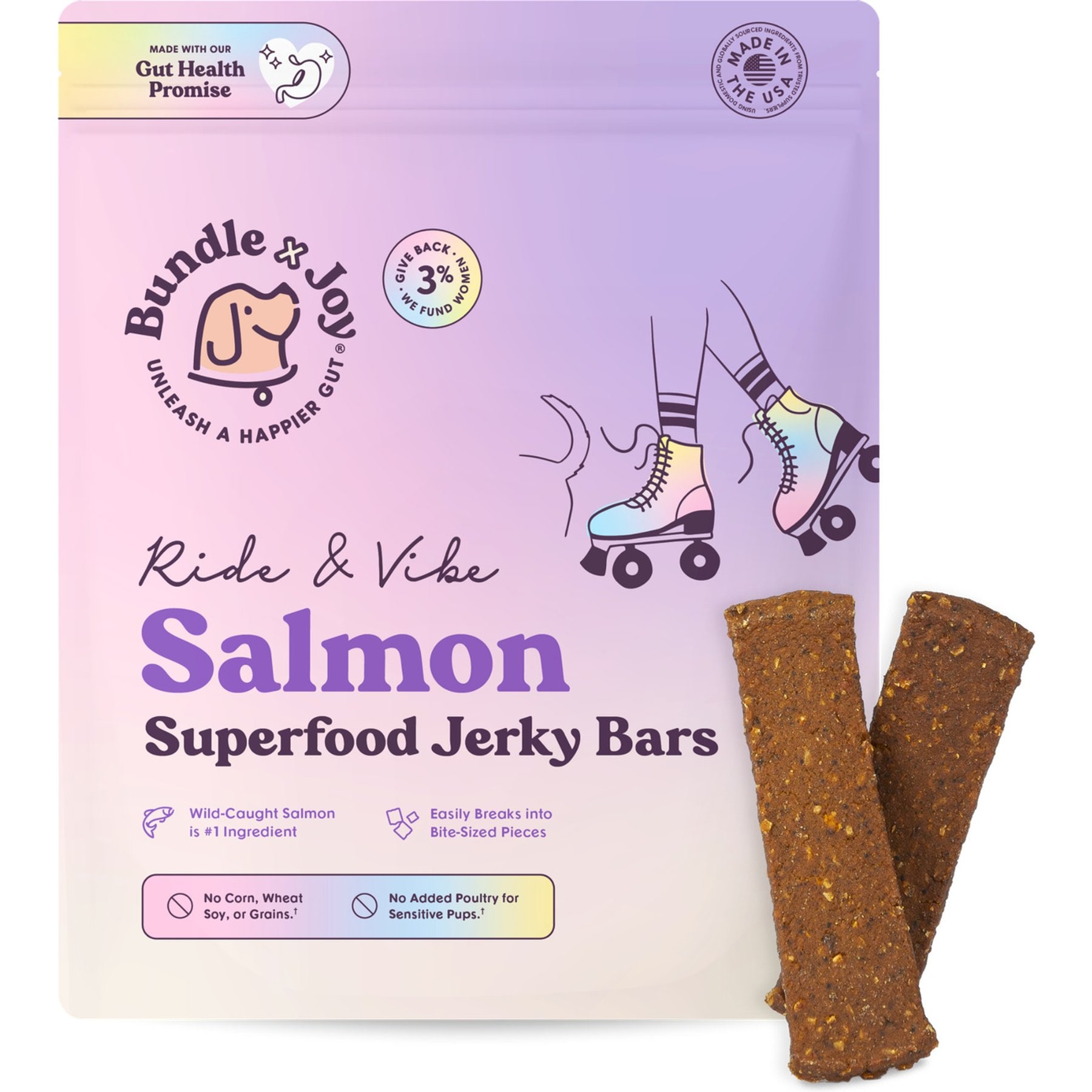
These salmon bars list wild-caught salmon as the first ingredient. The maker says they are free of beef, poultry, corn, wheat and soy, with a soft texture that breaks easily for small dogs or training.
A suspected food allergy needs a veterinarian and a proper elimination trial. A treat choice alone cannot confirm or rule one out. For single-protein options, see our single-ingredient dog treats guide.
Rawhide chews: only for the right dog
Rawhide divides opinion, and the reasons are specific. The American Kennel Club's article on whether rawhide is dangerous explains that strong chewers can break off large chunks. Those chunks can cause choking or an intestinal blockage, and both can be life-threatening.
The AKC also says rawhide is generally not easily digested. It suggests an appropriately sized chew, careful observation, and avoiding rawhide entirely for a dog that breaks off chunks with little effort.
These spearmint twist sticks are rawhide. Their maker says the rawhide fibers are made to break down in the stomach more easily, and the listing calls them highly digestible. That is a brand claim. It does not remove the choking risk of a swallowed piece.
Give a rawhide only to a gentle chewer, only while you watch, and take it away once it is small enough to swallow whole. Our power chewer guide skips rawhide for dogs that tear chunks, and that advice applies here.
How this goes wrong
| Treat type | Good for | Where it goes wrong |
|---|---|---|
| Crunchy biscuit | Single rewards, large dogs | Too many calories for a small dog |
| Jerky | High-value training pieces | Rich, easy to overfeed |
| Soft bar | Training, sensitive dogs | Allergy claims mistaken for diagnosis |
| Rawhide chew | Long chewing for gentle chewers | Chunks can choke or block a strong chewer |
| Any treat | Motivation | Over 10% of calories unbalances the diet |
Storing treats
The FDA suggests storing dry pet food in a cool, dry place below 80°F, in its original bag with the top folded down. The same habits suit dry biscuits and jerky. Keep the bag where the dog cannot reach it, since a dog that gets into a whole bag can eat days of calories at once.
When a treat becomes an emergency
Call a veterinarian or emergency clinic right away if your dog gags, paws at its mouth, or struggles to breathe after a chew. Repeated vomiting, a painful belly, or straining without passing stool after swallowing a piece can signal a blockage.
Some human foods used as treats are toxic to dogs. Check our what human foods are toxic answer before sharing from the table.
What to skip
- Full-size biscuits for small dogs. One can use the day's treat allowance.
- Rawhide for a dog that tears chunks. Choose a different chew.
- Unsupervised chews. Watch until the chew is finished or taken away.
- Treat claims as dental care. Brush teeth and follow your veterinarian's advice.
- Treats with no calorie count. You cannot stay under 10% without one.
How to choose
Work out your dog's daily calories, and keep treats under 10% of that. Break larger treats to fit.
Choose soft or tearable treats for training, crunchy biscuits for single rewards, and limited-ingredient bars for a dog avoiding common proteins.
Choose a rawhide only for a gentle chewer, supervise every session, and take it away when it gets small. Call a veterinarian for gagging, repeated vomiting or straining after a chew.
FAQ
Frequently asked
How many treats can I give my dog a day?
Keep treats to about 10% of daily calories. A Texas A&M veterinarian gives the example of a dog eating 500 calories a day, which should get 50 calories or less from treats. Check the calorie count on the bag and break large treats into pieces.
Are soft or crunchy treats better for training?
Soft treats usually work better for training because they are quick to eat and easy to break into small pieces. Crunchy biscuits suit single rewards where a slower treat is fine.
Is rawhide safe for dogs?
It depends on the dog. The American Kennel Club explains that strong chewers can break off chunks that cause choking or an intestinal blockage, and that rawhide is generally not easily digested. If you give rawhide, choose a gentle chewer, supervise, and remove it once it is small enough to swallow.
Do crunchy biscuits clean a dog's teeth?
Some makers say their texture helps support dental health, but that is a brand claim. Brushing and your veterinarian's dental advice matter more than any treat.
What should I do if my dog swallowed a piece of chew?
Watch closely and call your veterinarian for advice. Go to an emergency clinic right away for choking, gagging, trouble breathing, repeated vomiting, a painful belly or straining without passing stool.
Featured in this guide
The picks referenced above—priced and in stock at time of publication.
Affiliate links. Prices and availability change—we filter unavailable items nightly, but the retailer's page is source of truth.
Keep reading
Discussion
Talk about Dog Treats: Biscuits, Jerky and Chews Sorted by Calories, Texture and Chewing Style
Real questions from real pet owners. Add yours—signed-in members only, first three posts held for review.
Loading threads…