Single-Ingredient Dog Treats: One Line on the Label, and What It Does Not Tell You
A treat with one ingredient is easy to read, easy to portion and hard to get wrong. It is not automatically safe, low-calorie or good for a sensitive dog. What the label settles, what it leaves open, and five treats that are what they say.
petsupplies.co earns a commission if you buy through the product links on this page, and the price you pay is the same either way.

The appeal of a single-ingredient treat is that the label is finished in one word. Chicken. Beef liver. Minnows. There is nothing to decode, nothing hiding behind a proprietary name, and nothing to argue with a vet about. That is a real advantage, and this guide takes it seriously. It also takes seriously what the one word does not tell you, which is how many calories are in the bag, how the meat was processed, where it came from, and whether the treat suits the dog in front of you.
The five picks at the end are all exactly one ingredient, chosen to cover the jobs a treat actually does: training rewards, a high-value lure, a novel protein for a dog on an elimination diet, a fish for skin and coat, and a whole-prey oddity that some dogs will do anything for.
What one ingredient settles
Three things, and they are worth having.
You know what the dog ate. For a dog with itchy skin, recurrent ear infections or an unsettled gut, the first question a vet asks is what goes in its mouth, and the honest answer for most dogs is a list nobody can remember. A treat with one ingredient is a line in that list you can be sure of. If the vet moves the dog onto a single protein it has never eaten, see novel protein and limited-ingredient diet, the treats have to match, and single-ingredient treats are the only ones that can.
There is no padding. Mainstream biscuit treats are built on flour, sugar, glycerin and a flavoring; the meat on the front of the bag is often a minor ingredient. A single-ingredient treat is the meat.
The math is easier. Most single-ingredient makers print calories per piece or per gram, because there is nothing else to print. That matters because the rule that applies to all treats, from every veterinary nutrition body that has written one down, is a ceiling of about ten percent of daily calories. Texas A&M's veterinary college puts it plainly: limit treats to ten percent or less of total calories, so a dog on 500 calories a day gets 50 in treats. Cornell's clinical nutrition service is a shade more relaxed at no more than fifteen percent, with many nutritionists recommending ten, and gives the reason: treats are not complete and balanced, so beyond that point they displace nutrients the dog needs.
What one ingredient does not settle
Calories. This is the trap. Freeze-dried liver is about as calorie-dense as food gets once the water is gone, and a bag that says "100 percent beef liver" says nothing about how quickly a small dog reaches its allowance. See caloric density. A dog that is putting on weight on "healthy" treats is the commonest version of this story; how do I know if my dog is overweight is the check.
Process. One ingredient can be freeze-dried raw, air-dried, cold-smoked, oven-dehydrated or made into jerky. These are different products with different textures, shelf lives and handling rules, covered below.
Origin. "Chicken" on the front does not say which country the chicken came from or where it was dried. Imported poultry jerky was the subject of a years-long regulatory investigation into kidney illness in dogs, and the market moved towards domestic sourcing as a result. Look for a country of origin and a maker willing to name it.
Fat. Salmon skin is a single ingredient and a rich one. For a dog with a history of pancreatitis, a fatty single-ingredient treat is no safer than a fatty biscuit.
Suitability for a puppy or a gulper. A whole dried fish or a long jerky strip is a choking hazard for a dog that swallows rather than chews. Break, snap or crumble.
Freeze-dried, dehydrated, jerky
Freeze-dried meat is frozen and the water is drawn off under vacuum, so it never cooks. The result is light, crumbly, shelf-stable, and technically raw. It handles like raw meat: wash hands, seal the bag, do not feed on food-preparation surfaces. It crumbles well, which is why it is the trainer's favorite. See freeze-dried raw and, for the wider question, should I feed raw.
Dehydrated and air-dried meat is dried with warmth over time. It is chewier, denser, darker, and usually cooked to some degree, which suits a household that would rather not handle raw.
Jerky is dehydrated meat in strips, sometimes marinated, sometimes smoked. A single-ingredient jerky exists and is a good chewy reward; a jerky with a marinade is not single-ingredient, whatever the front of the bag implies.
For training, freeze-dried wins because it breaks into rice-grain pieces and the dog gets fifty rewards from fifty calories. For a slower reward, or a dog that needs to work at something, dehydrated or jerky lasts longer in the mouth.
For training: chicken breast that crumbles
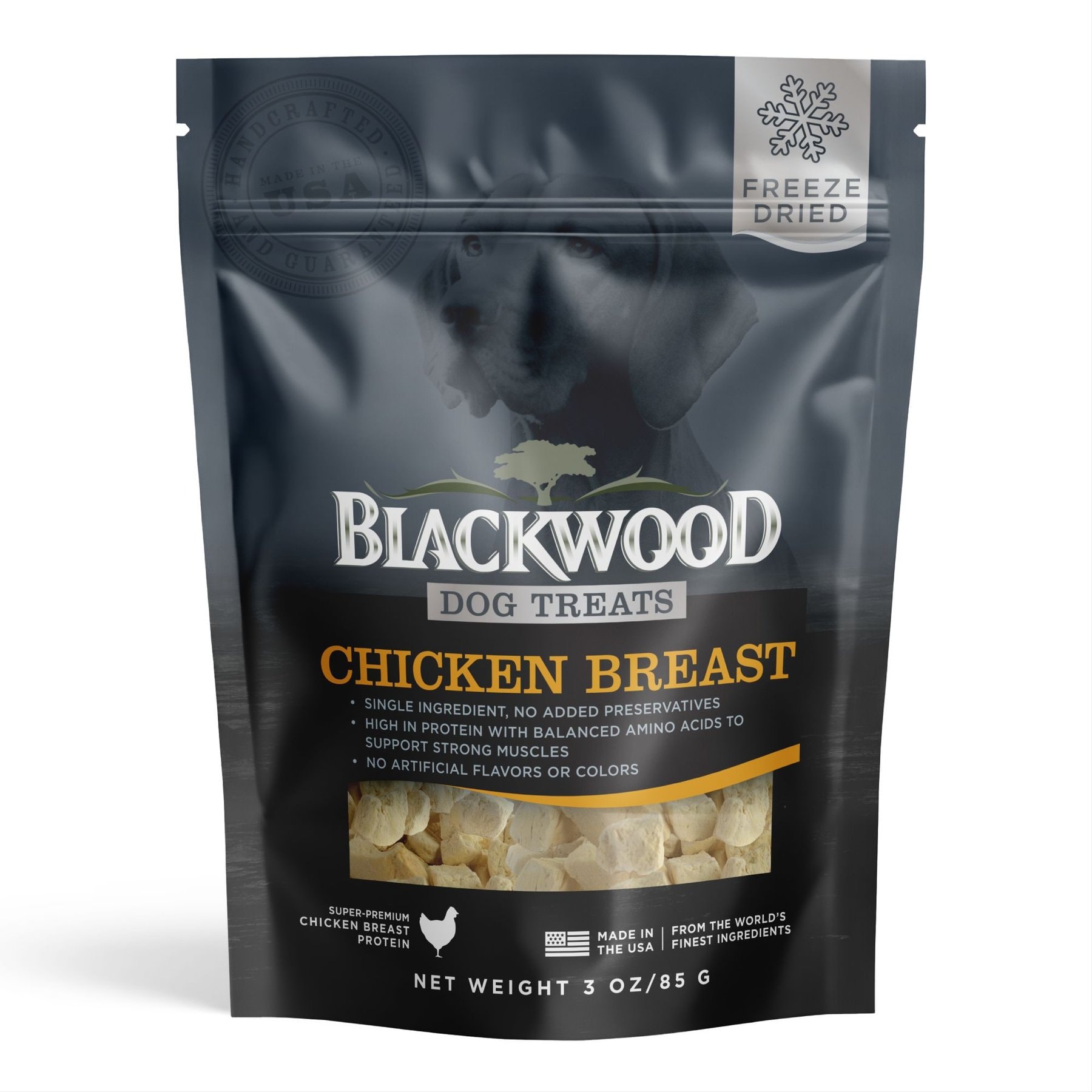
Chicken breast is the plain workhorse: lean, mild, and accepted by nearly every dog. This is one hundred percent chicken breast, freeze-dried, in a three-ounce bag, with no colors, flavors or preservatives. It is light in the pocket and breaks into small pieces, which is what a training treat needs to be. The obvious caveat is that chicken is the commonest protein in dog food and therefore the commonest suspect in a food allergy; if your dog is on an elimination diet, this is the treat to avoid rather than the one to reach for.
The high-value lure: beef liver
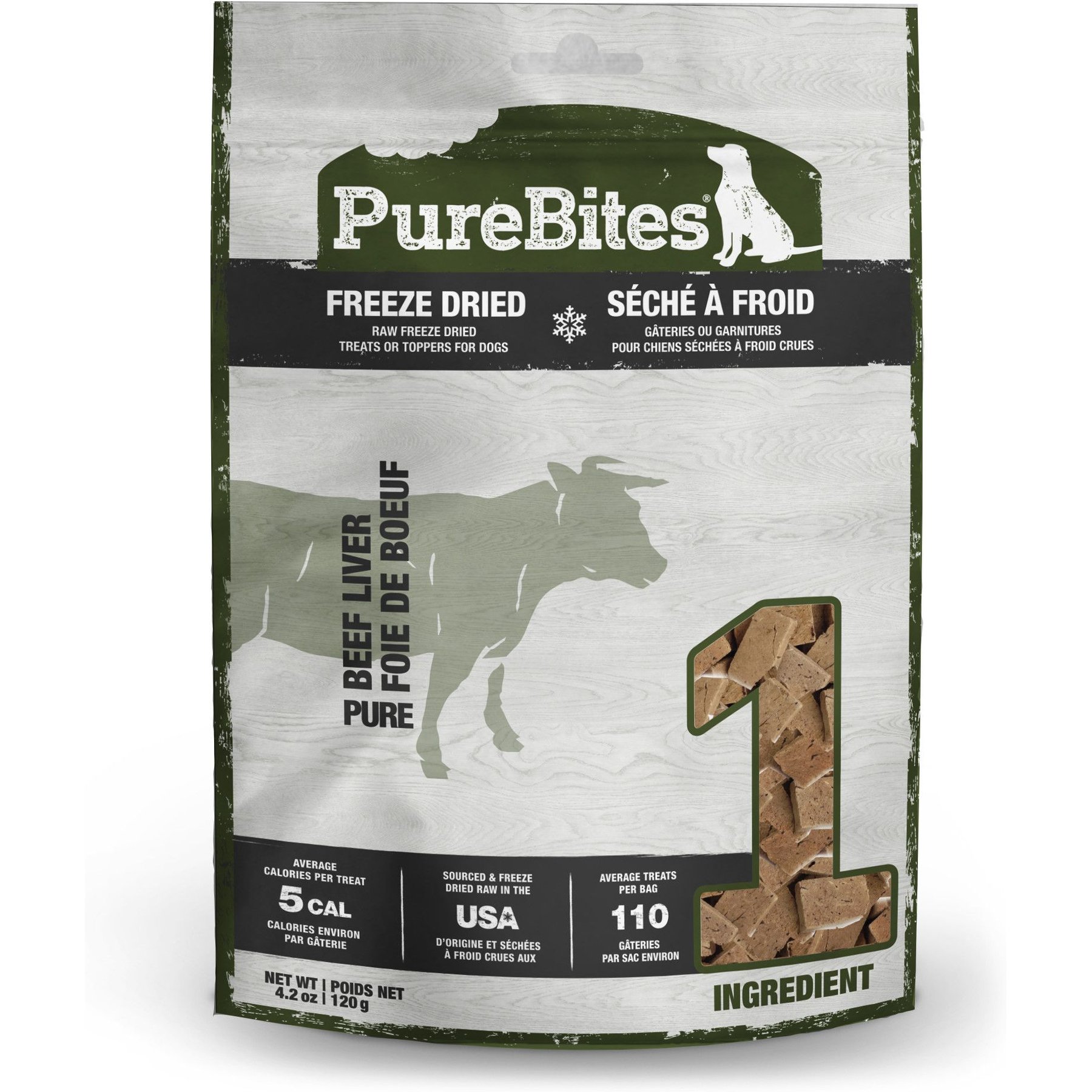
Liver is the treat trainers keep for the hard cases: recall from a squirrel, a calm sit at the vet, the first step onto a car ramp. This is a single ingredient, American beef liver, freeze-dried, in a four-ounce bag. It is also the treat most likely to blow the calorie budget, because liver is dense and irresistible, so break it small and count it. A dog that gets soft stools from a new treat has usually had too much liver too fast; introduce it over a week.
For an elimination diet: a novel protein
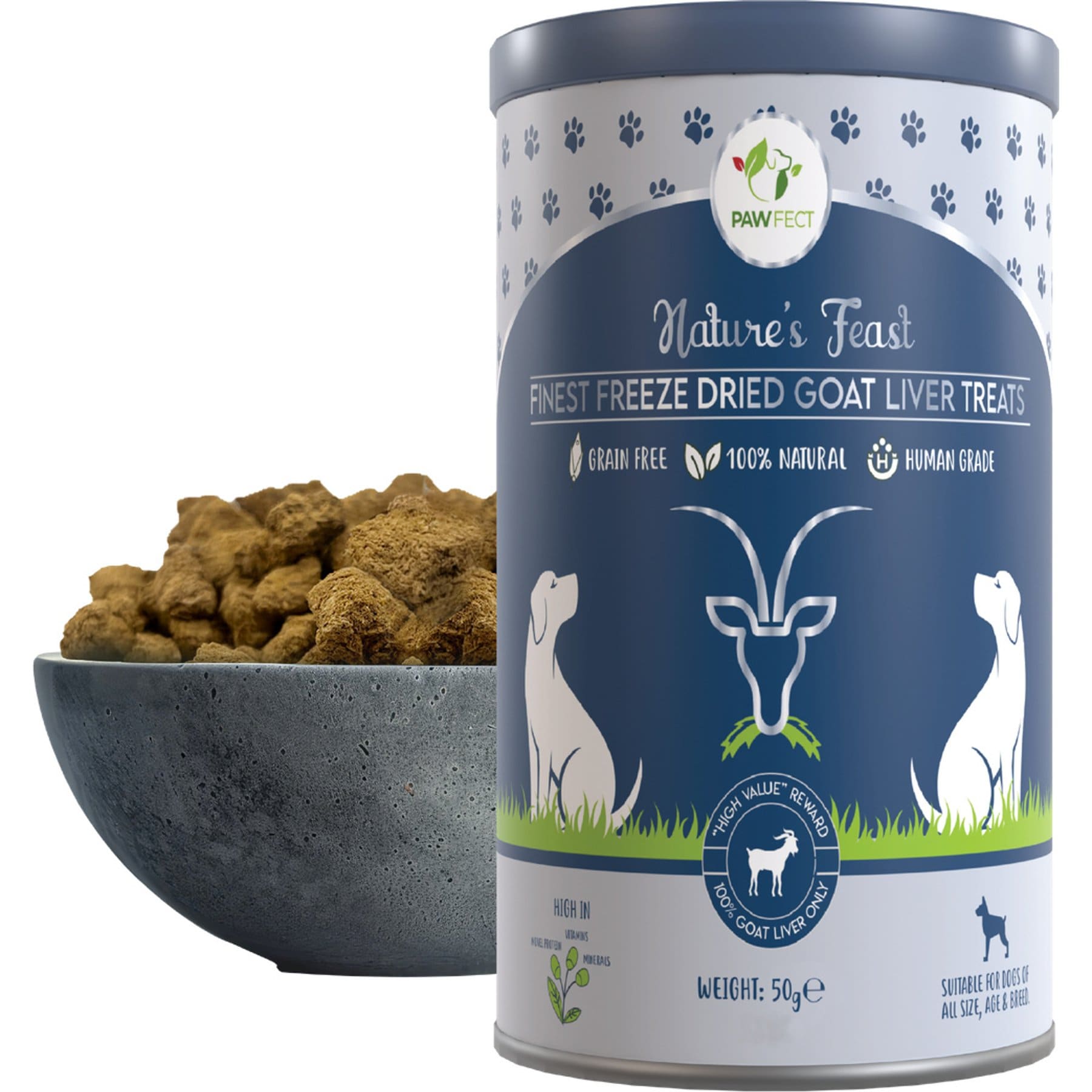
When a vet moves a dog onto a novel protein, the treats have to follow, and goat is a protein very few dogs have been exposed to. This is goat liver only, freeze-dried, in a small canister, grain-free and preservative-free. It is rich, so the same portion discipline applies as with beef liver. Check with your vet that goat fits the plan before you buy: the point of an elimination diet is that nothing unplanned goes in, and a treat is part of the diet.
For skin and coat: salmon skin
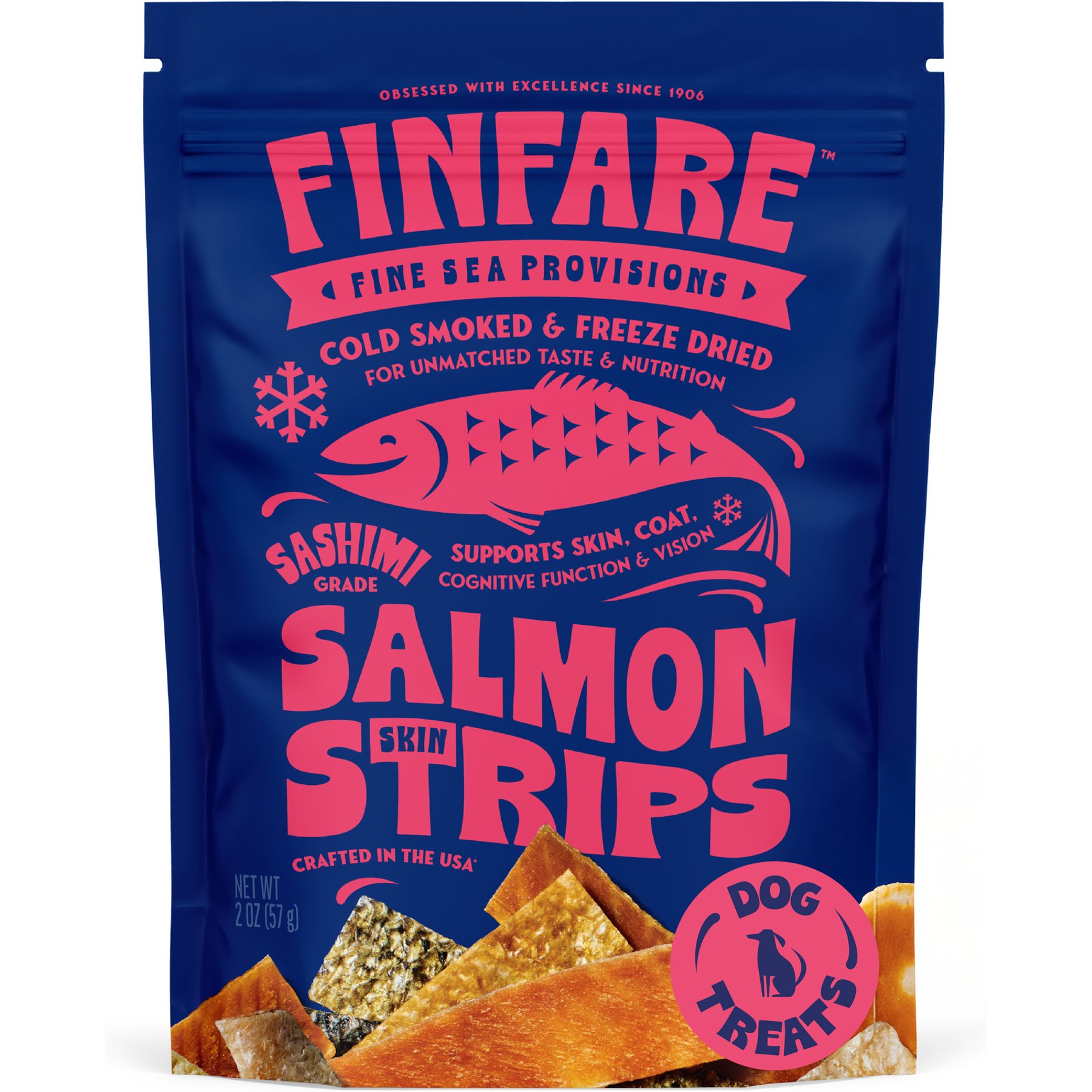
Fish skin is the single-ingredient treat with a nutritional argument beyond reward: salmon skin carries the omega-3 fatty acids that support skin and coat, covered under omega-3 EPA and DHA. These are strips of salmon skin, cold-smoked and then freeze-dried, with no fillers or preservatives. They are also fatty, which is the point and the caveat: a dog with pancreatitis history should not have them, and they count heavily against the daily allowance. Snap the strips for a small dog.
For the dog that wants something odd: whole minnows
Some dogs are unmoved by liver and lose their minds for fish. These are whole minnows, freeze-dried, nothing added, and they smell exactly as you would expect, which is why they work. Each fish is a small, complete package with bone included, softened by drying. They are a treat for the counter-top, not the pocket. Crumble for a small dog, and keep the bag sealed or the whole house will know.
Handling and storage
Single-ingredient treats have no preservatives, which is the reason to buy them and the reason to store them properly. Seal the bag after every use, keep it cool and dry, and finish it within the period on the label once opened. Freeze-dried treats that pick up moisture go soft and can spoil; if the bag smells wrong, it is. Wash your hands after handling raw-format treats, and keep them off surfaces where you prepare your own food.
For a dog that eats too fast to notice a treat, put the day's allowance in a snuffle mat or a puzzle feeder and let it work.
How this goes wrong
| What happens | Why it matters | What to do instead |
|---|---|---|
| "Healthy" treats fed by the handful | Freeze-dried liver is calorie-dense; the dog gains weight | Calories from the bag, ten percent ceiling, pieces broken small |
| Chicken treats for a dog on an elimination diet | Chicken is the commonest allergen and the diet fails | A treat made only of the diet's protein |
| Fatty fish treats for a pancreatitis dog | Fat is the trigger, whatever the ingredient count | Lean single proteins, and ask the vet |
| Jerky with no country of origin | The label tells you nothing about sourcing | Makers who name where the meat is from |
| Whole fish or long strips for a gulper | Choking | Snap and crumble |
| Opened bag left on the counter for a month | No preservatives means it spoils | Sealed, cool, dry, and finished by the date |
What to skip
- "Made with real chicken" biscuits sold as if they were single-ingredient. Read the back.
- Jerky with a marinade or glaze. Not one ingredient, and often sugar.
- Rawhide labeled as a single ingredient. A chew, not a treat, and a different conversation.
- Any treat with no calorie figure when you are managing weight.
- Raw-format treats in a household with a vulnerable person without asking the vet first.
How to choose
Decide what the treat is for. Training wants something that crumbles and is mild; a hard reward wants liver; an elimination diet wants the diet's own protein and nothing else.
Read the calories, not the ingredient count, and work back from ten percent of the dog's daily total.
Match the fat to the dog. Lean for a pancreatitis history or a weight problem; fish skin for a dog whose coat needs it.
Choose a maker who names the country of origin.
And store the bag as if it were meat, because it is.
FAQ
Frequently asked
Are single-ingredient dog treats healthier?
They are simpler, which is not quite the same thing. One ingredient means you know exactly what your dog ate, which matters for a dog with a suspected food allergy, and it means no sugars, binders or colorings padding the recipe. It does not make the treat low in calories: freeze-dried liver is dense, and a handful is a meal for a small dog. Treat them as a known quantity, keep them inside the ten percent of daily calories that veterinary nutritionists recommend for all treats, and they are a sound choice.
What is the difference between freeze-dried and dehydrated treats?
Freeze-drying removes water from frozen meat under vacuum at low temperature, so the treat is raw, light, crumbly and shelf-stable. Dehydrating and jerky-making use heat and time, so the treat is cooked or partly cooked, chewier and usually darker. Both can be a single ingredient. Freeze-dried raw carries the food-handling considerations of raw meat, so wash your hands and keep the bag away from food preparation surfaces; jerky can be a choking risk for a dog that gulps if the strips are long.
Can I use single-ingredient treats for a dog with allergies?
They are the most useful kind, because an elimination diet only works if every mouthful is accounted for. If your vet has put your dog on a single novel protein, choose a treat made only of that same protein, or of an organ from the same animal. A treat listing one meat but made in a facility that handles others is a small risk, and one to raise with your vet if the dog does not improve as expected.
How many single-ingredient treats can I give a day?
Work back from calories rather than counting pieces. Take the dog's daily calorie target, allow ten percent for all treats combined, and look up the calorie figure on the bag, which most single-ingredient treats print per piece or per gram. For a ten-kilogram dog on roughly 500 calories a day, that is 50 calories of treats, which freeze-dried liver reaches in a surprisingly small pile. Breaking pieces up for training makes the allowance go much further.
Are freeze-dried treats safe to feed raw?
Freeze-dried meat is raw meat with the water removed, and it should be handled as raw meat: hands washed after handling, the bag sealed, and no feeding on the kitchen counter. Reputable makers test batches for Salmonella and Listeria, and the risk to a healthy adult dog is low, but households with very young children, elderly or immunocompromised people, or a dog on immunosuppressive drugs, should talk to their vet before choosing raw-format treats over cooked ones.
Featured in this guide
The picks referenced above—priced and in stock at time of publication.
Affiliate links. Prices and availability change—we filter unavailable items nightly, but the retailer's page is source of truth.
Keep reading
Discussion
Talk about Single-Ingredient Dog Treats: One Line on the Label, and What It Does Not Tell You
Real questions from real pet owners. Add yours—signed-in members only, first three posts held for review.
Loading threads…