Nail Trimming for Dogs Who Hate It: A Desensitization Protocol
Fear of nail trims is one of the most reversible behavior problems in pet dogs. Here's the eight-step protocol we use, the tool choice that actually matters, and what to do the first time you hit the quick.
petsupplies.co earns a commission if you buy through the product links on this page, and the price you pay is the same either way.

Most dogs do not hate having their nails trimmed. They hate the specific way it usually happens: a rushed grab of the paw, a person who is tense, a clipper that pinches, and one bad experience that turns into a decade of dread. The good news is that fear of nail trims is one of the most reversible behavior problems in pet dogs, and the veterinary behavior literature is unusually consistent about how to fix it.
This protocol is drawn from published desensitization research and the current Fear Free and American Animal Hospital Association handling guidance. It works for puppies, and it works for a nine-year-old rescue who screams at the sight of clippers.
Why overgrown nails are a real problem, not a cosmetic one
The quick is the vascular and nervous tissue inside every nail. As the nail grows, the quick grows with it. Left untrimmed, the quick lengthens until the nail cannot be shortened without pain. Long nails then push the toes back into the paw with every step, which is what your dog is complaining about when they click across the kitchen floor.
The consequences are documented in orthopedic and rehabilitation practice. The American Kennel Club's summary is that unaddressed long nails alter weight distribution across the paw, contribute to splayed toes and flattened feet, and can accelerate arthritic changes in older dogs. The American Animal Hospital Association's nail-care resource adds the practical failure mode: nails that curl into the pad, which is a common finding on rescue intake exams and always requires veterinary treatment.
If your dog's nails click on hardwood when they walk past you, they are already too long.
How often, really
Nail growth is not a single number. It depends on breed, activity surface, age, and diet. But a working rule holds across the population:
| Dog profile | Typical trim interval |
|---|---|
| Active on concrete or asphalt several times a week | Every 4-6 weeks |
| Mostly indoor, grass or carpet | Every 2-3 weeks |
| Senior with reduced activity | Every 2-3 weeks |
| Dew claws (any dog) | Every 2-3 weeks; they do not wear |
Dew claws are the wildcard. Because they never touch the ground, they never self-file and they will curl into the leg if you ignore them. Every trim session should include them, even when the walking nails look fine.
The anatomy your first cut depends on
The quick's position is the only thing that matters when you make a cut. In light or clear nails, it is a pink stripe visible through the shell. In black nails, you cannot see it, and you have to read it from the cut surface instead.
The reliable indicator: as you shave off thin slices, the exposed cross-section changes color. A dry, chalky white ring around a dry center means the quick is still safely back. A wet-looking dark spot in the middle of the cross-section means the quick is one slice away. Stop there.
Puppies have proportionally longer quicks than adults, because the nail has not yet been reshaped by wear. Rescue dogs whose nails have been long for months often have visibly elongated quicks that recede over four to eight weeks of frequent short trims, a technique known as "chasing the quick."
Clipper or grinder: not a stylistic choice
Both tools are used in professional grooming; they are not interchangeable in every case.
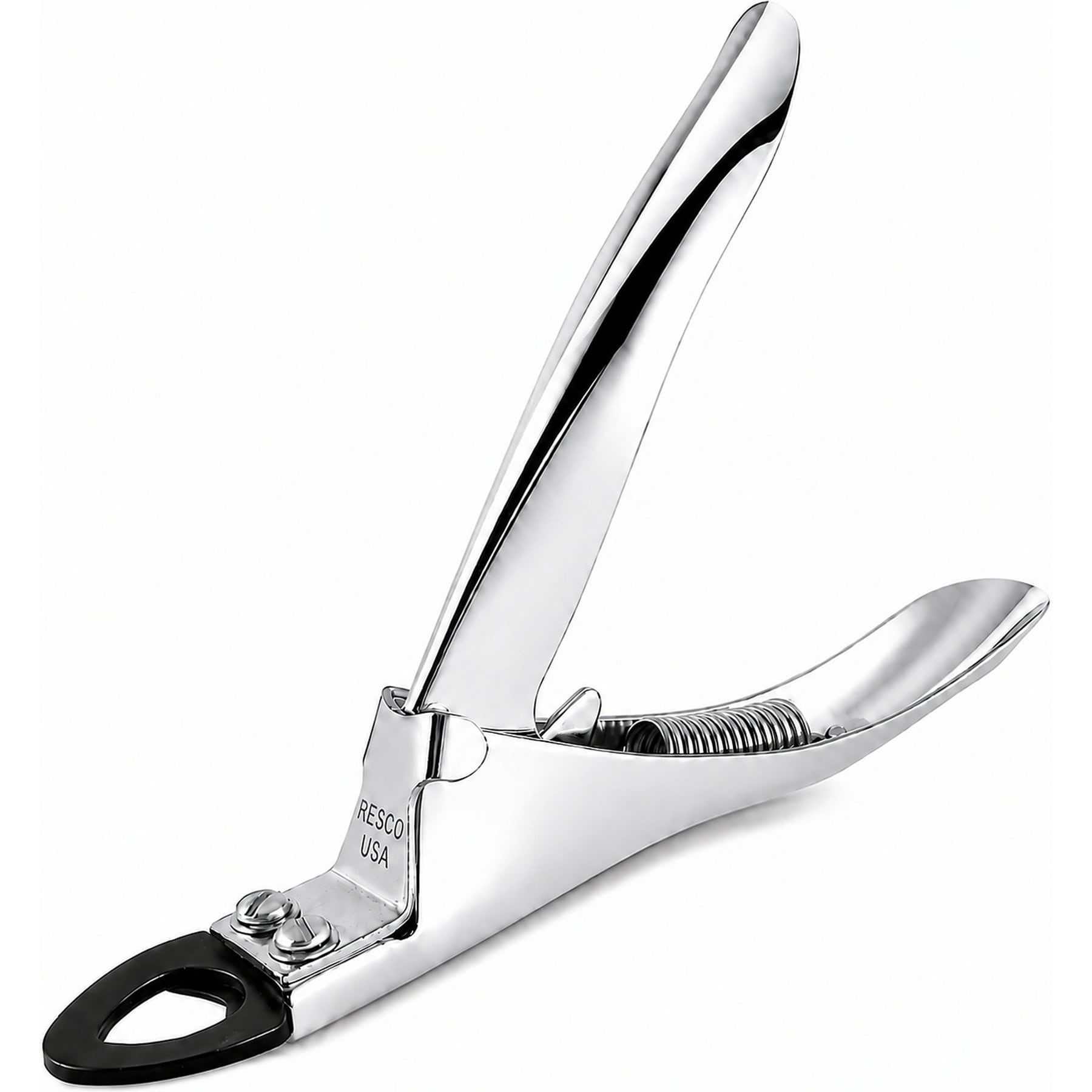
- Guillotine and scissor-style clippers cut the nail in a single motion. Faster, quieter, cheaper. Best when nails are white, quicks are easy to see, and the dog tolerates the sensation.
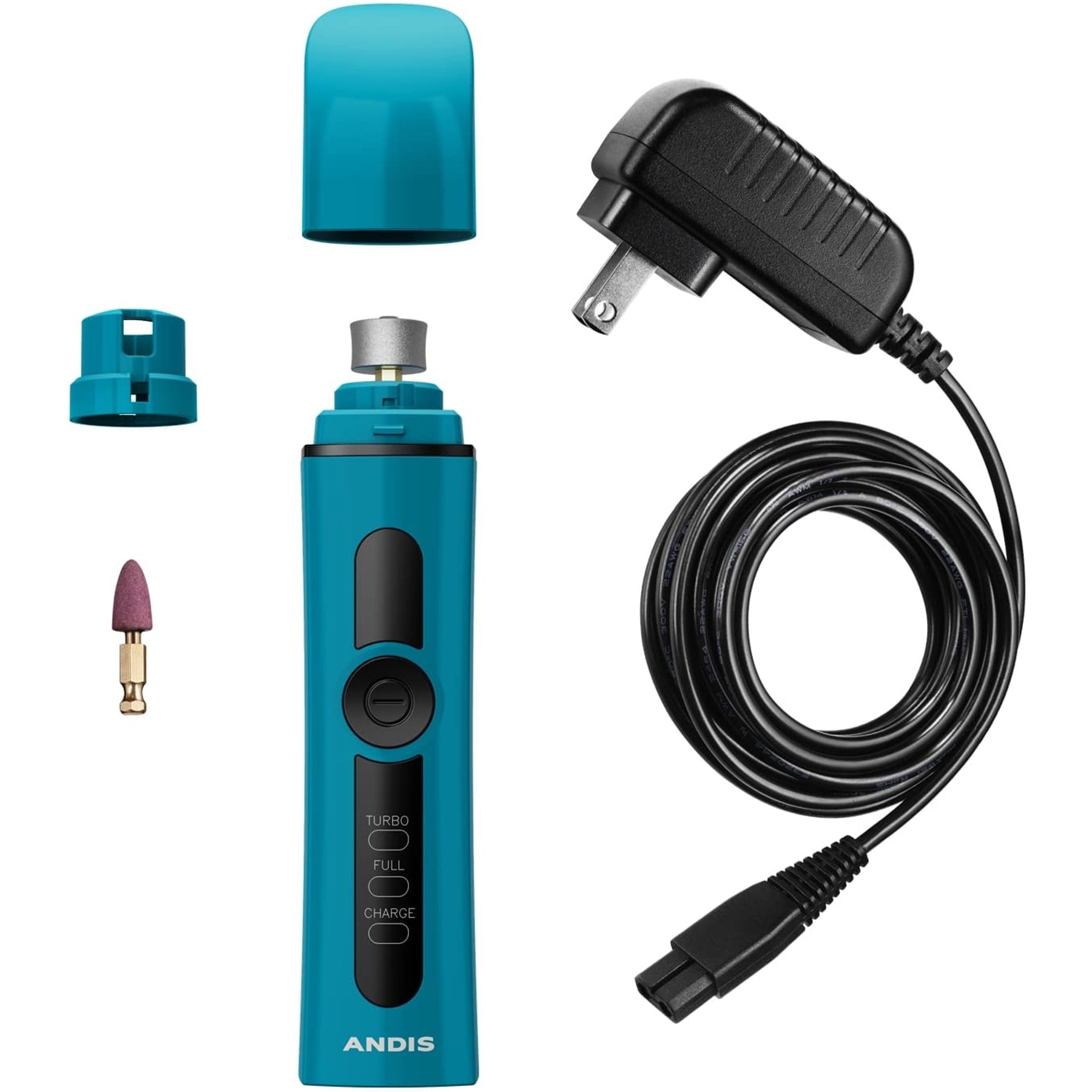
- Rotary grinders (Dremel-style) sand the nail down in fine layers. Slower per nail, but forgiving with black nails, and they finish with a rounded edge that is friendlier to sofa upholstery and human legs. Downsides: vibration, noise, and heat if you dwell on one nail for more than a second or two.
The AKC's tool guide captures the practical trade-off well: clippers are faster for a dog who is calm; grinders forgive more mistakes on a dog who is fidgeting. If you have any doubt about your dog's tolerance, start with a grinder on the lowest speed.
The one hard rule regardless of tool: keep sessions short. Three nails on a good day beats ten nails and a dog who is now afraid of the kitchen.
The desensitization protocol
Fear of nail trims almost always comes from a single overwhelming session in a dog's history. The published counter-protocol, described in the ASPCA's client resources and elaborated in most veterinary behavior texts, is desensitization and counter-conditioning: the tool and the touch appear only alongside food good enough that the dog would sell you out for another piece.
The eight-step version:
- Sit on the floor with the tool visible on a table, out of reach of the dog. Feed one small piece of chicken every few seconds for one minute. Put the tool away. That is the whole session.
- Next session, hold the tool in your hand while you feed. Do not touch the dog with it. One minute.
- Touch the dog's shoulder with the tool. Feed. Touch the elbow. Feed. Do not go to the paw yet.
- Touch a front paw with the closed tool. Feed. Do this on each paw. End the session.
- Lift a paw, touch the tool to a nail, put the paw down. Feed. No cut yet.
- Trim or grind exactly one nail. Feed a jackpot (three or four pieces in a row). End the session. Do not attempt a second nail today.
- Two nails on separate days, then three, adding one per session over the next week.
- Once the dog is stationary and relaxed for all four paws, keep every subsequent session short: aim for a full trim in two sittings, not one.
If the dog escalates at any step, back up one step and stay there for two or three sessions before advancing. The American Veterinary Society of Animal Behavior's position statement on humane dog training is clear that force-based restraint during grooming produces worse outcomes, not better ones; wrapping a dog in a towel and holding them down while trimming is the single most common way a dog goes from tolerant to phobic.
Food matters more than the tool
The reward has to outperform the aversive. Kibble does not. Use one of:
- Boiled chicken, cut small
- Freeze-dried liver or beef
- Real cheese, in pea-sized pieces
- A licking substrate (spray cheese, plain yogurt on a lick mat) that keeps the dog stationary for the entire session
For a dog with existing fear, the Fear Free professional program recommends "counter-conditioning first, mechanics second": build the food-and-tool association for a week before you attempt any cut at all. It sounds slow. It saves months.
When you hit the quick
You will, eventually. The nail will bleed more than seems reasonable for how small the vessel is. What matters is what you do next.
Apply styptic powder (Kwik Stop, ThunderEase Styptic, or any pharmacy equivalent) with steady pressure for 30-60 seconds. Cornstarch works in a pinch. Do not repeatedly lift and check; the pressure is what forms the clot. If bleeding does not stop within 15 minutes, call your veterinarian; a persistently bleeding nail is rare but worth having examined.
Then, and this is the part most owners get wrong: keep the session moving. If you end the session on the bleed, the dog remembers the bleed. If you feed a jackpot, trim one more nail on a different foot (or fake a trim without cutting), and end on a treat, the dog remembers the treat.
Our current picks
[pick:chewy-frisco-rechargeable-cordless-cat-dog-3-speed-nail-grinder-white-1p6qmst]
[pick:chewy-andis-cordless-2-speed-dog-cat-small-pet-nail-grinder-blue-69uhrq]
[pick:chewy-resco-original-dog-nail-clippers-large-chrome-1qkpoxx]
The one-page summary
- Trim every 2-6 weeks depending on activity surface. Dew claws every 2-3 weeks regardless.
- Choose a grinder for black nails or nervous dogs; clippers for calm dogs with visible quicks.
- Watch the cross-section, not the tool. Stop at the first hint of dark, moist center.
- Build tolerance with food, in one-minute sessions, before you make a single cut.
- Keep styptic powder within arm's reach every time.
- End every session on food, not on the last nail.
FAQ
Frequently asked
How often should I trim my dog's nails?
Every 2-6 weeks depending on how much your dog walks on hard surfaces. Dogs who run on concrete or asphalt several times a week may go 4-6 weeks; mostly indoor or grass-only dogs need trims every 2-3 weeks. Dew claws never touch the ground and always need a trim every 2-3 weeks regardless of activity.
Should I use a clipper or a grinder?
Clippers are faster and quieter, and work well when nails are pale and quicks are visible. Grinders are more forgiving on black nails and on dogs who fidget, because you take off thin layers instead of committing to a single cut. If you are new to at-home trims, or your dog has black nails, start with a low-speed grinder.
How do I find the quick on a black nail?
You cannot see it from outside. Instead, read the cross-section as you shave off thin slices. A dry, chalky ring around a dry center means the quick is still safely back. A wet or dark spot in the middle of the cross-section means one more slice will hit it. Stop there and move to the next nail.
What do I do if I cut the quick?
Apply styptic powder (Kwik Stop or equivalent) with steady pressure for 30-60 seconds without lifting to check. Cornstarch works in a pinch. Do not end the session on the bleed; do one more no-cut touch on a different paw and finish with a treat so your dog does not associate the whole session with pain.
My dog panics the moment I pick up the clippers. Where do I start?
Back up all the way to step one: the tool on a table across the room, chicken piece every few seconds, one minute, done. The literature is unambiguous that force-restraint during grooming makes fear worse, not better. Rebuilding the food-and-tool association for a week before you attempt any cut is faster in the long run than pushing through a scared dog.
Can a groomer or vet just do this for me?
Yes, and for some dogs that is the right answer forever. But it costs money, it stresses many dogs, and the visit does not build tolerance for the next one. Home desensitization is worth trying first, especially with a puppy or a young adult who has not yet had a bad experience.
Featured in this guide
The picks referenced above—priced and in stock at time of publication.

Affiliate links. Prices and availability change—we filter unavailable items nightly, but the retailer's page is source of truth.
Keep reading
evergreen
Wand Toys for Cats: The Toy Matters Less Than How You Move It
evergreen
Probiotics for Dogs: What the Evidence Supports, and What the Label Has to Say
evergreen
Vertical Space for Indoor Cats: Perches, Shelves and Towers That Make a Small Apartment Bigger
evergreen
Backyard Chicken Waterers: Size for Hot Days, Clean Daily, Then Plan for Freezing Ones
evergreen
Window Bird Feeders: Clean Them Often and Mark the Glass Around Them
evergreen
Scratching Posts Cats Actually Use: Tall, Heavy, Sisal, and in the Room You Live In
Discussion
Talk about Nail Trimming for Dogs Who Hate It: A Desensitization Protocol
Real questions from real pet owners. Add yours—signed-in members only, first three posts held for review.
Loading threads…