Backyard Chicken Waterers: Size for Hot Days, Clean Daily, Then Plan for Freezing Ones
A backyard flock can drink two or three times more water in hot weather, and a waterer sized for spring runs dry in July. How much capacity you need, how drinker types differ, cleaning, winter options, and five waterers compared.
petsupplies.co earns a commission if you buy through the product links on this page, and the price you pay is the same either way.

Chicken waterers are usually bought by flock size on a cool spring day. The trouble comes in July, when the same flock drinks far more, and again in January, when the water freezes solid. A good setup plans for both extremes.
This guide covers how much water a flock needs, the three main drinker types, cleaning, and winter, with five waterers from the catalog.
How much water a flock drinks
The University of Georgia Extension's management guide for the backyard flock gives a baseline. Twenty hens can drink about 1 gallon of water a day in cool weather. It adds that water use rises dramatically in hot weather.
UGA's poultry drinking water primer explains why. Birds cool themselves partly by panting, which loses water through the respiratory system. Water consumption can double or even triple during heat stress.
So a flock of 20 that drinks about a gallon on a cool day may need two or three gallons on a hot one. A smaller flock scales down from there, but the same multiplier applies.
Drinking space
UGA's guide says chickens need 1 inch of drinking space per bird. For a fountain, that means rim length. For nipple and cup drinkers, count the drinking points and how many birds can use them at once.
Too few drinking points lets dominant hens crowd others away. A low-ranking bird that cannot reach water on a hot day is the one at risk.
Fountain, nipple or cup
Fountains hold water in a tank that feeds an open trough or rim. Chickens drink the way they naturally do. The open water collects litter, droppings and feed, so fountains need frequent cleaning.
Nipple drinkers release water when a chicken pecks a valve. The water stays sealed and clean, but birds need to learn to use them.
Cup drinkers sit between the two. A small cup refills when a bird pecks it, so there is some open water but far less than a trough.
High-capacity fountain
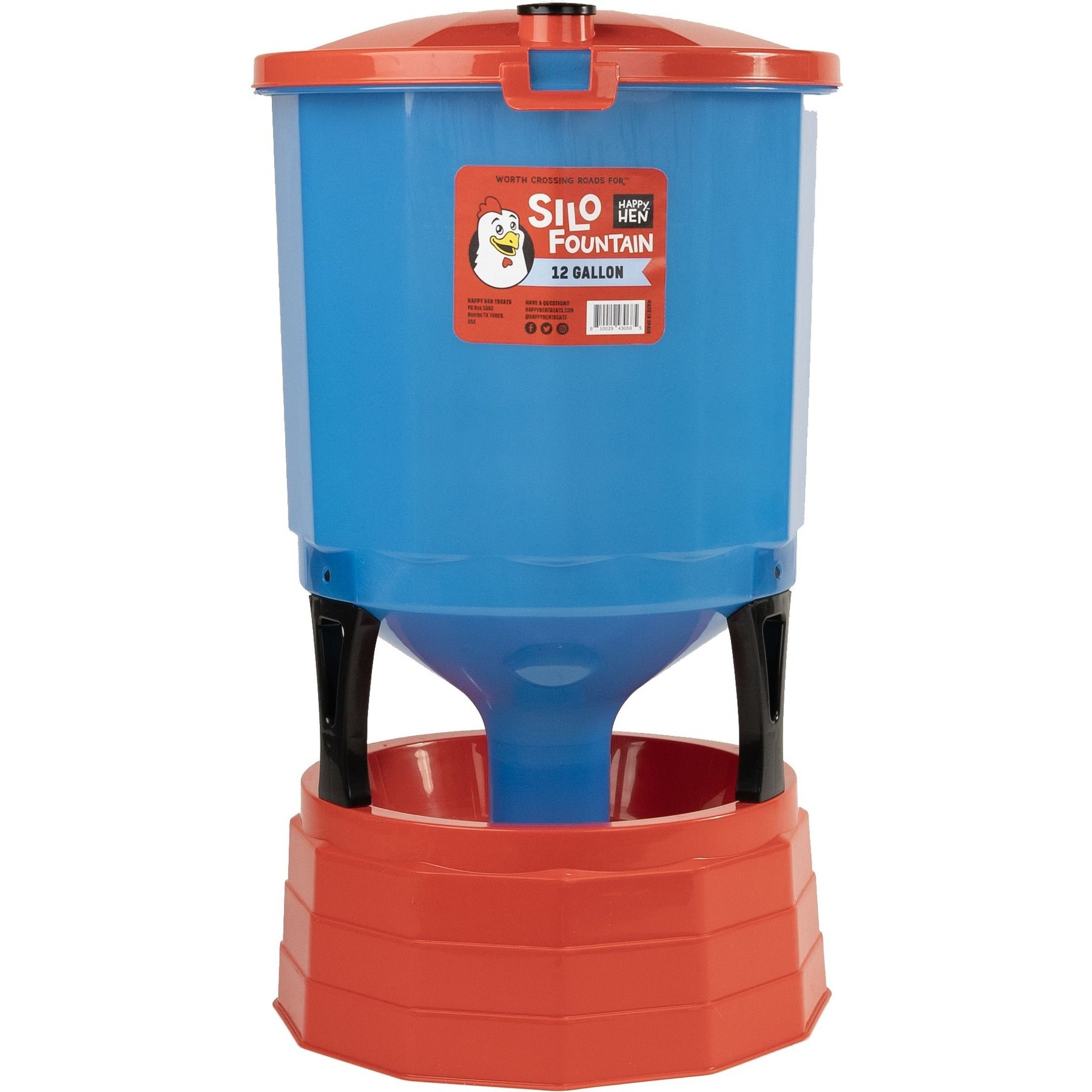
This 12-gallon fountain waterer is the largest option here. The maker says it has a wide-opening lid for cleaning and comes fully assembled. Its high capacity means fewer refills, which matters most on hot days.
A big tank does not remove the need to clean the trough. Open water still collects dirt daily.
Nipple and cup waterers
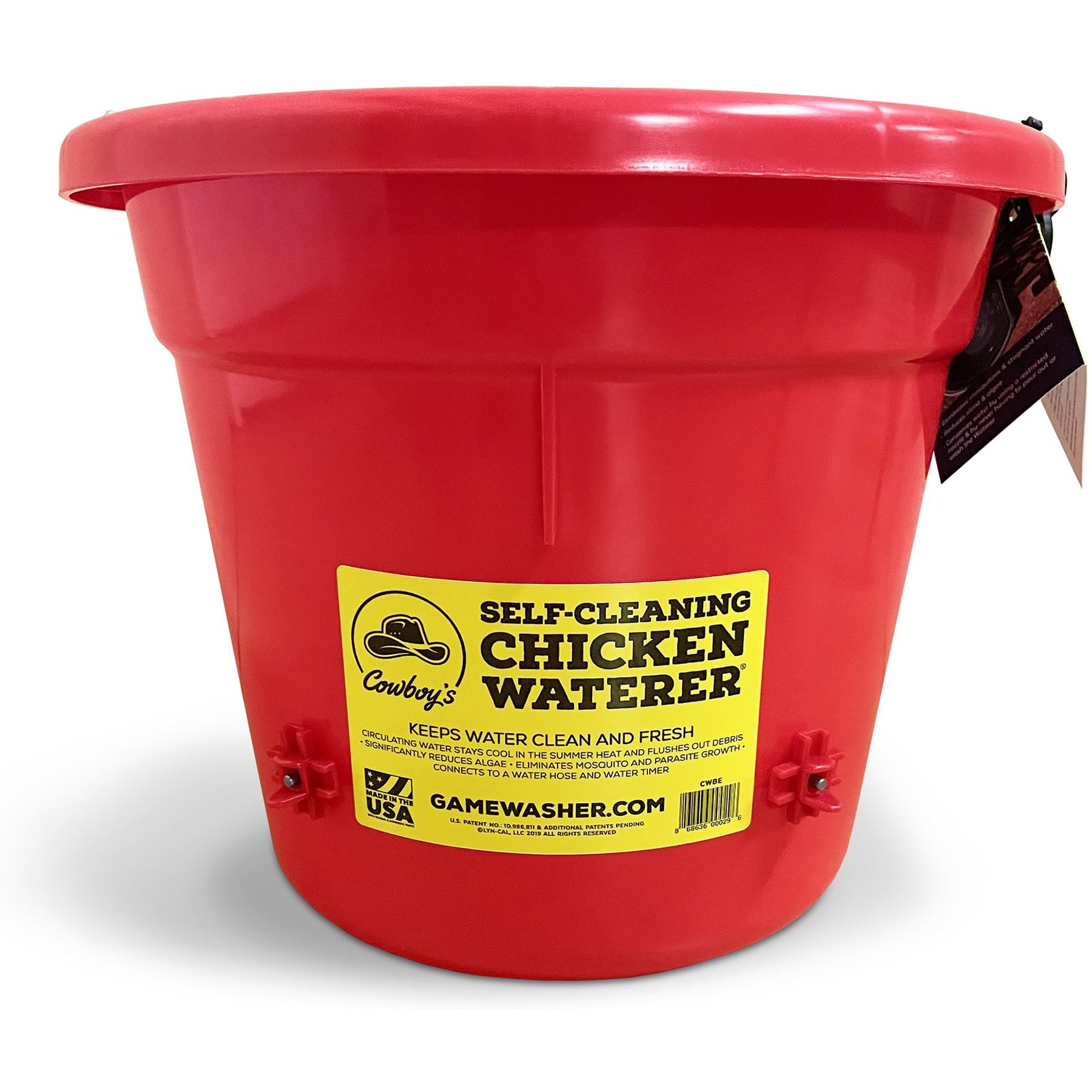
This 5-gallon self-cleaning waterer connects to a garden hose. The maker says a spray nozzle flushes dirt and debris from the bottom, and it can run on a sprinkler timer. It has four side-mounted nipples and a drain hose for overflow.
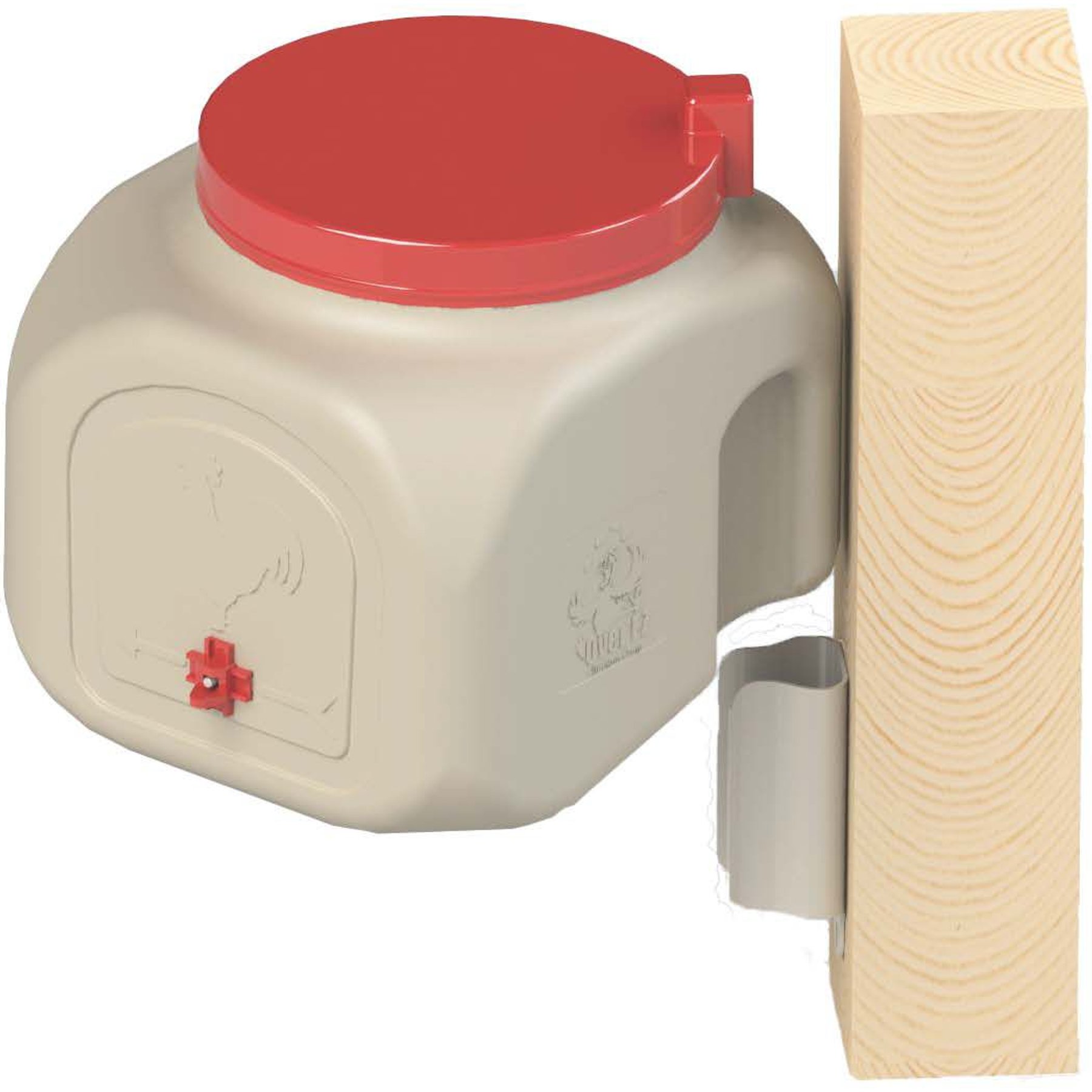
This compact 5-gallon waterer uses drip-free nipples and lets two chickens drink at once. The maker says it is fully sealed and has a port for a power cord, so you can add a deicer or circulation pump.
The same maker notes that once one chicken starts drinking, the others follow. It also advises checking water levels daily and discarding stale water before refilling.
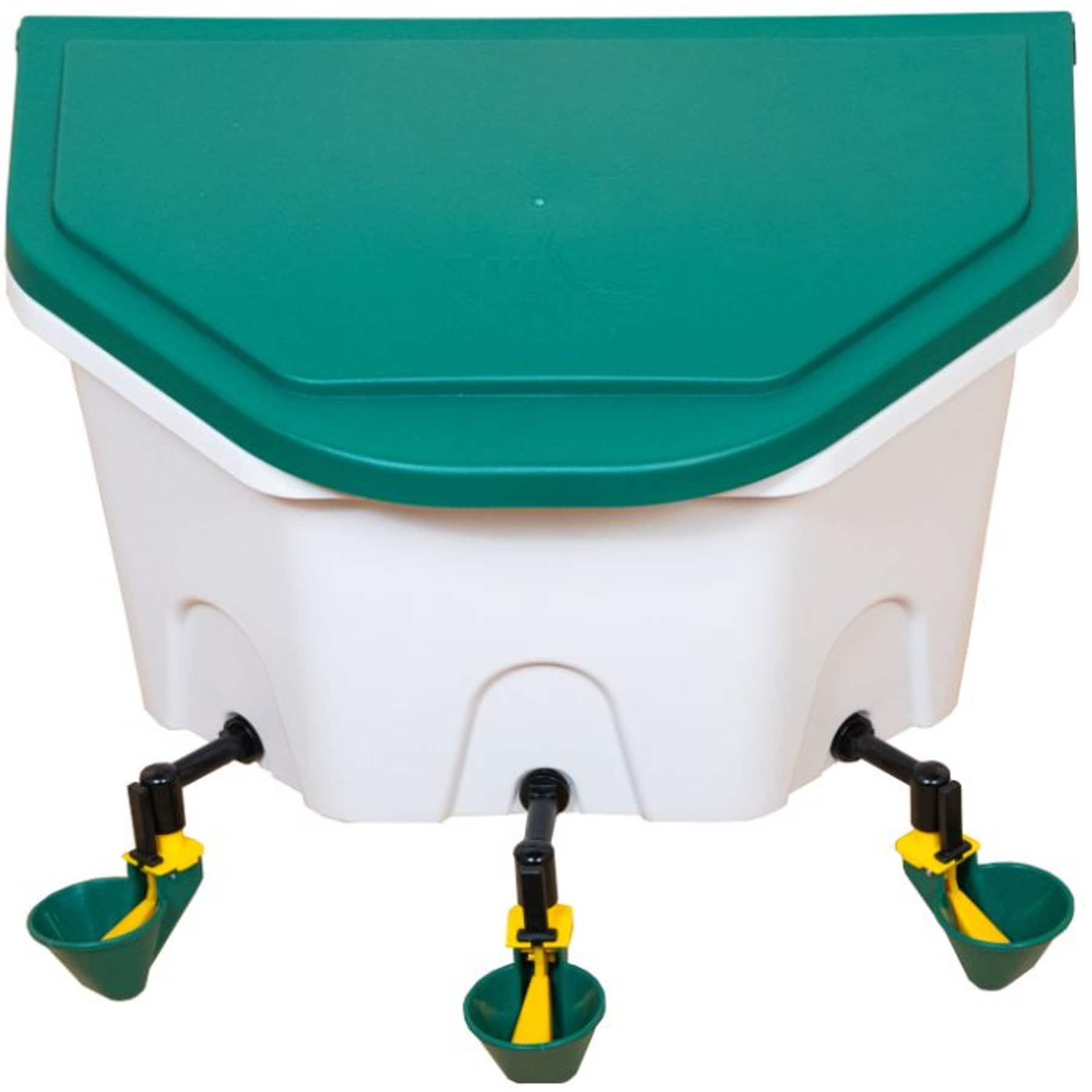
This 2-gallon drinker uses automatic cups that refill as birds peck. The maker says the enclosed reservoir helps protect water from debris.
Weight and placement
Water weighs about 8.3 lb per gallon. A full 12-gallon tank is roughly 100 lb, and even a 5-gallon waterer is over 40 lb. Plan to fill large tanks in place with a hose rather than carrying them.
Set waterers on firm, level ground so they do not tip or leak. Keep them out from under roosts, where droppings fall overnight. Shade matters in summer, both for the birds and for keeping algae down.
If your flock free-ranges, a second waterer outside the coop saves birds a trip back in on hot afternoons.
Winter: heated waterers
Frozen water is a daily problem in cold climates. A heated waterer or a deicer keeps water drinkable.
This 2.5-gallon heated waterer has a 60-watt heater to keep water from freezing. The maker says its shape stops birds roosting on it, and a filter ring lets you clean the tray without draining it.
A heater only keeps water liquid. It does not keep it clean, so the daily scrub still applies in winter. Check the waterer each morning in a cold snap, since a tripped outlet or unplugged cord can leave the flock with ice by midday.
Any electrical device in a coop needs a safe cord route. Use an outdoor-rated extension cord, keep it away from bedding and where birds can peck it, and follow the maker's instructions.
Cleaning
UGA's guide recommends scrubbing drinkers daily using a dilute chlorine bleach solution. It also mentions adding 1 to 2 teaspoons of bleach per 20 gallons of drinking water to inhibit bacteria.
Daily is the standard for a reason. Chickens scratch litter and droppings into open water, and warm water grows algae and bacteria quickly.
A simple routine:
- Empty the waterer.
- Scrub the tank, trough, cups or nipples.
- Rinse well and refill with fresh water.
- Check nipples and cups for clogs.
Raise open fountains off the floor on a level block to cut down on litter scratched into the water.
How this goes wrong
| Problem | What happens | Fix |
|---|---|---|
| Sized for cool weather | Runs dry on hot days | Plan for two to three times more water |
| Too few drinking points | Low-ranking birds go without | About 1 inch of drinking space per bird |
| Open trough on the floor | Litter and droppings in the water | Raise it, clean daily |
| Nipples without training | Birds do not drink | Watch the flock, show them, keep a backup |
| Frozen water | No water all day | Heated waterer or deicer |
Heat stress
On hot days, watch for panting. UGA's primer explains that panting is one of the main ways birds shed heat, and every breath costs water.
UGA also notes that studies of cool water in hot weather found it improved bird performance, and that any water below the bird's body temperature helps. Put waterers in shade, refill with fresh water during the hottest part of the day, and add a second waterer so no bird has to wait.
A bird that stops eating and drinking, seems weak, or cannot stand needs help right away. Contact a veterinarian who treats poultry, or your local extension office for advice.
Water quality and clogs
UGA's primer also covers what is in the water. High iron can feed bacteria that build a biofilm, and that film can block nipple drinkers. Cloudy water with silt or clay can cause leaky nipples, and hard water leaves scale in lines and valves.
A leaking nipple is more than a nuisance. UGA notes that leaky nipples wet the litter, which raises ammonia in the coop.
If nipples clog or drip often, test your water. Your county extension office can advise on water testing.
What to skip
- One waterer for a big flock in summer. Add a second in shade.
- Nipple drinkers with no backup until you have seen every bird drink.
- Open troughs on the coop floor. Raise them.
- Weekly cleaning. UGA's guidance is daily.
- Indoor extension cords in the coop. Use outdoor-rated ones.
How to choose
Count your birds and size for hot weather: two to three times the cool-weather amount, and about 1 inch of drinking space each.
Choose a fountain for simple drinking, nipples for the cleanest water, or cups as a middle ground. Add a heated waterer or deicer if water freezes where you live.
Scrub drinkers daily, check nipples and cups for clogs, and add shaded water on hot days.
FAQ
Frequently asked
How much water do backyard chickens drink?
The University of Georgia Extension says 20 hens can drink about 1 gallon a day in cool weather, and water use rises dramatically in heat. UGA's water primer adds that consumption can double or even triple during heat stress.
Are nipple waterers better than fountain waterers for chickens?
Nipple waterers keep water sealed and cleaner, but birds must learn to use them. Fountains let birds drink naturally but collect litter and droppings, so they need daily cleaning.
How often should I clean a chicken waterer?
Daily. UGA's backyard flock guide recommends scrubbing drinkers every day using a dilute chlorine bleach solution.
How do I keep chicken water from freezing?
Use a heated waterer or add a deicer. Some waterers have a cord port for a deicer. Route cords safely with an outdoor-rated extension cord, away from bedding and pecking.
How much drinking space do chickens need?
UGA's guide says 1 inch of drinking space per bird. With nipple or cup drinkers, add enough drinking points that low-ranking birds are not crowded out.
Featured in this guide
The picks referenced above—priced and in stock at time of publication.
Affiliate links. Prices and availability change—we filter unavailable items nightly, but the retailer's page is source of truth.
Keep reading
evergreen
Wand Toys for Cats: The Toy Matters Less Than How You Move It
evergreen
Probiotics for Dogs: What the Evidence Supports, and What the Label Has to Say
evergreen
Vertical Space for Indoor Cats: Perches, Shelves and Towers That Make a Small Apartment Bigger
evergreen
Window Bird Feeders: Clean Them Often and Mark the Glass Around Them
evergreen
Scratching Posts Cats Actually Use: Tall, Heavy, Sisal, and in the Room You Live In
evergreen
Single-Ingredient Dog Treats: One Line on the Label, and What It Does Not Tell You
Discussion
Talk about Backyard Chicken Waterers: Size for Hot Days, Clean Daily, Then Plan for Freezing Ones
Real questions from real pet owners. Add yours—signed-in members only, first three posts held for review.
Loading threads…