Window Bird Feeders: Clean Them Often and Mark the Glass Around Them
A window feeder brings birds within a few inches of the glass, which is why cleaning and window markings matter. What Project FeederWatch and the Cornell Lab advise, and five window feeders sorted by what you want to offer.
petsupplies.co earns a commission if you buy through the product links on this page, and the price you pay is the same either way.

Window bird feeders are sold as the easy way to see birds up close. They are, but they bring birds right to the glass and gather them in one spot. That makes two jobs more important than the feeder itself: keeping it clean, and making the window easier for birds to see.
This guide covers mounting, cleaning, glass safety and indoor cats, with five window feeders from the catalog.
Why cleaning matters more at a feeder
Project FeederWatch, run by the Cornell Lab of Ornithology, explains in its feeding birds guide that birds gathered at feeders can spread pathogens. That happens through direct contact or indirectly through droppings.
FeederWatch gives examples. House finch eye disease spreads through eye discharge. Salmonella and E. coli spread when birds eat food contaminated with droppings.
A window feeder concentrates birds in a small tray. Seed hulls, droppings and wet seed collect quickly, so the cleaning schedule is part of owning one.
How often to clean
FeederWatch suggests cleaning seed feeders regularly, for example every week or two. It advises cleaning more often during heavy use or wet weather.
Its method is simple:
- Take the feeder apart and scrub off debris.
- Wash the parts in warm water with dish soap and rinse well.
- Let everything dry completely before refilling.
For disinfection, FeederWatch suggests soaking cleaned parts for 10 minutes in a diluted bleach solution of one part bleach to nine parts water. Rinse off the bleach and dry fully before reassembly.
A feeder that comes off the window easily gets cleaned more often. That is worth checking before you buy.
Mounting on glass
Most window feeders attach with suction cups. Clean the glass and the cups before mounting, and press each cup firmly.
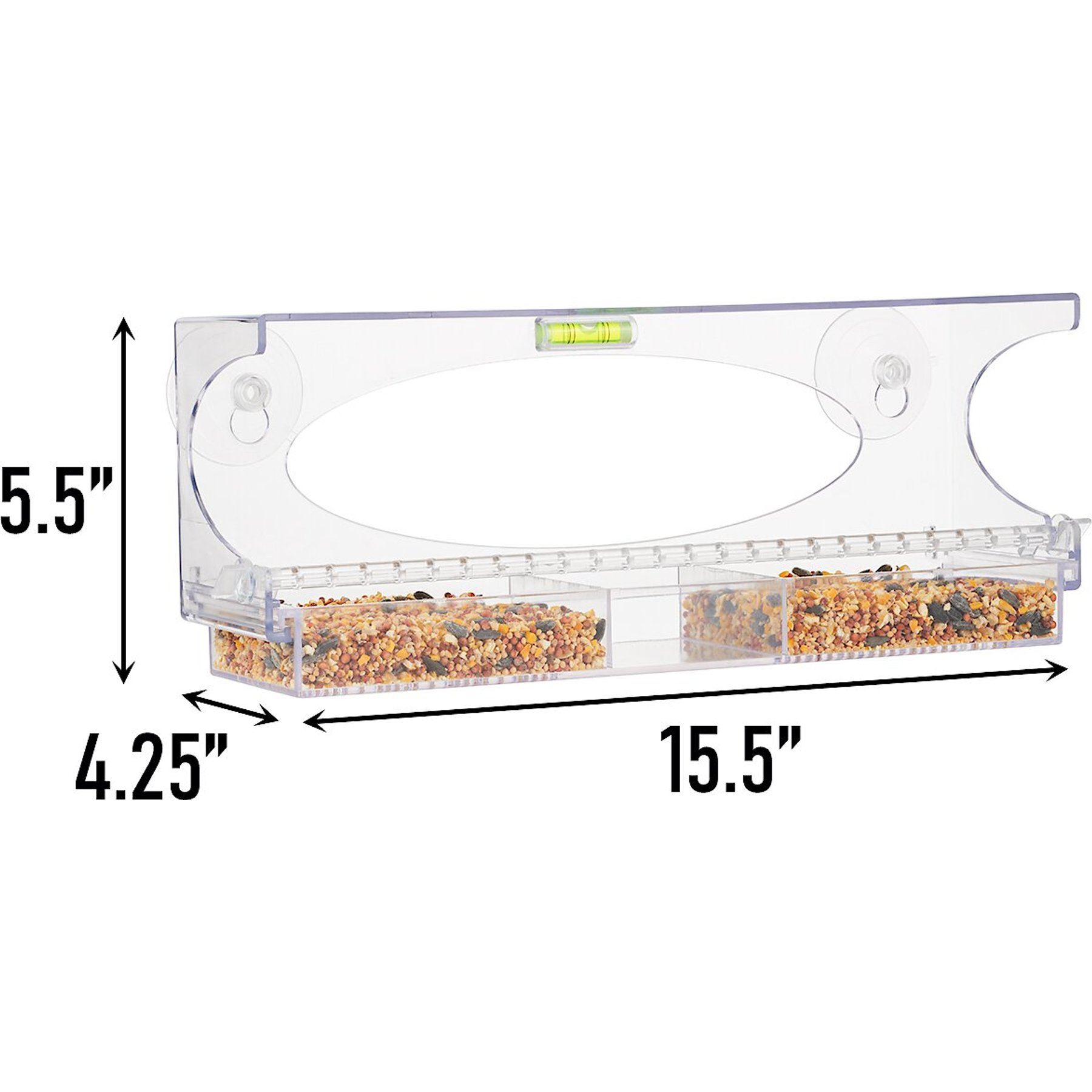
This large clear feeder mounts with suction cups and has a horizontal level indicator to help set it straight. The slide-out tray holds seed on one level, with a separate compartment for fruit slices or water.
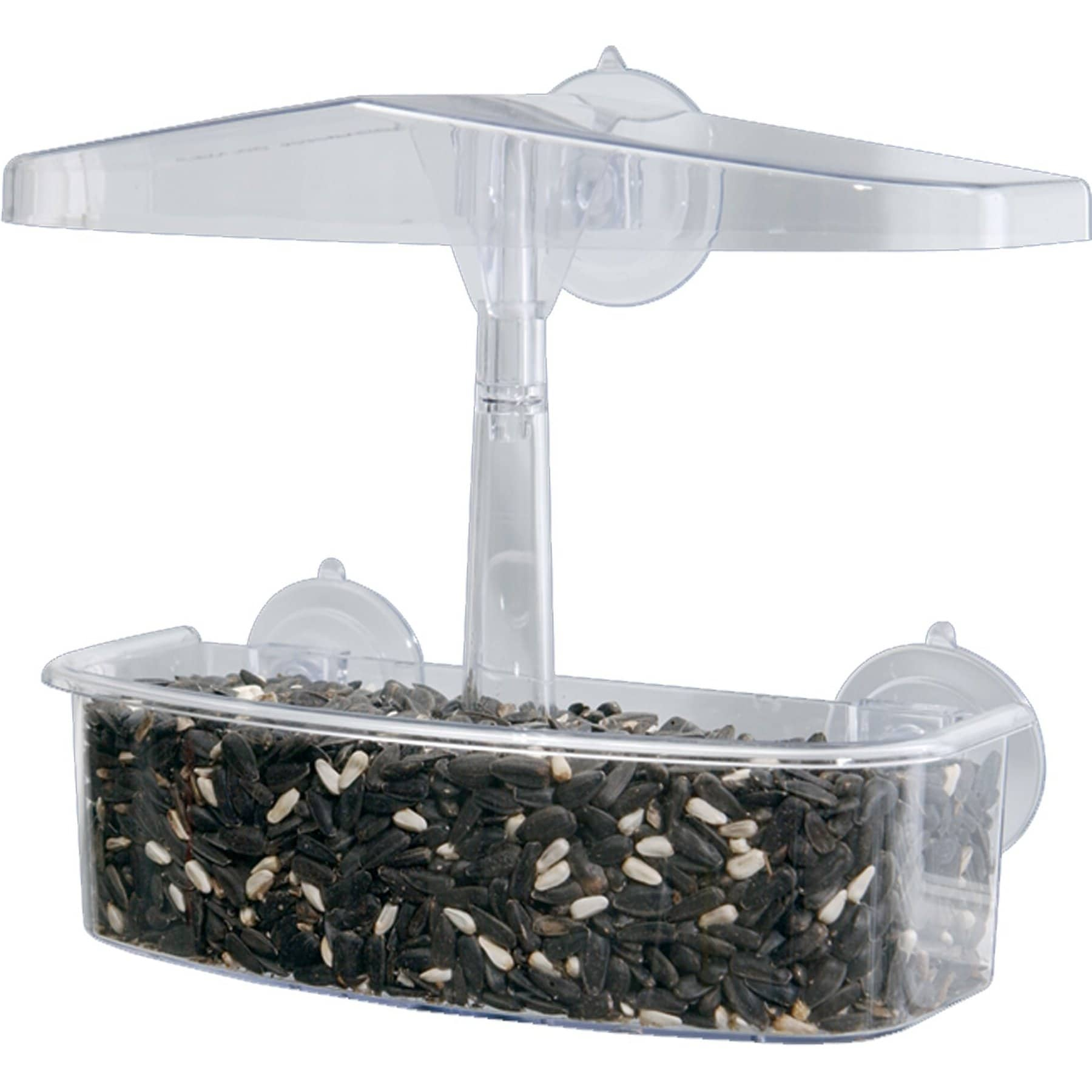
This smaller clear feeder uses four side-mounted suction cups, so the view through the front stays clear. The maker says the channeled, perforated tray drains water away from the seed, lifts out for filling, and the feeder detaches without removing the mounting.
A draining tray keeps seed drier, which matters because wet seed spoils and needs more frequent cleaning.
Choosing the window
Pick a window you can reach from outside without a ladder, since the feeder has to come down every week or two. A ground-floor window or one next to a deck is easiest.
Choose a window you actually look through: beside a desk, the kitchen table or a favorite chair. A feeder on a window you rarely pass will be forgotten, and a forgotten feeder is a dirty one.
Look at what sits below the window. Hulls and dropped seed fall straight down. FeederWatch notes that seed on the ground can attract rodents, so avoid windows above a doorstep or a flower bed you want to keep tidy. Sweep up spilled seed when you clean the feeder, and wear a mask while you do it, as FeederWatch suggests.
Feeders for different foods
What you offer decides which birds visit. Seed suits finches, chickadees and sparrows. Fruit, mealworms and suet widen the range.
This feeder has a long tray that can hold fruit, mealworms or suet as well as seed, with a clear tapered cover to shield food from weather. The maker lists visitors such as cardinals, chickadees, finches, jays, juncos and nuthatches. It is made in the USA.
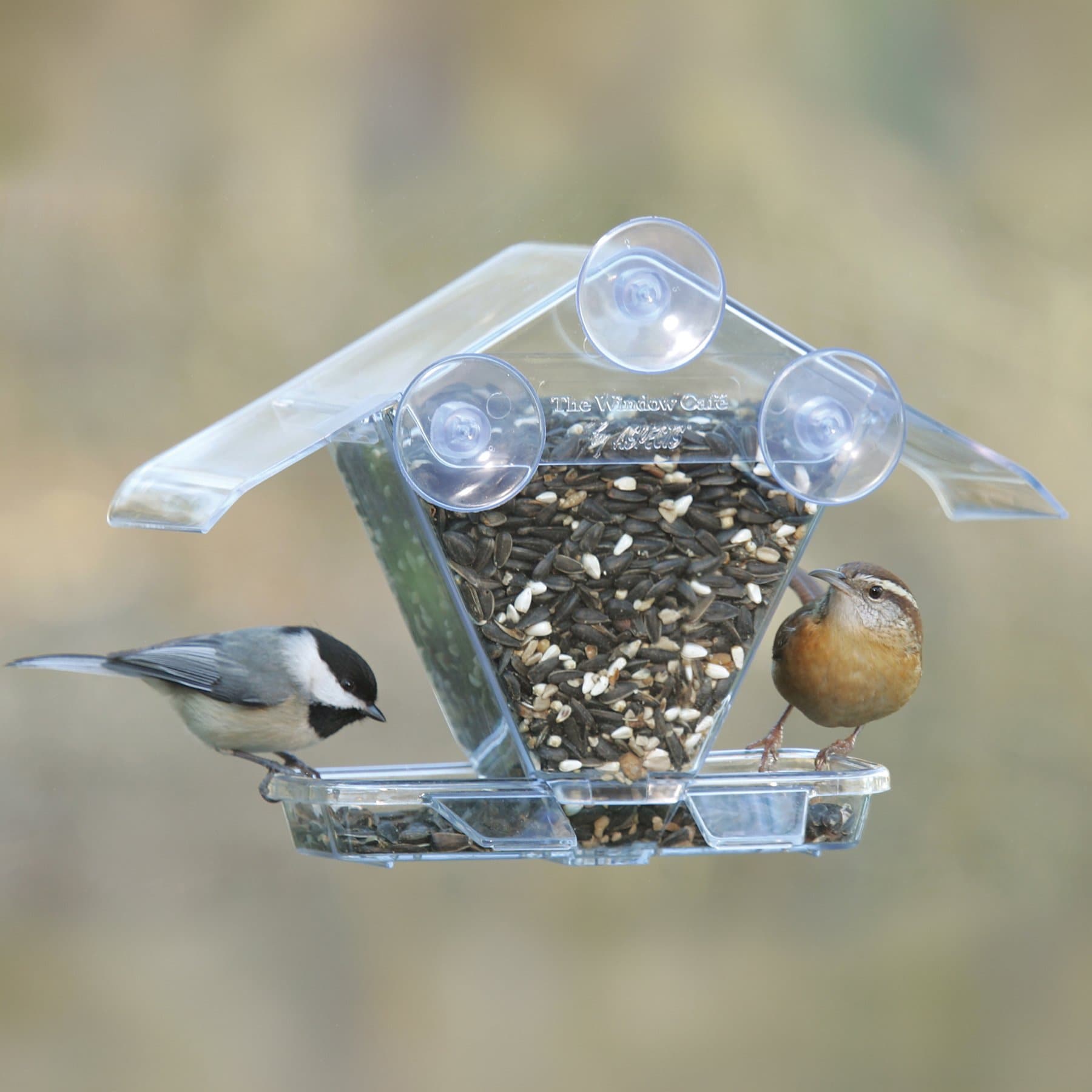
This hopper-style feeder is also made in the USA. It has a roof for rain protection and a seed tray that slides out for filling and cleaning. The maker says it is made of UV-stabilized polycarbonate.
This compact feeder has a sliding seed tray with four ports so several small birds can feed at once. The maker names finches, chickadees, titmice and sparrows as typical visitors.
Make the glass visible to birds
Window collisions are common. The Cornell Lab's article on why birds hit windows says older advice about safe distances for feeders is no longer thought to be valid. If you have windows near a feeder, make those windows bird-friendly.
For small birds, Cornell suggests markings such as decals spaced 2 inches apart across the entire outer surface of the glass. FeederWatch gives the same 2-inch spacing and adds two more steps: screens on the outside of windows, and dimming lights at night during migration.
Cornell specifies the outer surface of the glass, so apply markings outside.
Indoor cats and window feeders
A window feeder can give an indoor cat something to watch. That works only if the cat stays inside.
FeederWatch strongly recommends keeping pet cats indoors. It notes that cats kill hundreds of millions of birds each year, and that feeder birds are easy prey.
Check that the window screen is secure before a cat starts sitting at a busy feeder. A cat that lunges at the glass can push out a loose screen.
How this goes wrong
| Problem | What happens | Fix |
|---|---|---|
| Cleaning skipped | Disease can spread among visitors | Clean every week or two, more in wet weather |
| Wet seed in the tray | Spoiled food | Choose a draining tray, refill smaller amounts |
| Unmarked glass nearby | Collisions | Decals 2 inches apart on the outside |
| Suction cups on dirty glass | Feeder falls | Clean glass and cups before mounting |
| Cat allowed outside | Birds killed near the feeder | Keep cats indoors |
When you see sick birds
A window feeder is a kind of tray feeder, and FeederWatch has specific advice for trays. If you see birds with signs of a disease spread through droppings, such as salmonella poisoning or trichomoniasis, it suggests considering retiring tray feeders. Trays collect droppings that later birds then eat.
For eye disease, such as the crusty, swollen eyes of house finch conjunctivitis, regular cleaning and disinfection are the main tools.
FeederWatch also recommends wearing gloves whenever you handle feeders and washing your hands thoroughly after cleaning or filling them.
Food care in a small tray
What goes in the tray needs care too. FeederWatch advises throwing out fruit that turns moldy, because some molds make toxins harmful to birds. It also notes that hulled sunflower seed spoils more quickly than seed in the shell, so keep it dry.
Fill a window tray with what birds will finish in a day or two. A small, fresh portion is easier to keep clean than a heaped tray that sits through rain.
FeederWatch asks people not to use feeders that cannot be thoroughly washed, such as wooden ones. The clear plastic and polycarbonate feeders here wash easily by hand.
What to skip
- A feeder you cannot easily remove. It will not get cleaned.
- Overfilling the tray. Smaller amounts stay drier and fresher.
- Relying on distance alone to prevent collisions. Mark the glass.
- Markings on the inside of the window. Put them outside.
- Letting a cat outdoors near the feeder. Keep cats inside.
How to choose
Pick the food you want to offer, then a feeder built for it: seed trays for small songbirds, a long tray for fruit and mealworms, or a hopper with a roof for wet climates.
Choose one that comes off the window easily and has a tray that drains or lifts out. Plan to clean it every week or two, more in wet weather.
Mark the outside of nearby glass with decals 2 inches apart, and keep your cats indoors.
FAQ
Frequently asked
How often should I clean a window bird feeder?
Project FeederWatch suggests cleaning seed feeders every week or two, and more often during heavy use or wet weather. Take the feeder apart, scrub it, wash with warm soapy water, rinse and let it dry completely.
How do I disinfect a bird feeder?
FeederWatch suggests soaking cleaned parts for 10 minutes in one part bleach to nine parts water, then rinsing off the bleach and letting the parts dry completely before putting the feeder back.
Do window feeders cause birds to hit windows?
Collisions are common near any glass. The Cornell Lab says older advice about safe feeder distances is no longer thought valid, and recommends making nearby windows bird-friendly with markings about 2 inches apart on the outside of the glass.
Will a window feeder stick to any window?
Most use suction cups, which hold best on clean, smooth glass. Clean the glass and cups before mounting, press firmly, and check the cups regularly, especially after cold nights.
Is a window feeder good for indoor cats?
It can give an indoor cat something to watch. Project FeederWatch strongly recommends keeping cats indoors to protect birds, so check that screens are secure and keep the cat inside.
Featured in this guide
The picks referenced above—priced and in stock at time of publication.

Affiliate links. Prices and availability change—we filter unavailable items nightly, but the retailer's page is source of truth.
Keep reading
evergreen
Wand Toys for Cats: The Toy Matters Less Than How You Move It
evergreen
Probiotics for Dogs: What the Evidence Supports, and What the Label Has to Say
evergreen
Vertical Space for Indoor Cats: Perches, Shelves and Towers That Make a Small Apartment Bigger
evergreen
Backyard Chicken Waterers: Size for Hot Days, Clean Daily, Then Plan for Freezing Ones
evergreen
Scratching Posts Cats Actually Use: Tall, Heavy, Sisal, and in the Room You Live In
evergreen
Single-Ingredient Dog Treats: One Line on the Label, and What It Does Not Tell You
Discussion
Talk about Window Bird Feeders: Clean Them Often and Mark the Glass Around Them
Real questions from real pet owners. Add yours—signed-in members only, first three posts held for review.
Loading threads…