Dog Carrier Backpacks for Hiking: Fit the Dog First, Then Plan for Heat and Rest Stops
A carrier backpack lets a small or tiring dog ride part of the trail, but only if it fits the dog and you. How to measure, what to look for, heat and paw checks, and five carrier packs sorted by who each one suits.
petsupplies.co earns a commission if you buy through the product links on this page, and the price you pay is the same either way.

A dog carrier backpack is often bought for the view: a small dog riding high with its head out on a summit trail. The pack that actually works is the one that fits the dog's body and the owner's back, and that is a measuring job, not a style choice.
This guide covers fit, the two main designs, trail safety, and five packs from the catalog.
Who a carrier pack is for
A carrier suits a dog that can walk part of a hike but not all of it. That includes small dogs with short legs, older dogs that tire, and dogs recovering from an injury with a veterinarian's approval to go out.
It also suits a stretch of trail a dog should not walk, such as hot rock, sharp scree or a crowded section.
A carrier is not a fix for a dog that cannot handle exercise at all. A dog with osteoarthritis or a heart or breathing problem may still get hot and stressed riding in a pack. Ask your veterinarian before a long outing.
Measure before you buy
Several of these listings carry the same instruction: measure for the right fit. Brands size their packs by the dog's measurements and weight, not by breed name alone.
Check the brand's size chart for the measurements it asks for. They usually include the dog's weight and one or more body measurements. Measure with a soft tape while the dog stands.
Then check your own side. Weigh the dog and add the pack, water and gear. Carrying that load for hours is different from carrying it across a parking lot. Try a loaded walk around the neighborhood before a real hike.
Forward-facing packs
Forward-facing packs hold the dog upright with its head and front legs out. The dog sees the trail, and you can feel it shift.
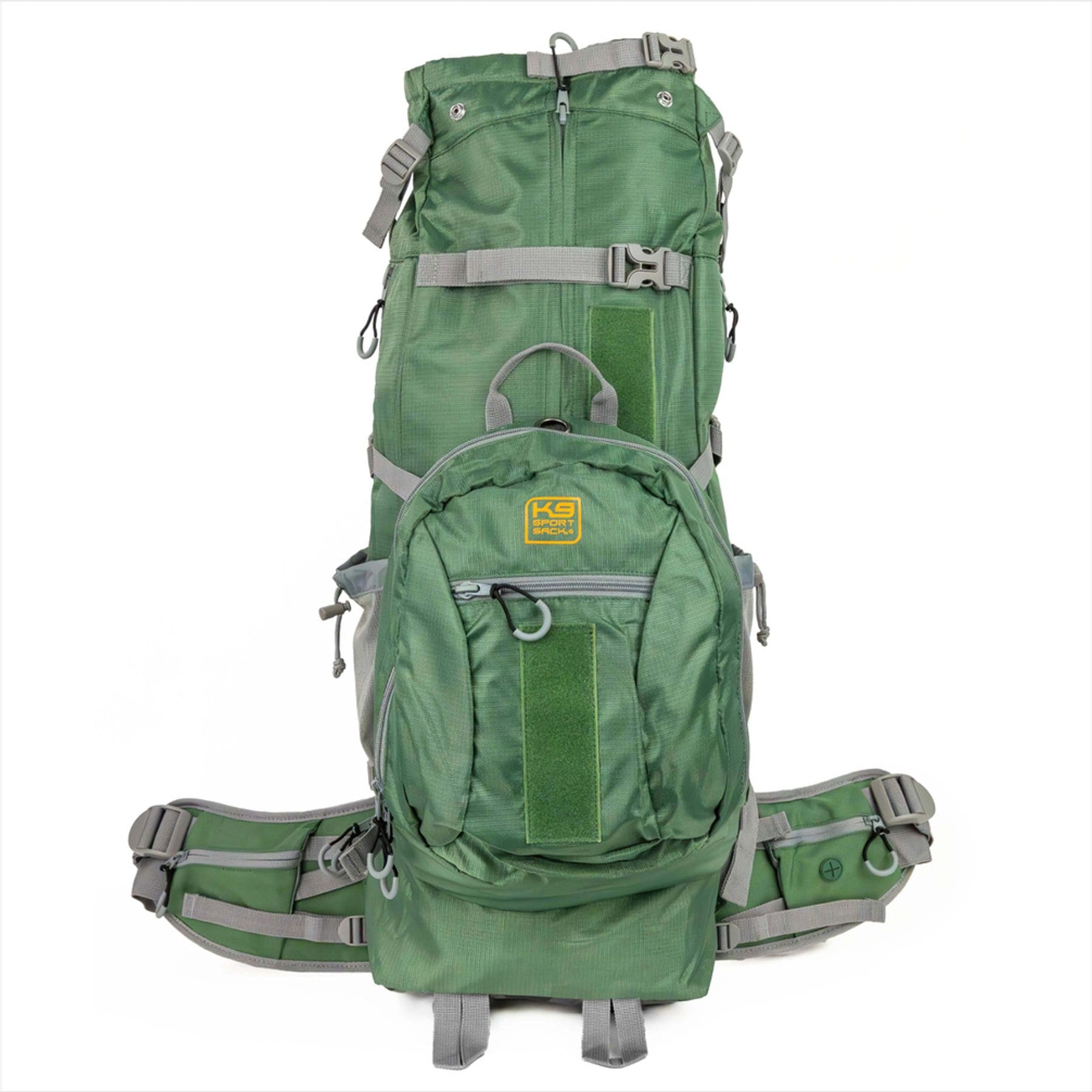
This extra-large forward-facing pack is the most gear-heavy option here. The listing describes inner padding, adjustable shoulder and torso straps, a detachable sun and rain hood, water bottle pockets, gear loops and a built-in waste bag dispenser. It can also be used as a regular hiking pack without the dog.
A lighter forward-facing pack suits shorter outings. This large pack has ventilated sides, a collar hookup D ring, a thick bottom rest pad and slotted foam shoulder straps, according to the listing.
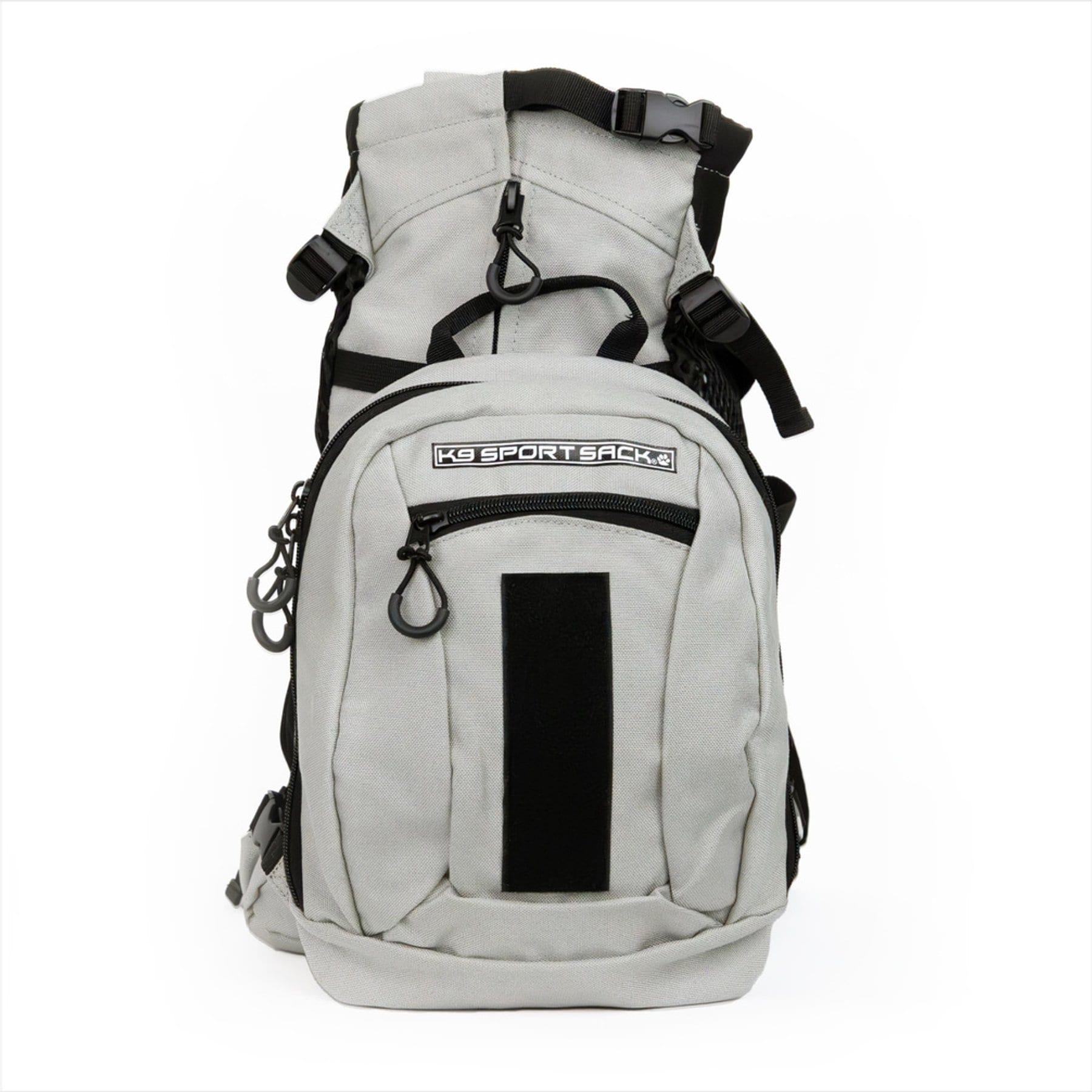
This minimalist version adds adjustable lumbar support straps and shoulder padding, with ventilated side panels and side pockets.
If the pack has a collar or harness clip, use it every time. A startled dog can try to climb out.
Enclosed packs
Enclosed packs hold the dog inside a ventilated compartment. They suit a nervous dog, a dog that tries to climb out, or trails where you need your hands.
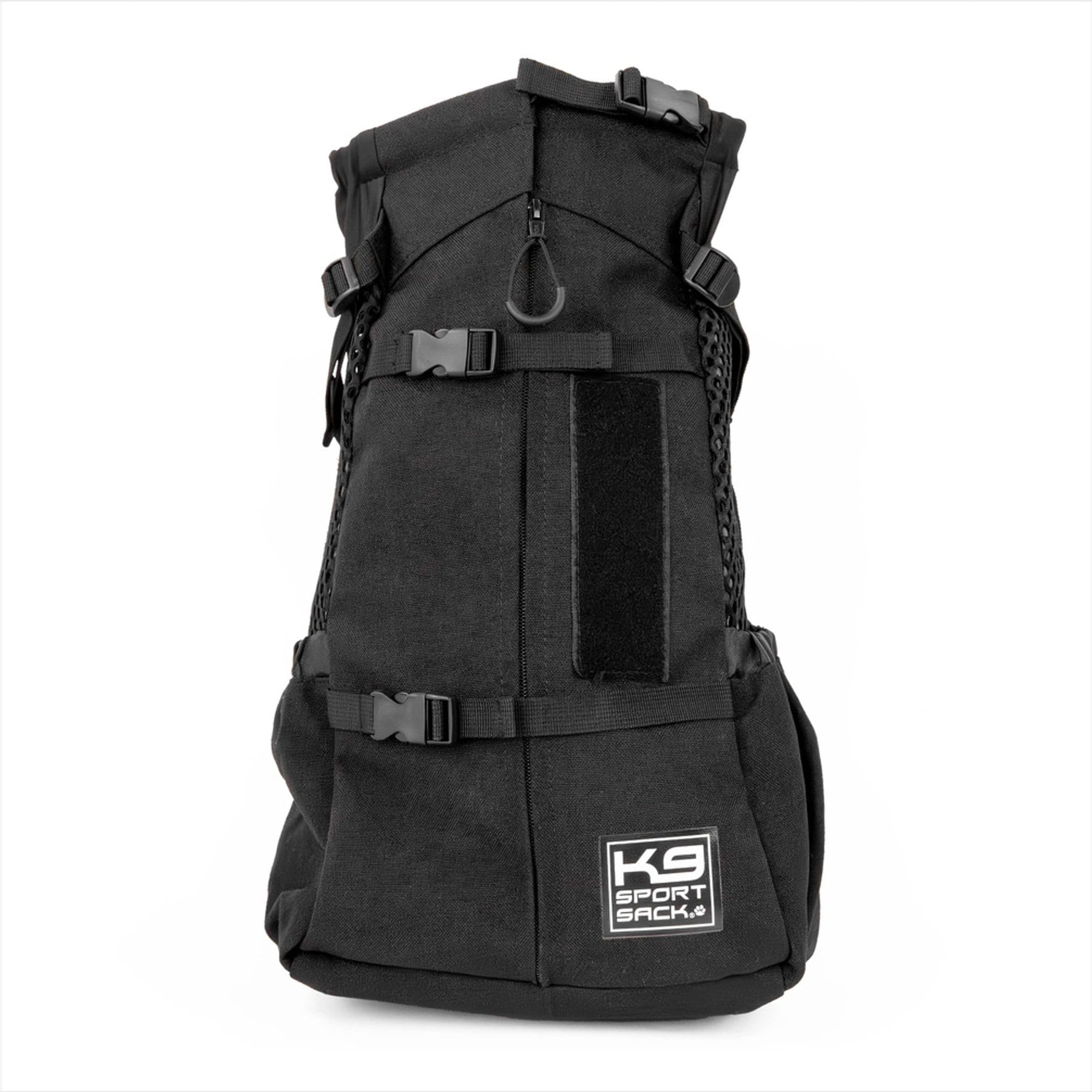
This pack uses tactical-style fabrics, a ventilated air vent, a roll-up top panel and side compression straps. The straps tuck away so it can be carried by hand in tight spaces.
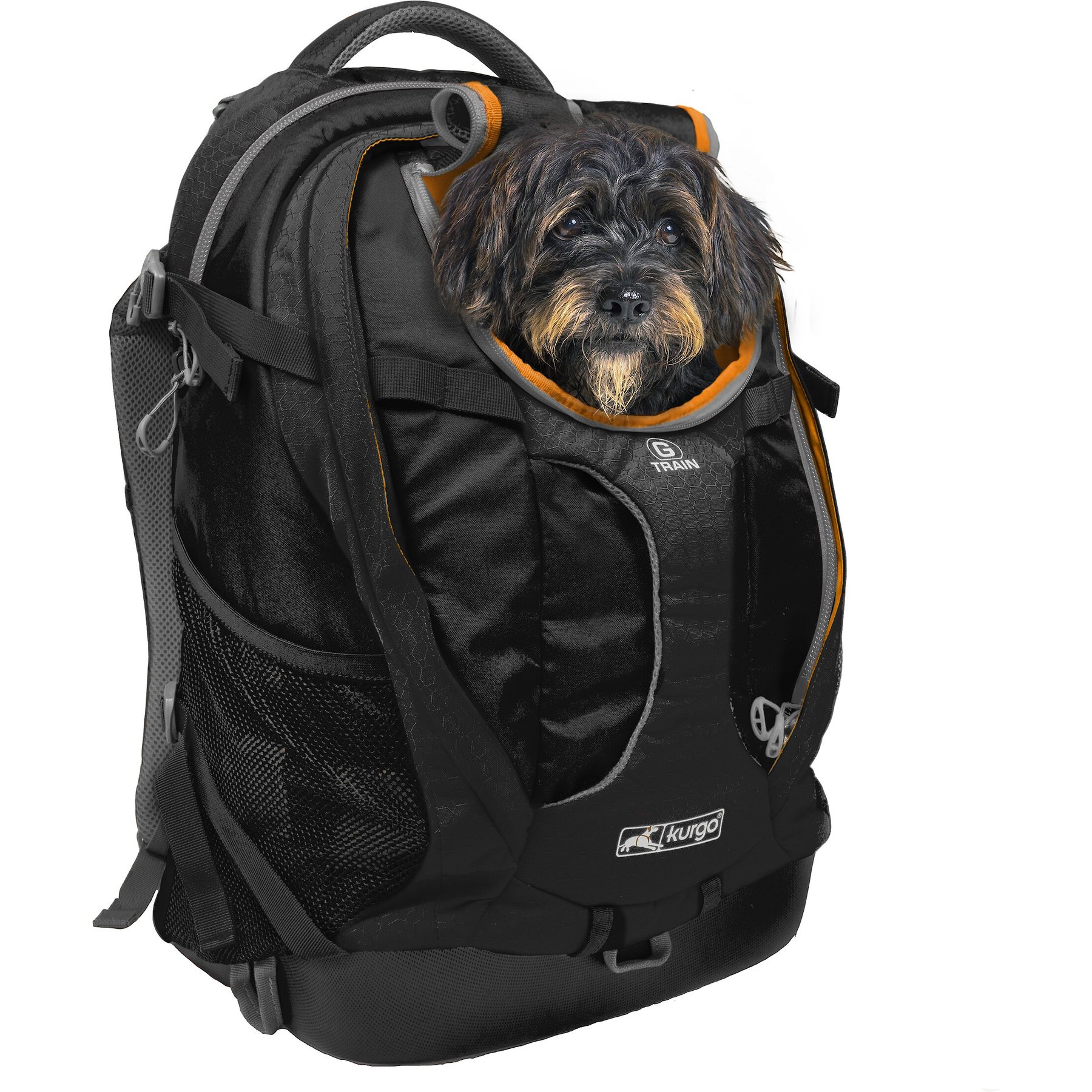
This lower-priced enclosed pack has shoulder padding, a sherpa-lined bed, a mesh window and a collapsible water bowl, according to the listing. The listing title calls it airline approved. Airline rules vary, so confirm size limits with your airline before flying.
An enclosed pack traps more heat than an open one. Use it on cooler days and check the dog often.
Heat on the trail
Heat is the main risk. A dog pressed against your back, under a hood or inside a compartment can overheat faster than a dog walking free.
Plan rest stops in shade. Offer water at each one. Our travel water bottles guide covers ways to carry it.
Know the warning signs. Heavy panting, drooling, weakness, stumbling or vomiting mean stop, cool the dog and call a veterinarian. Our dog heatstroke first aid guide explains what to do on the spot.
Paws on the walking sections
Most carrier dogs walk part of the trail. The American Kennel Club's advice on hot pavement applies to trails as well. Place your hand on the surface for ten seconds. If it is too hot for your hand, it is too hot for the dog's paws.
The AKC cites data that asphalt can reach 135 degrees when the air is 86°F. Dark rock and sand can heat up in similar ways, so put the dog in the pack for sun-baked stretches.
How this goes wrong
| Problem | What happens | Fix |
|---|---|---|
| Wrong size | Dog slumps or slides, straps rub | Measure the dog, follow the size chart |
| Load too heavy for you | Sore back, early turnaround | Practice loaded walks first |
| No clip used | Dog tries to jump out | Use the pack's clip every time |
| Hot day in an enclosed pack | Overheating | Cool hours, shade stops, water |
| Carrier for a dog that cannot exercise | Stress and heat | Ask your veterinarian first |
What to bring besides the pack
A carrier pack adds the dog's weight to your load, so the rest of the kit needs to be light and useful.
- Water for both of you, plus a bowl or a bottle the dog will drink from.
- A harness and leash for the walking sections. A harness spreads pressure better than a collar if you need to lift the dog.
- Waste bags. One of the packs here has a built-in dispenser.
- ID tags and a recent photo in case the dog slips away on a busy trail.
- A small towel to dry a wet dog before it goes back in the pack.
Check trail rules before you go. Many parks and trails require dogs on a leash of a set length, and some ban dogs from certain areas altogether. A dog riding in a pack still counts as a dog.
Planning the route
Pick a trail well within your own range the first few times. Carrying a dog changes your balance on steep or rocky ground, and a pack that feels fine on the flat can pull you backward on a climb.
Plan the walking and riding sections before you start. Let the dog walk the cool, shaded, even parts, and carry it across hot, rough or crowded stretches. Turn back early if the dog seems restless or you feel the load in your shoulders.
Getting the dog used to it
Introduce the pack at home. Let the dog sniff it, then sit in it on the floor with treats. Lift it for a few seconds, then a few minutes.
Walk around the house, then the block, before a trail. A dog that panics in the pack at home will not settle on a mountain.
What to skip
- Buying by breed name. Measure the dog and check the chart.
- A first trip on a long trail. Build up with short walks.
- Skipping the clip. If the pack has one, use it every time.
- Enclosed packs on hot afternoons. Heat builds inside.
- Hood down in full sun. Use shade and rest stops instead of hoping the dog copes.
How to choose
Measure your dog, check the brand's size chart, and add up the loaded weight you will carry.
Choose a forward-facing pack for a calm dog that likes to see, and an enclosed pack for a nervous dog or when you need your hands. Pick padding and hip or lumbar straps for longer hikes.
Practice at home and on short walks. On the trail, use the pack's clip, rest in shade, offer water often, and stop at the first sign of overheating.
FAQ
Frequently asked
How do I size a dog carrier backpack?
Follow the brand's size chart. Several listings remind buyers to measure for the right fit. Weigh your dog and take the body measurements the chart asks for while the dog stands.
Are forward-facing or enclosed dog carriers better for hiking?
Forward-facing packs suit a calm dog that likes to see the trail and let you feel it move. Enclosed packs suit a nervous dog or a dog that tries to climb out, but they trap more heat.
Can a dog overheat in a carrier backpack?
Yes. A dog pressed against your back or inside a compartment can overheat quickly. Rest in shade, offer water often, and stop and call a veterinarian for heavy panting, weakness, stumbling or vomiting.
Is a dog carrier backpack good for an older dog?
It can let an older dog join part of a hike and ride when tired. Ask your veterinarian first if your dog has arthritis, a heart condition or breathing problems, since heat and stress still apply.
How do I get my dog used to a carrier backpack?
Start at home with treats while the pack sits on the floor. Lift it for a few seconds, then minutes, then walk around the house and the block before trying a trail.
Featured in this guide
The picks referenced above—priced and in stock at time of publication.
Affiliate links. Prices and availability change—we filter unavailable items nightly, but the retailer's page is source of truth.
Keep reading
Discussion
Talk about Dog Carrier Backpacks for Hiking: Fit the Dog First, Then Plan for Heat and Rest Stops
Real questions from real pet owners. Add yours—signed-in members only, first three posts held for review.
Loading threads…