Best Chew Toys for Power Chewers: The Durability Trap
The toy hard enough to survive your dog is often the toy hard enough to break his tooth. The thumbnail test, what "indestructible" actually means, and the five things worth buying once you stop shopping for hardness.
petsupplies.co earns a commission if you buy through the product links on this page, and the price you pay is the same either way.

The toy hard enough to survive your dog is often the toy hard enough to break his tooth. That trade-off sits underneath this whole category, and nobody printing "indestructible" on a package wants to describe it.
So this guide is organized around the trade rather than around a ranking. Once you know which side of it you are on, the shortlist is short.
The thumbnail test
Veterinary dentists use two informal tests, and both are worth knowing before you spend anything.
Press your thumbnail into the surface. If it leaves no mark whatsoever, the material will not yield before a tooth does. The second version is blunter: if you would not want to be hit on the kneecap with it, it does not belong in a heavy chewer's mouth.
The injury this predicts is a slab fracture of the upper fourth premolar, the big carnassial tooth at the back of the jaw that does the heavy shearing work. A vertical slab shears off the outer surface, often exposing the pulp. It hurts, it needs a root canal or an extraction, and dogs are stoic enough about it that most owners find out at a dental examination rather than from the dog. The American Veterinary Dental College and the AVMA's pet dental care guidance are the references worth reading, and the 2019 AAHA dental care guidelines cover what a proper oral examination should include.
Things that fail the test outright: antlers, hooves, real and marrow bones, nylon in the wrong size, and ice cubes.
Start with firm rubber
For most power chewers the right answer is a rubber toy that flexes under pressure and still survives. It gives way before enamel does, and it fails safely by wearing rather than shattering.
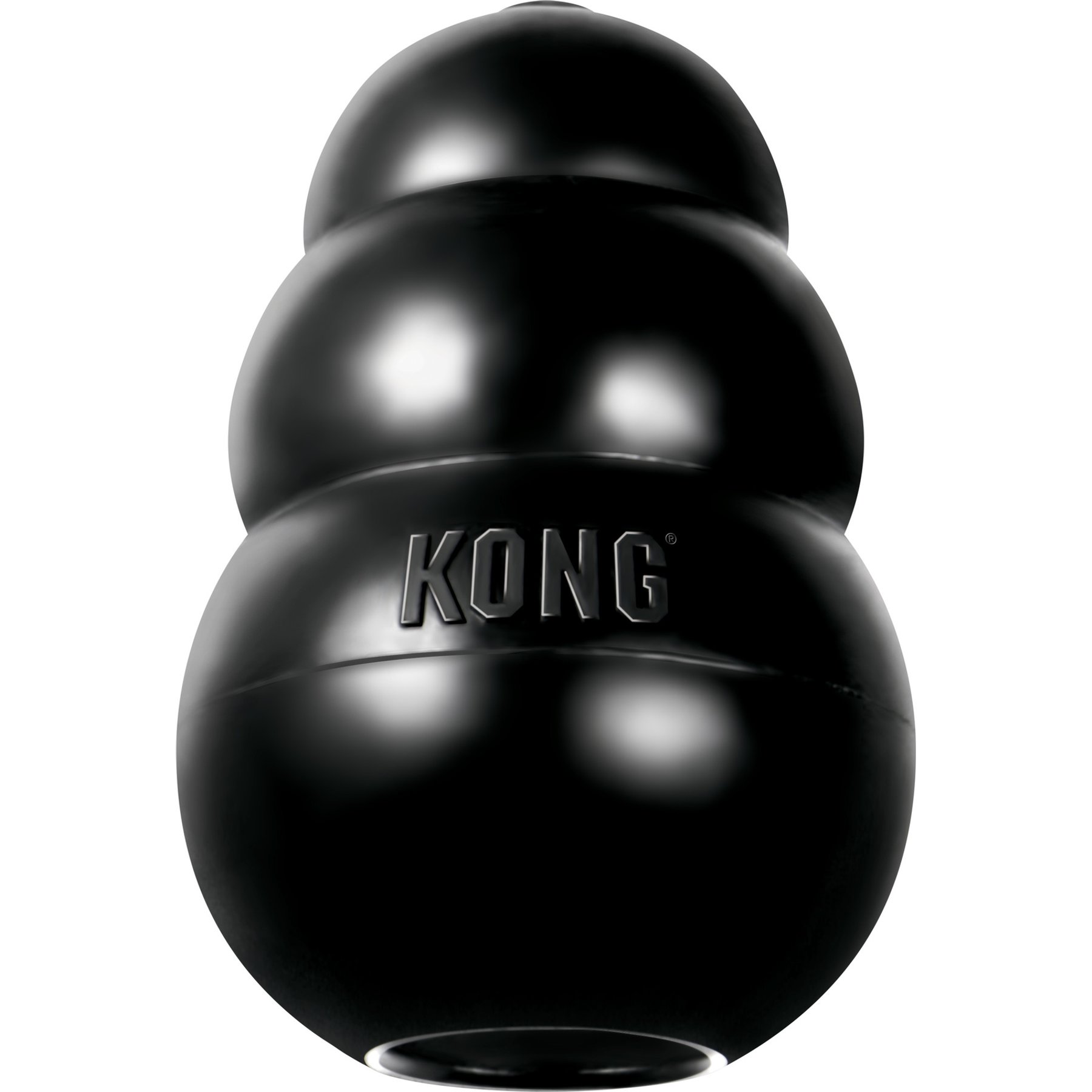
The black KONG compound is the default here for a reason. It is not marketed as indestructible, it is marketed as more durable than the red, which is an honest claim and roughly true.
Stuffing changes what the toy is for. A chew a dog works at for forty minutes to extract frozen food is doing enrichment work, not just surviving. See enrichment, and the same principle runs through puzzle toys for dogs home alone. On fillings, is peanut butter safe for dogs covers the xylitol check that matters more than the brand.
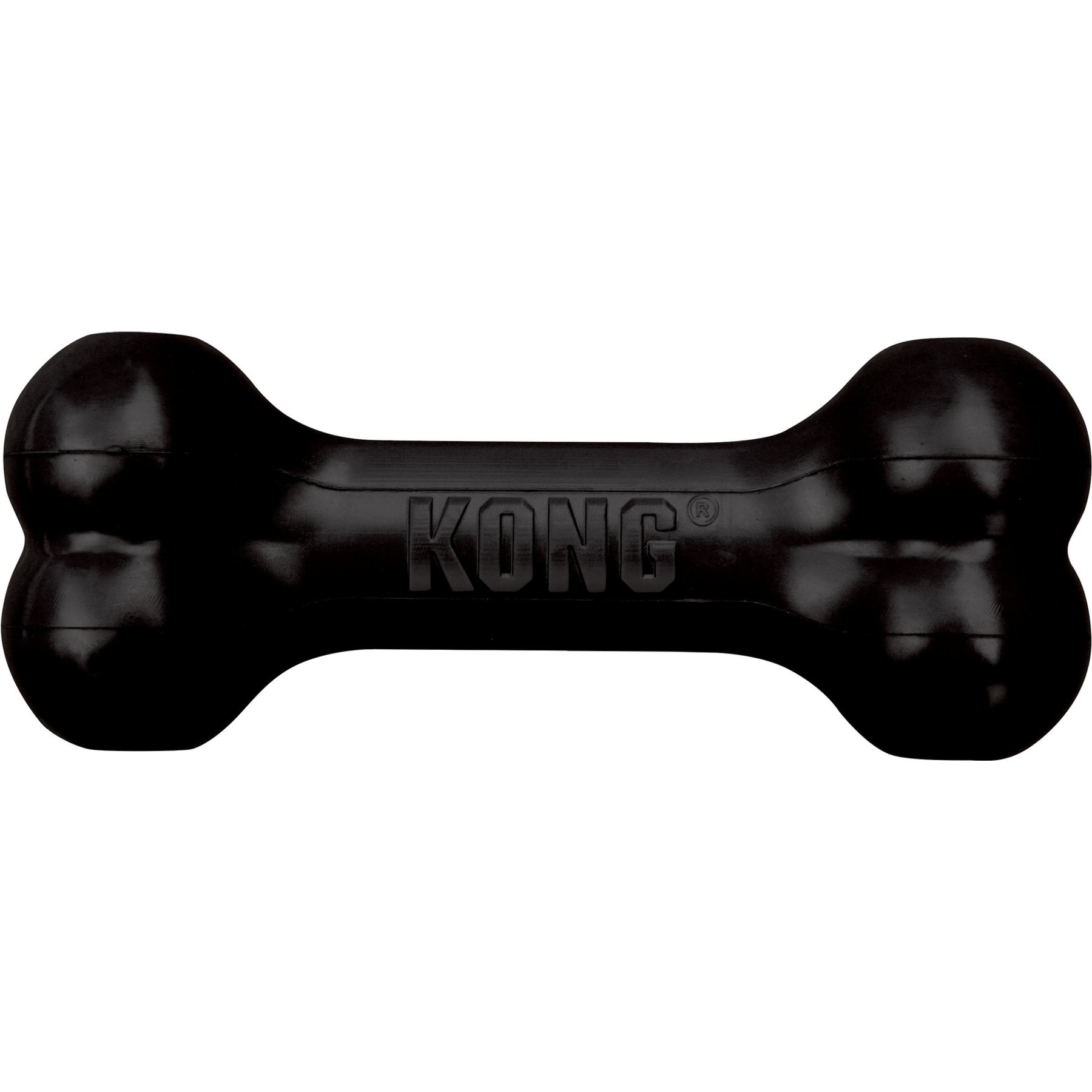
A bone shape suits dogs that chew by gnawing along a length rather than crushing a single point.
When rubber does not last
Some dogs go through the black compound in a week. At that point hard nylon becomes a reasonable choice, and it is worth being straight about what you are accepting.
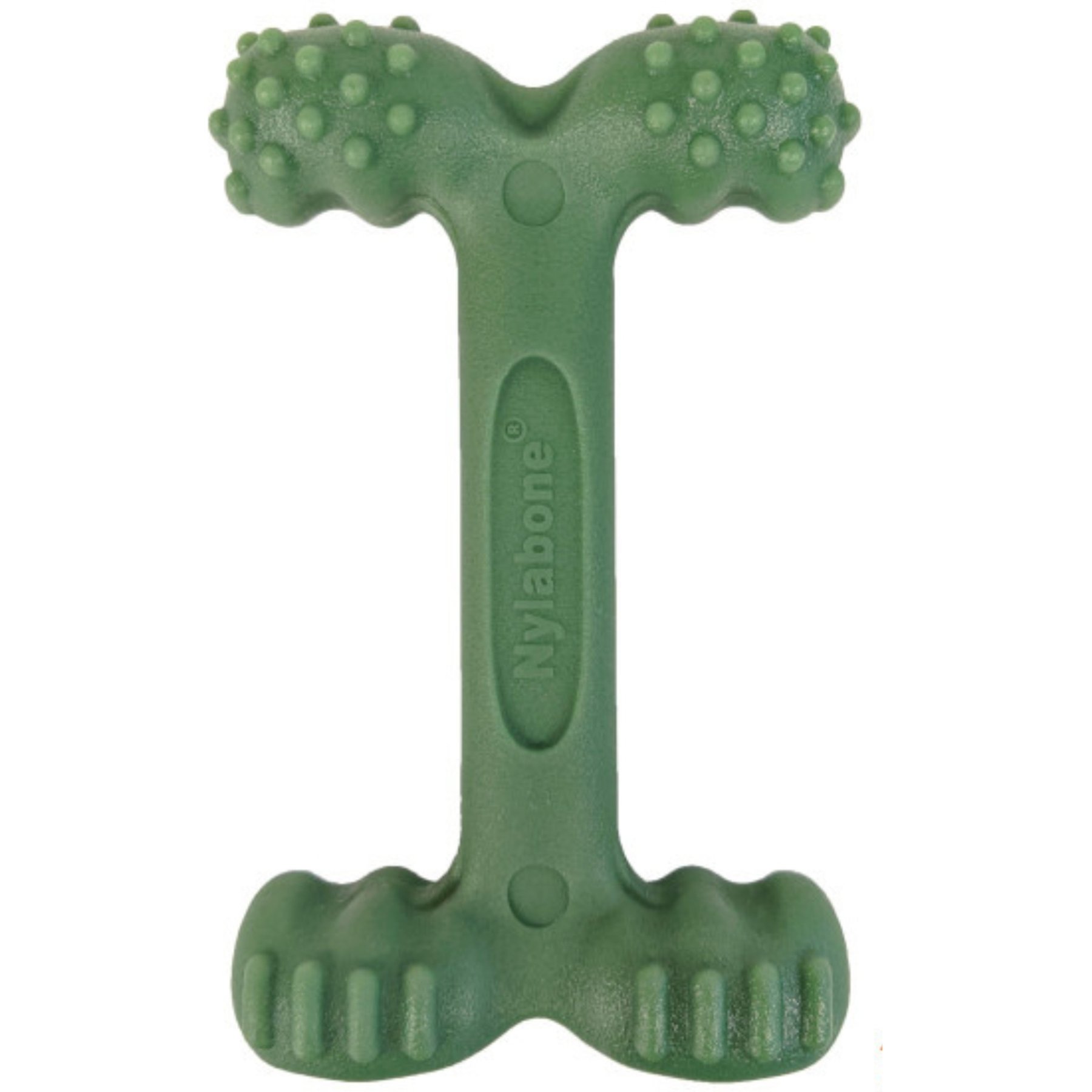
Nylon is made to shred into small bristly flakes as the dog works it, rather than break into swallowable chunks. That is a genuinely good failure mode. It is also hard enough to fail the thumbnail test, so the fracture risk is real and not marketing caution. If you go this way: buy the size up, supervise, and look at the back teeth every few months.
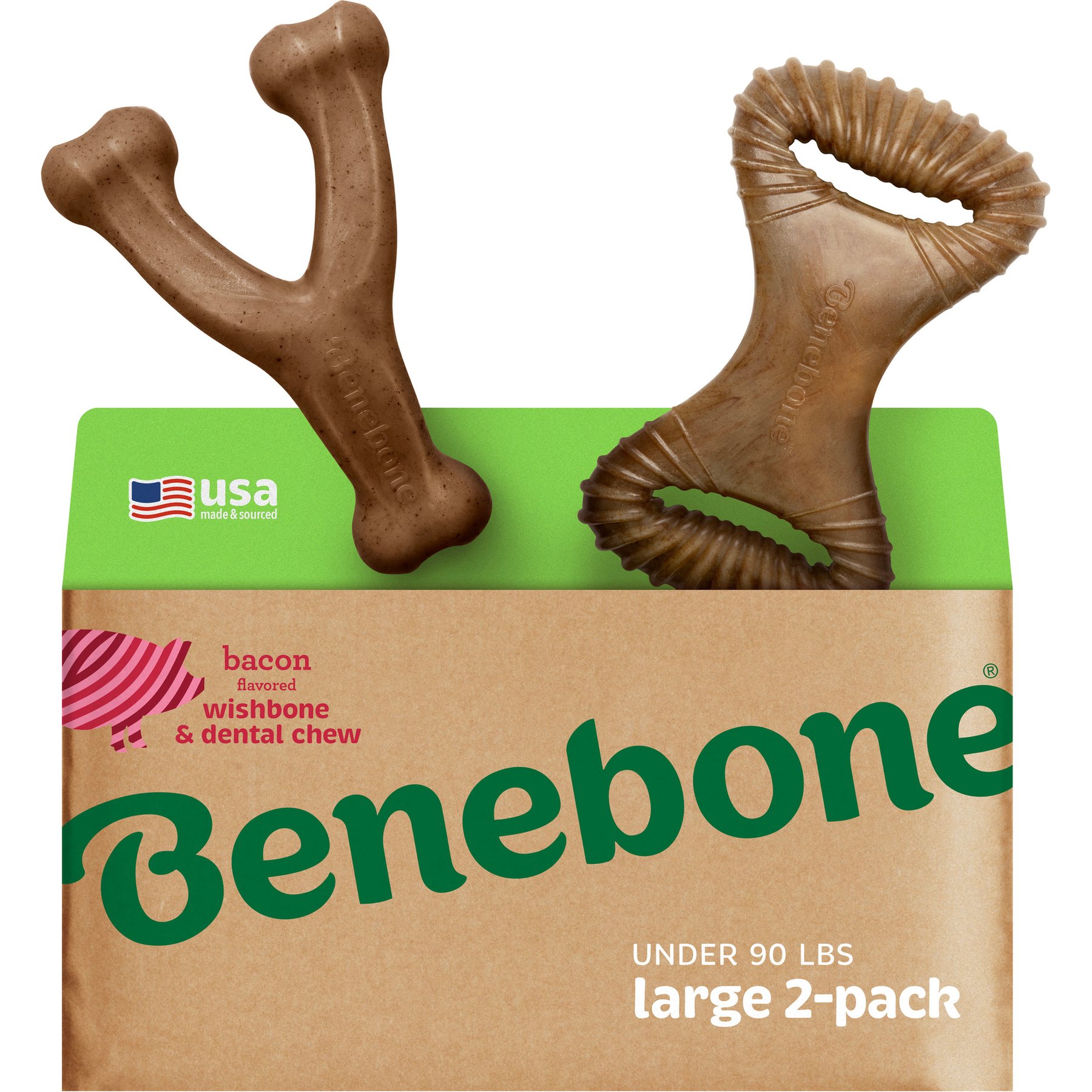
The wishbone shape solves a specific problem, which is that a dog needs to pin a chew with its paws to work it, and a straight bone rolls away.
Neither of these is a substitute for brushing. Chewing does some mechanical cleaning, but the products with measured plaque and tartar data are the ones carrying the Veterinary Oral Health Council seal, and the daily thing that works is a toothbrush. See dental chew, best dental chews for dogs, and how to brush my dog's teeth.
The bully stick problem
Power chewers reduce a bully stick to a short stub fast, and then swallow it. The stub is the hazard, not the stick.
A holder grips the last portion so the dog cannot get it down whole. It is the cheapest fix in this guide for a genuinely common emergency, and a swallowed stub is one of the routes to the kind of gastrointestinal trouble covered in canine acute gastroenteritis.
Size up, always
This is the most common and most consequential mistake in the category.
Manufacturer size charts are minimums keyed to body weight, and they do not know your dog's jaw strength or chewing style. A toy that fits comfortably behind the canines can be crushed and swallowed. Buy the size above the chart, every time, and particularly for dogs between two chart sizes.
In multi-dog homes, size for the largest dog in the house and supervise, because chews are among the most reliable triggers for resource guarding.
What to skip
- Antlers, hooves, marrow bones. The clearest fracture risk on the shelf, sold in the chew aisle next to everything else.
- Ice cubes. Free, popular in summer, and just as hard as everything else on this list.
- Tennis balls for habitual chewers. The felt holds grit and abrades enamel. A dog that grinds one nightly can wear its teeth visibly flat.
- Anything sold as indestructible. No toy is. The useful question is how it fails, not whether.
- Rawhide for a dog that tears chunks. The chunk is the problem, and a power chewer produces chunks quickly.
- Squeakers for dogs that hunt them. A dog whose goal is the squeaker will get to it, and the squeaker is swallowable.
How to choose
Rubber first. If the black compound lasts two weeks, you are done and you never need this guide again.
If it lasts three days, move to hard nylon and accept the trade knowingly: correct size, supervision, and a look at the carnassials every few months.
If the dog swallows things rather than shredding them, the holder and the stuffable rubber toy matter more than hardness, because the risk you are managing is obstruction rather than wear.
And whatever you buy, retire it when pieces start coming off. The toy that has begun to fail is more dangerous than the toy you were worried about buying.
FAQ
Frequently asked
What is the thumbnail test for chew toys?
Press your thumbnail into the surface of the toy. If it leaves no mark at all, the material is hard enough to fracture a tooth before it gives way. The related version veterinary dentists use is the kneecap test: if you would not want to be struck on the kneecap with it, do not give it to a heavy chewer. Antlers, hooves, real bones and ice cubes all fail both.
Which tooth do dogs usually break on hard chews?
The upper fourth premolar, the large carnassial tooth on each side at the back. The classic injury is a slab fracture, where a vertical piece shears off the outer surface. It often exposes the pulp, it is painful, and treatment is either root canal or extraction. Many dogs keep eating normally with a fractured carnassial, so owners frequently miss it until a dental examination finds it.
Is a hard nylon bone safe for a power chewer?
It is a trade. Hard nylon survives dogs that destroy rubber, and it is made to shred into small bristly flakes rather than break into chunks. It is also hard enough to fail the thumbnail test, so it carries real fracture risk. If your dog goes through rubber in minutes, nylon is a reasonable choice with supervision, correct sizing, and a check of the back teeth every few months. It is not the safer option, just the more durable one.
How do I know when to throw a chew toy away?
Retire it when pieces can be torn off, when a rubber toy is punctured through, when a nylon chew is worn down to roughly the size it could be swallowed, or when edges have gone sharp. The failure that matters is not the toy wearing out, it is the toy coming apart into pieces the dog can swallow.
Are tennis balls bad for heavy chewers?
For habitual chewers, yes. The felt cover holds grit and acts like fine sandpaper, and dogs that carry and grind a tennis ball daily can wear their teeth visibly flat over time. Occasional fetch is a different matter from a dog that chews the ball for an hour every evening. A purpose-made rubber ball avoids the problem entirely.
Featured in this guide
The picks referenced above—priced and in stock at time of publication.
Affiliate links. Prices and availability change—we filter unavailable items nightly, but the retailer's page is source of truth.
Keep reading
back to school routine
Best Lick Mats for Dogs: A Good Tool With an Overstated Claim
back to school routine
Enrichment for Working Owners: Redistributed Time, Not a Drawer of Toys
back to school routine
Scratching Posts That Actually Last: Height, Stability, and Re-Roping
back to school routine
Crates and Pens for Dogs Home Alone: What Confinement Fixes, and What It Hides
back to school routine
Litter Box Setups for Multi-Cat Homes: You Need More Boxes, Not a Better One
back to school routine
Dog Cameras with Treat Dispensers: What They Diagnose, and What They Can't Fix
Discussion
Talk about Best Chew Toys for Power Chewers: The Durability Trap
Real questions from real pet owners. Add yours—signed-in members only, first three posts held for review.
Loading threads…