Scratching Posts That Actually Last: Height, Stability, and Re-Roping
Posts do not usually wear out. They get abandoned, because they are too short to stretch on or they wobble. Both are buying decisions, and one of them is fixable with $27 of rope.
petsupplies.co earns a commission if you buy through the product links on this page, and the price you pay is the same either way.

Scratching posts rarely wear out. They get abandoned, and then they sit in the corner looking like furniture while the cat carries on with the sofa.
Two things cause that, and both are decided at the moment you buy. The post is too short to stretch on, or it moves when the cat leans into it. Everything else is detail.
Scratching is not a behavior problem
Worth saying before the shopping starts, because it changes what you are buying for.
Cats scratch to maintain their claws, to stretch the whole back and shoulder chain, and to leave a visual and scent mark. It is normal, necessary behavior, and the AAFP and ISFM feline environmental needs guidelines list an appropriate outlet for it among the basic requirements of a cat's environment rather than an optional extra.
So the goal is never to stop the scratching. It is to make one surface obviously better than the sofa. See scratching post for the short version, and how do I stop my cat from scratching furniture for the redirection method.
Height is the first failure
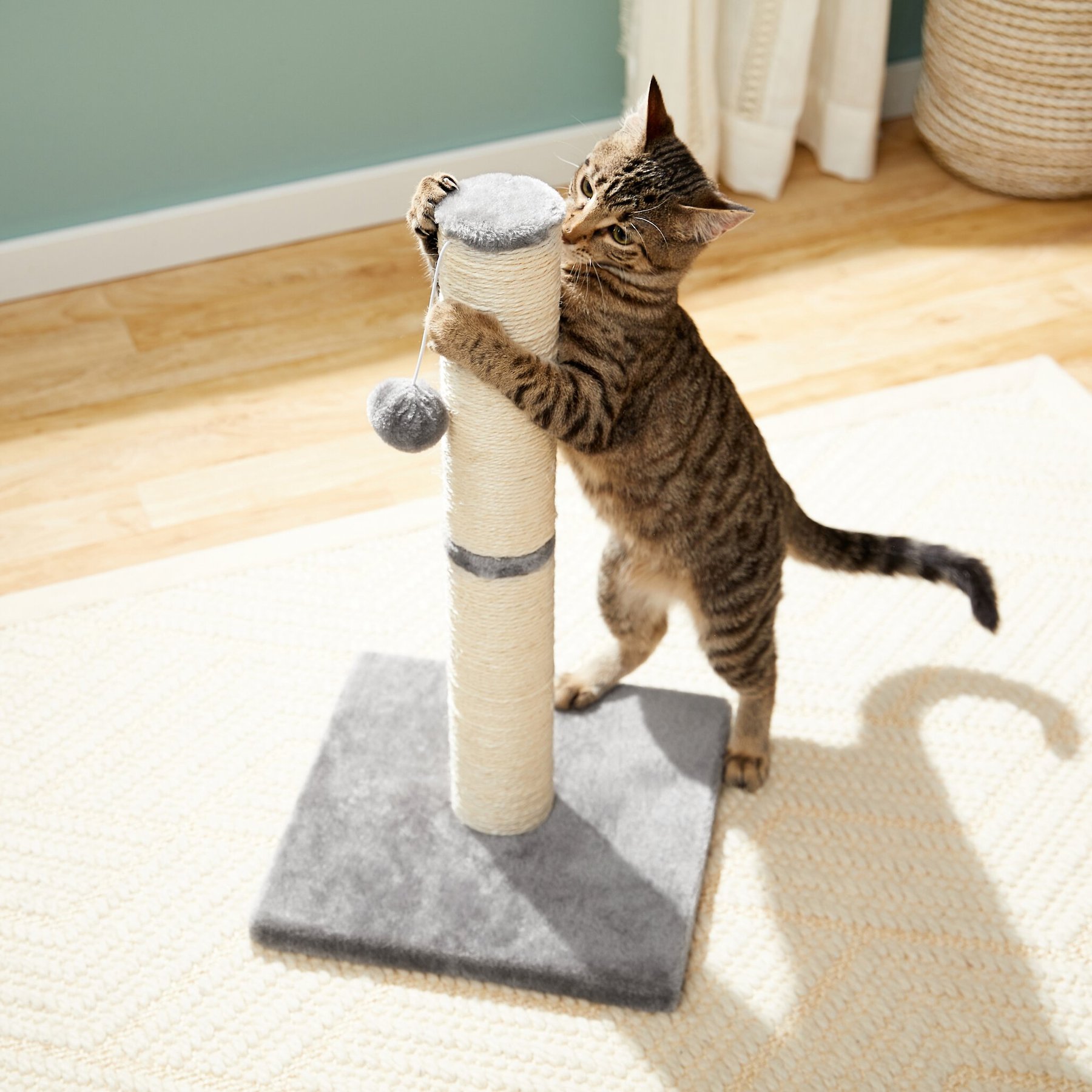
A cat scratching properly reaches up, hooks in, and drags down through a full stretch, back legs still on the floor. For an average adult cat that wants somewhere around 30 inches of usable surface, and the post has to be taller than the reach because the stroke starts near the top.
A great deal of what is sold sits at 19 to 22 inches. That is a kitten post. The kitten grows, the post stops fitting, and the cat quietly moves to the arm of the sofa, which is exactly the right height and never wobbles.
Stability is the second, and it is the one people miss
The entire point of scratching is to pull hard against something that does not give. A post that rocks under load has failed at its only job, and a cat will abandon it after two or three attempts without ever going back.
Base width is what decides this, not weight. A tall post on a narrow base is a lever, and the cat is at the far end of it. Look for a base roughly as wide as the post is tall, or at minimum wide enough that pressing hard at the top does not lift an edge.
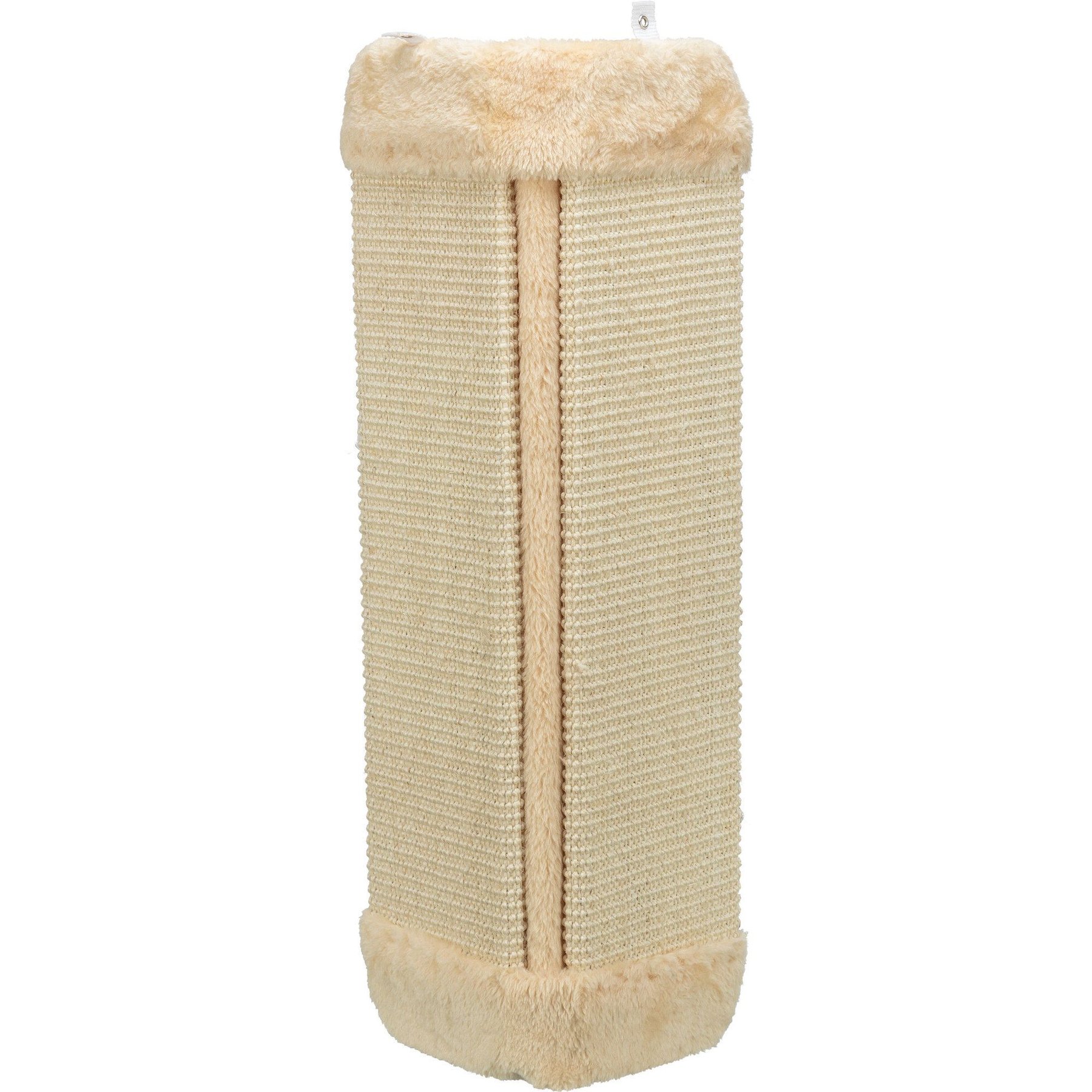
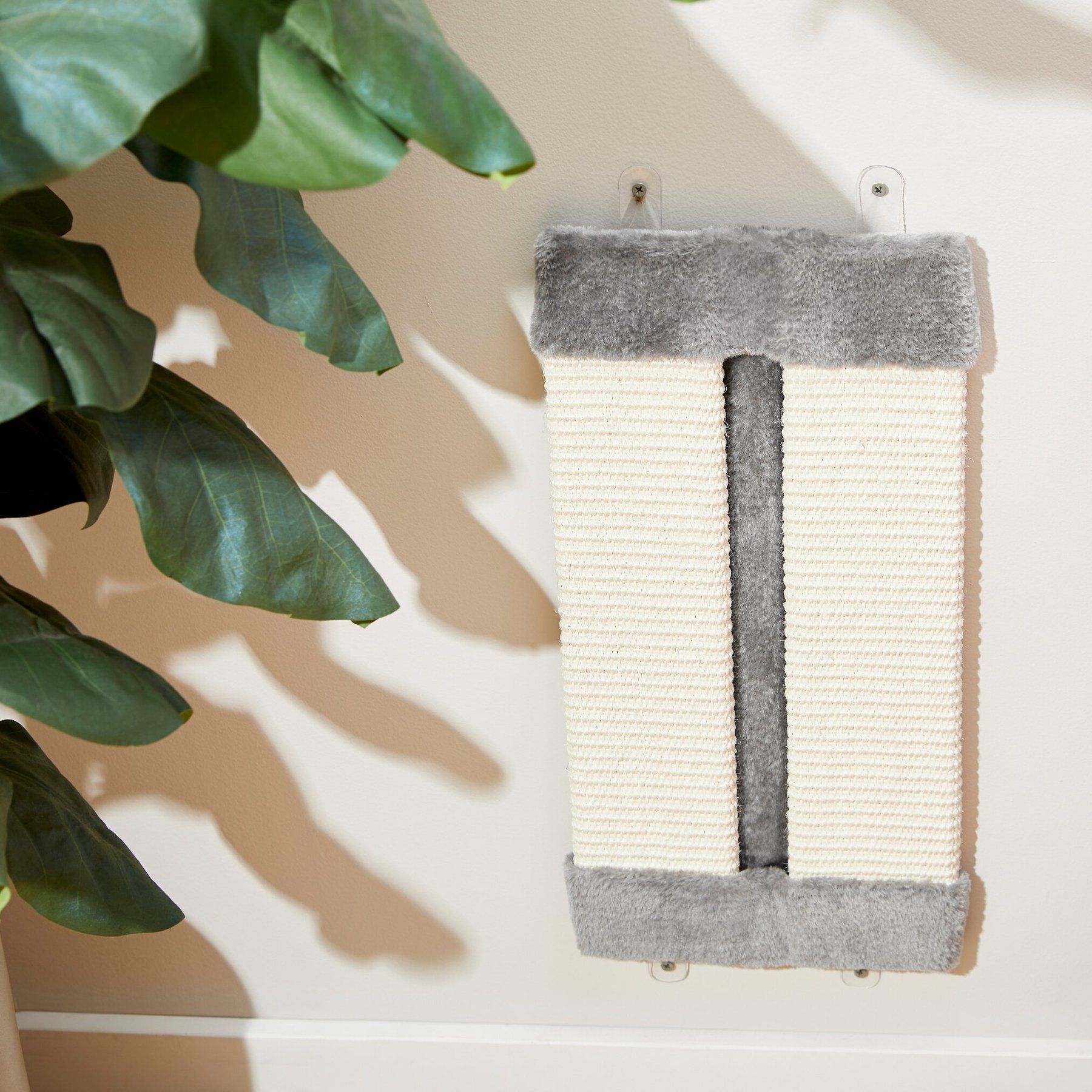
If you cannot get stability from a base, take the base out of the equation entirely. A wall-mounted scratcher cannot wobble, takes no floor space, and lets you put the surface at exactly the height your cat wants.
Mount it where the cat is already scratching rather than where you would prefer it to. That is not a compromise, it is the whole technique.
Sisal, not carpet
Sisal rope or woven sisal, every time.
Carpet-covered posts undermine the lesson you are trying to teach, because carpet on the post is the same material as the carpet on the floor and the stair runner. A cat that learns carpet is a scratching surface has learned something you will regret.
Vertical, horizontal, or both
Orientation is a preference rather than a rule, and cats do not all share one.
Plenty of cats scratch vertically against door frames and sofa arms. Plenty of others work horizontally on rugs, doormats and the stair carpet, and a cat that has ignored every upright post in the house is often telling you it is a horizontal scratcher rather than a fussy one.
The diagnosis is free. Look at what is already damaged. Vertical claw marks down the side of an armchair mean one thing; shredded pile in a doorway means another. Match the new surface to the evidence rather than to the shape of the gap in your living room.
Cats that use both are common enough that offering one of each is a sensible default in a house where nothing has been established yet.
One post is not enough
Cats scratch on waking, after eating, and at doorways and boundaries, and they do it where they spend time. A single post in the spare room competes with a sofa in the room the family actually sits in, and the sofa wins on location before material or height are even considered.
Two posts in the two rooms the cat uses most will outperform one expensive tower every time. This is the same distribution logic that governs litter boxes.
Placement rules that cost nothing: next to where the cat sleeps, because the first stretch of the day is the reliable one; near the sofa or door frame currently taking the damage, not across the room from it; and never in a corridor a nervous cat has to pass another cat in.
More than one cat changes the arithmetic
Scratching is territorial marking as well as claw maintenance, which means posts behave like resources in the same way food bowls and litter boxes do.
The working rule is one post per cat plus a spare, distributed rather than clustered. Two posts side by side in the same corner count as one location to the cats, because whichever animal controls the corner controls both.
Watch for the quiet version of conflict. A confident cat does not need to fight for a post; sitting in a doorway and looking at it is enough to keep another cat away, and the excluded cat scratches the sofa in the room it can actually reach. See resource guarding and enrichment.
If one cat has stopped using a post it used to like and nothing about the post has changed, consider who else is in the room.
When a cat stops using a post it used to like
A change in an established habit is worth treating as information rather than fussiness.
If the post is unchanged, still stable, and still in the same place, the likeliest explanation is that scratching has started to hurt. The stroke loads the shoulders, elbows and the whole back, and an arthritic cat will give up the full-height stretch long before it stops scratching altogether. Cats conceal this well, and a dropped stretch often shows up earlier than any visible limp. See osteoarthritis.
Two things follow. Mention it to your vet, because arthritis in cats is common, underdiagnosed and treatable. And in the meantime lower the target: a horizontal scratcher, or a short wide surface, asks far less of a painful joint than a 30-inch vertical stretch does.
Overgrown claws are the other reversible cause, and they are easy to miss under fur.
Re-rope rather than replace
This is the part that actually answers the question in the title.
Most posts are structurally sound long after the sisal looks wrecked. A shredded post is usually a post working correctly, and the frame, base and fittings are all fine. A replacement post section screws onto the existing base and costs less than a new unit, while keeping the object your cat has already accepted, which has value the packaging never mentions.
Check the thread size before ordering, usually M8 or M10, and measure the section you are replacing.
How this goes wrong
| What gets bought | Why it disappoints | What to do instead |
|---|---|---|
| A 20-inch post for an adult cat | Too short for a full stretch, so it is abandoned within months | Measure the cat at full reach, then buy taller |
| A tall post on a narrow base | Rocks under load, which is the one thing scratching cannot tolerate | Base as wide as the post is tall, or mount it on a wall |
| A carpet-covered post | Teaches that carpet is a scratching surface | Sisal rope or woven sisal |
| One post, kept in the spare room | Loses to the sofa on location before height or material count | One in each room the cat actually uses |
| A second post placed beside the first | Two posts in one corner is a single resource to the cats | Distribute them, one per cat plus a spare |
| A new post because the old one looks wrecked | Shredded sisal is the post working, not failing | Re-rope the base the cat has already accepted |
What to skip
- Anything under 24 inches for an adult cat. It will get used for a while and then abandoned.
- Carpet-covered posts. Teaches the wrong material.
- Tall posts on narrow bases. The worst combination available, and common.
- Replacing an ignored post with a more expensive ignored post. Diagnose first: too short, or wobbly.
- Deterrent sprays as the primary plan. They address the sofa without giving the cat anywhere better to go, which leaves the need unmet.
- Assuming a cat that ignores upright posts dislikes posts. It may simply scratch horizontally, and nobody has offered it the option.
- Reading a sudden drop in scratching as good manners. In an older cat it is more often pain, and it is worth a consultation.
How to choose
Watch what your cat already scratches. Note the orientation, vertical or horizontal, the material, and the room.
Then buy the same orientation and a similar material, at least 30 inches of surface if vertical, on a base wide enough that it does not shift under a hard pull. Put it beside the thing being damaged, not somewhere tidier.
When the sisal shreds, that is the post working. Buy rope, not a new post.
FAQ
Frequently asked
How tall should a scratching post be?
Tall enough that the cat can scratch at full stretch with front paws extended and back legs on the floor. For an average adult cat that means roughly 30 inches of scratchable surface, and the post itself needs to be taller than the reach because the cat starts high and drags down. A lot of what is sold sits at 19 to 22 inches, which is fine for a kitten and too short for the adult it becomes.
Why does my cat ignore the post and use the sofa?
Usually height or stability. A post that rocks when weight goes through it fails the one test that matters, because the point of scratching is to pull against something solid. The sofa arm never moves. After that, check location: a post in a spare room competes with furniture in the room the cat actually lives in, and the sofa wins on placement alone.
Sisal or carpet?
Sisal, and specifically sisal rope or woven sisal fabric rather than carpet. Carpet-covered posts blur the distinction you are trying to teach, since carpet on the post is the same material as the carpet on the floor and the stair you would rather they left alone. Sisal also shreds in a way cats seem to find satisfying without disintegrating.
Is it worth replacing the rope instead of the whole post?
Often yes. Most posts are structurally fine long after the sisal looks destroyed, and a replacement post section with the right screw fitting costs less than a new unit while keeping the base your cat has already accepted. Check the thread size, usually M8 or M10, before ordering.
Should I get a horizontal scratcher too?
If your cat scratches the carpet or a rug rather than vertical surfaces, yes. Orientation preference varies between individual cats and some use both. The cheap way to find out is to watch what your cat already ruins: match the new surface to the orientation and material it has chosen for itself.
Featured in this guide
The picks referenced above—priced and in stock at time of publication.

Affiliate links. Prices and availability change—we filter unavailable items nightly, but the retailer's page is source of truth.
Keep reading
back to school routine
Cat Trees for Indoor Enrichment: Vertical Territory, Not Furniture
back to school routine
Best Lick Mats for Dogs: A Good Tool With an Overstated Claim
back to school routine
Enrichment for Working Owners: Redistributed Time, Not a Drawer of Toys
back to school routine
Crates and Pens for Dogs Home Alone: What Confinement Fixes, and What It Hides
back to school routine
Litter Box Setups for Multi-Cat Homes: You Need More Boxes, Not a Better One
back to school routine
Best Chew Toys for Power Chewers: The Durability Trap
Discussion
Talk about Scratching Posts That Actually Last: Height, Stability, and Re-Roping
Real questions from real pet owners. Add yours—signed-in members only, first three posts held for review.
Loading threads…