Cat Trees for Indoor Enrichment: Vertical Territory, Not Furniture
A cat tree is not a toy and not decoration. It is vertical territory and a scratching substrate, and both of those are needs rather than luxuries. Why placement and stability decide whether it gets used at all.
petsupplies.co earns a commission if you buy through the product links on this page, and the price you pay is the same either way.

A cat tree is usually sold as furniture and bought as a gift. It is neither. It is vertical territory and a scratching substrate, and those are needs rather than indulgences, which is also why the expensive tree in the spare bedroom is ignored while the sofa continues to be destroyed.
The useful reframing is that you are not buying an object your cat will enjoy. You are modifying an environment, and the modification only counts if the cat uses it. Placement and stability decide that. Height, color and the number of platforms mostly do not.
What vertical space is actually for
The AAFP and ISFM feline environmental needs guidelines set out five pillars of a healthy feline environment, and vertical space serves at least three of them.
A safe place. Cats resolve conflict by avoidance rather than confrontation, and height is the cheapest form of avoidance available indoors. A cat with somewhere to go up has an option that does not involve a fight.
Separated key resources. In multi-cat homes, resting, feeding, watering and toileting sites should be far enough apart that no cat has to run a gauntlet to reach one. Vertical space multiplies the usable area of a room without needing a larger room.
Opportunity for observation. A great deal of ordinary cat behavior is watching. A perch with a view of a window, or of the room the household actually uses, does more for a cat's day than most toys.
This matters clinically as well as behaviorally. Environmental modification and enrichment are a standard part of managing stress-associated lower urinary tract signs, as covered in feline lower urinary tract disease, and inactivity in indoor cats is a contributor to feline obesity. A tree that gets climbed several times a day is a small, genuine activity intervention. See also enrichment and cat tree for the short versions.
Scratching is maintenance and marking, not misbehavior
The second argument for a tree is the scratching surface, and it helps to understand what scratching is for. It conditions the claws by shedding the outer sheaths, it gives a full-body stretch, and it leaves both a visible mark and a scent mark from glands between the toes. The ASPCA's general cat care guidance covers the basics.
The marking function explains the single most common complaint. A cat scratching the arm of the sofa in the middle of the living room has chosen a socially prominent, structurally rigid, full-stretch-height surface. The post tucked behind a door has none of those things. This is not defiance, it is a substrate preference expressed rationally, and the fix follows directly: put an acceptable option where the unacceptable one is. See scratching post and how do I stop my cat from scratching furniture.
Two specifics are worth getting right. Height, first: a vertical post needs to allow a full stretch, which for a grown cat means noticeably taller than it stands on its hind legs: most posts sold as adequate are not. Rigidity, second: a post that flexes under load fails at the stretching job entirely.
Stability is the specification that matters
If one thing decides whether a tree is used, it is whether it moves.
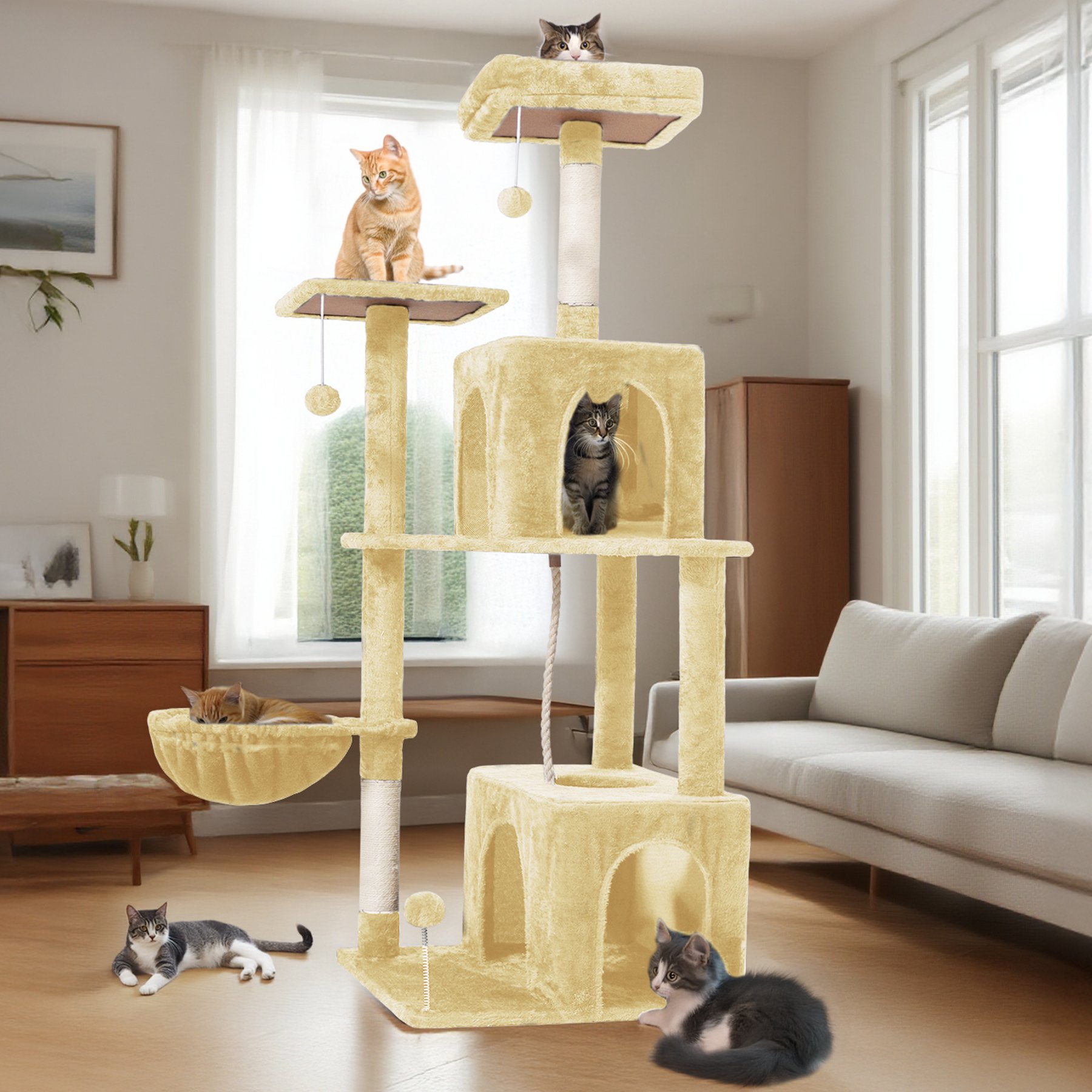
A cat approaching a new tree tests it. If the structure rocks when it lands on the top platform, that is generally the end of the relationship, and no amount of catnip recovers it. Wide base relative to height, a low center of mass, and platforms that do not flex are what you are actually paying for in a good tree.
This is also the argument for buying fewer, better levels rather than the tallest tower available. A tall, narrow tree with a small top platform is the worst combination: it wobbles, and the destination at the top is too small for a cat to lie on comfortably. Large cats in particular need a top platform they can actually settle on rather than perch on.
Placement decides whether it is used
The tree goes where the household is. Cats want to observe activity from a secure height, not to be given a private room away from everyone.
- Near a window if you can manage it. A view of birds and street activity is the highest-value thing most indoor cats get all day.
- In a room people use. A tree in an unoccupied spare room is a piece of furniture in storage.
- Not in a corridor or a dead end. A cat resting somewhere with only one exit is not resting securely, which matters most in multi-cat homes.
- Spread out, if you have several cats. Two modest trees in different rooms beat one large tree, because they create two territories rather than one contested one. Resource separation also reduces the tension that shows up as litter box aversion. See how to introduce a new kitten.
The picks
A full-height multi-level tree is the default when you have the floor space and want vertical territory and scratching in one object.
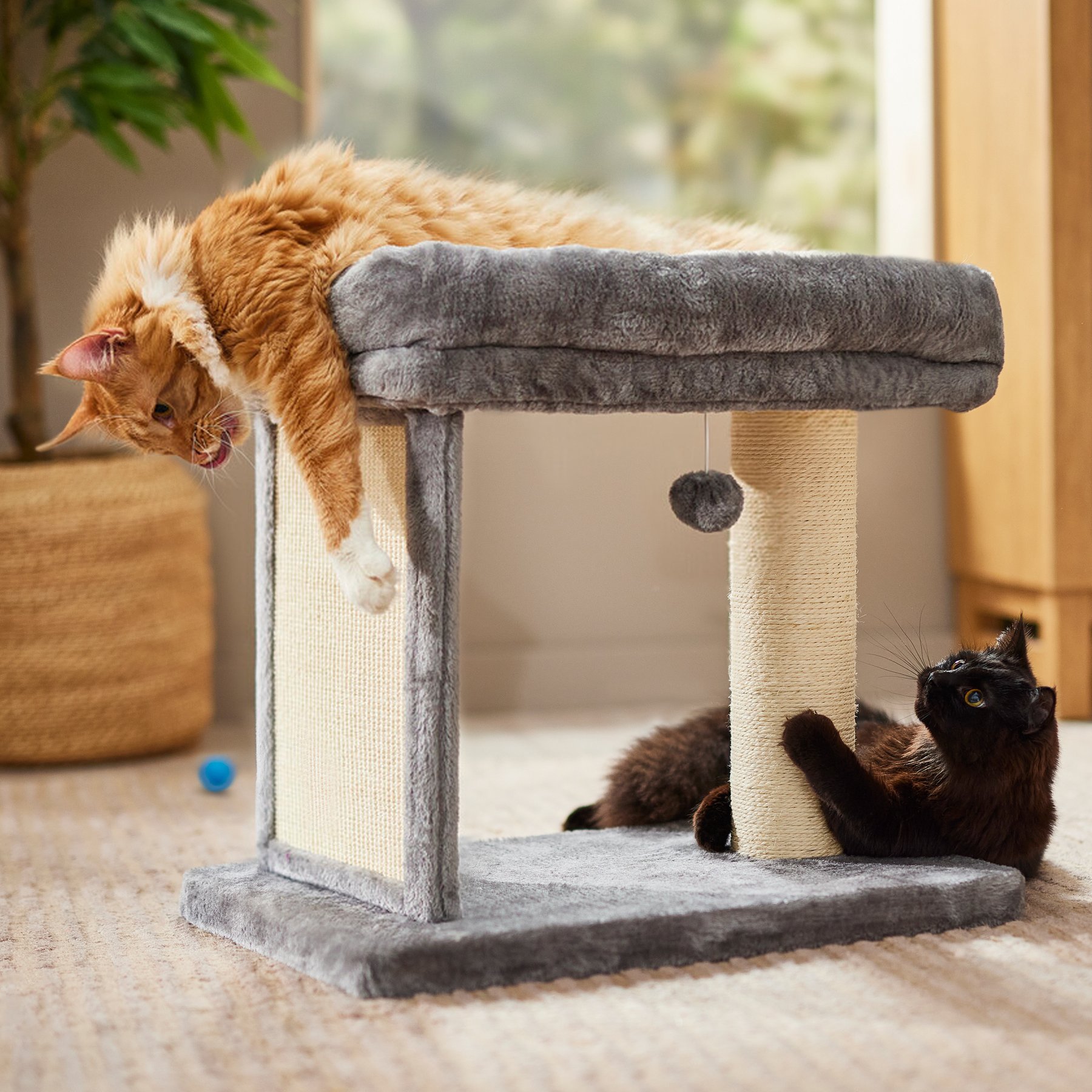
Where floor space is the constraint, a compact tree in the right place beats a tall one in the wrong place. Two smaller trees in two rooms is a legitimate use of the same budget.
A dedicated vertical post is the right answer when the tree is already in place and the sofa is still losing. Its job is to go beside the furniture being scratched, not beside the tree.
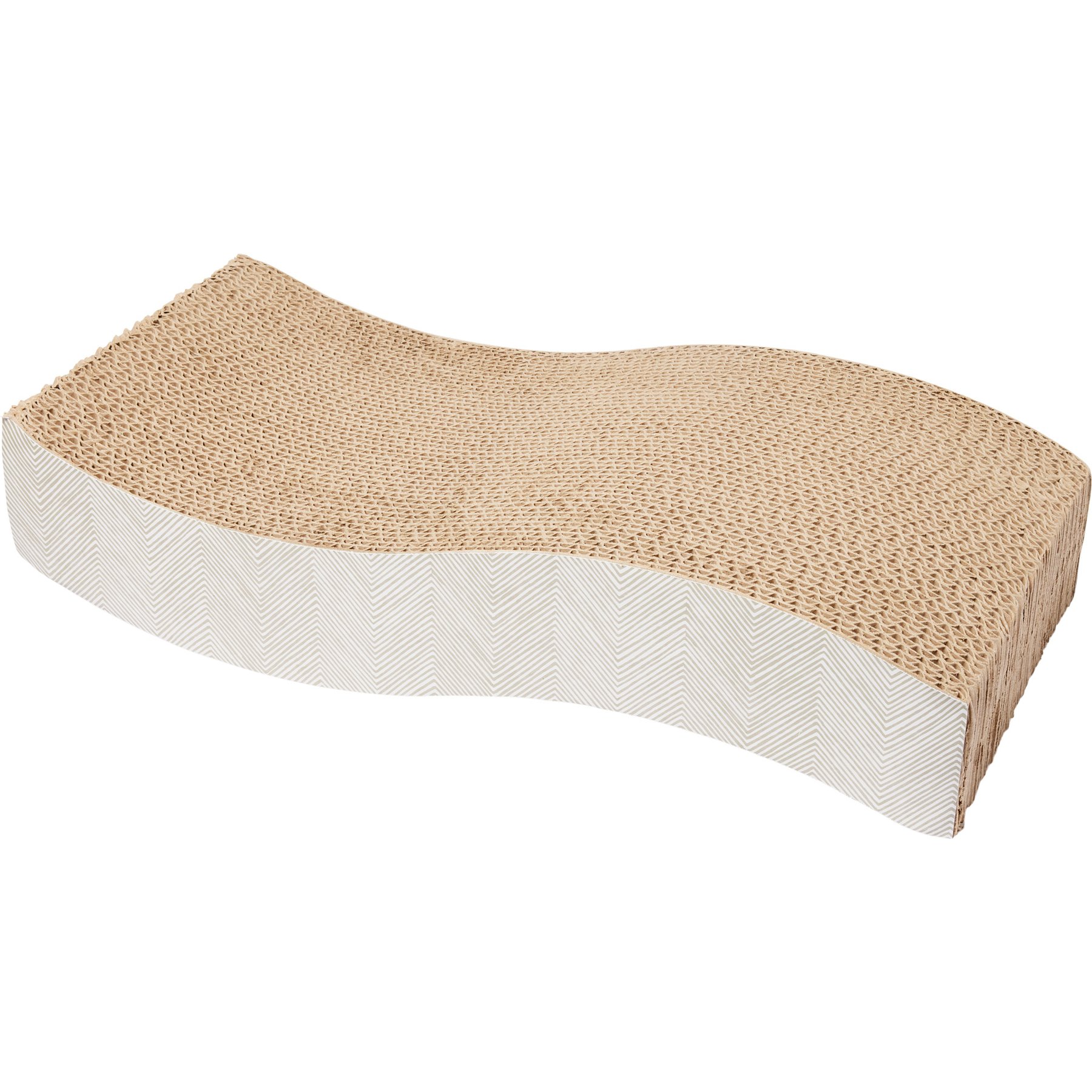
Horizontal scratchers cover the other common orientation preference, and they are cheap enough that offering both is the sensible experiment.
A window perch supplies the observation post without the footprint of a tree, and it is often the single most-used surface in the house.
How this goes wrong
| What gets bought | How it fails | What it is actually good for |
|---|---|---|
| Tall narrow tower | Rocks on landing, small top platform; tested once, then avoided | Nothing: buy width over height |
| Tree placed in a spare room | Out of the household's traffic; cat has no reason to be there | Relocating to a used room, near a window |
| Short carpeted post | Too short for a full stretch, wrong substrate for many cats | Kittens, or as a second option alongside a tall sisal post |
| One large tree for three cats | Becomes a contested resource; the confident cat holds it | Splitting the budget across rooms |
| Enclosed condo cube | Some cats love it; many want a view, not a box | Cats that already hide in boxes by preference |
What to skip
- Height for its own sake. A stable four-foot tree beats a swaying six-foot one every time.
- Trees with dangling string or ribbon toys attached. Linear material is a genuine ingestion hazard, and an unsupervised permanent fixture is the worst way to offer it. Cut them off.
- Replacing a scratched post because it looks used. Frayed sisal is a post with an established scent mark. That is the finished product, not a worn-out one.
- Anything sold as a deterrent to be sprayed on furniture instead of providing an alternative. You still have to give the cat somewhere to scratch.
- A tree as a substitute for play. Vertical territory is passive infrastructure. It does not replace interactive play with a human, which is a separate need.
How to choose
If you have one cat and the space, buy one stable full-height tree, put it by a window in a room you use, and add a tall rigid post beside whatever furniture is currently being scratched.
If you have several cats, split the same budget across rooms rather than buying one impressive tower.
If your cat already ignores a tree you own, move it before you replace it. Placement is the more common fault, and it is free to fix.
And offer both orientations once (a vertical post and a horizontal scratcher) before concluding anything about what your cat prefers. Cats are individuals about this, and the experiment costs less than the sofa.
FAQ
Frequently asked
Does my cat actually need a cat tree?
Your cat needs vertical space and an acceptable scratching substrate. A tree is the most convenient way to supply both in one object, but it is not the only way: wall shelves, a cleared bookshelf top, a window perch and a separate post will do the same job. What is not optional is the underlying need. Indoor cats confined to floor level in a shared house have fewer ways to avoid conflict and fewer ways to feel secure.
Why does my cat ignore the expensive tree I bought?
Usually placement or stability. A tree in a spare room the family never enters is in the wrong place; cats want to observe activity from a height, not be exiled from it. A tree that shifts or creaks when a cat lands on it will be tested once and avoided afterward. Move it somewhere the household actually is, near a window if possible, and check that it does not rock when you push the top platform.
Will a scratching post stop my cat from destroying the sofa?
Only if it competes with the sofa on the sofa's terms. Cats scratch partly to leave a visible and scented mark in a socially significant place, which is why they choose the arm of the furniture in the middle of the room rather than the post hidden behind a door. Put an appropriate post directly beside the spot being scratched, make it tall and rigid enough for a full stretch, and make the furniture temporarily less appealing. Then move the post gradually if you want it elsewhere.
Sisal or carpet, vertical or horizontal?
Cats have individual substrate and orientation preferences, and the only reliable way to find your cat's is to offer more than one. Sisal rope is the most commonly preferred vertical surface and cardboard the most commonly preferred horizontal one, but plenty of cats reverse this. Offering one of each is cheaper than replacing a sofa.
How many trees or posts do I need for multiple cats?
More than one, and placed apart. The relevant principle is that key resources should be separated so that no cat has to pass another to reach something it needs, and so that a cat being followed always has an exit. Two modest trees in different rooms generally do more for a two-cat household than one large tree, however impressive.
Featured in this guide
The picks referenced above—priced and in stock at time of publication.

Affiliate links. Prices and availability change—we filter unavailable items nightly, but the retailer's page is source of truth.
Keep reading
back to school routine
Scratching Posts That Actually Last: Height, Stability, and Re-Roping
back to school routine
Litter Box Setups for Multi-Cat Homes: You Need More Boxes, Not a Better One
back to school routine
Interactive Cat Toys Reviewed: Most of Them Are Solo Toys
back to school routine
Best Lick Mats for Dogs: A Good Tool With an Overstated Claim
back to school routine
Enrichment for Working Owners: Redistributed Time, Not a Drawer of Toys
back to school routine
Crates and Pens for Dogs Home Alone: What Confinement Fixes, and What It Hides
Discussion
Talk about Cat Trees for Indoor Enrichment: Vertical Territory, Not Furniture
Real questions from real pet owners. Add yours—signed-in members only, first three posts held for review.
Loading threads…