Interactive Cat Toys Reviewed: Most of Them Are Solo Toys
The word interactive usually means the cat plays by itself. Real interactive play needs a human on the other end and has to let the cat finish the prey sequence, which is where most of the category fails.
petsupplies.co earns a commission if you buy through the product links on this page, and the price you pay is the same either way.

Most products sold as interactive cat toys are solo toys. The cat bats the ball, the ball rolls, the cat plays alone. That is a fine thing for a toy to be, but it is not what the word is meant to describe, and the confusion has a cost: people buy gadgets for a need that only a human holding a stick can meet.
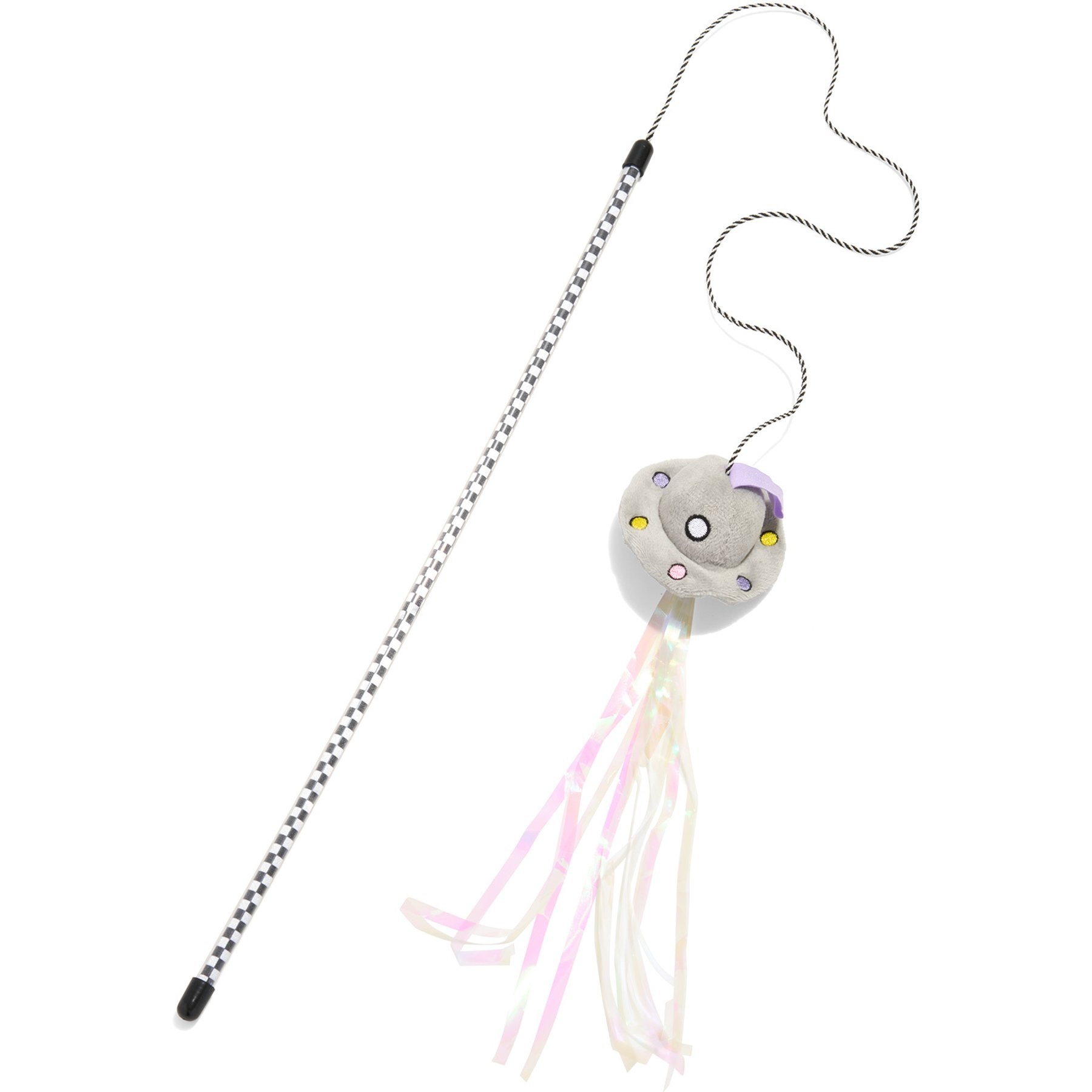
The genuinely interactive toy is a wand with a person on the other end, and the reason it outperforms almost everything else in the aisle is that it can be moved like prey. That is the whole trick, and it is why the same wand can be the best toy in the house for one cat and ignored by another cat whose owner drags it across the floor in a straight line.
What play is actually for
Play in cats is the predatory sequence run without the consequences: stalk, chase, pounce, grab, bite. The AAFP and ISFM feline environmental needs guidelines treat the opportunity to express predatory behavior as one of the pillars of a healthy environment rather than as entertainment, and the ASPCA's general cat care guidance makes the same point in plainer terms.
Two consequences follow, and they explain most of what works and what does not.
The sequence needs an ending. A hunt that never resolves is frustrating rather than satisfying. Play that lets the cat make contact (grab it, wrestle it, rabbit-kick it) completes the pattern. Play that never permits capture leaves it open.
Movement matters more than the object. Prey moves away from the predator, not toward it. It hides, freezes, and bolts unpredictably. A feather dragged steadily toward a cat looks like nothing in nature and gets the response it deserves. See prey drive.
This is also why indoor cats need it deliberately supplied. An indoor cat has no hunting outlet unless someone supplies one, and the shortfall shows up as inactivity, weight gain and, in some cats, stress behaviors. See enrichment and feline obesity.
Why the laser pointer is the category's worst product
It is worth singling out, because it is cheap, it produces a dramatic response, and it is the clearest example of the sequence problem.
The cat can never catch the dot. Every session ends with a hunt that did not resolve, and repeated across months that is a poor deal for the animal. Survey work has reported an association between frequent laser pointer use and abnormal repetitive behaviors in cats, which is not proof of causation but is consistent with what the sequence argument predicts.
If you already own one and your cat loves it, the fix is not to throw it away. It is to always land the dot on something physical at the end (a toy, a treat scattered on the floor), so the hunt finishes with a capture.
Wand toys, and how to use one properly
The wand is the product worth spending on, and the technique matters more than the model.
Move it away from the cat. Let it vanish behind a chair leg and reappear. Use short, erratic darts with pauses in between, because the pause is when a cat commits to the stalk. Let the cat win several times during the session, not just at the end.
Keep sessions short and frequent. Cats hunt in brief bursts; two or three sessions of five to ten minutes across a day suit them better than a single long one, and stopping while the cat still wants more is better than continuing until it disengages.
Attachments matter more than the handle. Cats have individual preferences for feathers, fur-like textures and things that skitter, and habituation is quick, so a second wand in a different texture, kept back and rotated in, does more than a more expensive single one.
For the terminal part of the sequence, a kicker gives the cat something it can hold with the front paws and rabbit-kick with the back: the part of the pattern a wand can only partly satisfy. Ending a wand session by letting the cat capture and wrestle a kicker completes the whole arc.
Where solo toys genuinely earn their place
Solo toys do not replace social play, but they cover the many hours you are not there. See how long can I leave my cat alone.
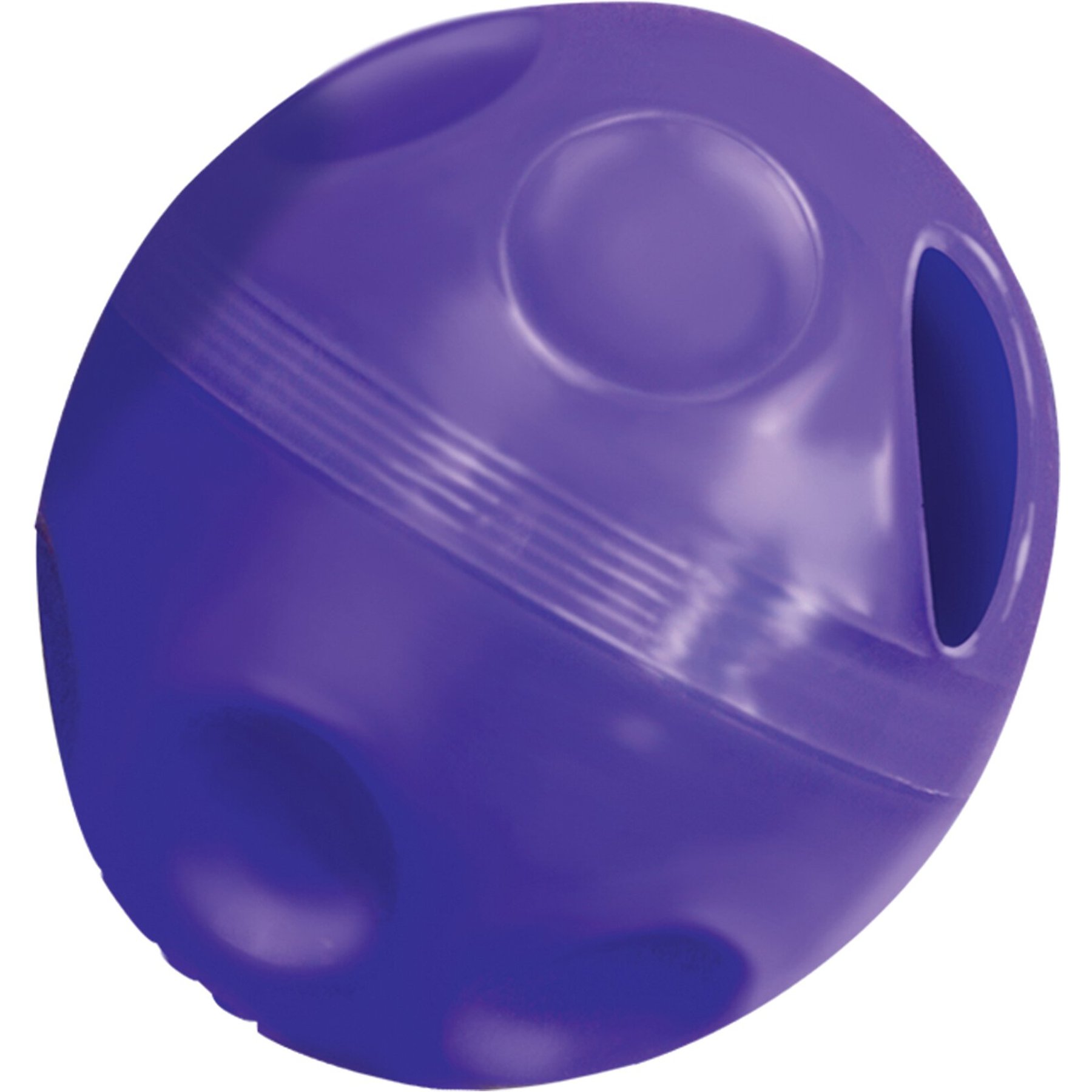
The strongest argument in this group is feeding-based. Delivering part of the daily ration through a puzzle turns a thirty-second bowl into a foraging problem, which is closer to how a cat would naturally acquire food: ten to twenty small hunts across a day rather than two large meals.
Board-style puzzles work the paws and the problem-solving rather than the chase, and they suit cats that lose interest in rolling toys. Start easy. A puzzle a cat cannot solve is a puzzle it walks away from, and one abandonment is often enough to poison it. See puzzle feeder and slow feeder.
The calories are the catch. Anything delivered through a puzzle comes out of the daily ration, not on top of it: work from your food's caloric density and a veterinary body condition score rather than from the scoop.
How this goes wrong
| What gets bought | How it fails | What it is actually good for |
|---|---|---|
| Laser pointer | Hunt never resolves; can maintain frustration | Only with a physical capture at the end of every session |
| Battery-powered moving toy | Predictable pattern; cats habituate within days | Short novelty windows in a rotation |
| Bag of twenty small toys | All available at once, all boring by week two | Rotating four at a time and storing the rest |
| Wand left out between sessions | Becomes furniture; also a string ingestion risk unsupervised | Put away after use, which also preserves its novelty |
| Hardest puzzle feeder available | Cat fails, disengages, and will not retry | Starting at the easiest setting and progressing |
What to skip
- Anything with loose string, ribbon or tinsel left out unsupervised. Linear foreign bodies are among the more serious things a cat can swallow, and a wand left on the sofa is exactly how it happens. Supervised play only, then put it away.
- Toys with small glued-on parts. Eyes, bells and plastic decorations come off, and cats swallow them.
- A cupboard full of toys, all available. Novelty is the resource you are managing. Four out, the rest away, rotated every two weeks.
- Gadgets bought to replace your own time. They cover the hours you are absent, which is a real job, but no automated toy substitutes for ten minutes with a wand.
- Catnip as a strategy. Roughly a third of cats do not respond to it at all, and it is inherited. Test it once before building anything around it.
How to choose
Buy one good wand and learn to move it like prey. That single change does more than any other purchase in this category.
Add a kicker so sessions can end in a capture, and use it as the finish for wand play and for the laser pointer you probably already own.
Add one feeding puzzle, start it on the easiest setting, and take the calories out of the daily ration.
Then rotate everything, keep sessions short and frequent, and put the wand away between them. If your cat ignores all of it, change how you are moving the toy before you buy another one; that is the fault far more often than the toy is. And if play refusal is new in a cat that used to play, or arrives alongside changes like litter box problems or hiding on a cat tree all day, that is a veterinary question rather than a shopping one.
FAQ
Frequently asked
What makes a cat toy interactive?
A human on the other end of it. The word is used commercially to mean anything that moves, rolls or dispenses, most of which the cat operates alone. That is not a criticism of solo toys, which have a real job, but it is worth being clear that a battery-powered gadget is self-directed play and a wand toy is social play. Cats need some of both, and only one of them is what the word interactive is supposed to describe.
Why are laser pointers a problem?
Because the cat can never catch the dot. Feline play follows the shape of a hunt (stalk, chase, pounce, grab, bite), and the sequence is meant to end in contact. A laser removes the ending permanently, and survey work has reported an association between frequent laser play and abnormal repetitive behaviors in cats. If you use one, finish every session by landing the dot on a physical toy or a scattering of treats so the cat catches something real.
How long should a play session be?
Shorter and more often than most people assume. Cats hunt in brief, high-intensity bursts rather than long sessions, so two or three sessions of five to ten minutes spread through the day generally suit them better than one long one. Ending while the cat still wants more is better than playing until it walks away bored.
My cat ignores every toy I buy. What now?
Change the movement, not the toy. Most toys are ignored because of how they are being moved: dragged toward the cat, in the open, at constant speed. Prey moves away, hides behind things, freezes and then bolts. Try short darting movements, pauses, and letting the toy disappear behind furniture. Also rotate: cats habituate quickly, and a toy put away for two weeks becomes new again.
Do puzzle feeders help with weight?
They help with pace, engagement and boredom, which supports a weight plan without being one. The calories still count, so anything delivered through a puzzle has to come out of the daily ration rather than on top of it. Get a body condition score from your veterinarian, work from the food's actual caloric density, and treat the puzzle as a way of making the measured portion take longer and mean more.
Featured in this guide
The picks referenced above—priced and in stock at time of publication.


Affiliate links. Prices and availability change—we filter unavailable items nightly, but the retailer's page is source of truth.
Keep reading
evergreen
Wand Toys for Cats: The Toy Matters Less Than How You Move It
back to school routine
Litter Box Setups for Multi-Cat Homes: You Need More Boxes, Not a Better One
back to school routine
Cat Trees for Indoor Enrichment: Vertical Territory, Not Furniture
back to school routine
Best Lick Mats for Dogs: A Good Tool With an Overstated Claim
back to school routine
Enrichment for Working Owners: Redistributed Time, Not a Drawer of Toys
back to school routine
Scratching Posts That Actually Last: Height, Stability, and Re-Roping
Discussion
Talk about Interactive Cat Toys Reviewed: Most of Them Are Solo Toys
Real questions from real pet owners. Add yours—signed-in members only, first three posts held for review.
Loading threads…