Best Lick Mats for Dogs: A Good Tool With an Overstated Claim
Lick mats are sold on the idea that licking calms a dog. The evidence for that is thinner than the marketing, and the mat is still worth owning, just for reasons nobody puts on the packaging.
petsupplies.co earns a commission if you buy through the product links on this page, and the price you pay is the same either way.

Lick mats are sold on a mechanism: repetitive licking releases endorphins, endorphins calm the dog, therefore the mat is a calming device. It appears on packaging, in product descriptions and in a great many blog posts, usually stated as settled fact.
It is not settled. The endorphin claim in dogs is an extrapolation, repeated with far more confidence than the underlying evidence carries. That is worth saying up front, because it is the reason people buy these and then feel let down.
The mat is still worth owning. It just earns its place for duller and better-supported reasons: it is a good format for slowing a meal, an excellent way to occupy a dog at a specific moment you choose, and one of the cheapest tools available for making handling and grooming tolerable. Those are real. The neurochemistry is decoration.
What a lick mat is actually good at
Buying you a defined window. This is the strongest argument and the one least often made. A loaded mat reliably occupies a dog for three to ten minutes, or twenty to forty frozen. That is enough to clip nails, clean ears, get through the vacuum, take a call, or let a delivery driver come and go. Knowing you can produce ten quiet minutes on demand is worth more than the mat costs.
Making handling a good experience rather than a fight. Pairing something a dog finds unpleasant with something it likes is counter-conditioning, and a lick mat stuck to the side of the bath is the most practical delivery system most owners will ever use. The AVSAB position statement on humane dog training sets out why building cooperation beats forcing compliance, and this is that principle in nine dollars of textured rubber. See also how do I brush my dog's teeth and how often should I bathe my dog.
Slowing a fast eater, at the soft-food end. A mat does for wet food what a maze bowl does for kibble. See slow feeder and lick mat.
Low-arousal occupation. A puzzle that has to be solved winds a dog up. A mat that has to be worked at slowly does the opposite. That makes it the better choice for evenings, for crate settling, and for the wind-down after exercise rather than as a substitute for it.
Texture is the specification that matters
Every mat in the category is a flat sheet with a pattern molded into it, and the pattern is the entire product. Deeper and more convoluted holds food longer; shallow and wide gets cleared fast.
| Pattern | How it fails | Suits |
|---|---|---|
| Shallow ridges or waves | Cleared in ninety seconds by a determined dog | Puppies, seniors, first mats, dogs new to the idea |
| Deep interlocking maze | Frustrating for flat-faced dogs; awkward to clean | Persistent dogs that solve everything quickly |
| Suction-backed flat mat | Suction fails on textured or damp surfaces; the mat becomes a frisbee | Bath and tile use, dogs that push the mat around |
| Bowl-shaped with lick base | Less surface area than a flat mat | Dogs that tip flat mats, feeding a full wet ration |
| Lick-plus-puzzle hybrid | Two mediocre functions rather than one good one | Dogs that need the difficulty raised over time |
The classic textured mat is the default, and it stays the default because the pattern holds a genuinely useful amount of food without being unpleasant to wash.
The failure mode that annoys people most is not difficulty, it is the mat sliding across the floor or being carried to the sofa. A non-skid base solves it more reliably than suction does.
For dogs that clear a shallow mat too quickly, a deeper pattern is the upgrade rather than a bigger mat.
Silicone suction mats exist for one job (sticking to the wall of a bath or shower) and they are worth owning if grooming is the problem you are solving. Check the suction on your actual tiles before relying on it.
If the dog is solving everything and you want the difficulty to keep climbing, a hybrid that combines licking with a moving element is the sensible next step rather than a fourth flat mat.
Loading one properly
Most disappointment with a lick mat is a loading problem rather than a product problem.
Spread thin, not thick. The point is to make the dog work the food out of the texture. A thick layer sits on top of the pattern and gets taken off in three passes, which is why people conclude their dog "solves it instantly".
Freeze it if you want more than ten minutes. This is the single biggest lever available. Load it, freeze it overnight, and the same quantity of food runs three to four times longer. Keep two or three mats in rotation in the freezer so there is always one ready.
Match the consistency to the texture. Deep patterns need something that will push into them: wet food, soaked kibble, yogurt. Shallow patterns work with almost anything. A stiff paste on a shallow mat comes off in sheets.
Serve it where you want the dog to be. The mat is a placement tool as much as a food tool: put it on the bath mat, by the crate, or on the spot you want the dog to settle on, and it does the training for you. See place training.
A lick mat is a warm, damp, textured surface covered in food residue and saliva, usually left by the sink until later. It is a very good place to grow bacteria, and the grooves that make it work are exactly what makes it awkward to clean.
Wash it after every use, with a brush that reaches into the pattern. Most are dishwasher-safe on the top rack, which is the easiest way to be consistent. Replace any mat that has developed chew damage, because torn rubber holds residue that will not come out and creates edges a dog can strip off.
This matters more with raw or meat-based toppings, and it matters most in households with young children, elderly people or anyone immunocompromised.
Calories, and the quiet weight gain
A mat changes how food is delivered, not how much of it there is.
Load it from the ration the dog was already getting. If you top it with yogurt, pumpkin, wet food or peanut butter on top of normal meals, you have added a daily snack, and the mats that get used most enthusiastically are the ones that add most. Work from your food's caloric density and a veterinary body condition score rather than from how full the mat looks. See canine obesity and how much should I feed my dog.
One specific warning on toppings. Peanut butter is the default choice and some brands are sweetened with xylitol, which is seriously toxic to dogs in small amounts. Read the ingredient list on the actual jar, every time you buy a new one: reformulation happens. See xylitol toxicity and what human foods are toxic to dogs.
What to skip
- Any mat sold primarily on the endorphin claim. Buy it for the ten quiet minutes, which are real and reliable.
- Leaving one down unsupervised. Thin flexible rubber is chewable, and swallowed pieces are a surgical problem. Supervised use, then wash and put away.
- Sweetened peanut butter, and anything with xylitol. The one genuinely dangerous thing in this category.
- The biggest mat available. Surface area is not the constraint; texture depth and how much food you load are.
- A mat as the answer to separation anxiety. Useful inside a proper absence plan, harmful as a substitute for one. See canine separation anxiety.
How to choose
Buy one standard textured mat with a non-skid base, load it with part of the actual meal, and freeze it if your dog clears it too fast. That covers most of what this category can do.
Add a suction silicone mat only if bathing or grooming is the specific problem.
Go deeper in texture, not bigger in size, when the dog gets too good at it.
And wash it every time. The mat is a food surface, and it is the part of owning one that people quietly stop doing by week three.
FAQ
Frequently asked
Do lick mats actually calm dogs down?
The claim usually made is that repetitive licking releases endorphins and lowers stress. That is an extrapolation rather than a demonstrated finding in dogs, and it gets repeated with more confidence than the underlying evidence supports. What can be said plainly is that a dog occupied with a lick mat is a dog doing something slow and repetitive instead of something frantic, and that being reliably occupied at the right moment is genuinely useful. Judge it on your own dog's behavior rather than on the mechanism.
What do you put on a lick mat?
Ideally part of the meal the dog was going to eat anyway: wet food, or dry food soaked into a paste. Plain unsweetened yogurt, pumpkin puree and wet food are the common toppings. Peanut butter works and is the most over-used option, partly because it is calorie-dense and partly because some brands contain xylitol, which is toxic to dogs. Read the label every time, or avoid it.
How long should a lick mat last?
Smeared thin and served at room temperature, most dogs finish one in three to ten minutes. Frozen, the same amount of food can run twenty to forty. If your dog clears it in under two minutes you have applied too much too thickly, or the texture is too shallow for that dog.
Are lick mats safe to leave with a dog unsupervised?
Treat them as supervised items. They are thin, flexible and pleasant to chew, and a dog that chews and swallows pieces of soft rubber or silicone has created a foreign-body risk. Use them while you are in the room, then wash and put them away. If you need something for the hours you are out, a solid stuffable rubber toy is the better format.
Do lick mats help with separation anxiety?
Not as a treatment. Separation anxiety is a panic disorder that needs a graduated absence plan and often veterinary input. A lick mat at departure can be a useful part of that plan, and it doubles as a diagnostic: a dog that ignores a loaded mat a minute after you leave is over threshold, which tells you the training step is too large. It does not tell you the mat failed.
Featured in this guide
The picks referenced above—priced and in stock at time of publication.
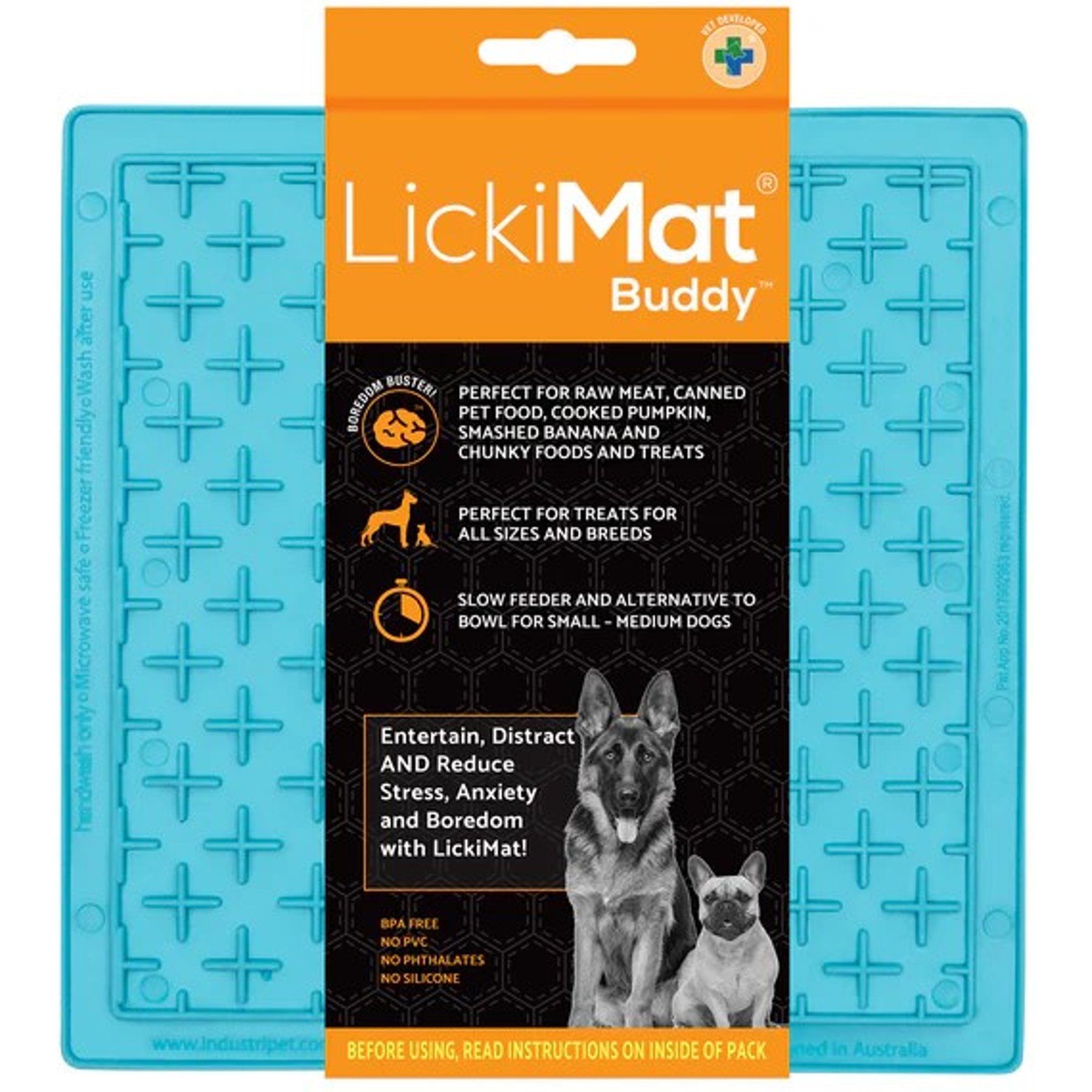
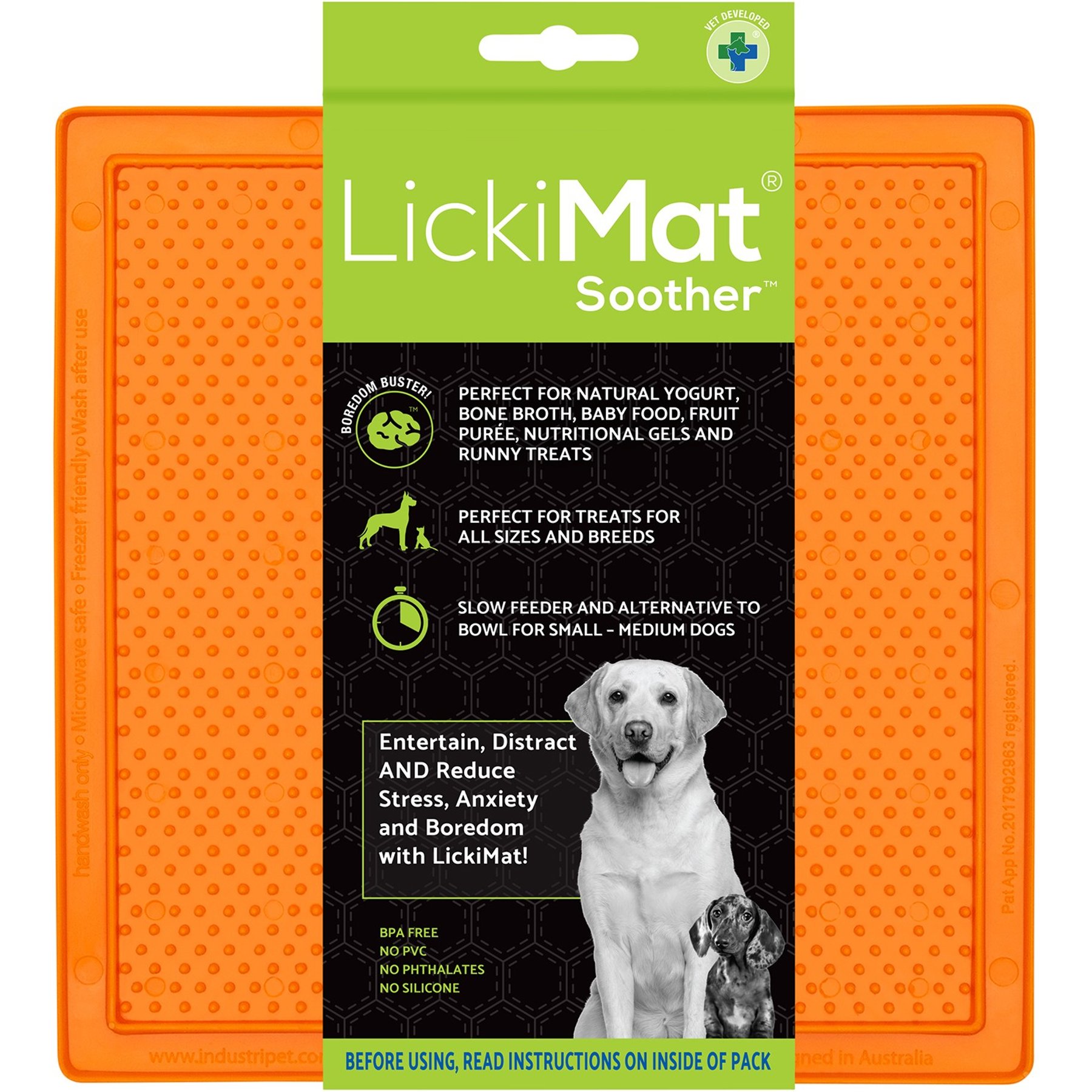
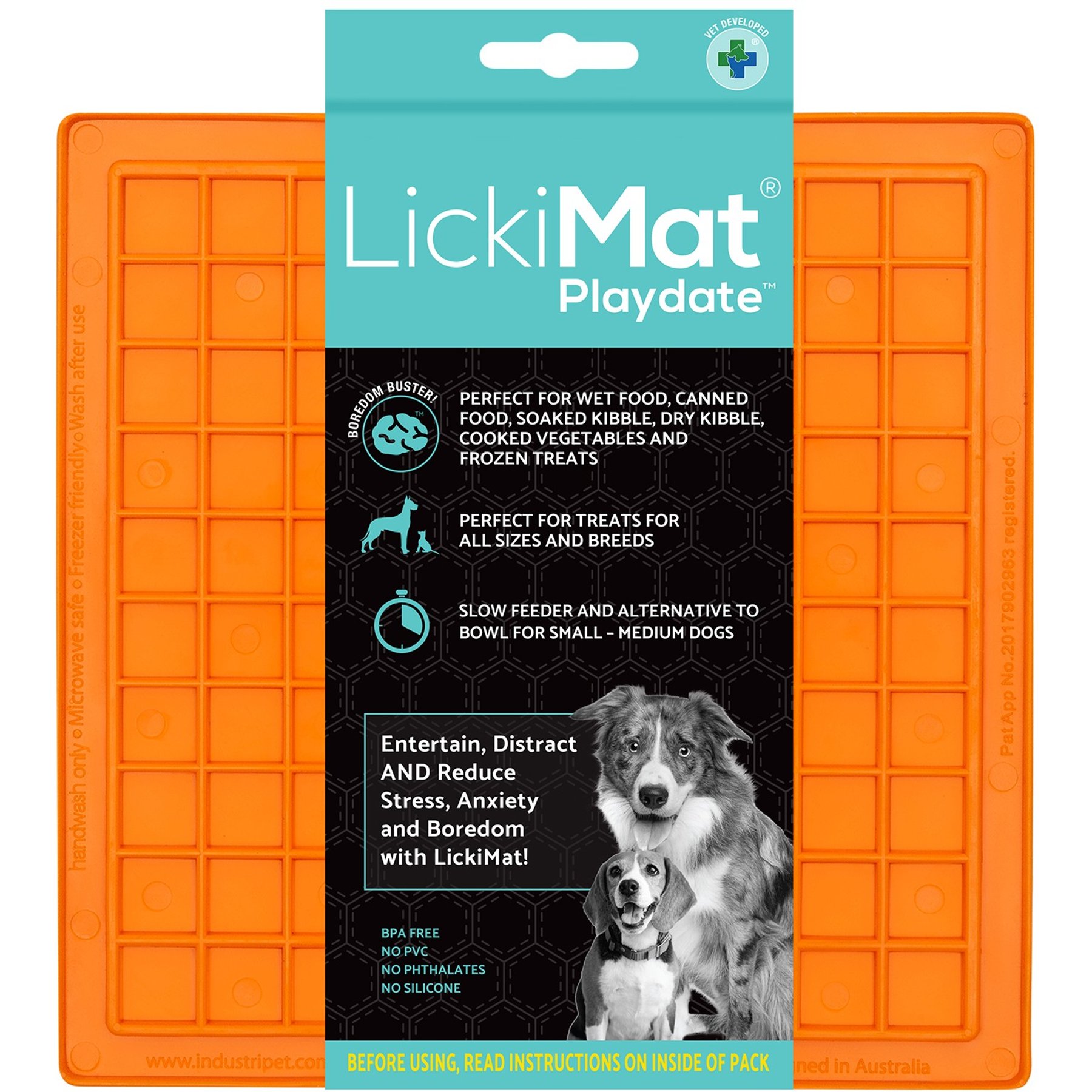
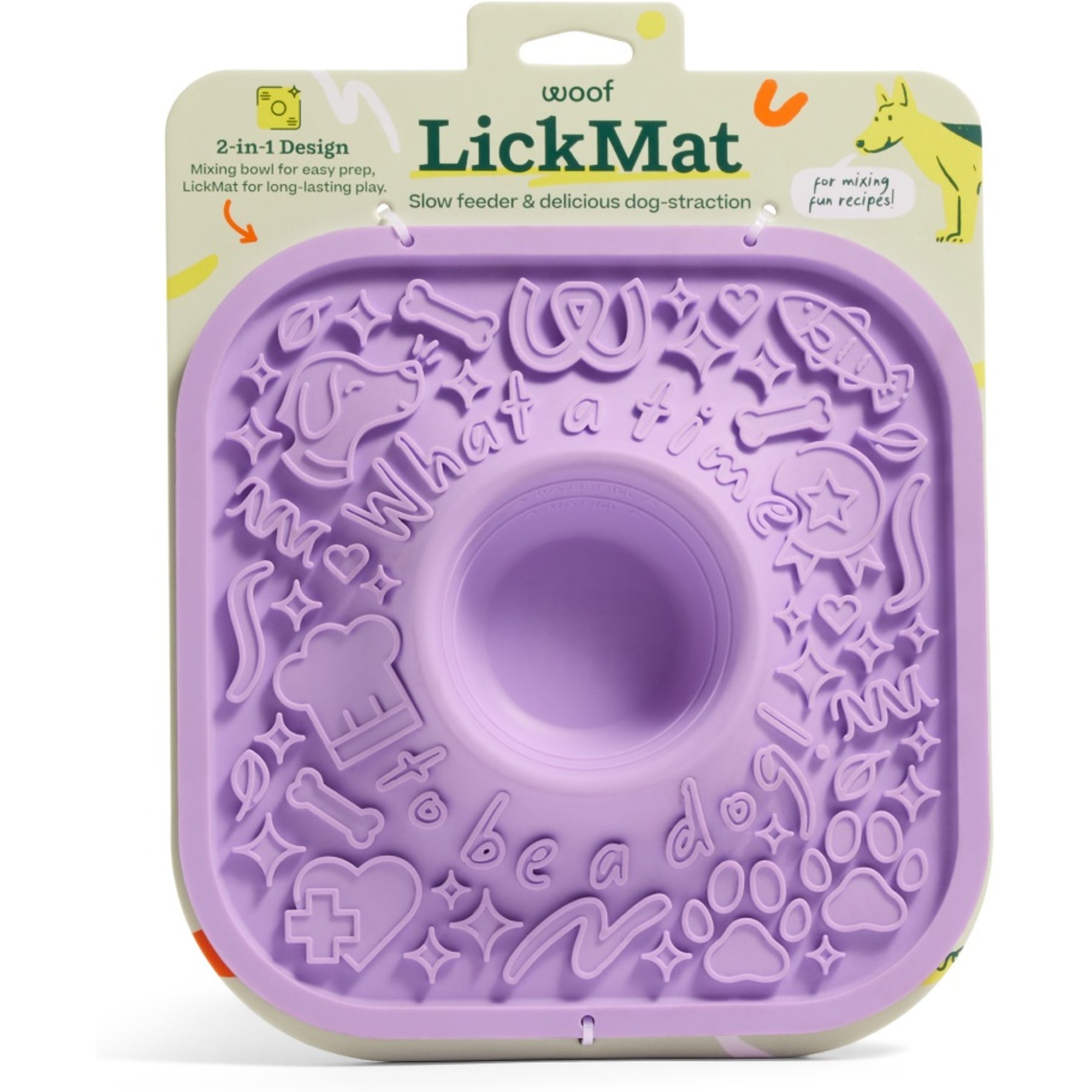
Affiliate links. Prices and availability change—we filter unavailable items nightly, but the retailer's page is source of truth.
Keep reading
back to school routine
Puzzle Toys for Dogs Home Alone: What They Fix, and What They Don't
back to school routine
Crates and Pens for Dogs Home Alone: What Confinement Fixes, and What It Hides
back to school routine
Dog Cameras with Treat Dispensers: What They Diagnose, and What They Can't Fix
back to school routine
Best Automatic Feeders for Dogs: What Actually Holds Up on a Work Schedule
back to school routine
Enrichment for Working Owners: Redistributed Time, Not a Drawer of Toys
back to school routine
Scratching Posts That Actually Last: Height, Stability, and Re-Roping
Discussion
Talk about Best Lick Mats for Dogs: A Good Tool With an Overstated Claim
Real questions from real pet owners. Add yours—signed-in members only, first three posts held for review.
Loading threads…