Puzzle Toys for Dogs Home Alone: What They Fix, and What They Don't
Puzzle toys treat boredom, not panic. Here is how to tell which one your dog has, why the freezer matters more than the toy, and what is safe to leave unsupervised.
petsupplies.co earns a commission if you buy through the product links on this page, and the price you pay is the same either way.

Puzzle toys get sold as a solution to a dog who cannot cope alone. They are not that. They are a solution to a dog who is bored alone, and those are different animals with different problems, one of which gets worse if you treat it with a rubber toy and call it handled.
The distinction matters most right now. Late August is when a house that has been full all summer empties out at 7:30 in the morning, and the dog who has had company for ten weeks is suddenly alone for eight hours. Some dogs find that dull. Some find it frightening. What you buy depends entirely on which one you have.
Boredom and panic are not the same problem
A bored dog left alone sleeps, then wakes up, then looks for something to do. The damage happens in the middle of the day, it is exploratory, and it is usually aimed at something interesting: the trash can, a shoe, the edge of a rug. That dog eats when you leave. A stuffed toy is genuinely useful to them.
A panicking dog is different. The distress starts as you pick up your keys, escalates within the first fifteen to thirty minutes, and the damage clusters at exits: door frames, window sills, the crate door. That dog does not eat. This is the single most useful thing to know about puzzle toys: if the food is untouched when you get home, that is a finding. Owners routinely misread it as "he is not food motivated." A dog who inhales the same filling on a Saturday afternoon and ignores it on a Tuesday morning is not indifferent to food; he is too distressed to eat.
The Merck Veterinary Manual's overview of behavioral problems of dogs treats that departure-linked pattern as the distinguishing feature, and it is worth reading before you spend money on equipment. Our canine separation anxiety reference covers presentation and what an actual treatment plan looks like, and the separation anxiety glossary entry has the short version.
If your dog is in the second category, buy the toy anyway (it is useful later, during the desensitization work), but understand that it is a component, not the plan. AVSAB's humane dog training position statement sets out the standard of care for behavior work, and it is the document to hand your trainer if their proposed method involves punishing the distress.
What a puzzle toy is actually doing
The mechanism is foraging. Dogs are built to work for food, and given the choice between a free bowl and an identical portion that requires effort, many animals will do some of the work anyway. Extracting food from a rubber cavity is a task with a clear beginning, a rhythm, and an end, and it consumes attention in a way that a chew alone does not.
Two practical consequences follow. First, the food has to be worth working for. Kibble rattling loose in a wide-mouthed toy is a two-minute distraction. Second, the difficulty has to sit slightly above what the dog can do casually and well below what makes them quit; see enrichment and puzzle feeder for the fuller definitions.
The four formats, and how each one fails
Every category has a characteristic failure. Pick the one you can live with.
| Format | How it fails | Best for |
|---|---|---|
| Stuffable rubber cavity | Emptied in minutes if not frozen; needs real cleaning | The default alone-time toy for most dogs |
| Rolling treat dispenser | Noisy on hard floors; ends up under furniture and abandoned | Dogs who prefer movement to licking; carpeted rooms |
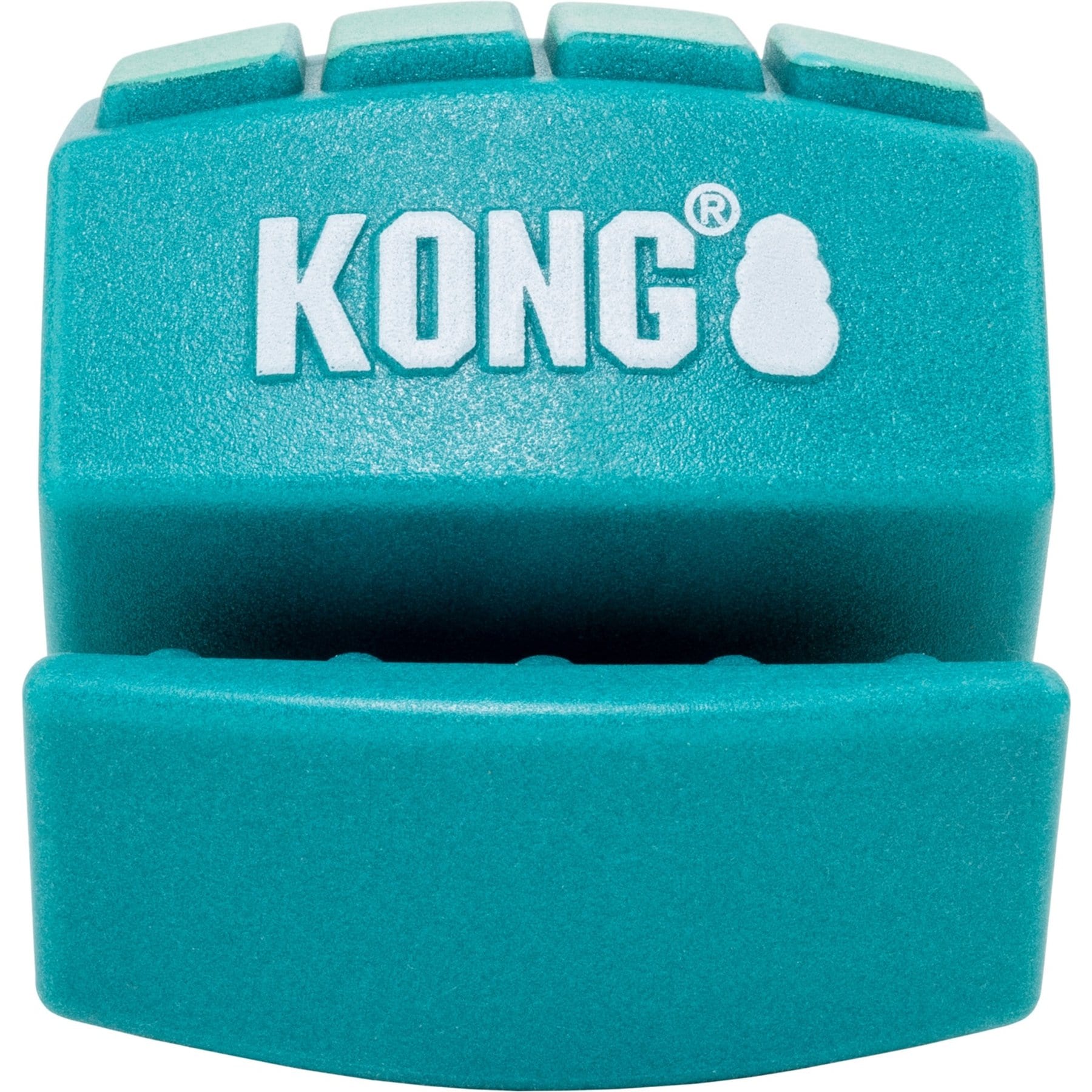
| Compartment or slider puzzle | Solvable once, then boring; most are not chew-proof | Supervised sessions, rainy days, smart dogs |
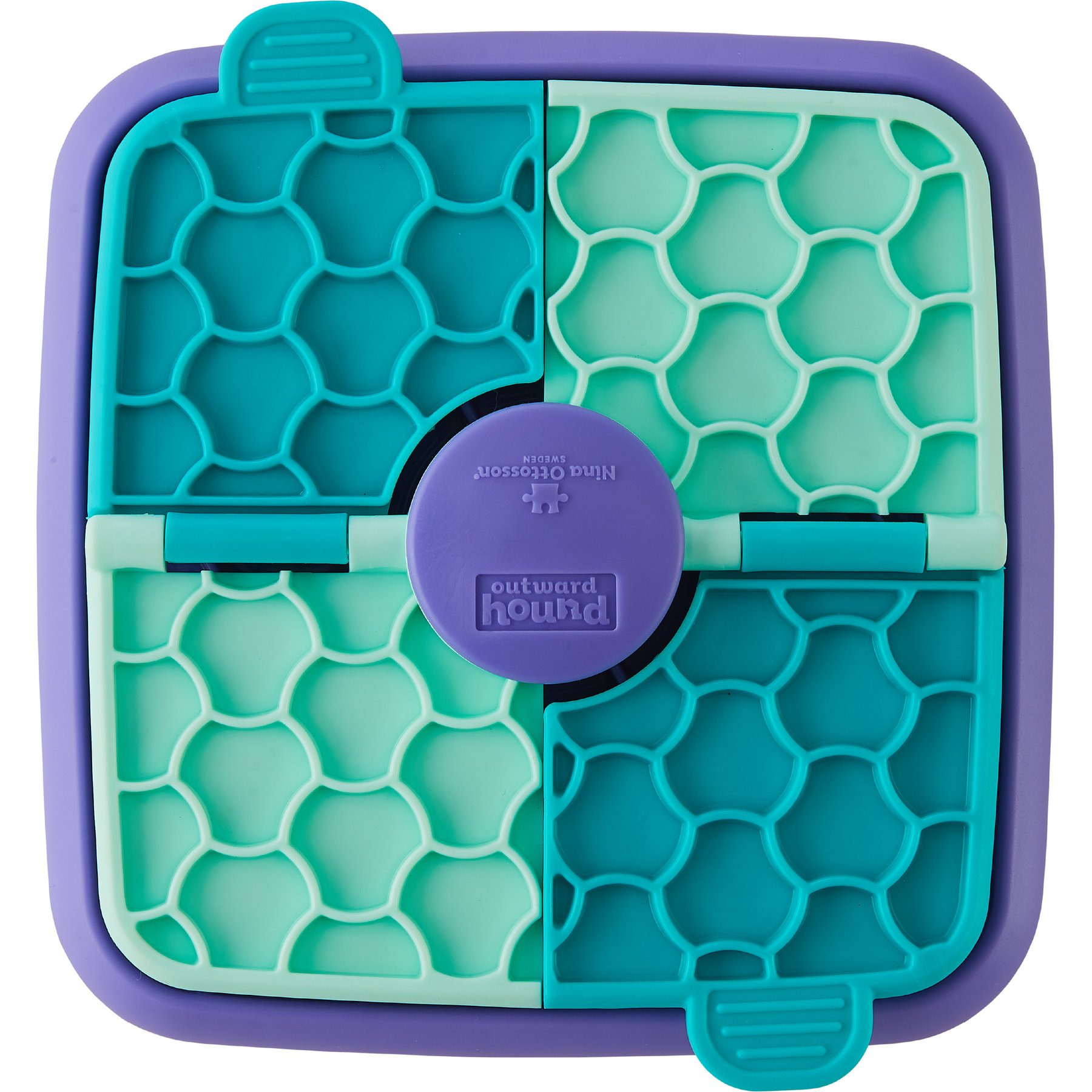
| Lick mat | Short duration unless frozen; needs a smooth surface to stick to | Building calm, crate work, dogs who bolt their food |
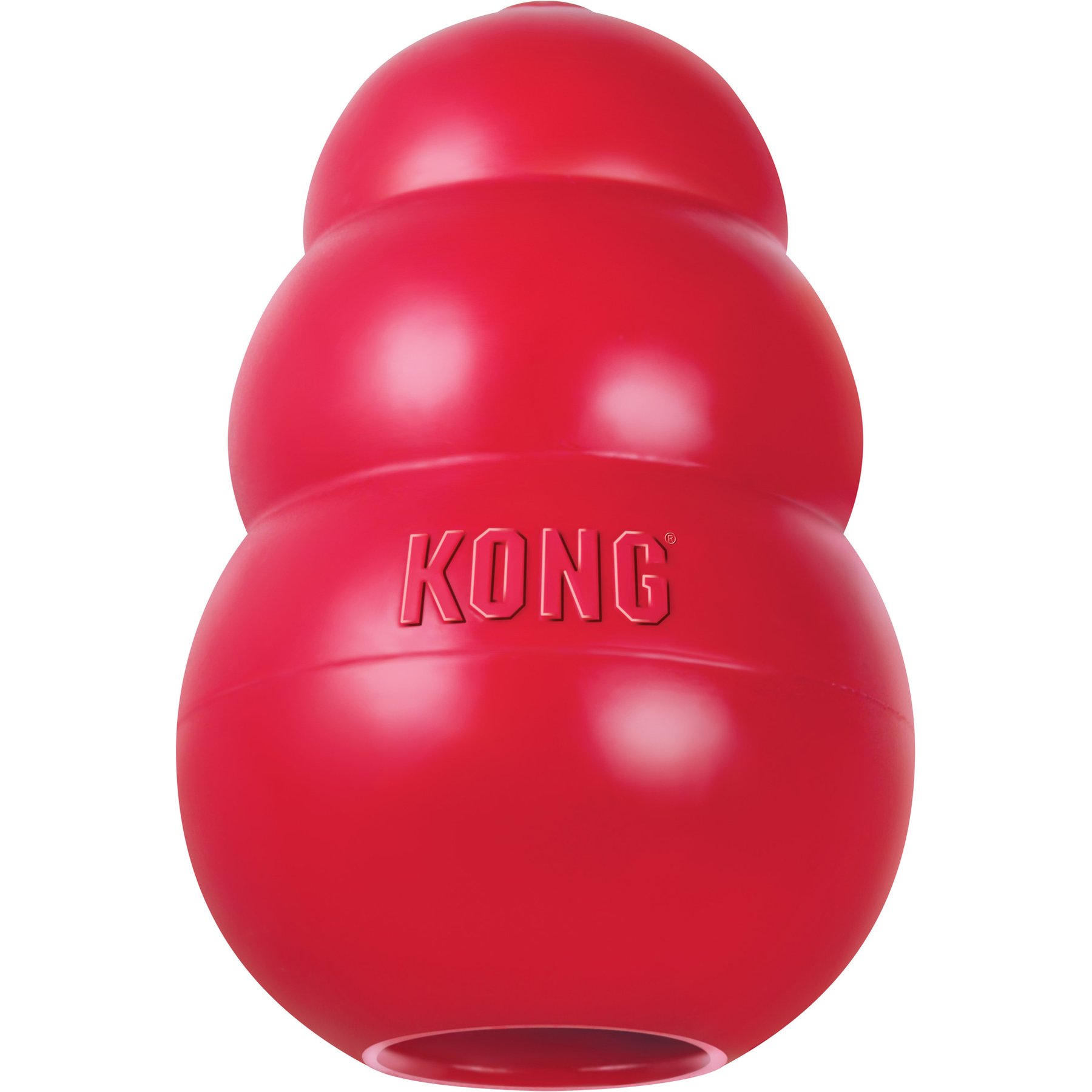
The stuffable rubber cavity is the workhorse, and the reason is durability rather than cleverness. It can be stuffed at four difficulty levels, frozen, cleaned properly, and left with a dog who is going to chew it hard.
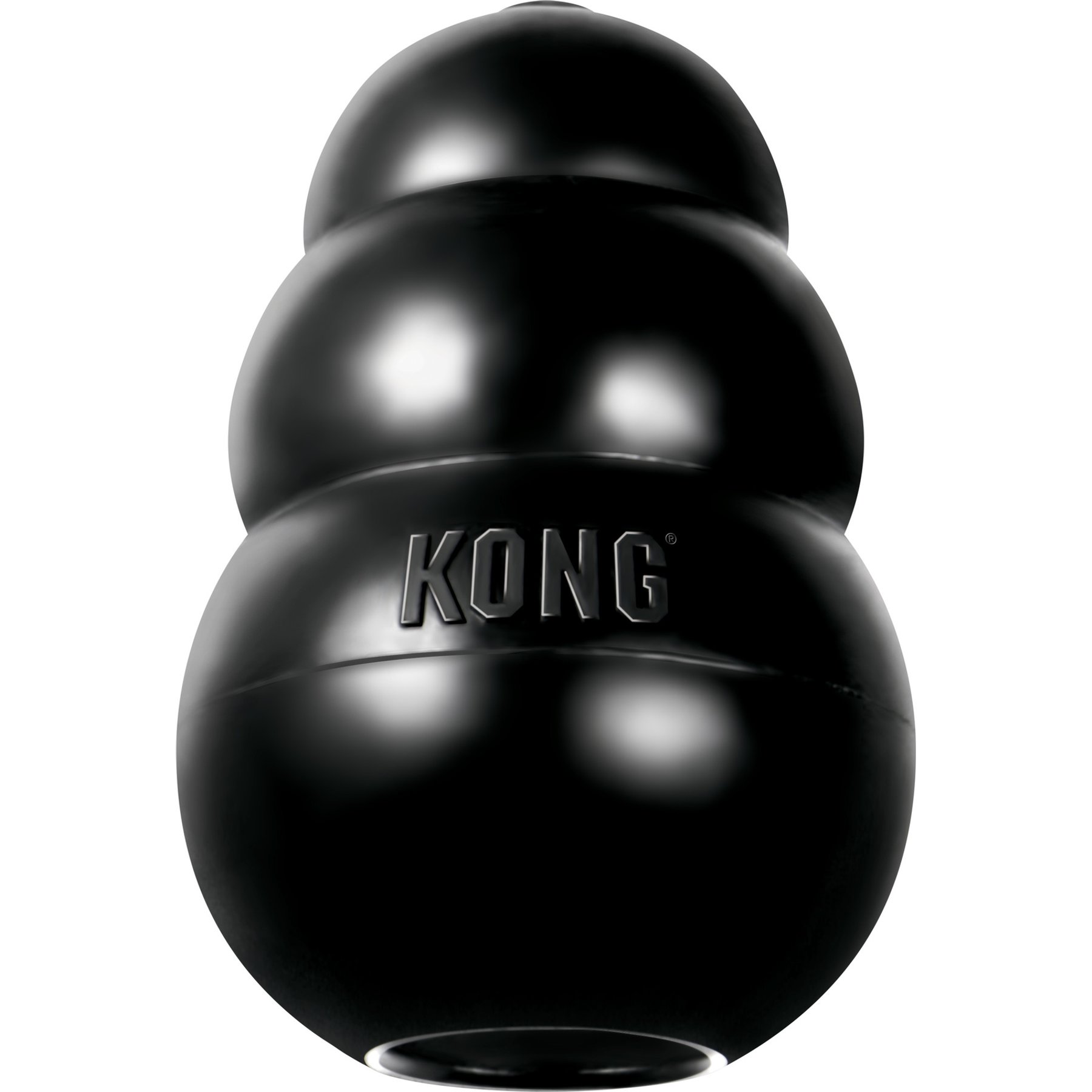
For a dog who destroys ordinary rubber, the harder compound is not a luxury. A toy that comes apart is a foreign-body risk, and that is an emergency surgery, not an inconvenience.
If your dog would rather chase than lick, a rolling dispenser converts the same meal into movement. It works best on carpet, where the noise is tolerable and the toy does not disappear under the sofa within ninety seconds.
The freezer is most of the trick
This is the part owners skip, and it is the part that decides whether the toy covers a departure or a coffee break.
A dry-stuffed toy is a five-minute activity. The same toy, packed with something wet and frozen overnight, is a twenty to thirty minute activity, because the dog now has to melt the filling as well as extract it. That difference is the difference between a toy that runs out during the anxious window and one that carries the dog through it.
A workable progression:
- Level one. Loose kibble, wide opening, nothing frozen. Confirm the dog understands the toy at all. Most dogs solve this in under two minutes, which is the point.
- Level two. Kibble bound with a little wet food or plain unsweetened yogurt, packed firmly, served fresh.
- Level three. Same filling, frozen solid overnight. This is the standard alone-time configuration.
- Level four. Frozen, densely packed, with a larger piece plugging the opening so the dog has to work the plug out first.
Serve it as you leave, not ten minutes before. The toy should be associated with the door closing.
A lick mat runs the same logic on a flat surface and is the better tool if your goal is a calm dog rather than a busy one. Slow, repetitive licking suits crate work and settles a dog who otherwise bolts a meal in seconds.
For supervised sessions, a compartment puzzle asks a different question (sequencing rather than persistence) and is a good rainy-afternoon activity even though it is not an alone-time toy.
Safety, specifically for unsupervised use
Alone time removes the person who would notice a problem, so the standard is higher than for a toy you play with together.
- Size up, not down. The toy must be too large to fit entirely inside the mouth. Sizing charts are based on weight, and weight is a poor proxy for jaw size: a lean 40-pound dog with a wide head may need the size above what the chart says.
- Watch it first. Use the toy in your presence several times before it becomes an alone-time toy. You are checking how this dog attacks this object, not how the category behaves in general.
- Inspect before every use. Rubber fails at the rim. Any tearing, any missing chunk, and it is done.
- No fabric, no squeakers, no rope, alone. All three are supervised-only. A squeaker is a small hard object inside a chewable shell.
- Count the calories. Puzzle filling comes out of the daily ration, not on top of it. This is a quiet route to weight gain; see caloric density, how much should I feed my dog and our canine obesity reference.
What to skip
- Anything advertised as curing separation anxiety. No toy does this. If the dog is panicking, the toy is untouched and the money is wasted; spend it on a behavior consult instead.
- Electronic toys left running unsupervised. Batteries and chewers are a bad pairing, and a device that stops working mid-session frustrates rather than settles.
- The toy nobody will wash. Frozen wet filling in a rubber cavity grows things. A toy that cannot go in the dishwasher, or that you will not clean by hand, becomes a hygiene problem within two weeks.
- Buying five toys at once. Rotation only helps once you know which format this dog engages with. Start with one stuffable, learn the dog, then expand.
- Treating the toy as the whole plan. A puzzle toy plus an eight-hour absence is still an eight-hour absence. Physical exercise before departure, a midday visit past the four-to-six hour mark, and a predictable routine do more than any object.
How to choose
One dog, ordinary chewer, straightforward boredom: buy one stuffable rubber cavity in the size above what you think you need, and spend your effort on the freezer routine rather than on a second toy.
Determined chewer: the firmer compound, same routine, with a hard inspection habit.
A dog who ignores the toy the moment you leave: stop shopping. That is the separation-anxiety picture, and the next step is the canine separation anxiety reference and a conversation with your veterinarian, not another purchase.
FAQ
Frequently asked
Do puzzle toys help with separation anxiety?
Not on their own. A puzzle toy occupies a bored dog, but a dog in genuine separation distress usually will not eat at all once the door closes. If the stuffed toy is untouched when you get home, that is a clinical signal, not a sign your dog dislikes the toy. Separation anxiety needs a structured behavior plan, and often veterinary involvement.
How long should a puzzle toy last?
For a first attempt, aim for five to ten minutes of engagement. Once the dog empties it reliably, freeze it. A frozen stuffed rubber toy typically stretches the same food from a few minutes to twenty or thirty, which is the window that actually covers a departure.
Is it safe to leave a puzzle toy with an unsupervised dog?
Only after you have watched the dog use that specific toy, at that size, several times. Choose a toy too large to fit fully in the mouth, inspect it for damage before every use, and retire it at the first sign of chunks coming off. Anything that can be chewed apart is not an alone-time toy.
My dog empties the toy in thirty seconds. What now?
Increase difficulty in one dimension at a time. Freeze the filling, pack it more densely, switch to a narrower opening, or move from a rolling dispenser to a compartment puzzle. Jumping straight to the hardest toy usually produces a dog that gives up rather than a dog that works longer.
Does the food in a puzzle toy count as part of the daily ration?
Yes, and this is where enrichment quietly causes weight gain. Measure the day's food first, then take the puzzle filling out of that amount rather than adding it on top. See our note on caloric density for why cup-for-cup substitutions between foods do not work.
Featured in this guide
The picks referenced above—priced and in stock at time of publication.
Affiliate links. Prices and availability change—we filter unavailable items nightly, but the retailer's page is source of truth.
Keep reading
back to school routine
Best Lick Mats for Dogs: A Good Tool With an Overstated Claim
back to school routine
Enrichment for Working Owners: Redistributed Time, Not a Drawer of Toys
back to school routine
Calming Aids for Separation Anxiety: What Helps and What Is Just Packaging
halloween safety
Anxiety Wraps for Fireworks and Noise: What the Pressure Does, and What It Cannot
back to school routine
Crates and Pens for Dogs Home Alone: What Confinement Fixes, and What It Hides
back to school routine
Dog Cameras with Treat Dispensers: What They Diagnose, and What They Can't Fix
Discussion
Talk about Puzzle Toys for Dogs Home Alone: What They Fix, and What They Don't
Real questions from real pet owners. Add yours—signed-in members only, first three posts held for review.
Loading threads…