Calming Aids for Separation Anxiety: What Helps and What Is Just Packaging
Separation anxiety is a panic disorder, and panic disorders are not treated by objects. What the evidence says about diffusers, wraps and supplements, and where a product genuinely earns a place alongside the plan that actually works.
petsupplies.co earns a commission if you buy through the product links on this page, and the price you pay is the same either way.

The calming aisle rests on a category error. Separation anxiety is a panic disorder, and panic disorders are not treated by objects. They are treated by a plan, run over weeks, sometimes alongside medication. Every product below is at best an adjunct to that plan, and several of the most heavily marketed ones rest on evidence considerably thinner than the packaging implies.
That is worth stating before any recommendation, because the usual way this goes wrong is not buying the wrong wrap. It is buying a wrap, seeing nothing change in three weeks, concluding that nothing works, and never starting the training that would have.
What separation anxiety actually is
The behavior that brings people to this page (destruction, howling, scratched door frames, a puddle by the entrance from a house-trained adult) is the visible edge of a panic response. It is not spite, it is not protest, and it is not a dog that needs to be shown who is in charge. The Merck Veterinary Manual's overview of behavioral problems in dogs is the reference worth reading in full, and our canine separation anxiety page covers presentation and workup.
Three things are commonly mistaken for it, and each needs a different response:
- Boredom or under-exercise. Builds gradually through the day, looks like a dog finding a project, and improves markedly with enrichment and exercise. Genuine separation anxiety front-loads into the first fifteen minutes.
- Noise phobia that happens to coincide with absences. A dog frightened by construction, thunder or fireworks may only show it when alone because nobody is there to buffer it. See canine noise phobia and how do I help my dog with fireworks anxiety.
- Incomplete house-training or a medical problem. A dog with a urinary tract issue does not have a behavior problem, and no wrap will help.
The diagnostic step that separates these costs nothing. Put a camera on the dog for three departures and watch the first twenty minutes. Owners are routinely wrong about what happens after the door closes, in both directions, and trigger stacking from the departure routine itself is often visible on tape long before the owner has left the building.
Why the evidence for calming products is thin
Being specific about this is more useful than a disclaimer.
Pheromone diffusers. Dog appeasing pheromone is the most studied of the calming products and still does not have a convincing evidence base. A systematic review of pheromone use in cats and dogs published in the Journal of the American Veterinary Medical Association (Frank, Beauchamp and Palestrini, 2010) found the available trials small, methodologically inconsistent, and often manufacturer-funded, and concluded that the evidence did not support the confidence of the marketing. Later work has not overturned that picture. The honest position is that a diffuser is cheap, carries almost no risk, and might contribute something at the margin.
Calming supplements. The category is regulated as a supplement rather than a drug, which means efficacy claims are not held to a drug standard before sale. Some ingredients have small supporting trials; most products are blends at doses that do not match those trials. Anything given by mouth deserves a conversation with your veterinarian first, particularly alongside other medication.
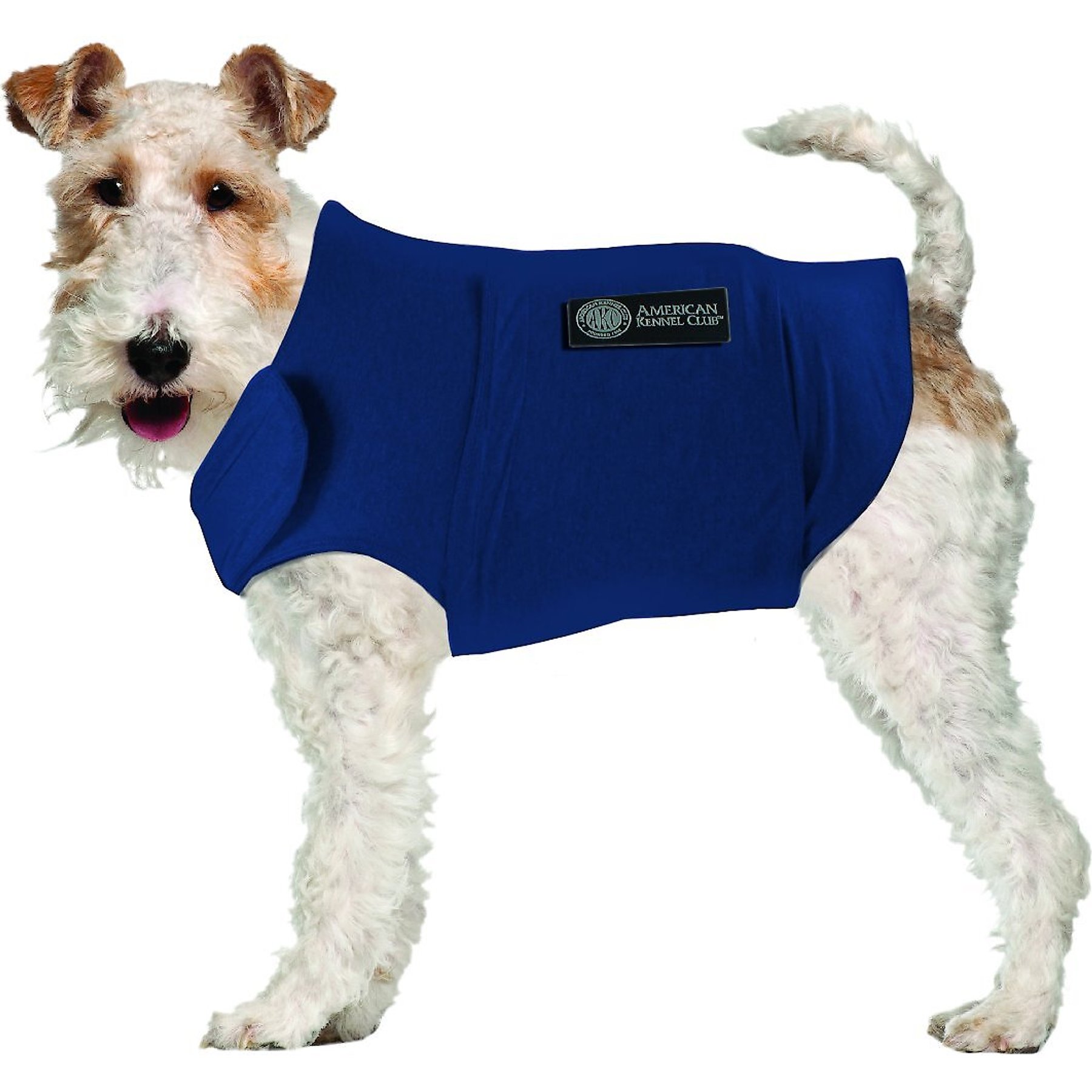
Anxiety wraps. Maintained gentle pressure is a plausible mechanism, and a minority of dogs do visibly settle. The controlled evidence is limited and the effect sizes are small. This is a reasonable thing to try and an unreasonable thing to rely on.
What none of these do is change what the dog believes about being left alone. That is the actual target.
The part that actually works
The treatment is a graduated absence plan: desensitization paired with counter-conditioning, run below the threshold at which the dog panics, and progressed on the dog's timetable rather than yours.
In outline, it means finding the duration the dog can tolerate without distress (for some dogs that is genuinely three seconds), pairing departures with something good, and extending in increments small enough that the dog never rehearses panic. Rehearsed panic is the thing that sets progress back, which is why "leaving them to cry it out" reliably makes separation anxiety worse rather than better.
Two points on method. First, this is slow, non-linear work and it is the single highest-value thing you can do. Second, do it with reinforcement rather than correction: the AVSAB position statement on humane dog training sets out why aversive methods are contraindicated generally, and with a frightened animal they are actively counterproductive; you are adding a second thing to fear to a dog that is already afraid.
For moderate and severe cases, ask your veterinarian about medication early rather than late. A dog in full panic is not in a state where learning happens, and medication is often what makes the training possible at all. See also can I leave my dog home alone for 8 hours for the management side while the plan is running.
Where a product genuinely helps
With expectations set correctly, some purchases do earn their place, mostly by supporting the plan rather than substituting for it.
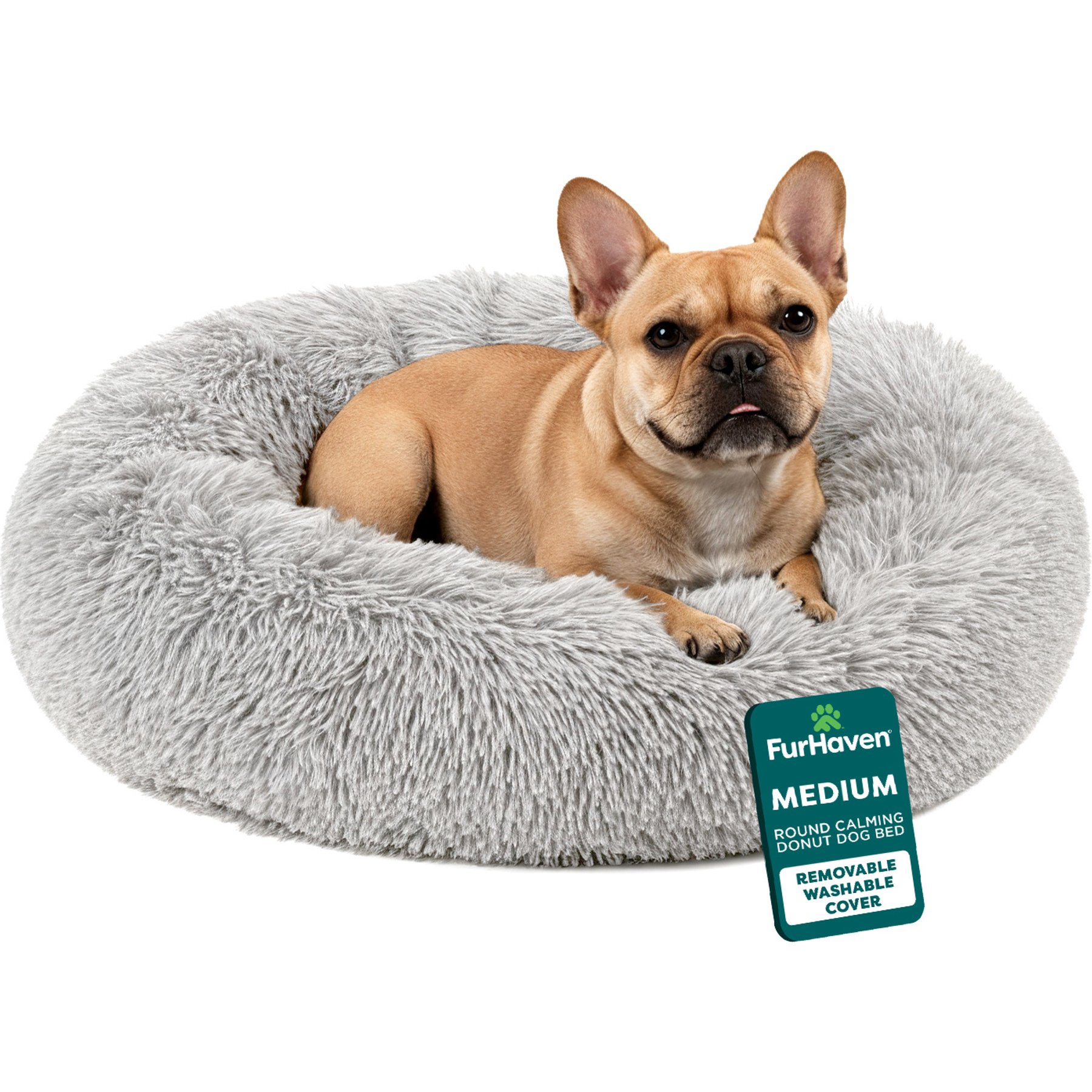
A defined, comfortable resting place gives the dog somewhere to settle that is associated with calm rather than with the front door. This is worth more than its price suggests, because a great deal of departure training consists of asking a dog to stay somewhere and be relaxed about it.
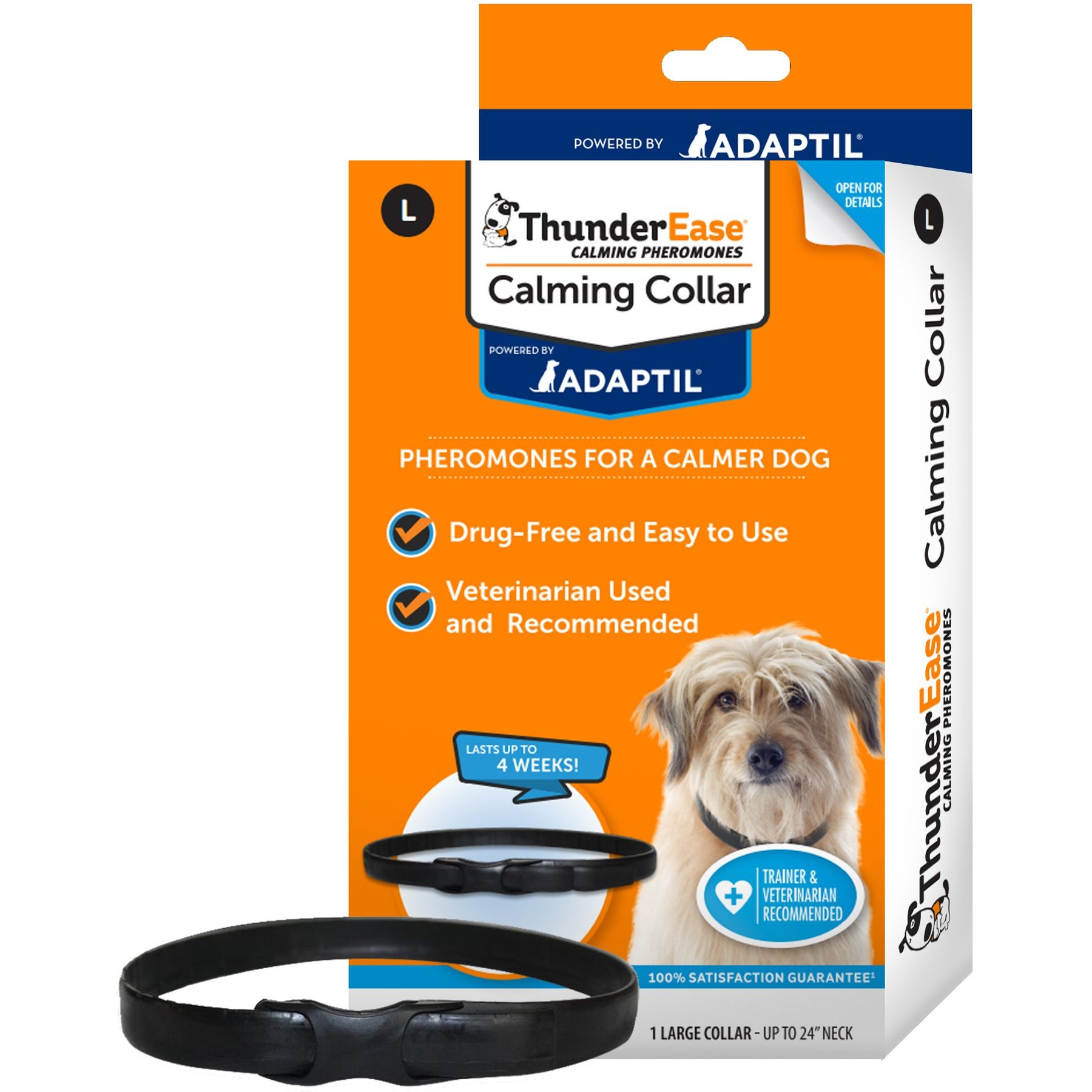
Pheromone products are the clearest example of a low-cost, low-expectation, low-risk adjunct. They come as plug-in diffusers and as collars, and the collar has the practical edge of traveling with the dog rather than with the room. Run it, do not build the plan around it.
Wraps sit in the same category. Fit matters more than brand: it must be snug and even, not tight, and a dog that freezes and refuses to move in one is not calm but shut down.
A food-dispensing toy given at the moment of departure does two jobs. It gives the dog something to do during the highest-intensity window, and it is diagnostic: a dog that will not touch high-value food thirty seconds after you leave is telling you it is over threshold and the training step is too big. See puzzle feeder.
Some dogs settle better enclosed, with a covered bed or a blanket that lets them get under something. This is individual: offer it, watch, and let the dog choose.
How this goes wrong
| What gets bought | How it fails | What it is actually good for |
|---|---|---|
| Pheromone collar or diffuser | Bought as the treatment; nothing changes in three weeks; owner concludes the problem is untreatable | A background adjunct while the real plan runs |
| Anxiety wrap | Fitted too loosely to do anything, or left on for hours unsupervised | Short, supervised periods around known triggers |
| Calming supplement | Given without veterinary input, sometimes alongside prescribed medication | A discussion with your vet, not a shelf decision |
| Crate, bought for containment | A dog with separation anxiety will injure itself escaping a crate it was not trained to love | A resting place, if the dog is already crate-happy |
| Camera | Bought, then only used to watch the dog panic in real time | Three recorded departures, watched once, to set the training threshold |
What to skip
- Anything sold as a cure. There is no product that treats a panic disorder, and the ones claiming to are selling the delay that costs your dog months.
- Bark collars and any aversive device aimed at the noise. You would be punishing an animal for being afraid, and the vocalizing is a symptom.
- Crating a dog that is not already comfortable in a crate. Escape attempts from crates are a common source of broken teeth and torn nails in these dogs.
- Getting a second dog as treatment. Usually addresses the wrong absence, and it is a large, irreversible experiment.
- Buying five things at once. If it works you will not know which one worked, and four of them were unnecessary.
How to choose
Start with the camera you already own, and watch three departures before spending anything.
If the recording shows front-loaded panic, the order is: veterinary appointment, graduated absence plan, and then (only as scaffolding for that plan) a comfortable defined resting place and a food toy for the departure window.
Add a pheromone product if the low cost appeals; add a wrap if you want to test it on your own dog. Judge both within two weeks, on video, against what you saw before.
And if you are going to spend money on one thing, make it a session with a qualified behavior professional rather than a shelf of adjuncts. The plan is the treatment. Everything on this page is scaffolding around it.
FAQ
Frequently asked
Do pheromone products work for separation anxiety?
The evidence is weak. Systematic review of pheromone products in companion animals has repeatedly concluded that the published trials are small, inconsistent in design, and frequently funded by manufacturers, which is not the same as concluding the products do nothing but is a long way from the confidence the packaging projects. Collars and diffusers are cheap and carry almost no risk, so they are reasonable things to run in the background. It is not a treatment, and if it is the only thing you change, expect no change.
Does an anxiety wrap actually calm a dog down?
For some dogs, a little. Maintained gentle pressure is a plausible mechanism and a minority of owners report a visible reduction in pacing and trembling, but the controlled evidence is limited and effect sizes are small. Try one if you like; judge it on your own dog within two weeks of honest observation, ideally on video, and do not let it substitute for the behavior plan.
How do I know it is separation anxiety and not boredom?
Record it. Boredom builds slowly and looks like a dog finding something to do. Separation anxiety front-loads: the distress starts within minutes of departure, often before you have left the street, and looks like panic rather than mischief, with pacing, drooling, vocalizing, destruction focused on exit points, and house-soiling in an otherwise reliably trained dog. A camera for three departures will tell you more than any checklist.
Is medication a failure or a last resort?
Neither. For moderate to severe cases, veterinary behaviorists commonly use medication precisely so that the dog can be under threshold often enough for desensitization to work at all. A panicking animal cannot learn. Treating medication as a moral defeat tends to extend the dog's suffering rather than avoid it.
Will getting a second dog fix it?
Usually not, and it is an expensive way to find out. Separation anxiety in dogs is typically about the absence of a specific person rather than the absence of company in general, so a second dog often ends up as a second dog in a house with one anxious dog. Some dogs do settle better with company, but this is a hypothesis to test with a trial or a fostering arrangement, not a purchase to make on hope.
Featured in this guide
The picks referenced above—priced and in stock at time of publication.

Affiliate links. Prices and availability change—we filter unavailable items nightly, but the retailer's page is source of truth.
Keep reading
halloween safety
Anxiety Wraps for Fireworks and Noise: What the Pressure Does, and What It Cannot
back to school routine
Puzzle Toys for Dogs Home Alone: What They Fix, and What They Don't
travel
Calming Products for Car Rides: An Evidence-Led Buyer's Guide
back to school routine
Best Lick Mats for Dogs: A Good Tool With an Overstated Claim
back to school routine
Enrichment for Working Owners: Redistributed Time, Not a Drawer of Toys
back to school routine
Scratching Posts That Actually Last: Height, Stability, and Re-Roping
Discussion
Talk about Calming Aids for Separation Anxiety: What Helps and What Is Just Packaging
Real questions from real pet owners. Add yours—signed-in members only, first three posts held for review.
Loading threads…