Dog Cameras with Treat Dispensers: What They Diagnose, and What They Can't Fix
The camera earns its place. The treat launcher, which is what the price is built around, is the part most likely to make things worse. What to watch in the first twenty minutes, and why a dog that eats the treat has told you something important.
petsupplies.co earns a commission if you buy through the product links on this page, and the price you pay is the same either way.

The camera is worth the money. The treat launcher, which is the feature the price is built around, is the part most likely to make things worse.
That is an awkward thing to say about a category defined by the launcher. The reasoning is simple though. The useful device here is a camera pointed at a dog who is alone, and the useful thing you do with it is watch.
The first twenty minutes carry the signal
Owners are routinely wrong about what happens after the door closes, in both directions. Some are convinced their dog is distraught and find forty minutes of uninterrupted sleep. Others assume everything is fine and find a dog that starts pacing before the lift arrives.
Three different problems produce similar-looking damage, and they need different responses. The Merck Veterinary Manual's overview of behavioral problems in dogs is the reference worth reading in full, and our canine separation anxiety page covers presentation and workup.
| What the footage shows | What it points to | Where to go next |
|---|---|---|
| Distress starting within 0 to 15 minutes: pacing, drooling, vocalizing, damage at doors and windows | Separation-related distress | Canine separation anxiety, then a veterinary conversation |
| Settled for an hour, then a dog finding a project | Boredom or under-exercise | Enrichment and puzzle toys for dogs home alone |
| Calm until a specific sound, then a spike | Noise trigger | Canine noise phobia |
| Calm throughout, damage found later | Something outside the camera's view, or a different time window | Move the camera, record longer |
Set the camera up before you buy anything else. Three departures on tape is a better purchase than any product on this page, and it costs nothing if you already own a spare phone.
A dog that eats the treat has told you something
This is the one genuinely valuable thing the dispenser does, and it is a one-time test rather than a daily feature.
A dog in a real panic state will commonly refuse food it would take instantly when you are home. That is why food is used as an informal gauge of how far a dog is over threshold. So if you toss a treat ten minutes into an absence and the dog takes it, that argues against severe separation distress and points toward boredom or a noise trigger. If the dog ignores high-value food entirely, paces, and drools, you are looking at something closer to panic, and the device has just earned its price by telling you so.
Run that test two or three times. Then stop, because past that point the dispenser stops informing you and starts training your dog.
Where remote treat-tossing goes wrong
It reinforces the moment, not the behavior you meant. Reinforcement lands on whatever is happening when the kibble does. Owners tend to press the button when the dog looks unsettled, which is precisely when reinforcing is least helpful. Barking that reliably summons food becomes more barking. The AVSAB position statement on humane dog training is the reference for why timing and contingency matter this much.
The device becomes a departure cue. Dogs read the sequence that predicts your leaving. Add a machine that whirs and clicks and it joins keys, shoes and the boot of the cupboard as part of the pre-departure routine, which is exactly the chain a graduated absence protocol is trying to defuse. See trigger stacking.
It is a plausible guarding trigger. A machine that fires food at unpredictable intervals in a multi-dog home is worth thinking twice about.
It gives you something to do instead of the thing that works. This is the real cost. Watching a distressed dog on a phone and tossing kibble at it feels like intervening. Three weeks later the dog is no better, and the protocol that would have helped has not been started. The same failure mode runs through the calming aids for separation anxiety category.
What Chewy actually stocks
Being straight about this saves you a search. The Furbo and Petcube class of tossing camera is not in the range we can verify for stock and price, so we are not going to pretend to rank it.
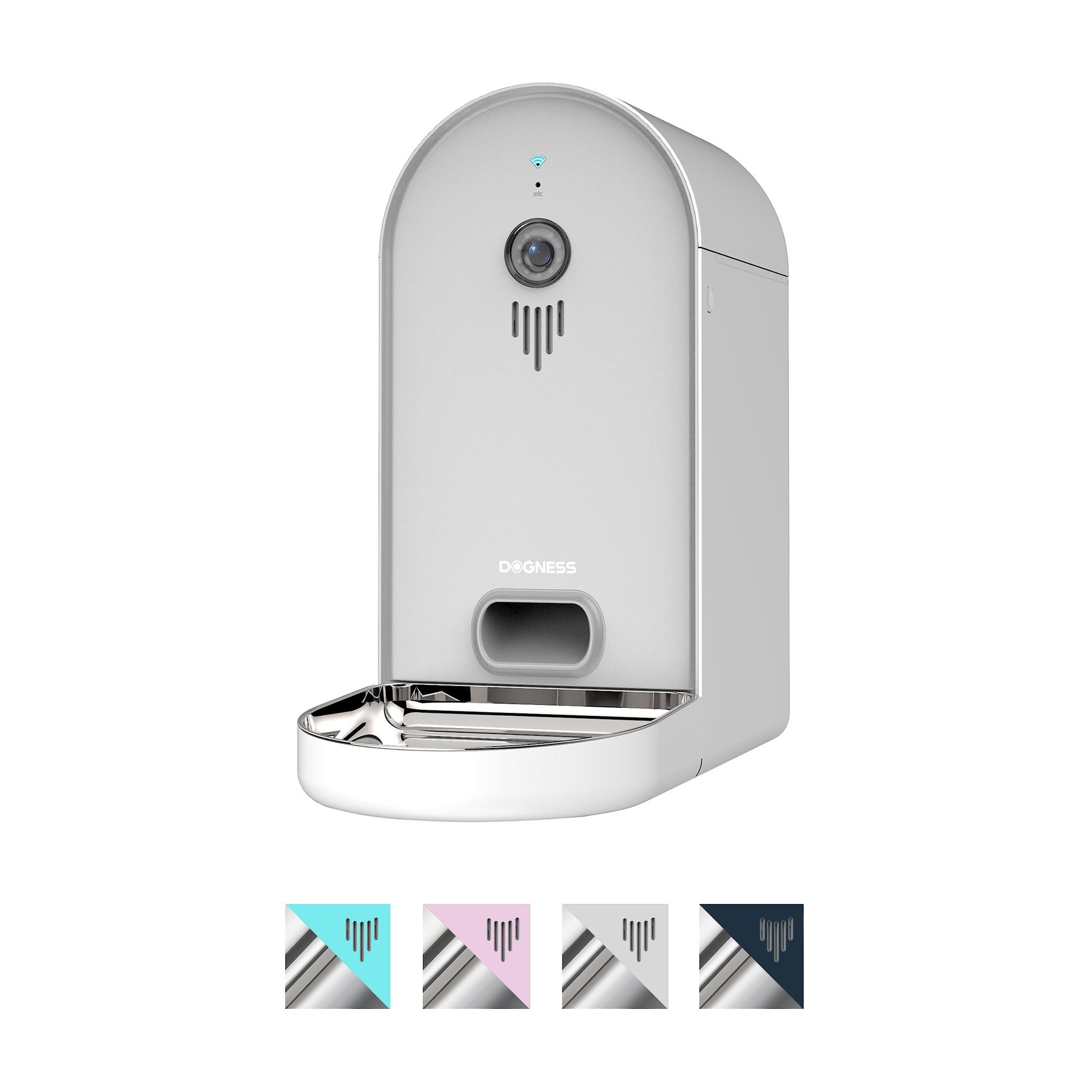
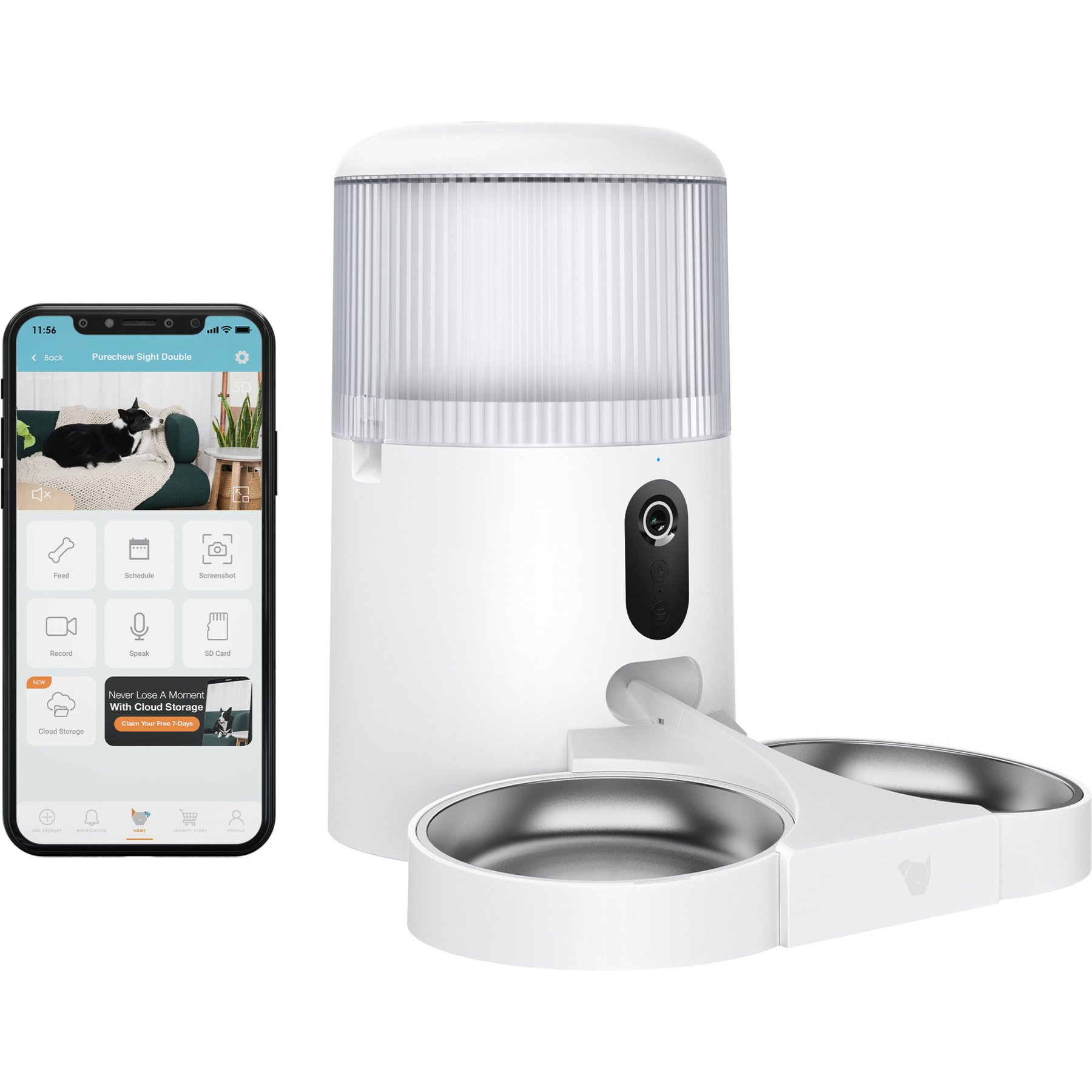
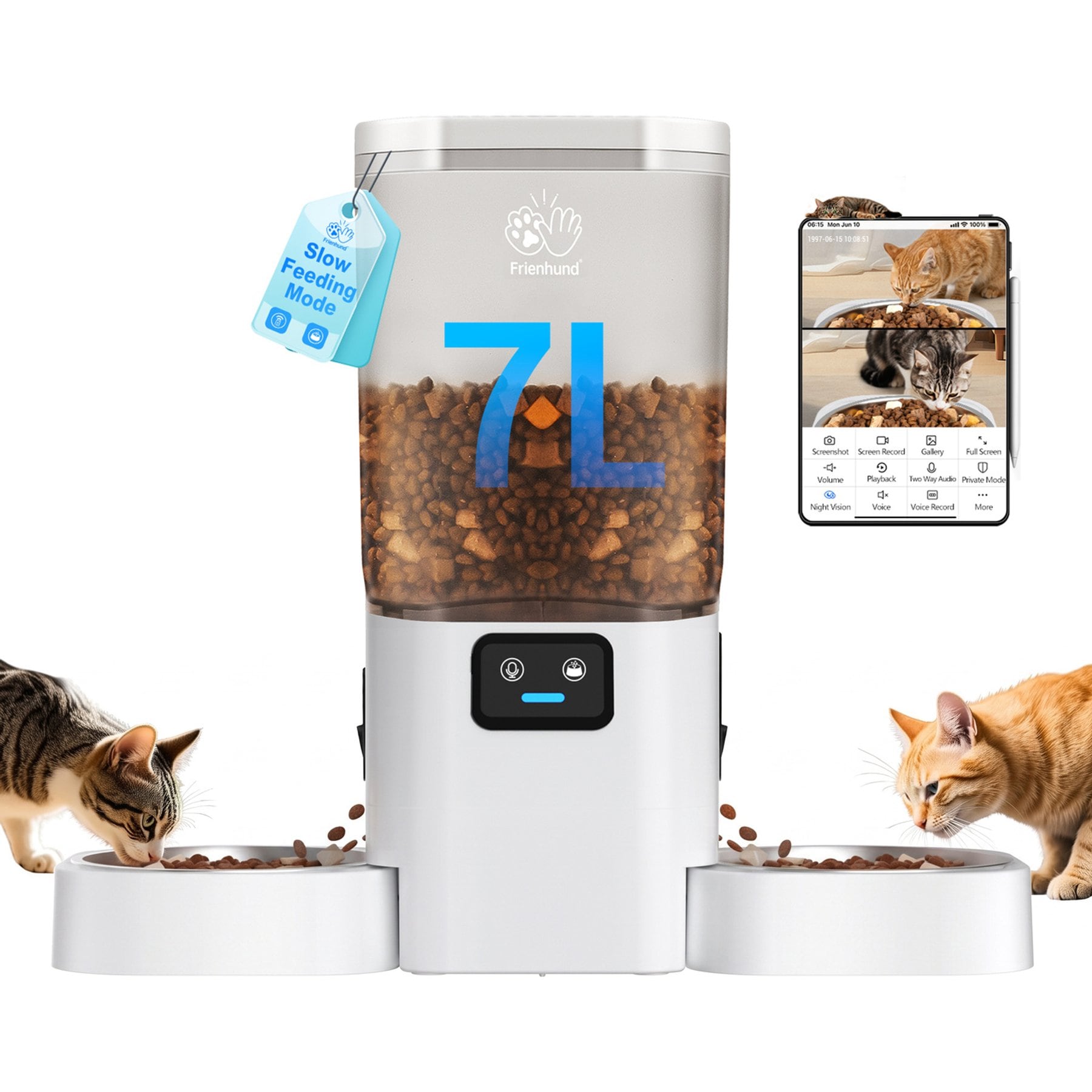
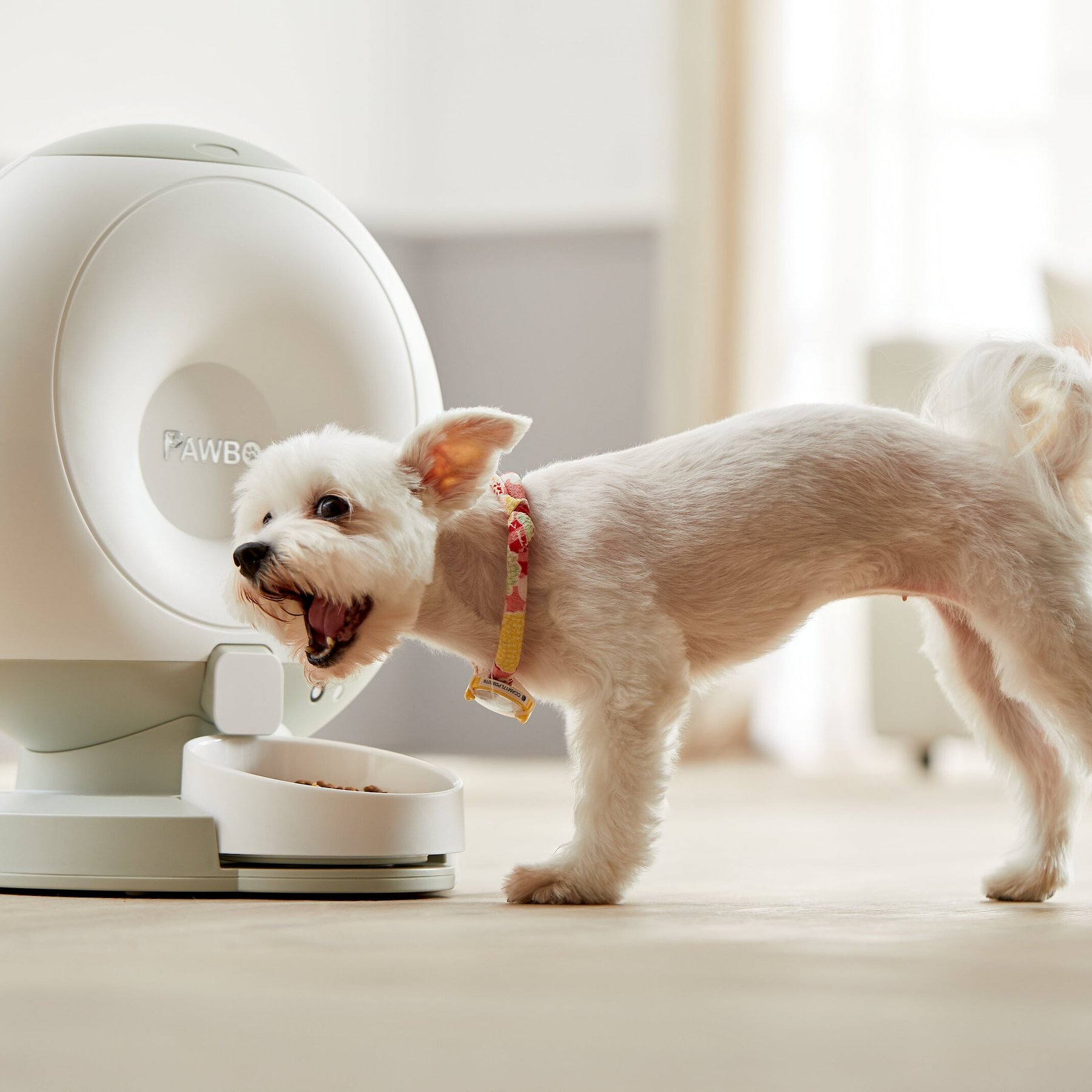
What the catalog does carry is a different device: an app-controlled automatic feeder, several with a camera built in. Scheduled meals, portion control, a view of the room, two-way audio on some models. That is a real job and a useful one. It is not an anxiety treatment, and buying one to fix anxiety is the most common way this money gets wasted.
If the actual problem is that meals land late because you do, and you also want eyes on the room:
Multi-cat homes are where the camera earns the most, because the question is usually who is eating whose food.
The closest thing in the catalog to on-demand remote dispensing has no camera at all, which makes the split between the two functions unusually clear.
On sizing, hopper capacity and jam behavior, our best automatic feeders for dogs guide covers the mechanics, and automatic feeder has the short version. Wet food does not work in any of these.
If it is separation anxiety
The camera's job is measurement. Treatment is a separate thing and it is well described.
The core of it is graduated absence: absences short enough that the dog stays under threshold, lengthened only as fast as the dog can take, paired with desensitization to the departure cues and counter-conditioning so those cues stop predicting abandonment. The AVMA's separation anxiety guidance and the ASPCA's page both set out the protocol in usable detail.
Two things worth knowing before you start. Severe cases often need medication alongside the training, which is a veterinary conversation and not a failure of nerve. And progress is slow enough that you will not notice it without a baseline, which is the second real use for the camera: record week one, run the protocol, record week four, compare the first fifteen minutes.
For how long a dog can reasonably be left in the meantime, see can I leave my dog home alone for 8 hours. Cats are a different question: how long can I leave my cat alone.
What to skip
- A tossing camera bought as an anxiety fix. The most expensive way to not treat the problem.
- Daily remote dispensing. Useful two or three times as a test. After that you are training something, probably not what you intended.
- Any camera you will not actually review. Footage nobody watches is a subscription, not a diagnosis.
- Cloud plans bought on day one. Run it on local recording first and find out whether you review the footage at all.
- A camera when the answer is a midday walk. A dog left ten hours has a schedule problem, and no lens changes that.
How to choose
If you do not know what happens when you leave, buy nothing yet. Point any camera you already own at the room for three departures and watch the first twenty minutes.
If the footage shows distress in the first fifteen minutes, the next purchase is a veterinary appointment, not hardware.
If it shows boredom, spend the money on enrichment and a longer morning walk.
If meals are the actual problem and you want a view of the room as well, a feeder with a camera is a sound buy at this price. Just buy it for the meals.
FAQ
Frequently asked
Do treat-dispensing cameras help with separation anxiety?
Not as a treatment. The camera is genuinely useful because it shows you what happens after you leave, which is the information most owners are missing. The treat dispenser is a different matter: remote reinforcement with no plan behind it rewards whatever the dog happens to be doing when the kibble lands, and a dog in genuine panic will usually not eat at all. Separation anxiety is treated with a graduated absence protocol, sometimes alongside medication, not with a device.
My dog eats the treat when I toss it remotely. Is that a good sign?
It is informative. A dog in a real panic state commonly refuses food it would take instantly when you are home, so a dog that eats within the first twenty minutes of being alone is pointing you away from severe separation anxiety and toward boredom, under-exercise, or a noise trigger. That is a useful one-time test rather than a reason to dispense every day.
Can remote treat-tossing make behavior worse?
Yes, in three specific ways. It can reinforce whatever the dog is doing at the moment the treat lands, and barking that reliably summons kibble becomes more barking. The device can turn into a departure cue that raises arousal before you have even left. And in a multi-dog home, a machine that dispenses food at unpredictable intervals is a plausible trigger for guarding.
Does Chewy sell Furbo or Petcube-style tossing cameras?
Not in the range we can verify for stock and price. What the catalog does carry is app-controlled automatic feeders, several with a camera built in. That is a different product doing a different job: scheduled meals plus a view of the room. It is worth being clear that none of them is an anxiety treatment.
What should I actually watch for on the footage?
The first twenty minutes carry almost all the signal. Genuine separation distress front-loads: pacing, drooling, whining or destruction aimed at exit points, starting within minutes of the door closing. Boredom builds slowly and looks like a dog finding a project an hour in. A dog that settles for forty minutes and then reacts to a garbage truck or a doorbell has a noise trigger, not a separation problem.
Featured in this guide
The picks referenced above—priced and in stock at time of publication.
Affiliate links. Prices and availability change—we filter unavailable items nightly, but the retailer's page is source of truth.
Keep reading
back to school routine
Best Lick Mats for Dogs: A Good Tool With an Overstated Claim
back to school routine
Crates and Pens for Dogs Home Alone: What Confinement Fixes, and What It Hides
back to school routine
Puzzle Toys for Dogs Home Alone: What They Fix, and What They Don't
back to school routine
Best Automatic Feeders for Dogs: What Actually Holds Up on a Work Schedule
back to school routine
Enrichment for Working Owners: Redistributed Time, Not a Drawer of Toys
back to school routine
Scratching Posts That Actually Last: Height, Stability, and Re-Roping
Discussion
Talk about Dog Cameras with Treat Dispensers: What They Diagnose, and What They Can't Fix
Real questions from real pet owners. Add yours—signed-in members only, first three posts held for review.
Loading threads…