Litter Box Furniture and Enclosures: Measure the Pan and the Cat Before the Cabinet
A litter cabinet hides the box from people, but the cat still has to fit, turn and dig inside it. How to measure, where enclosures go wrong, and five cabinets and enclosures sorted by who each one suits.
petsupplies.co earns a commission if you buy through the product links on this page, and the price you pay is the same either way.

Litter box furniture is sold as a way to make the box disappear. For the person, it does. For the cat, a cabinet is a covered box with a door, and it only works if the space inside suits a cat that needs room to turn and dig.
Most enclosure problems are sizing problems. The cabinet looked right in the room, but the pan inside was too small, or the cat was too big for the opening.
An enclosure is a covered box
The AAFP and ISFM feline house-soiling guidelines are useful here. They report that cats are roughly evenly split between covered and uncovered boxes. Preference seemed to depend more on how often the box was cleaned than on the cover.
The same guidelines raise three cautions that apply to any enclosure:
- A small covered box can stop a larger cat from getting into a comfortable posture.
- Odor can build up inside a covered box, and some cats avoid it for that reason.
- An open box makes it easier to see and scoop what is inside.
None of this rules out furniture. It means the cabinet has to be large, easy to open and cleaned at least as often as an open box would be.
Measure the cat first
The guidelines suggest a box about 1.5 times the length of the cat, measured from the nose to the base of the tail. One study they cite found cats preferred a box around 34 by 15 inches.
That is larger than many boxes sold as standard. It is also larger than the interior of some cabinets.
Measure in this order:
- The cat. Nose to base of tail, then multiply by 1.5.
- The pan. Choose a pan that meets that length, or comes close.
- The cabinet interior. Width, depth and height, with room for the cat to stand and turn over the pan.
- The doorway. The opening has to clear the cat's shoulders comfortably.
Our litter box sizing entry and the what size litter box does my cat need answer cover the same ground in more detail.
Cabinets that pass for furniture
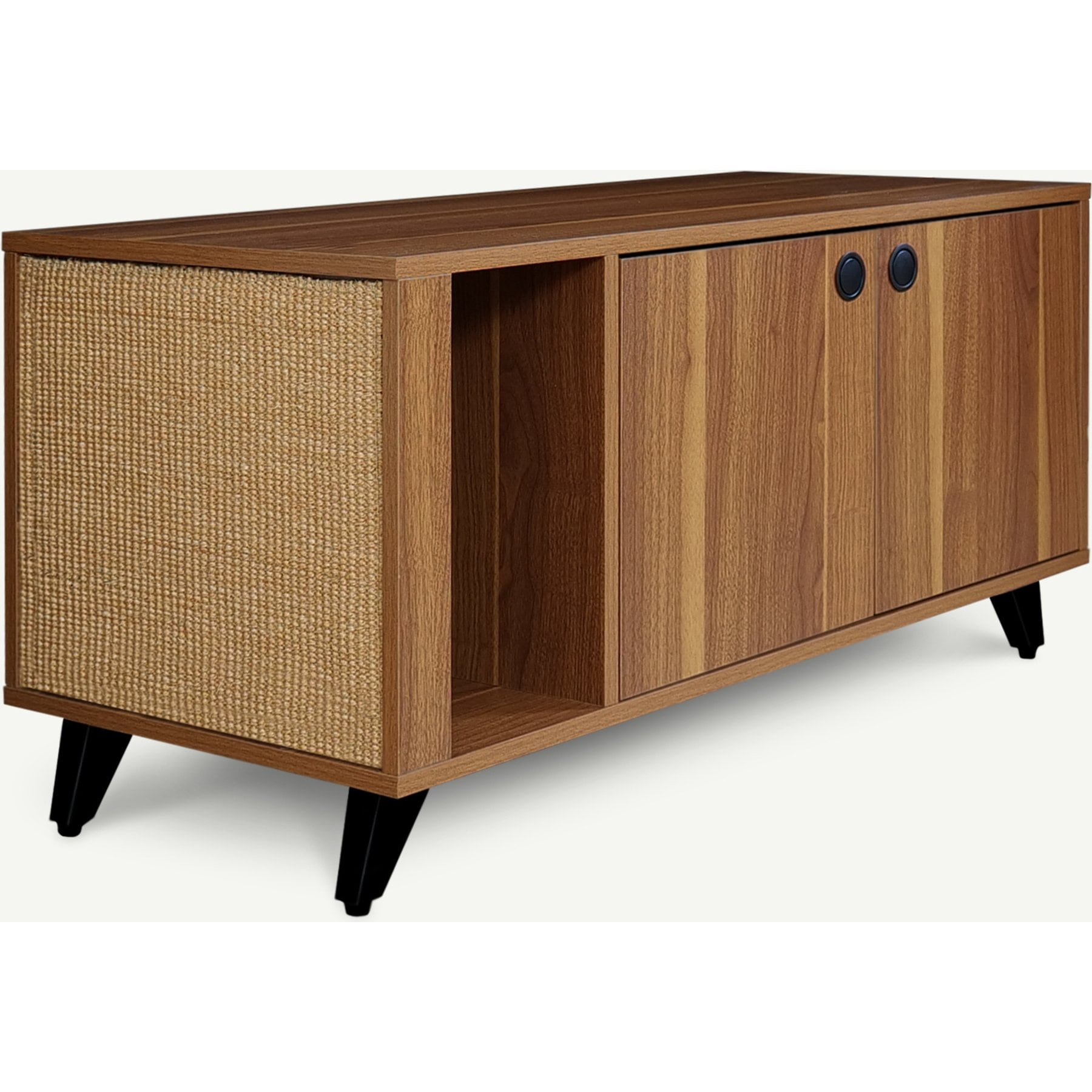
A walnut cabinet on raised legs is the most furniture-like option in this group. The listing says it has dual-door access for cleaning and fits most standard litter boxes, which are sold separately. It also carries a reminder to measure before buying.
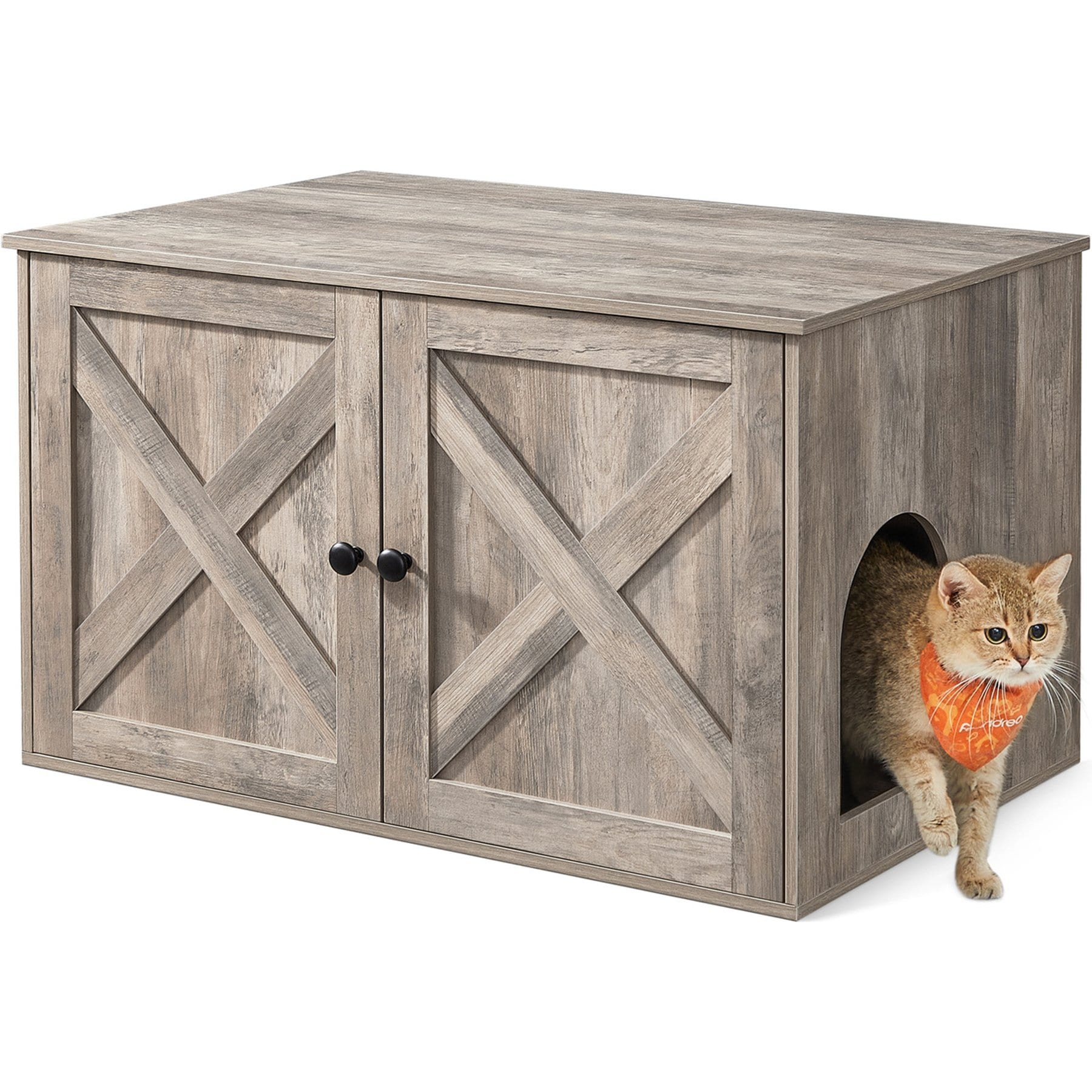
A barn door end table is a cheaper route to the same look. The maker says it supports up to 132 lbs with the divider in place. The divider comes out to give more room for a standard litter box.
Before you choose a doored cabinet, check how the doors open in the space you have. A door that hits a wall or couch makes daily scooping harder, and a skipped scoop is how enclosures start to smell.
Benches and open-roof enclosures
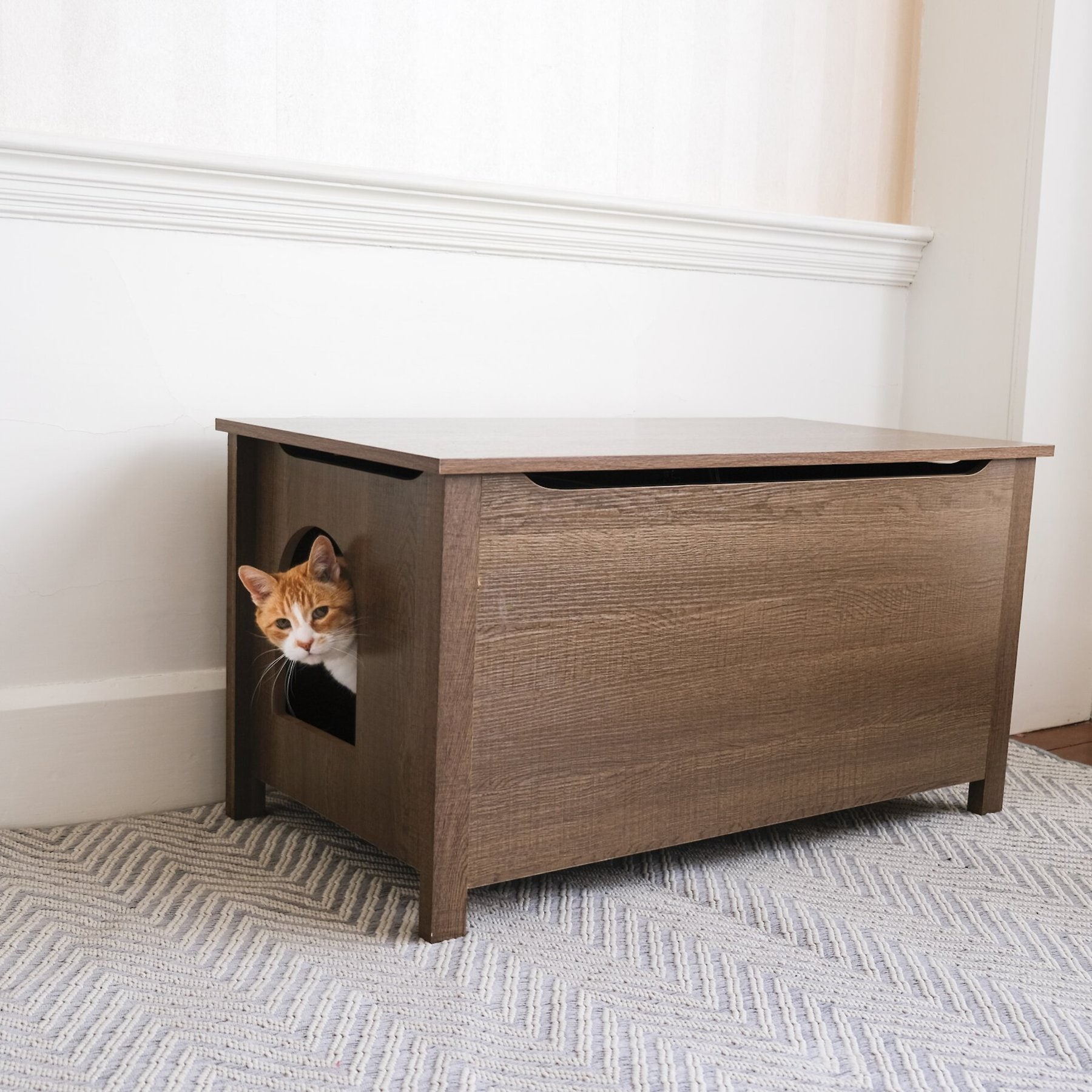
A bench-style enclosure with a lift-up lid makes scooping easier than reaching through a door. This 36-inch bench lets you install the entry on either side. The maker says it holds a regular or jumbo pan, and a safety hinge props the lid open while you clean.
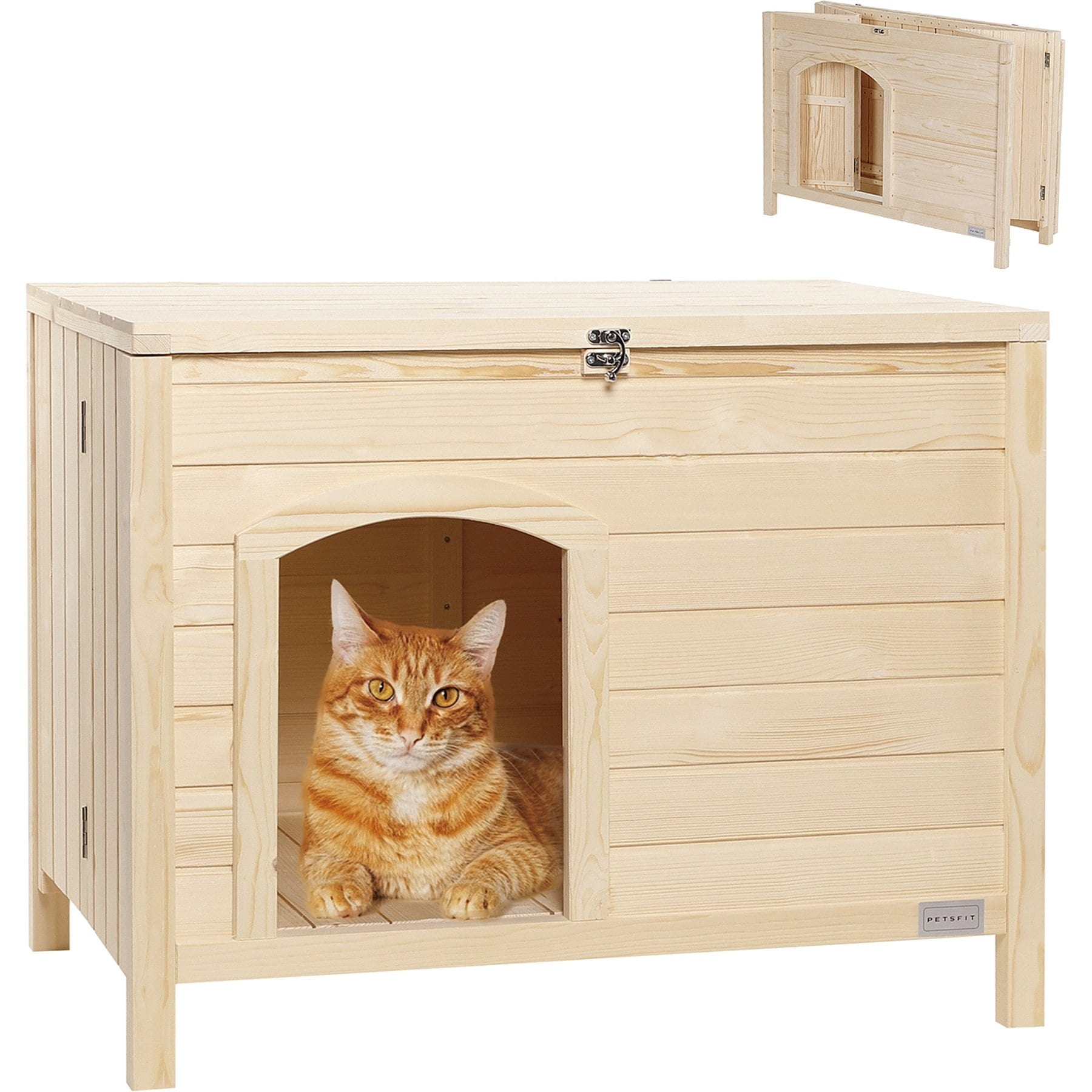
A folding fir enclosure is the simplest to set up and take down. The maker describes tool-free assembly, a hinged roof that lifts aside for cleaning, and a removable floor. The listed size is small, so measure your pan against it before ordering.
Cat trees with a litter cabinet
Some cat trees put a cabinet in the base. This 56.7-inch tree has an enclosed cabinet that can hide a litter box or store supplies, with sisal scratching posts, a top perch and two condos above.
The trade-off is location. A box under a climbing tower sits where cats play, jump and sometimes ambush each other. That can suit a confident single cat. In a household with tension, a box in a busy play area is easier to guard.
How this goes wrong
| Problem | What it looks like | Fix |
|---|---|---|
| Pan too small for the cat | Cat perches on the edge, misses the pan | Measure the cat, buy the largest pan the cabinet fits |
| Doorway too tight | Cat hesitates or backs out | Choose a larger opening or a lift-lid bench |
| Odor trapped inside | Cat goes beside the cabinet | Scoop daily, wash the pan, add an open box |
| Doors hard to open | Scooping gets skipped | Place the cabinet so doors open fully |
| Only box in the home | No fallback when the cabinet is dirty | Keep a second box elsewhere |
Keep a second box open
The guidelines suggest two boxes in two locations even for one cat. The historical multi-cat rule of one box per cat plus one is a guide, not a fixed law, but it points the same way.
A cabinet works well as one of those boxes. It is a poor idea as the only one, especially while a cat is getting used to it.
Introduce an enclosure slowly. Leave the doors open or the lid up for the first week. Put the cat's current pan and litter inside so only one thing changes.
For multi-cat homes, our multi-cat setup guide explains why spreading boxes across rooms matters more than the hardware. The litter box count rule entry covers the numbers.
Cleaning inside a cabinet
A hidden box is easy to forget. The guidelines call for removing waste at least once a day and washing the box every one to four weeks with soap and hot water.
A cabinet also hides what is in the pan, which is the monitoring problem the guidelines raise. Open the doors fully and look at the clumps when you scoop. More clumps than usual, much smaller clumps, or pink-tinged litter are worth a call to the veterinarian, because frequent small urinations and blood in the urine are early signs of urinary disease.
Wipe the cabinet floor when you wash the pan. Wood that absorbs urine will hold the smell even after the pan is clean. A washable mat or a tray under the pan protects the base.
When to call the veterinarian
A cat that stops using a new enclosure may simply dislike it. A cat that also strains, visits the box often, cries, or leaves small spots of urine needs a veterinary check, since these are signs of feline lower urinary tract disease.
A male cat straining with little or no urine may have a urethral obstruction. That is a same-day emergency.
What to skip
- An enclosure sized to the room instead of the cat. Measure the cat and pan first.
- A cabinet as the only box. Keep a second, open box in another room.
- Scented sprays inside the cabinet. The guidelines say many cats find deodorizers offensive.
- Doors that cannot open fully where the cabinet sits. Scooping will slide.
- Switching the enclosure, pan and litter at once. Change one thing at a time.
How to choose
Measure the cat from nose to base of tail and multiply by 1.5. Buy a pan close to that length, then find an enclosure whose interior and doorway fit both the pan and the cat.
Choose a cabinet for a living room, a lift-lid bench for easy scooping, a folding enclosure for small pans, or a cat tree cabinet for a confident single cat.
Keep a second open box elsewhere, scoop the hidden one daily, and treat straining or frequent trips as a reason to call the veterinarian.
FAQ
Frequently asked
Do cats like litter box furniture?
Some do and some do not. The AAFP and ISFM house-soiling guidelines report that cats are roughly evenly split between covered and uncovered boxes, and that cleaning frequency matters more than the cover. A cabinet that is large enough and scooped daily has a good chance of being accepted.
How big should a litter box enclosure be?
Big enough to hold a pan about 1.5 times the length of your cat, measured from nose to base of tail, with room for the cat to turn. Measure the cat, then the pan, then the cabinet interior and doorway.
Do litter box cabinets trap odor?
They can. The feline house-soiling guidelines say odor can build up inside covered boxes and that some cats avoid them for that reason. Daily scooping and regular pan washing matter more inside a cabinet than with an open box.
Should a litter box cabinet be the only box in the house?
It is safer to keep a second, open box in another room. The guidelines suggest two boxes in two locations even for a single cat, and a second box gives the cat a fallback while it gets used to the cabinet.
My cat stopped using the box after I added an enclosure. What should I do?
Open the doors or lift the lid, and put an open box nearby. If the cat also strains, cries, visits the box often or passes little urine, call a veterinarian. A male cat straining with little or no urine needs care the same day.
Featured in this guide
The picks referenced above—priced and in stock at time of publication.
Affiliate links. Prices and availability change—we filter unavailable items nightly, but the retailer's page is source of truth.
Keep reading
Discussion
Talk about Litter Box Furniture and Enclosures: Measure the Pan and the Cat Before the Cabinet
Real questions from real pet owners. Add yours—signed-in members only, first three posts held for review.
Loading threads…