Soft-Sided Airline-Approved Pet Carriers: What "Approved" Actually Means
"Airline approved" is a marketing phrase, not a federal standard. Here is what regulators actually require, the under-seat dimensions that matter, and how to choose a soft-sided carrier your airline will accept.
petsupplies.co earns a commission if you buy through the product links on this page, and the price you pay is the same either way.

"Airline approved" is one of the most overused phrases in the pet-supply category. There is no single federal certification that grants it. In the United States, three different authorities set partial rules: the U.S. Department of Transportation, the USDA Animal and Plant Health Inspection Service, and each individual airline, and the airline rules trump everything else at the gate. This guide explains what the regulators actually require, what airlines add on top, and what to look for in a soft-sided cabin carrier you will not be turned away with.
Who actually regulates pet travel
The U.S. Department of Transportation publishes baseline rules for air travel with pets, focused on consumer protection and disability access. The USDA-APHIS Pet Travel program governs interstate and international animal-health requirements, including documentation and vaccinations. Internationally, IATA's Live Animals Regulations define container standards used by most airlines worldwide. None of these bodies certifies a specific consumer carrier as "approved." Each airline writes its own in-cabin pet policy, including maximum carrier dimensions and breed and species restrictions, and that policy is what flight crews enforce.
Under-seat dimensions: the spec that matters
Soft-sided carriers fit under the seat in front of you, and every airline publishes its own cap. The numbers below come straight from each airline's own pet-policy page, checked in July 2026. Dimensions are length x width x height in inches.
| Airline | Carrier type | Max L x W x H (in) |
|---|---|---|
| American | Soft-sided | 18 x 11 x 11 |
| Delta | Soft-sided | 18 x 11 x 11 |
| United | Soft-sided | 18 x 11 x 11 |
| Alaska / Hawaiian | Soft-sided | 17 x 11 x 9.5 |
| JetBlue | Soft-sided | 17 x 12.5 x 8.5 |
| Southwest | Soft-sided | 18 x 10.5 x 10 |
The fine print behind those numbers:
- American allows hard-sided kennels up to 19 x 13 x 9 on mainline flights and 16 x 12 x 8 on American Eagle.
- Delta publishes no fixed cap. Under-seat space varies by aircraft, and 18 x 11 x 11 is the size Delta says fits most of its fleet.
- United allows hard-sided kennels up to 17.5 x 12 x 9, and limits you to one pet per person on the A319, A320, A321neo, 737-800/8 and 737-900/9.
- Alaska and Hawaiian do not allow hard-sided kennels in the cabin at all.
- JetBlue takes small dogs and cats only, caps each flight at six pets, and does not allow pets in Mint.
- Southwest's own branded carrier is 15 x 10 x 10, under its published maximum.
Read the table by its tightest column, not its longest. A carrier that clears American's 18-inch length still fails Alaska's 9.5-inch height and JetBlue's 8.5-inch height. Across those six airlines the binding envelope is roughly 17 x 10.5 x 8.5, which is why a 16-inch carrier with a low profile is the safest single purchase.
Always re-check your specific airline's current policy page before you fly. Aircraft type and even seat class shift the under-seat clearance, and these caps change without notice. If you are still deciding on shape and material, our buyer's guide to choosing a pet carrier walks through the trade-offs.
This listing is no longer available.
What soft-sided actually has to do
USDA-APHIS rules for cabin pets, mirrored by every major airline, require that the animal be able to stand up, turn around, and lie down naturally inside the carrier. The carrier must have adequate ventilation on at least two sides, a leak-proof bottom, and a secure closure. Soft-sided carriers add a few practical details airlines effectively require even if the policy page does not spell them out: mesh panels on multiple sides, a structured bottom that does not collapse around the animal, and a shoulder strap or top handle that lets you carry it without lifting from the mesh.
What to look for when you buy
Concrete checklist when evaluating a soft-sided carrier for flight:
- Internal dimensions large enough for the dog to stand, turn, and lie naturally: measure your dog from nose to base of tail and floor to top of head, then add 1 to 2 inches in each direction.
- External dimensions under the maximum published by your specific airline (re-checked within a week of booking).
- Mesh panels on at least two sides for ventilation and visibility.
- A rigid or semi-rigid base plate that holds shape under the seat.
- A leak-proof bottom liner (often removable for washing).
- Self-locking zippers on the main opening.
- A safety leash clip inside, so the dog cannot bolt when the carrier is opened at security.
- A trolley strap that fits over a roller-bag handle for airport navigation.
- Materials that survive a wash: nylon and polyester hold up far better than untreated canvas.
A pre-flight checklist that prevents gate denials
Acclimate the dog to the carrier at least two weeks before travel. Open it on the floor at home, feed inside it, and let the dog choose to enter. Practice short car rides in the carrier. The day of, take a long pre-flight walk to drain energy, withhold food in the 4 to 6 hours before boarding to reduce nausea, and carry a small water bottle and a collapsible bowl through security. Bring a printed copy of the airline's pet policy and (for any veterinary documentation) a copy of the rabies certificate and a USDA-APHIS health certificate if your destination requires one. Carriers under the dimension cap have still been turned away because the animal was visibly cramped; the "stand up and turn around" rule is enforced at the gate.
Common mistakes to avoid
- Trusting a carrier's "airline approved" label without checking the specific airline's current dimensions.
- Sizing the carrier to the dog you have today, when the puppy will be 15 percent larger on the return leg.
- Skipping the acclimation period and discovering at the gate that the dog refuses to enter.
- Booking a flight without checking the airline's breed restrictions; brachycephalic (flat-faced) breeds are restricted or banned in cargo on most carriers, with cabin policies varying.
- Forgetting to confirm pet capacity on your specific flight; most airlines cap the number of in-cabin pets per cabin (often 4 to 6), first-come first-served.
When to talk to your vet
Schedule a veterinary visit 4 to 6 weeks before any flight if your destination requires a USDA-APHIS health certificate (most international travel and some interstate routes). Discuss whether the dog's breed, age, or medical history makes air travel inadvisable. For dogs with travel anxiety, see our companion guide on calming products for car rides: the conditioning protocol transfers directly to carrier acceptance. Sedation is generally not recommended for air travel; the American Veterinary Medical Association advises against tranquilizing pets for flight because of cardiovascular and respiratory risks at altitude.
Bottom line
There is no single "airline approved" badge worth trusting. Treat it as a marketing phrase, then verify against your specific airline's current under-seat dimensions, the USDA stand-and-turn requirement, and your dog's real measurements. A 16-inch soft carrier with rigid base, multi-side mesh, a safety leash clip, and a trolley strap will pass on nearly every major U.S. carrier; the rest of the pre-flight work is conditioning and paperwork.
Authoritative references
- U.S. Department of Transportation: Traveling with pets
- USDA Animal and Plant Health Inspection Service: Pet travel
- International Air Transport Association: Pets and animal travel: Live Animals Regulations
- American Veterinary Medical Association: Traveling with your pet
- American Kennel Club: Flying with dogs in the cabin
Hero photo by Maxim Tolchinskiy on Unsplash.
FAQ
Frequently asked
Is there a single 'airline approved' standard for pet carriers?
No. There is no federal certification that grants 'airline approved' status. Each airline sets its own in-cabin pet policy, including maximum dimensions and breed restrictions. Always verify against your specific airline''s current policy page within a week of your flight.
What are typical under-seat dimensions for soft-sided carriers?
Most major U.S. airlines allow soft carriers up to roughly 17 to 18 inches long, 11 inches wide, and 10 to 11 inches tall. Delta and American Airlines, for example, both publish 18 by 11 by 11 inch limits at the time of writing. A 16-inch carrier gives you the most flexibility across airlines.
Can my dog be sedated for the flight?
The American Veterinary Medical Association generally advises against sedating pets for air travel because tranquilizers can cause cardiovascular and respiratory complications at altitude. Talk to your vet about non-sedating alternatives, including pheromones, pressure wraps, and behavioral conditioning.
What paperwork do I need to fly with my dog?
For domestic flights, most airlines require proof of current rabies vaccination. For international travel and some interstate routes, you need a USDA-APHIS endorsed health certificate completed by an accredited veterinarian, typically within 10 days of departure. Check both your destination and your airline''s requirements 4 to 6 weeks ahead.
How early should I get my dog used to the carrier?
Plan at least two weeks of acclimation. Open the carrier at home, feed your dog inside it, practice short car rides, and gradually increase the time inside. Dogs who arrive at the airport already comfortable in their carrier handle the trip far better than dogs who first see it on departure day.
Featured in this guide
The picks referenced above—priced and in stock at time of publication.
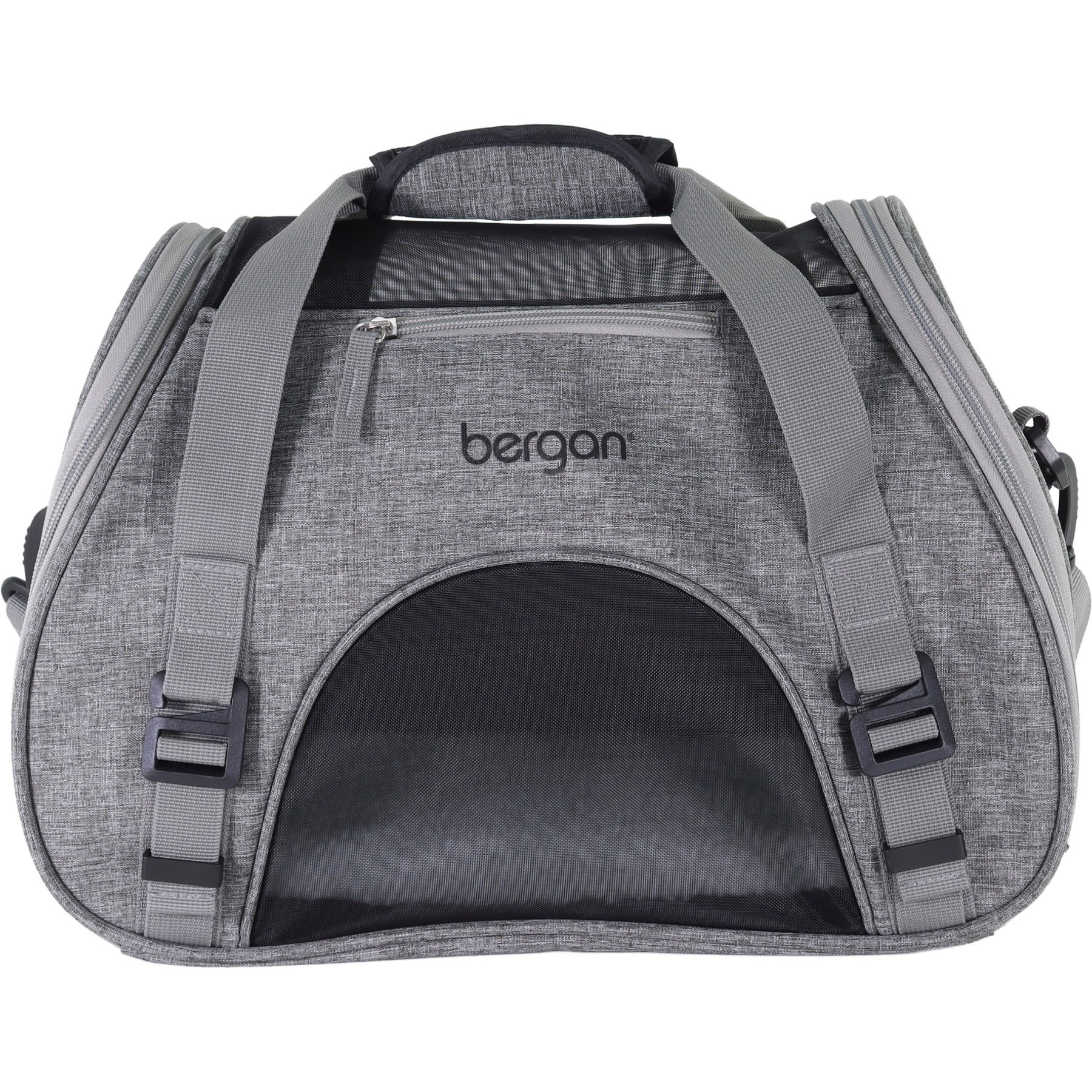
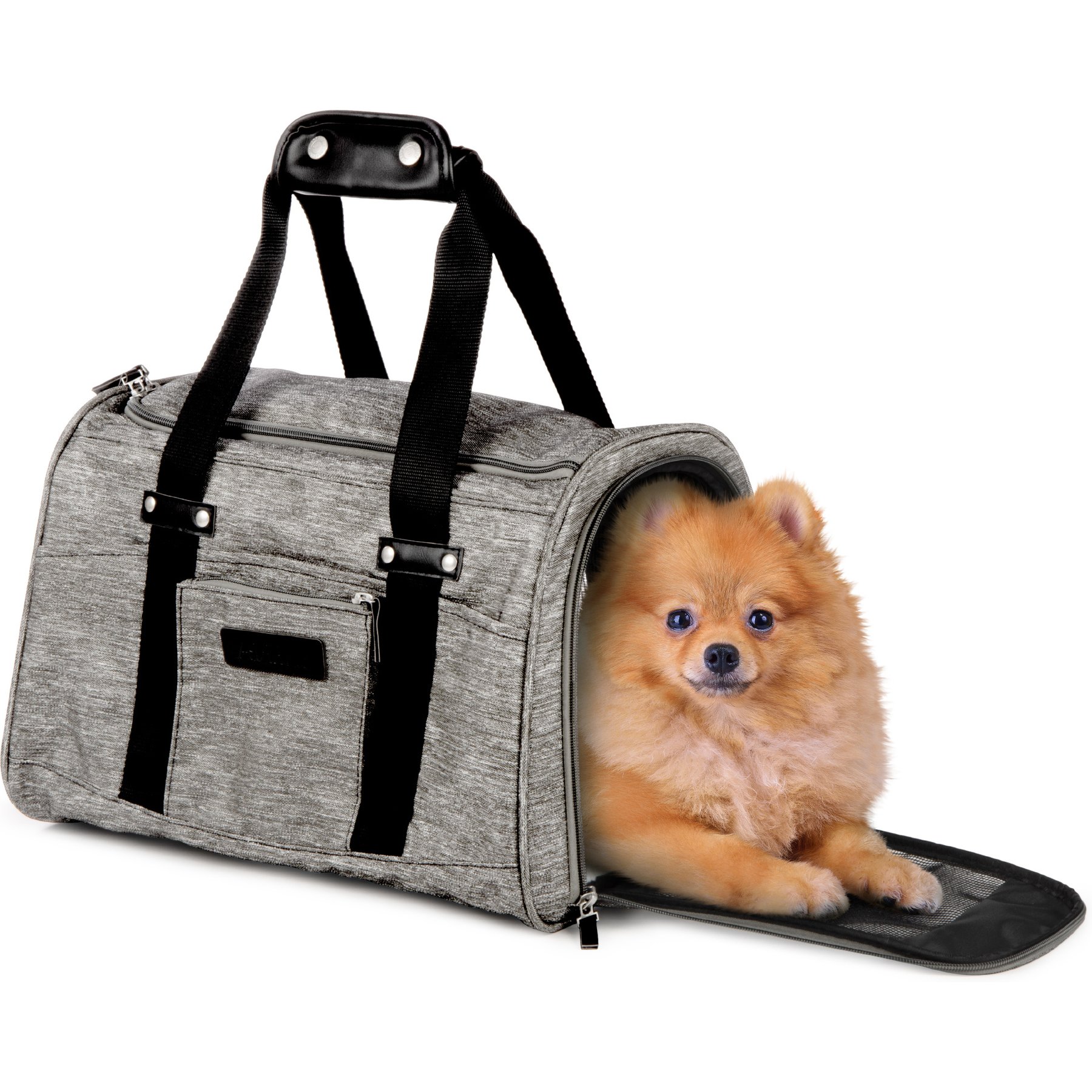
Affiliate links. Prices and availability change—we filter unavailable items nightly, but the retailer's page is source of truth.
Keep reading
travel
Calming Products for Car Rides: An Evidence-Led Buyer's Guide
evergreen
Wand Toys for Cats: The Toy Matters Less Than How You Move It
halloween safety
Halloween Candy and Dogs: Which Candies Are Dangerous, How Much, and What to Do
evergreen
Probiotics for Dogs: What the Evidence Supports, and What the Label Has to Say
halloween safety
LED Collars for Night Safety: Light That Does Not Need Headlights
halloween safety
Anxiety Wraps for Fireworks and Noise: What the Pressure Does, and What It Cannot
Discussion
Talk about Soft-Sided Airline-Approved Pet Carriers: What "Approved" Actually Means
Real questions from real pet owners. Add yours—signed-in members only, first three posts held for review.
Loading threads…