Grooming a Senior Pet: The Weekly Examination You Are Already Doing
In an old animal, grooming stops being cosmetic. It is how you find the lump, the sore and the mat early, and a cat that has stopped grooming itself is reporting a medical problem.
petsupplies.co earns a commission if you buy through the product links on this page, and the price you pay is the same either way.

For a young animal, grooming is largely cosmetic. For an old one it stops being about appearance and becomes the most regular physical examination anyone performs on it.
Running your hands over an entire animal every week is how lumps get found while they are small, how a hot painful ear gets noticed before it is a rupture, how fleas are caught before an infestation, and how you discover that the spot over the left hip now makes your dog flinch. None of that is visible across a room, and a veterinary examination happens once or twice a year.
There is a second reason it matters more in old age, and it runs the other way: a cat that has stopped grooming itself is reporting a problem.
When the coat is the symptom
Cats are fastidious, and they do not become slovenly with age. When self-grooming declines there is nearly always a mechanical or medical reason.
Arthritis. The commonest. Grooming the lower back and base of the tail requires twisting that becomes genuinely painful, so those areas go first. A greasy, clumped, spiky-looking coat over the rump in an old cat is close to a textbook sign. See osteoarthritis.
Weight. A cat that cannot reach cannot groom. See feline obesity.
Dental pain. Grooming is done with the mouth, and a painful mouth makes it unpleasant. See feline dental resorption and periodontal disease.
Systemic illness. A generally unwell animal stops maintaining itself. An unkempt coat sits alongside weight loss in the classic picture of hyperthyroidism and chronic kidney disease.
Over-grooming is worth the same attention in the opposite direction: a bald strip along the belly or flank usually means itch or pain rather than habit, and atopic dermatitis and fleas head that list. See flea life cycle.
In dogs the equivalent signal is subtler: a coat that has become dull, greasy or thin, or dandruff in an animal that never had it.
Mats are a welfare problem, not an appearance problem
This is worth being blunt about, because mats get treated as untidiness.
A mat is a knot of hair anchored to the skin. As it tightens it pulls, continuously, on the skin underneath. It traps moisture and warmth against that skin, which is how sores and infections start. It hides everything beneath it, so a lump or a wound under a mat is invisible until it is serious. In an incontinent or poorly mobile animal, mats around the hindquarters trap urine and feces directly against skin.
Two rules make the difference.
Prevent rather than remove. A few minutes with a comb several times a week keeps a coat mat-free. Once mats have formed, the job is harder and less pleasant for everyone.
Never cut a mat out with scissors. A mat pulls skin up into its base, so the skin is inside the mat where you cannot see it, and scissors go through both. It is one of the most common ways owners accidentally cut their own pets, and the wounds are typically worse than they look. Clippers cut flat against the skin and are the correct tool. Anything large, tight or close to the skin belongs to a groomer or your vet, and for a severely matted animal, sedation and a full clip is the kind option rather than a failure.
The kit, and what each part is for
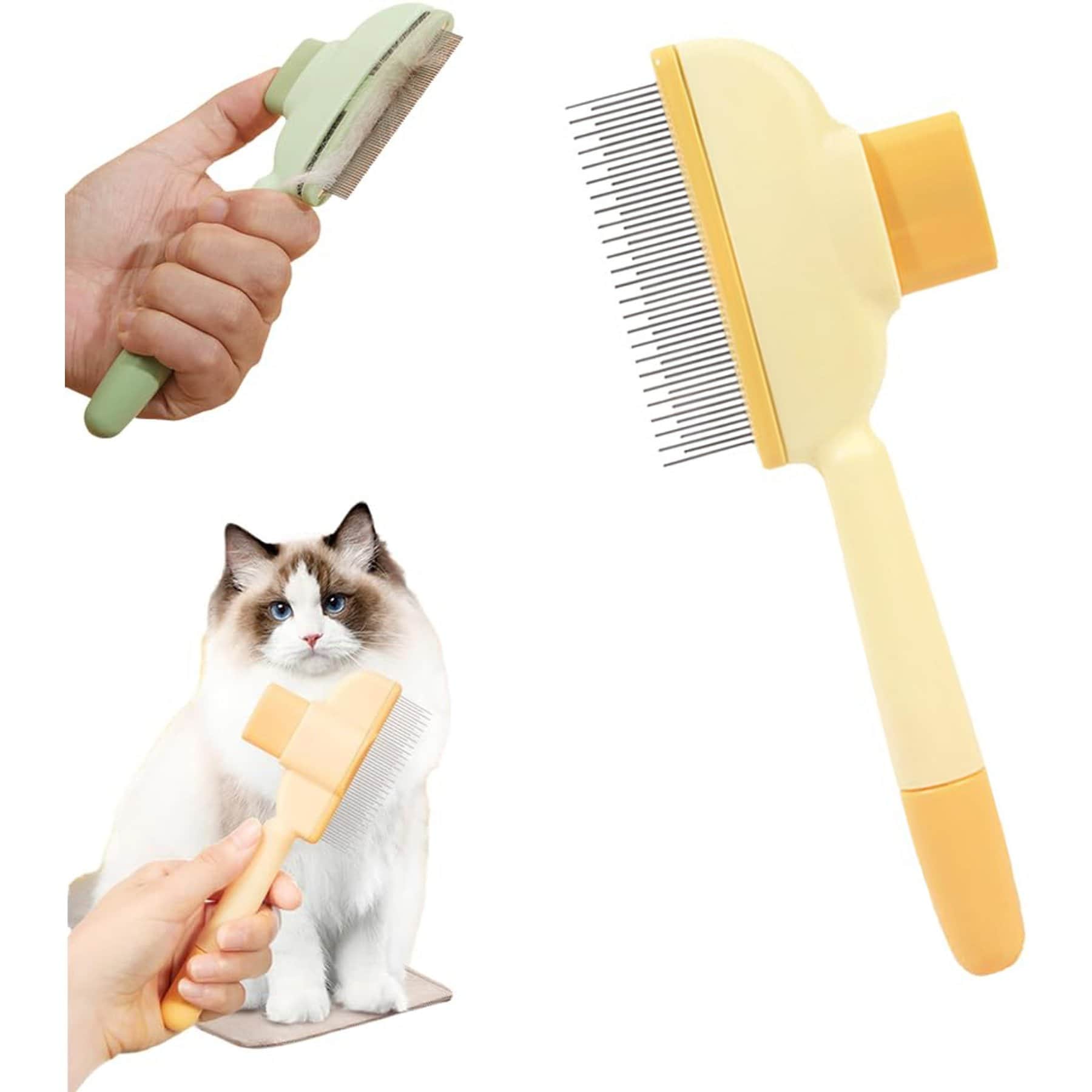
A metal comb is the diagnostic instrument. It finds mats forming while they are still soft, well before you can see them, and it is the only tool that reliably reaches the skin through a thick coat. If you own one grooming tool, own this.
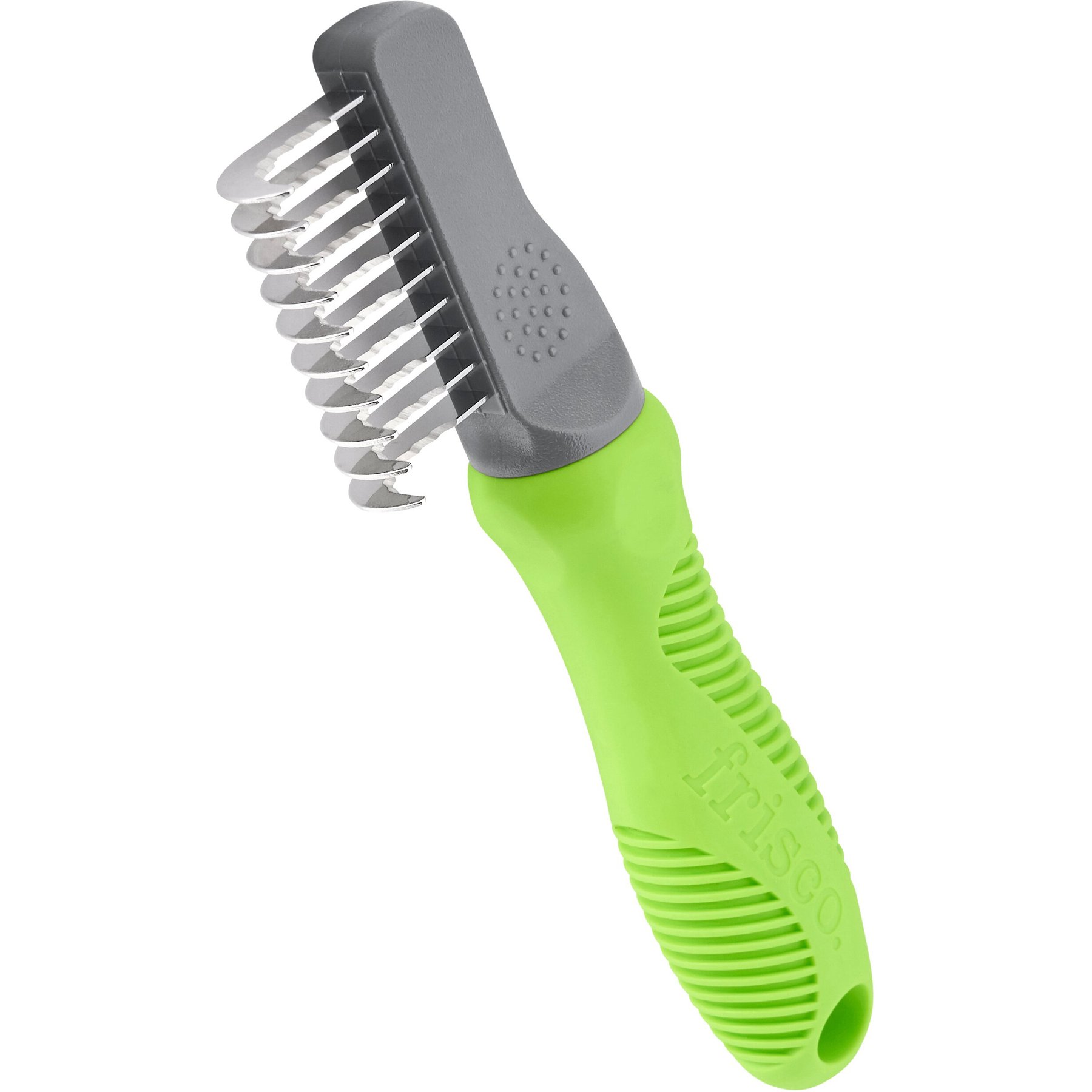
A dematting rake breaks up mats that have already formed, working them apart rather than pulling them out whole. Use it in small strokes, holding the hair at the base so the pull is against your hand and not the skin.
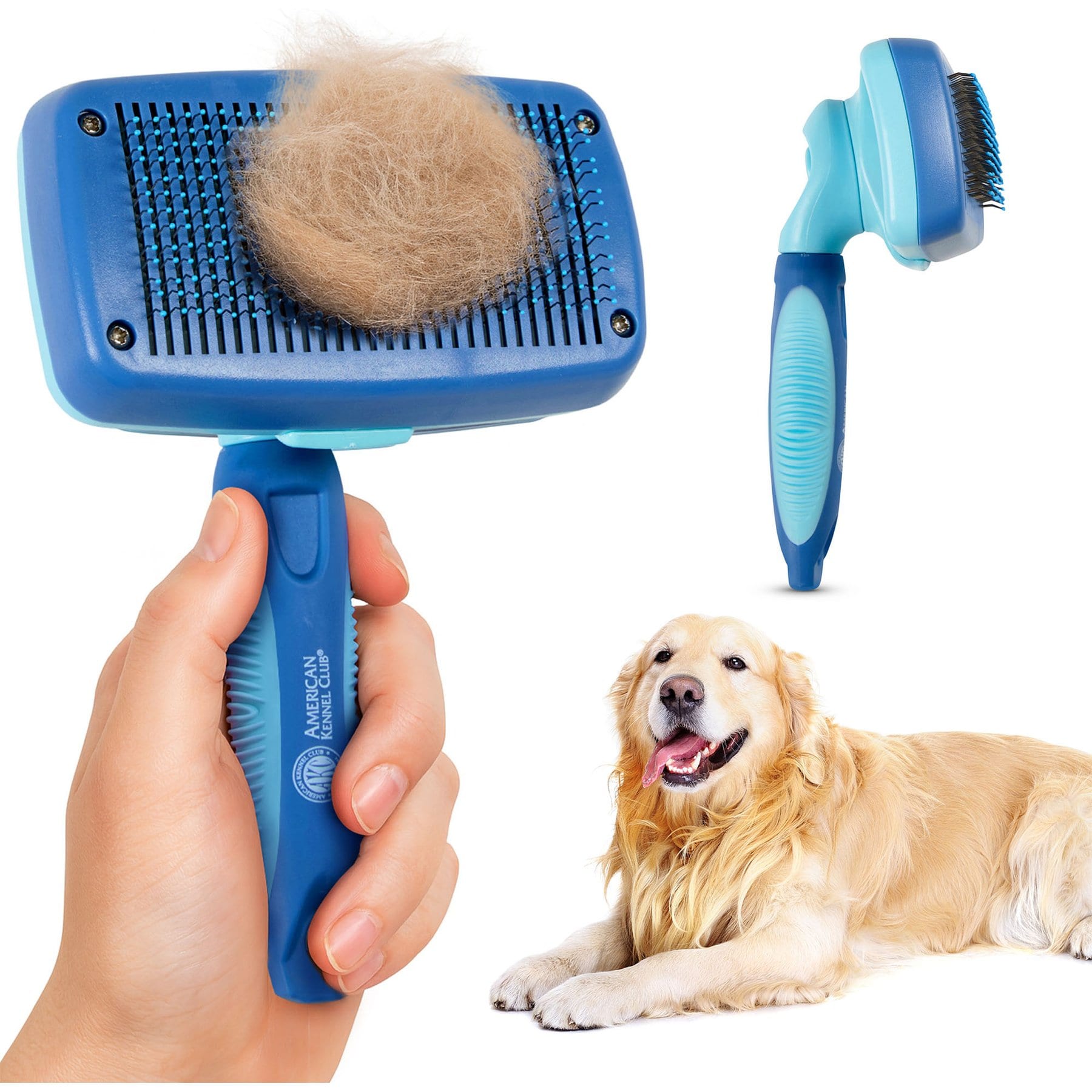
A slicker lifts loose undercoat and is the workhorse for routine coat maintenance. Light pressure: the bent wire pins will scratch skin if you lean on them, and old skin marks easily.
Nails, which senior owners consistently underestimate
Nail length is a genuine welfare issue in old animals and it creeps up invisibly.
The mechanism is simple. Nails wear down through walking on abrasive surfaces. An older animal walks less, more slowly, and mostly on carpet and grass. The wear stops; the growth does not. An overgrown nail changes how the foot loads, which is the last thing an arthritic animal needs, and left long enough it curls into the pad, which is painful, prone to infection, and completely hidden by fur.
Dewclaws are the ones to check first. They never contact the ground at any age, so they are the most frequent offenders, and an ingrown dewclaw is a common and avoidable emergency.
Cats have a different failure mode. Older cats stop shedding their claw sheaths properly and scratch less, so claws thicken, layer up and grow into the pads of the front feet. Check every claw monthly, including the fifth on each front foot, which does not touch the ground either.
Check monthly, trim little and often, and take the tip only: the quick lengthens as the nail does, so a long-neglected nail cannot be shortened in one go. Trimming small amounts every couple of weeks encourages the quick to recede.
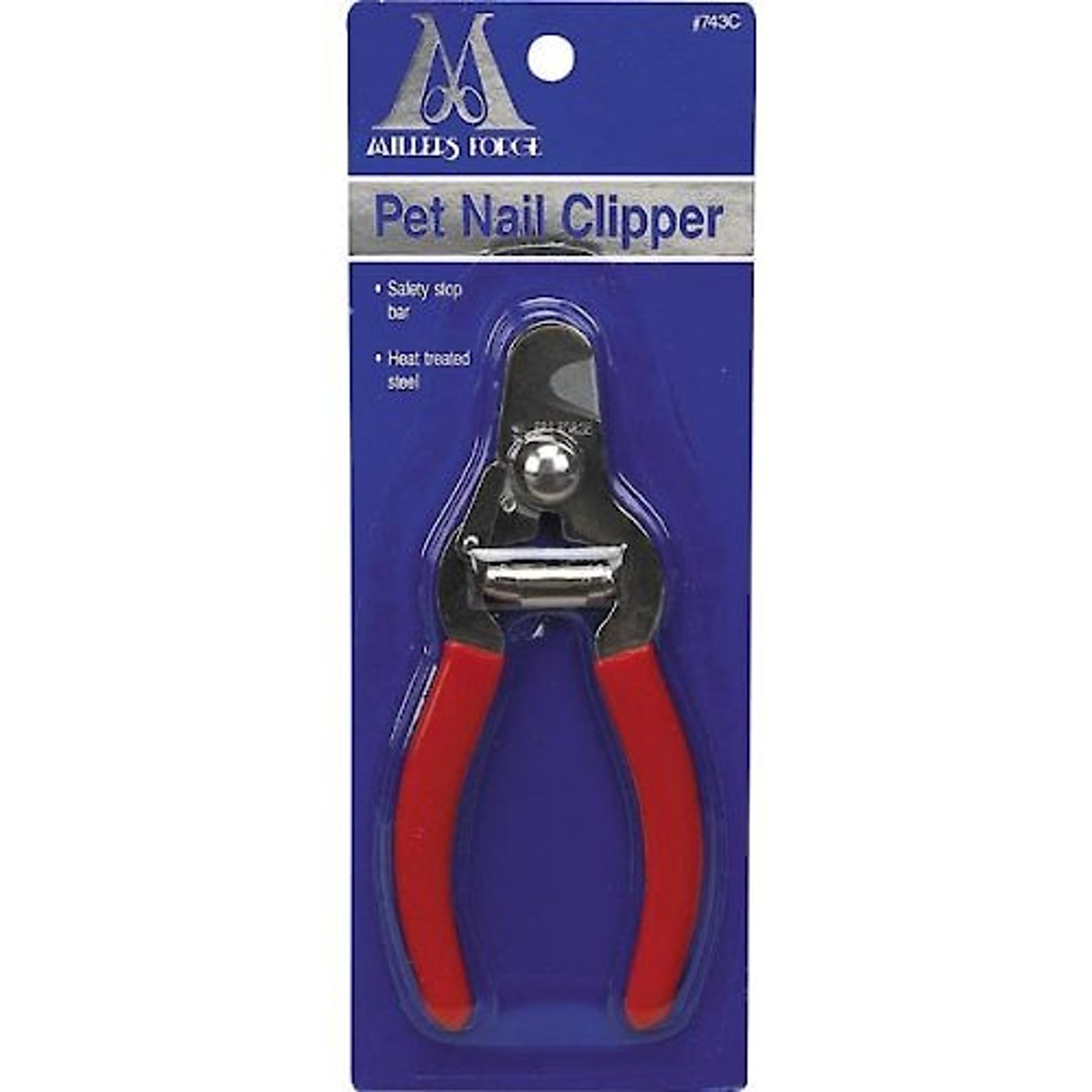
A scissor-type clipper with a safety stop is forgiving for larger nails and helps avoid taking too much at once.
Cat claws need a smaller, finer tool: the trick is to press the toe pad gently to extend the claw, and cut only the clear hook beyond the pink.
Handling an animal that hurts
The technique matters more than the equipment for a senior.
Short and often. Five calm minutes several times a week beats a half-hour session that ends with everyone upset. For an arthritic animal, holding one position is the hard part, not the brushing.
Go to the animal, not the other way. Do not extend, rotate or lift limbs to reach an area. Work around whatever position the animal is comfortable in, and finish another day.
Non-slip footing. On a table, on a mat, on a towel: an animal that feels it might slip will not relax, and for a stiff old dog a slip is an injury risk in itself.
Build it back if it has gone wrong. If grooming has become a fight, treat it as counter-conditioning rather than a task to complete: touch, reward, stop, for days, before any tool comes out. See also desensitization.
Bathe less. Older skin is thinner and drier. Lukewarm water, thorough drying, non-slip footing in the bath. See how often should I bathe my dog and do cats need baths.
Log what you find. Note where a lump is and how big, so you can tell your vet whether it has changed. This is where grooming stops being grooming and turns into surveillance, which is the whole argument for doing it.
How this goes wrong
| What happens | Why it matters | What to do instead |
|---|---|---|
| Cat's coat gets greasy and nobody investigates | Usually arthritis, dental pain or systemic illness | Treat the coat change as a clinical sign |
| Scissors used to remove a mat | Skin tents into the mat; lacerations are common | Clippers, or a groomer |
| Grooming only when the coat looks bad | Mats already formed; job is now unpleasant | Short sessions several times a week |
| Nails checked only when they click | Dewclaws never click, and they curl first | Monthly check of every nail |
| Long neglected nail cut back hard | The quick has grown out with it; painful bleeding | Small trims every two weeks to let the quick recede |
| Limbs extended to reach an awkward spot | Painful for an arthritic animal; ends the session badly | Work around the animal's chosen position |
What to skip
- Scissors near a mat. The single most important line here.
- Letting a severely matted animal stay matted to avoid a clip. Sedation and a full clip is the kind outcome.
- Human clippers and human shampoo. Wrong blade geometry, wrong skin pH.
- Deshedding tools used hard on thin senior skin. Light pressure, or a comb instead.
- Treating a coat change as cosmetic. In an old cat it is usually the earliest thing you will notice.
- Waiting for the annual check to mention a lump. Grooming is how you find it early; use that.
How to choose
Buy a metal comb first. It finds problems while they are small, and it is the tool most owners do not own.
Add a slicker for routine coat work and a dematting rake if your animal is prone to knots.
Get clippers sized to the animal, check nails monthly including dewclaws, and trim little and often.
Keep sessions short, on a non-slip surface, in whatever position your animal finds comfortable.
And treat the whole thing as an examination rather than a chore. The brushing is the excuse; the hands on the animal are the point.
FAQ
Frequently asked
My old cat has stopped grooming itself. Is that just age?
Treat it as a symptom. Cats groom fastidiously, and stopping is usually mechanical or medical rather than a change in standards. Arthritis is the most common reason (twisting to reach the lower back and base of the tail becomes painful), followed by obesity limiting reach, dental pain making grooming uncomfortable, and general illness reducing the motivation to bother. A greasy, clumped coat over the rump in an old cat is one of the more reliable outward signs that something needs investigating.
Can I cut a mat out with scissors?
Please do not. This is one of the most common causes of accidental laceration in pets. A mat pulls the skin up into itself, so the skin tents into the base of the mat where you cannot see it, and scissors go through both. Use clippers, which cut flat against the skin, or work the mat apart with a dematting tool and your fingers if it is small. Anything large, tight, or close to the skin is a job for a groomer or your vet.
How often do senior pets need their nails done?
Check monthly, and expect to trim more often than you used to. Older animals walk less and on softer surfaces, so nails that used to wear down naturally now keep growing, and an overgrown nail can curl into the pad, which is painful and easy to miss under fur. Dewclaws never touch the ground at any age and are the ones most often found grown into the leg. Cats have their own version: older cats stop shedding claw sheaths properly, and the claws become thick and brittle.
Is it safe to bathe an old dog?
Usually, with adjustments. Older skin is thinner and often drier, so bathe less frequently than you might have, use lukewarm rather than hot water, and dry thoroughly: a damp, arthritic dog gets cold and stiff. Non-slip footing in the bath matters more than anything else, because a slip is both frightening and genuinely injurious. If your dog finds the whole business distressing, dry grooming between rare baths is a reasonable trade.
How do I groom a pet that is painful to handle?
Short sessions, supported joints, and no forced positions. Five minutes done calmly beats twenty that end badly. Do not extend or rotate limbs to reach an area: go to the animal's position instead. Work on a non-slip surface at a height that does not require it to balance. If your animal has started objecting to being touched somewhere it never minded before, that localized change is worth mentioning to your vet rather than working around.
Featured in this guide
The picks referenced above—priced and in stock at time of publication.
Affiliate links. Prices and availability change—we filter unavailable items nightly, but the retailer's page is source of truth.
Keep reading
Discussion
Talk about Grooming a Senior Pet: The Weekly Examination You Are Already Doing
Real questions from real pet owners. Add yours—signed-in members only, first three posts held for review.
Loading threads…