Heated Pet Beds: Two Different Products Sold Under One Name
Self-warming and heated are not variations on a theme. One has no power source and cannot warm an animal that is not already warm. Knowing which you are buying decides whether it does anything.
petsupplies.co earns a commission if you buy through the product links on this page, and the price you pay is the same either way.

Two quite different products share this shelf, and the labels do little to separate them.
A heated bed has a power source and makes heat. A self-warming bed has no power source at all: it contains a reflective layer, usually a mylar sheet under the padding, that returns some of the animal's own body heat instead of letting it drain into the floor.
That difference is the whole decision. A self-warming bed makes a warm animal warmer. It cannot warm an animal that is not producing much heat to begin with, which is exactly the thin, old, frail or convalescent animal most people have in mind when they go looking. Sold side by side at similar prices, one of them will do the job you have in mind and the other will not.
Who this is actually for
Most healthy adult pets in a heated house do not need either, and will ignore both. Warmth becomes genuinely useful in a shorter list of cases.
Arthritic and elderly animals. Cold stiffens painful joints, and stiffness in the morning is one of the more visible signs of osteoarthritis. Warmth does not treat the disease but it does make the resting hours more comfortable, and comfortable rest is not a small thing for an animal in chronic pain.
Thin animals. Body fat is insulation. A cat that has lost condition, a lean sighthound, a dog recovering from illness: all lose heat faster than their well-covered equivalents. Get a body condition score at the next visit if you are not sure where your animal sits.
Short coats and small bodies. Small animals have more surface area relative to their mass and lose heat faster. Short-coated breeds have less to hold it in.
Cats in cold houses. Cats seek heat as a matter of preference, not just need, and an indoor cat with no sunny window in winter has genuinely limited options.
Convalescence. Post-operative and unwell animals thermoregulate poorly, which is worth discussing with your vet alongside everything else. General care basics for both species are covered in the ASPCA's general cat care and general dog care guidance.
When heat-seeking is information
One clinical aside, because it is easy to miss and worth catching.
A marked new increase in heat-seeking in an older animal (sitting on radiators, pressing against heaters, refusing to leave a sunny patch) frequently travels with weight loss and declining body condition. The causes worth ruling out include chronic kidney disease, hyperthyroidism in cats, diabetes and intestinal disease.
Buying the animal a warm bed is a kind response and entirely reasonable. It should follow the bloodwork rather than substitute for it. The same applies in reverse: an animal that has stopped seeking its usual warm spot has also told you something.
The safety rules that actually matter
This is the part of the category where getting it wrong has consequences, so it is worth being specific.
Use a purpose-built pet product. Human heating pads and electric blankets run far hotter, are not built for chewing or clawing, and are not meant to be lain on continuously for hours. This is the most common serious mistake here.
Look for thermostatic limiting. A well-designed pet bed warms to roughly the animal's own body temperature and holds there. It should feel gently warm to your hand, not hot. Anything that feels hot is wrong for continuous contact.
The animal must be able to leave. This is the non-negotiable one. A heated bed is safe largely because a comfortable animal moves off when it has had enough. Any animal that cannot reliably do that (the very old and immobile, neonates, sedated or post-anesthetic animals, the paralyzed, animals with reduced skin sensation) should not be left unsupervised on one. Provide a bed large enough that the animal can lie half on and half off, so it can self-regulate without leaving entirely.
Respect the cord. Chew-resistant sheathing, routed where it cannot be chewed or tripped over, and not under a rug. Puppies, kittens and determined chewers are a straightforward reason to choose a self-warming bed instead.
Check the skin. Low-temperature contact burns develop slowly, look unremarkable at first, and hide under fur. If an animal is using a heated bed daily, part the coat over the contact areas now and then and look.
For a cat, the flat heated mat is the classic format and the easiest to place: on a windowsill, inside an existing bed, or on top of a favorite chair.
If your cat prefers something with sides to settle into, the same heating element comes in a bolstered version.
Where self-warming is the right answer
Self-warming is not the lesser product; it is the correct product in several situations, and it carries none of the electrical risk.
Choose it for animals that generate plenty of heat but are losing it to a cold floor; for chewers and young animals where a cord is a liability; for crates and cars where there is no power; and anywhere you would rather not leave something plugged in unattended.
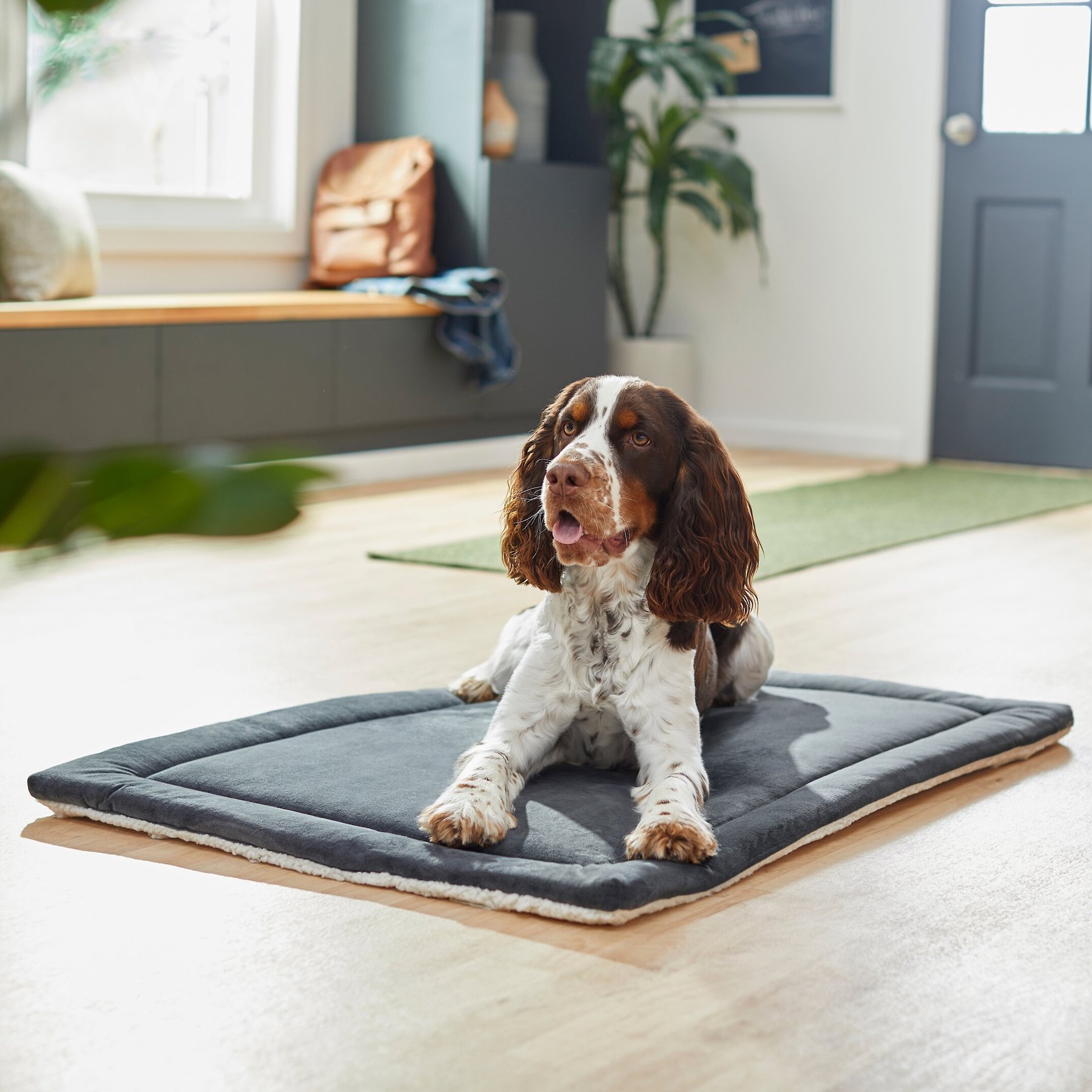
The crate is the obvious case: a thin mat on a plastic tray in a cold room is a genuinely cold place to sleep, and there is no socket involved.
For a dog that curls up rather than lies flat, a self-warming nest with a padded rim holds more of its own heat than an open mat.
And for cats, where the whole point is retaining a small animal's own heat in an enclosed shape, a self-warming bed with a washable cover is a sensible default.
This listing is no longer available.
How this goes wrong
| What gets bought | How it fails | What to do instead |
|---|---|---|
| Self-warming bed for a thin, frail animal | No heat source; the animal has little to reflect | A thermostatic heated bed |
| Human heating pad | Runs far too hot for continuous contact | A purpose-built pet product |
| Heated bed sized exactly to the animal | Nowhere to move to; no self-regulation | Large enough to lie half off |
| Heated bed for an immobile animal, unsupervised | Cannot move away; burn risk | Supervised use only, or self-warming |
| Cord left loose near a chewer | Chewed cable; electrical and ingestion risk | Chew-resistant, routed and secured, or go self-warming |
| A warm bed bought for new heat-seeking | Comforts the symptom, misses the diagnosis | Bloodwork first, bed afterward |
What to skip
- Human electric blankets and heating pads. The single most important thing not to do here.
- Anything that feels hot rather than warm. Continuous contact and hot surfaces do not mix.
- A self-warming bed for a genuinely cold, thin or ill animal. Right shelf, wrong product.
- Leaving any heated bed with an animal that cannot move off it. Includes the very old, the very young and the post-operative.
- Buying warmth instead of pain relief. A warm bed makes an arthritic dog more comfortable at rest. It is not a substitute for veterinary pain management.
How to choose
Decide first whether the animal generates enough heat to reflect. If it is thin, old, unwell or genuinely cold, you need a powered bed and a self-warming one will disappoint you.
If it is a healthy animal on a cold floor, self-warming is cheaper, simpler and has no cord to worry about.
Buy a size the animal can lie half on and half off, so it can regulate itself.
Put it somewhere the animal already chooses to sleep rather than somewhere you would like it to. Beds do not relocate cats.
And if the heat-seeking is new, get the bloodwork first. The bed will still be there next week, and some of the things behind that change will be considerably easier to treat if you find them now. See heated bed for the short version.
FAQ
Frequently asked
What is the difference between heated and self-warming?
A heated bed has a power source and produces heat. A self-warming bed has no power source at all: it contains a reflective layer that returns some of the animal's own body heat rather than letting it escape into the floor. That distinction decides everything. A self-warming bed makes a warm animal warmer; it cannot warm an animal that is not generating much heat in the first place, which unfortunately describes many of the thin, old or ill animals people buy them for.
Are heated pet beds safe to leave on?
A properly made one built for pets, used as intended, generally is. The conditions matter: it should be a purpose-built pet product rather than a human heating pad, it should be thermostatically limited to around body temperature rather than getting genuinely hot, the cord should be chew-resistant, and the animal must be able to move off it whenever it wants. Human electric blankets and heating pads run far hotter and are not a substitute.
Which pets actually benefit from a heated bed?
Arthritic and elderly animals, whose joints stiffen in the cold; thin animals with little insulating fat; short-coated and small breeds; cats in cold houses; and animals recovering from illness or surgery. A healthy, well-covered adult in a heated home does not need one and will often ignore it. Buy it for a specific animal with a specific reason, not as a general upgrade.
Can a heated bed burn a pet?
It is uncommon with a well-made pet bed but it is the risk worth respecting, and it concentrates in animals that cannot or will not move away: the very old, the very young, the sedated, the paralyzed, and animals with reduced skin sensation such as some diabetics. Low-temperature contact burns develop slowly and can be hidden under fur. Never use a heated bed for an animal that cannot reliably move off it unsupervised, and check the skin of any animal using one regularly.
My old cat has started sitting on the radiator constantly. Is that just age?
It is worth a vet visit rather than a bed. A marked new increase in heat-seeking in an older cat often accompanies weight loss and loss of body condition, and the common causes behind that (kidney disease, hyperthyroidism, diabetes, intestinal disease) are all diagnosable. Buying a warm bed treats the symptom and is a perfectly kind thing to do, but it should follow the bloodwork rather than replace it.
Featured in this guide
The picks referenced above—priced and in stock at time of publication.



Affiliate links. Prices and availability change—we filter unavailable items nightly, but the retailer's page is source of truth.
Keep reading
Discussion
Talk about Heated Pet Beds: Two Different Products Sold Under One Name
Real questions from real pet owners. Add yours—signed-in members only, first three posts held for review.
Loading threads…