Bird Travel Carriers: Match the Carrier to the Bird's Size, Beak and Trip
A bird carrier is used most for vet visits and emergencies, so it needs to be ready before the trip. How to match a carrier to your bird's size and beak, set it up for the car, and five carriers sorted by who each one suits.
petsupplies.co earns a commission if you buy through the product links on this page, and the price you pay is the same either way.

Bird carriers are often bought the day before a vet appointment. That is the worst time to introduce one. A bird meeting a strange box while stressed, in a hurry, is a bird that fights the door.
The right carrier fits the bird's size and beak, fits your car, and is already familiar when you need it. This guide covers how to choose and set one up, with five carriers from the catalog.
Have it ready before you need it
The Hagen Avicultural Research Institute, which is part of a bird products company, makes a useful point in its carrier guide. A carrier is not only for vacations. It is for vet visits and home emergencies, and it should be in the house well before any trip.
Let the bird explore the carrier at home. Put a favorite food or foraging toy inside. Short sessions with the door open work better than one long session with it shut.
Size and beak strength
The HARI guide says larger species need a carrier roomy enough to stand up and turn around. Smaller birds can slip through gaps in a carrier built for large birds, and many get stressed in a space that is too big.
Beak strength matters too. HARI notes that strong hooked beaks, such as those of cockatoos, can chew through almost any plastic. Acrylic and wire suit those birds better than soft plastic.
Before you buy, check the listing for the species range, bar or mesh spacing, and interior dimensions.
Think about how you will carry it, too. HARI suggests a carrier that is sturdy but light enough to tote comfortably, with a top handle, and a shoulder strap for larger, heavier birds. A carrier that is awkward to lift is one you will be tempted to leave at home.
Soft-sided carriers
Soft-sided carriers are light and fold away more easily than hard cages. They suit short trips and smaller birds.
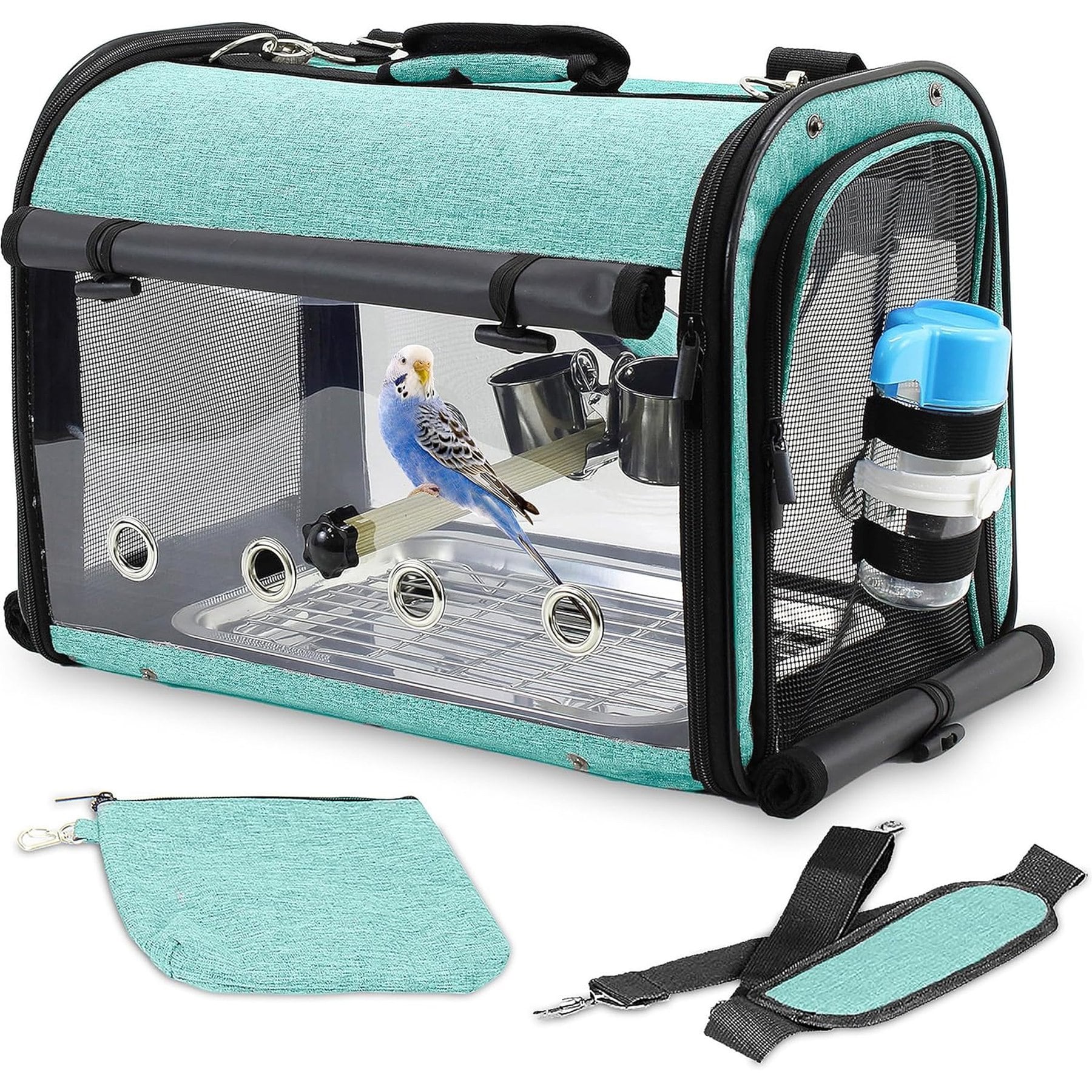
This teal carrier has breathable mesh for ventilation and a light-blocking shade, according to its listing. The maker positions it for vet visits, outdoor strolls and daily travel.
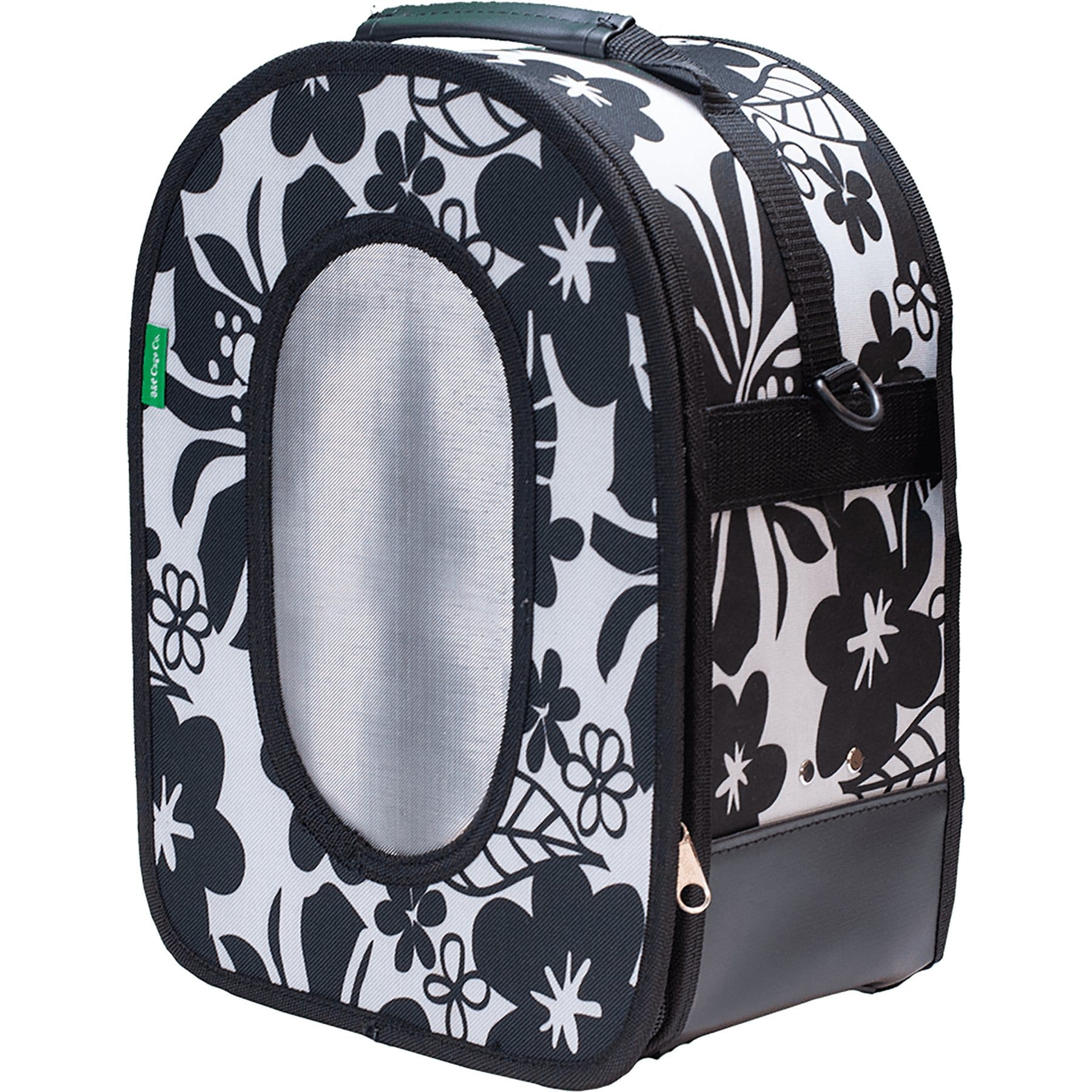
This black carrier combines a reinforced plastic shell with canvas overlays. The whole front zips open, the floor covering comes out for cleaning, and the wooden perch fits in two positions depending on bird size.
A wide front opening makes it easier to guide a bird in and out without reaching into a corner.
Clear and backpack carriers
A clear carrier lets the bird see out on all sides. Some birds settle better with a view, while others do better with part of the carrier covered.
This collapsible carrier has clear sides for a 360-degree view, a hard removable perch, a mesh zip-down door and an attached seatbelt loop. It folds flat for storage.
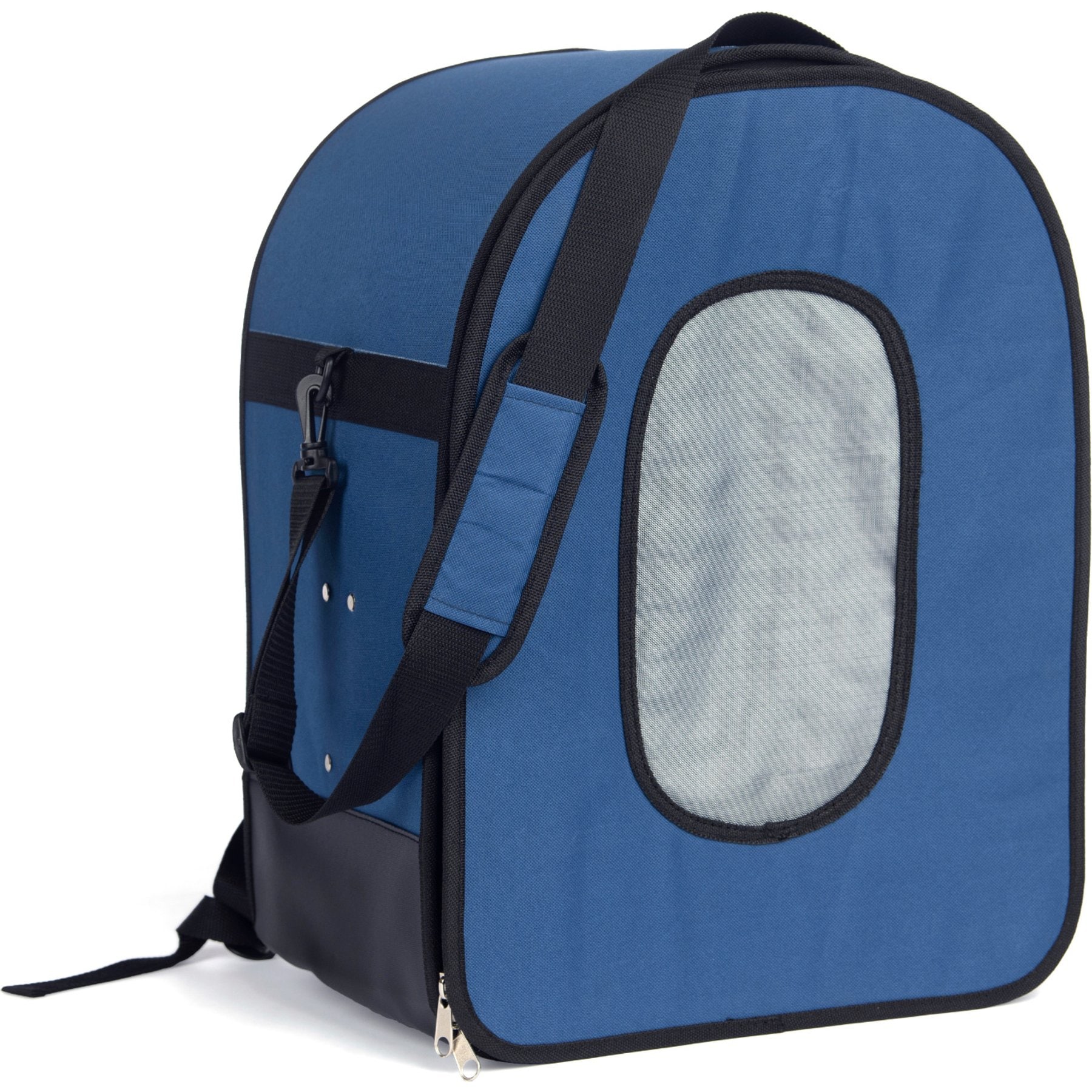
A backpack carrier frees your hands. This one has padded backpack straps and a padded shoulder strap, stiff panel sides, a wire mesh window, an adjustable wood perch and a removable floor pad. The listing says it suits birds from parrotlets to severe macaws, and the double zippers can take a small lock.
Cage-style travel carriers
A small travel cage looks and feels most like home. It suits longer trips and overnight stays.
This lightweight travel cage has a perch carry handle and a slide-out tray. The maker says the tray can double as an out-of-cage play area.
HARI points out that a slide-out tray makes cleaning easier without the bird escaping.
Setting up the carrier for the car
VCA Animal Hospitals' page on transporting your bird gives practical rules for car travel:
- Secure it with a seat belt so the carrier cannot slide or tip.
- Remove toys and swings that could hurt the bird on a rough ride.
- Skip the water dish. Water spills and can leave the bird soaked and chilled. Small pieces of fruit or vegetable can supply moisture instead.
- Bring the bird's water bowl and a bottle so it can drink at stops.
HARI adds a tip on perches. Place the perch so it runs from the front to the back of the car. The bird then sits sideways to the direction of travel, which makes it less likely to fall forward or back when you brake.
Temperature and timing
VCA says birds can travel in bad weather with some care. In cold weather, warm the car first and cover the carrier with towels or blankets.
In hot weather, the bird needs good ventilation or fresh air. VCA warns that a bird should never be left unattended in the car because of the risk of overheating, and that even birds from hot climates can suffer heat stroke very quickly.
For flights, VCA says airline rules vary and you should contact the airline to learn its policy.
How this goes wrong
| Problem | What happens | Fix |
|---|---|---|
| Carrier bought the day before | Bird panics at the door | Introduce it weeks ahead |
| Too large for a small bird | Bird slips, gets stressed | Match the species range |
| Soft plastic for a strong beak | Bird chews through | Choose acrylic or wire |
| Carrier loose on the seat | Slides or tips when braking | Use the seat belt |
| Water dish inside | Bird gets soaked and chilled | Offer water at stops, fruit inside |
| Bird left in the car | Heat stroke risk | Never leave the bird alone |
Signs of trouble during travel
The Merck Veterinary Manual's page on injuries and accidents in pet birds explains why travel days need close watching. Birds in the wild hide signs of illness or injury to avoid predators, and pet birds do the same. Any unusual behavior can signal a problem.
Merck advises prompt veterinary advice for limping, difficulty moving the wings, discharge from any body opening, abnormal droppings or decreased activity. A bird that is huddled, weak, unresponsive or lying on the cage floor is an emergency. Call your veterinarian and take the bird in immediately.
Stress from a trip can make an existing problem show. If the bird seems off after a trip, do not assume it is only tired. Call an avian veterinarian.
Before the first real trip
Take a few short drives with the bird in the carrier before any long drive. Start with a trip around the block and come straight home. The bird learns that the carrier and the car end with a return to its cage.
Pack a small kit for vet visits and emergencies: the bird's usual food, a bottle of water, its water bowl, a towel, paper liners and your veterinarian's phone number. Keep it with the carrier so both are ready at once.
What to skip
- Last-minute carriers. Familiarity matters more than extras.
- Soft plastic for large hooked beaks. Choose acrylic or wire.
- Water dishes on the road. Use stops and fresh fruit.
- Unsecured carriers. Belt them in every time.
- Any stop that leaves the bird alone in a warm car. Take the bird with you or skip the stop.
How to choose
Match the carrier to your bird's size and beak first. Check the species range and the material.
Choose a soft-sided carrier for light, short trips, a clear carrier for a bird that settles with a view, a backpack when you need your hands, or a travel cage for long stays.
Introduce it weeks before you need it. In the car, belt it in, run the perch front to back, skip the water dish, and never leave the bird alone in the vehicle.
FAQ
Frequently asked
What size bird carrier do I need?
Large enough for your bird to stand up and turn around, but not so large that a small bird slides around or feels exposed. Check the listing's species range and interior dimensions against your bird.
Should I put water in a bird carrier for car travel?
VCA Animal Hospitals advises against a water dish in the carrier because it spills and can leave the bird soaked and chilled. Offer small pieces of fruit or vegetable inside, and give water from the bird's own bowl at stops.
How do I secure a bird carrier in the car?
Use the seat belt so the carrier cannot slide or tip. Some carriers have a seatbelt loop. Place the perch front to back so the bird faces sideways and keeps its balance when you brake.
Can a bird chew through a plastic carrier?
Strong hooked beaks can. The Hagen Avicultural Research Institute notes that birds such as cockatoos can chew through almost any plastic, so acrylic or wire carriers suit them better.
Is it safe to leave a bird in the car for a few minutes?
No. VCA Animal Hospitals warns that birds should never be left unattended in a car because of the risk of overheating, and that even birds from hot climates can suffer heat stroke very quickly.
Featured in this guide
The picks referenced above—priced and in stock at time of publication.

Affiliate links. Prices and availability change—we filter unavailable items nightly, but the retailer's page is source of truth.
Keep reading
evergreen
Wand Toys for Cats: The Toy Matters Less Than How You Move It
halloween safety
Halloween Candy and Dogs: Which Candies Are Dangerous, How Much, and What to Do
evergreen
Probiotics for Dogs: What the Evidence Supports, and What the Label Has to Say
halloween safety
LED Collars for Night Safety: Light That Does Not Need Headlights
halloween safety
Anxiety Wraps for Fireworks and Noise: What the Pressure Does, and What It Cannot
halloween safety
Reflective Gear for Evening Walks: Where It Goes Matters More Than How Much
Discussion
Talk about Bird Travel Carriers: Match the Carrier to the Bird's Size, Beak and Trip
Real questions from real pet owners. Add yours—signed-in members only, first three posts held for review.
Loading threads…