Halloween Candy and Dogs: Which Candies Are Dangerous, How Much, and What to Do
Chocolate is the famous one, and it is the sugar-free candies that put a dog in the hospital fastest. What in the trick-or-treat bowl matters, at what dose, what to do in the first hour, and what to give a dog instead.
petsupplies.co earns a commission if you buy through the product links on this page, and the price you pay is the same either way.

Every owner knows chocolate is bad for dogs. Fewer know that the pack of sugar-free gum in a coat pocket is the thing most likely to put a small dog in intensive care, that a box of chocolate raisins is two emergencies in one wrapper, or that the dose of chocolate that matters depends on which chocolate it was. Halloween puts all of it within reach of a dog at once, in a bowl by the front door, on the night the door opens fifty times.
This guide goes through what in the bowl matters, roughly how much, and what to do in the first hour. It ends with what to give the dog instead, because the easiest way to keep a dog out of the candy is to give it something better to be doing.
Chocolate: which one, not how much
Chocolate poisons dogs through theobromine and caffeine, two related stimulants the dog clears far more slowly than we do. The Merck Veterinary Manual's toxicology entry puts the point at which signs begin at around 20 milligrams of theobromine per kilogram of dog, with severe signs, racing heart, tremors and seizures, from roughly 40 to 60. What decides whether a dog reaches that is the kind of chocolate.
The cocoa content is the toxin. Baking chocolate and cocoa powder carry the most by weight, then dark chocolate, then milk chocolate at a fraction of the dose, then white chocolate at almost none. A fun-size milk chocolate bar in a Labrador is a stomach upset. The same weight of dark chocolate in a Chihuahua is an emergency. That is why the answer to how much chocolate is too much is always which chocolate and how big is the dog, and why the poison lines ask for the wrapper.
Signs start within a few hours: restlessness, vomiting, drinking and urinating more, a fast heart, and at higher doses tremors and seizures. Because theobromine clears slowly, a dog that looks fine at bedtime can be in trouble by morning. See how much chocolate is toxic to dogs for the working out.
Xylitol: the one that cannot wait
Xylitol is a sugar substitute, and it is in sugar-free gum, mints, some candies, some chewable vitamins and some peanut butters. In a dog it triggers a surge of insulin, and blood sugar can fall to dangerous levels within an hour; larger doses damage the liver. The Merck entry on xylitol toxicosis in dogs describes a toxin that acts fast at doses measured in a few pieces of gum for a small dog, and Pet Poison Helpline treats every ingestion as urgent.
The practical rule is simple. If a dog has eaten anything labeled sugar-free, or anything with xylitol in the ingredients, which is sometimes listed as birch sugar, it goes to a vet now, not after the first sign, because the first sign is weakness and collapse. Glucose can be managed if the dog arrives before it crashes. See xylitol toxicity.
Raisins, grapes and the boxes that hide them
Grapes, raisins, sultanas and currants cause acute kidney injury in some dogs, and nobody can predict which. The Merck entry on raisin and grape toxicosis notes that the toxic dose is unknown and that the safe course is to treat any ingestion as significant. At Halloween the risk is the box of mixed candy, the chocolate-covered raisins, the trail mix and the cereal bar, all of which a dog can eat without anyone realizing there were raisins in it. Check the ingredients of anything the dog got into, not just the obvious chocolate.
Macadamias and the rest of the bowl
Macadamia nuts cause weakness, particularly in the back legs, tremors and a raised temperature within hours, and they turn up in nut mixes and some chocolates; Pet Poison Helpline's entry covers the signs. Hard candies and lollipops are a choking and obstruction risk more than a poisoning one, and a dog that eats the stick as well as the sweet has swallowed something that does not digest. Wrappers themselves cause obstructions, and a dog that has eaten a quantity of foil and cellophane needs watching for vomiting and a stomach that will not settle. Sugar and fat in bulk, the ordinary contents of a raided bowl, are enough on their own to trigger pancreatitis in a susceptible dog. See canine pancreatitis and the ASPCA's list of people foods to keep from pets.
The first hour
Find out what was eaten and how much, from the wrappers and from what is missing. Weigh the dog if you do not know its weight. Then ring your vet or a pet poison line, and give them the product, the amount and the weight. Do that before you do anything else, including making the dog sick: inducing vomiting is the right call for some ingestions and the wrong one for others, and it depends on what and when.
For sugar-free anything and for raisins, expect to be told to come in at once. For milk chocolate in a large dog, expect to be told what to watch for and when to call back. For dark chocolate in a small dog, expect to be told to come in. Keep the wrappers and bring them.
The cost of the call is nothing and the cost of waiting to see can be a night in intensive care, so the threshold for ringing is low. A dog that seems fine has usually not had time to become unwell.
What to give the dog instead
The household is going to eat candy for a week. The dog should be having something of its own while that happens, for the same reason a child at a party should: an animal with a job is not an animal raiding the bowl. The right thing is a treat with one ingredient, in small pieces, so it carries none of the risks above and does not blow the dog's calorie budget. Keep treats under about a tenth of daily calories, and if the dog is carrying weight see how do I know if my dog is overweight.
Freeze-dried chicken, made in Canada, with one ingredient. Soft enough to break into pieces the size of a fingernail, which is how a dog gets a dozen rewards over an evening for the calories in one biscuit.
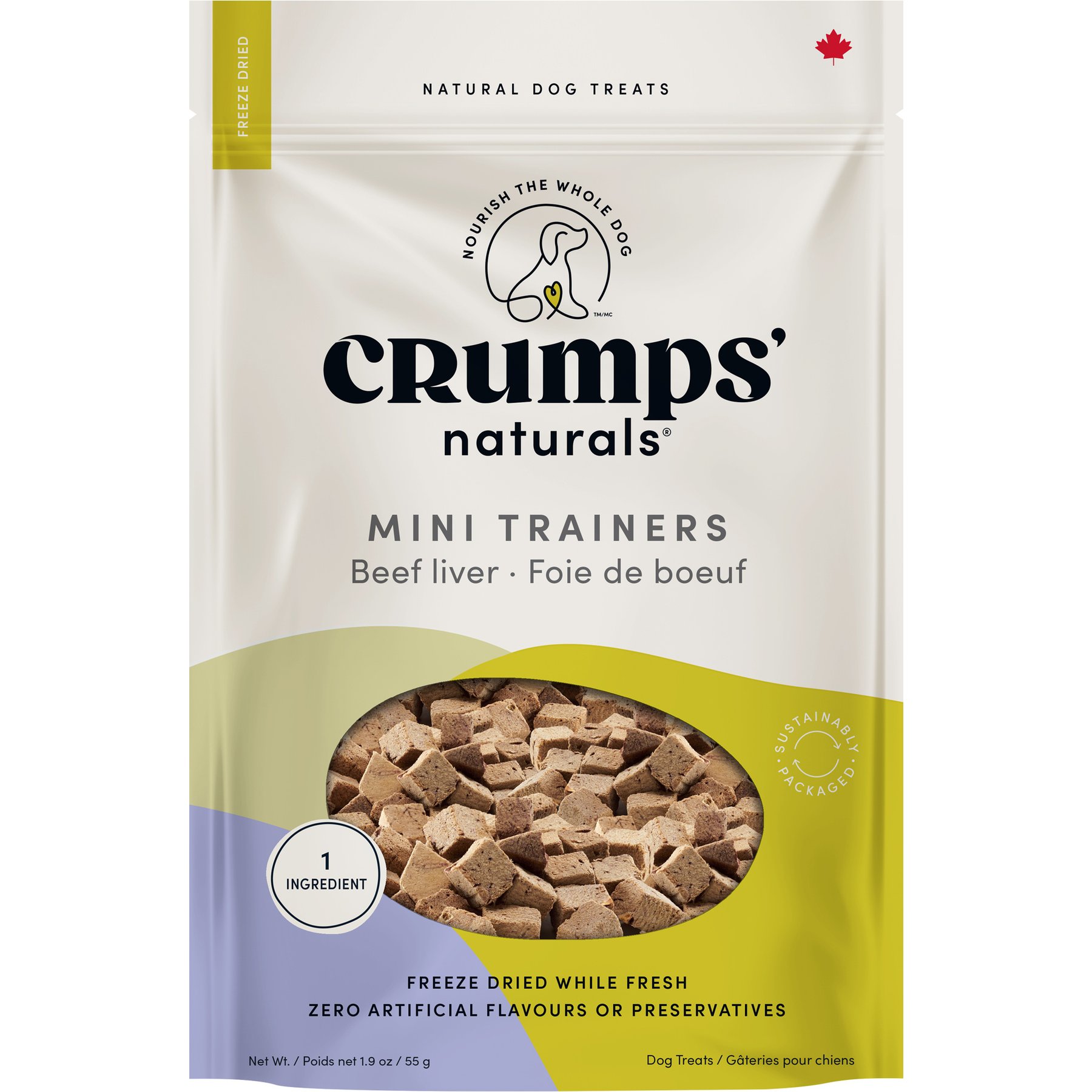
Mini freeze-dried beef liver pieces at about one calorie each, which is the arithmetic that makes an evening of small rewards possible. Liver is rich, so a small dog gets a few rather than a handful.
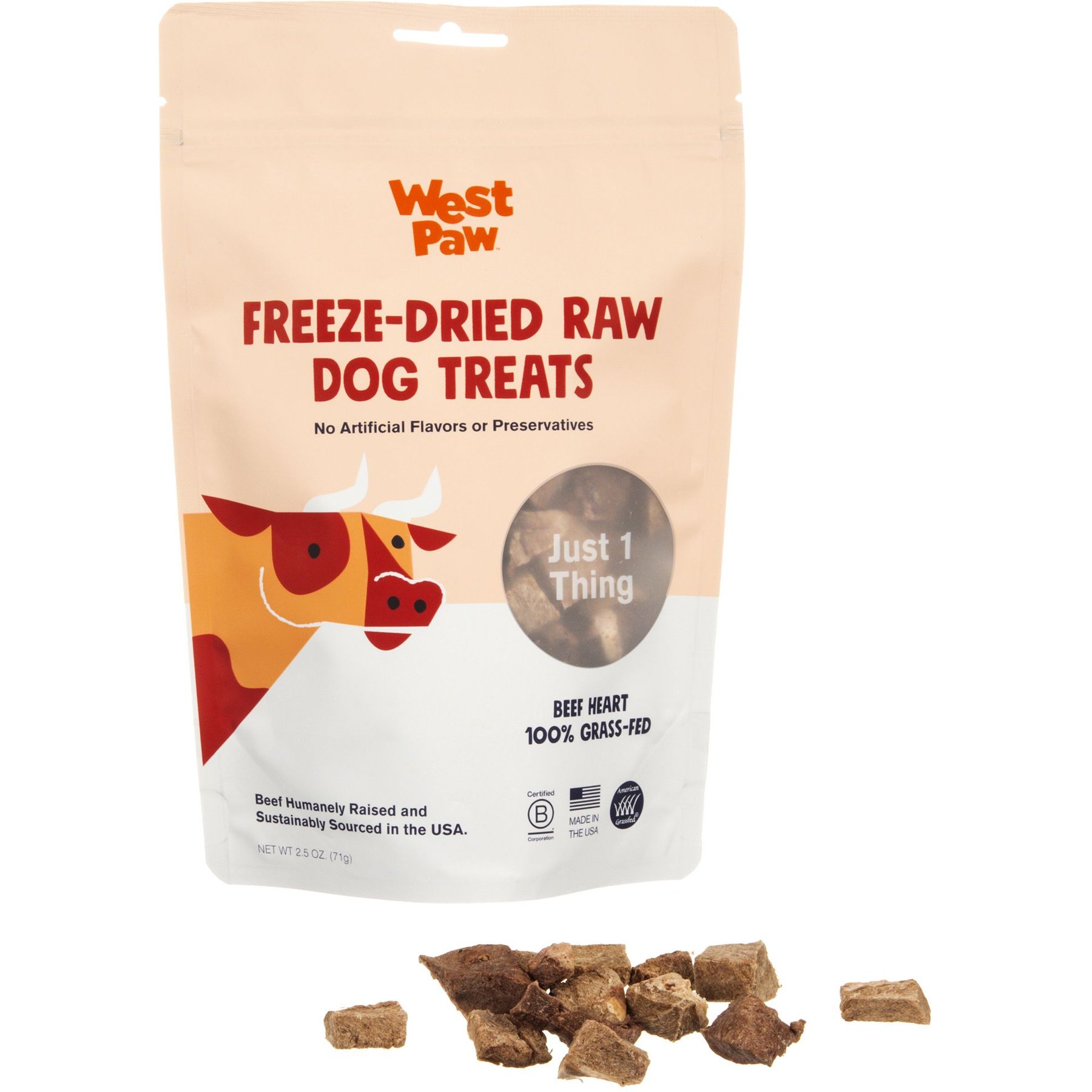
Freeze-dried beef heart from grass-fed beef, one ingredient, a different taste for a dog that has had enough chicken.
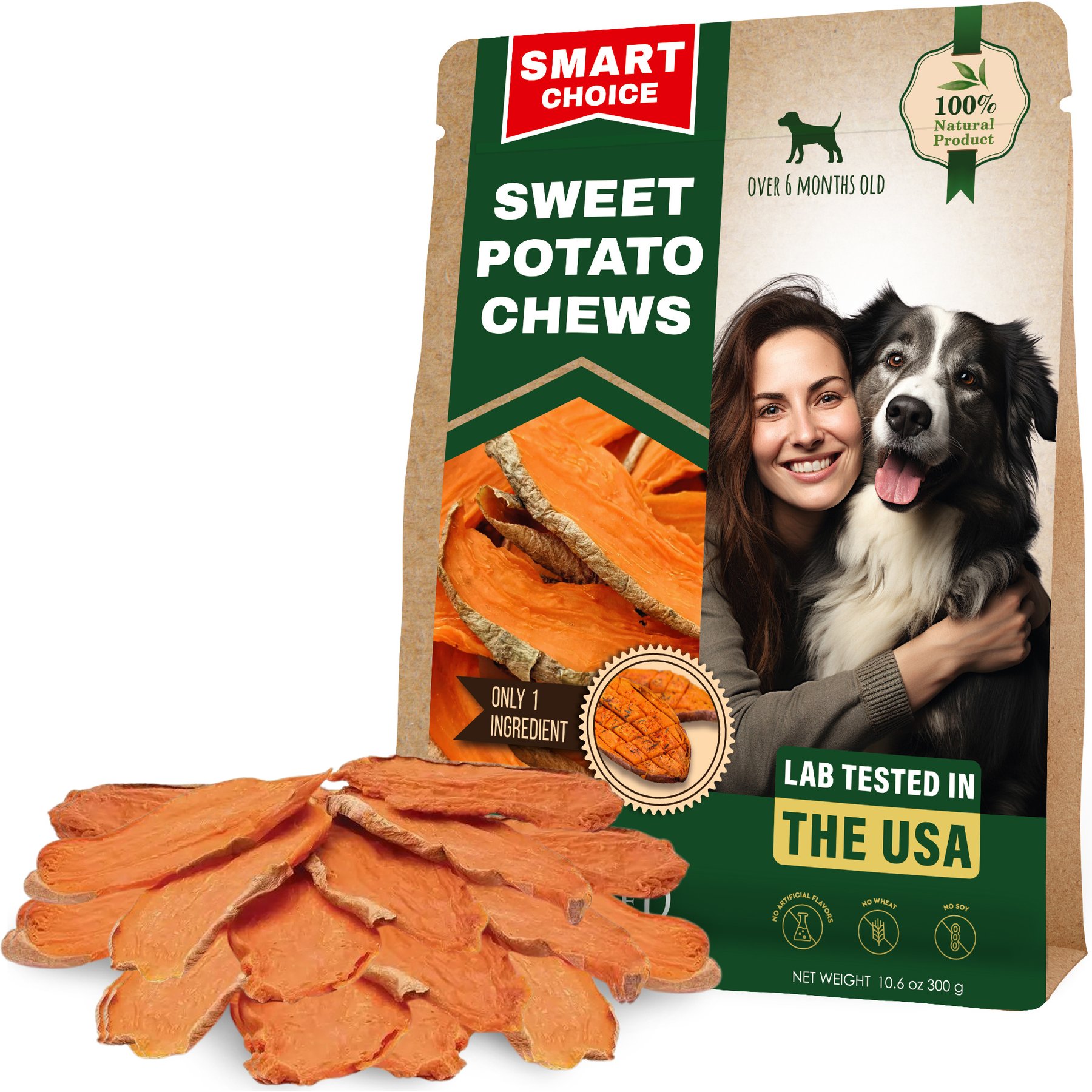
Slices of dehydrated sweet potato and nothing else, chewy rather than crunchy, for the dog that wants something to work at rather than swallow. A plant-based option for a dog on a limited-ingredient diet, and a sensible thing to hand a dog while the bowl is being filled. See limited-ingredient diet.
The same idea in a resealable tub: freeze-dried chicken breast, one ingredient, in a quantity that lasts a multi-dog household through the season. It also stuffs into a rubber toy or scatters across a snuffle mat, which is the other way to keep a dog busy on the night. See best lick mats for dogs and puzzle toys for dogs home alone for the occupation side.
The bowl, the door and the dog
Most of the risk on the night is not the candy, it is the door. A dog that is anxious about fifty strangers in masks, and a bowl of chocolate at nose height beside an open front door, is a dog that either eats the bowl or goes through the door. Put the bowl on a shelf. Put the dog in a room with a closed door, a covered bed and something to lick, and let the household answer the doorbell without it. Our anxiety wraps for fireworks and noise guide covers the den and the lick mat that make that room a good one, and the what human foods are toxic answer covers the rest of the year.
How this goes wrong
| What happens | Why it matters | What to do instead |
|---|---|---|
| Dog ate milk chocolate, owner waits to see | Usually fine in a large dog, but nobody checked the dose | Ring with the wrapper and the weight; let them decide |
| Sugar-free gum eaten, dog seems fine | Blood sugar can collapse within the hour | Vet now, before the signs |
| Box of mixed candy raided, only the chocolate counted | Raisins and macadamias hide in mixes | Read every ingredient list in the box |
| Dog made to vomit at home | Wrong for some ingestions; timing matters | Ring first, and follow the instruction |
| Bowl by the front door on the night | Nose height, door open, fifty distractions | Bowl on a shelf; dog in a closed room |
| Dog given human candy as a treat to include it | Sugar, fat and the risk of the wrong one | Single-ingredient treats, in small pieces |
What to skip
- Waiting for signs. The call is free and the wait is not.
- Home remedies for inducing vomiting. Salt, in particular, has poisoned dogs on its own.
- Assuming a big dog is safe. Dark chocolate and xylitol do not care.
- Chocolate-covered anything. Two risks in one.
- The bowl by the door. The single biggest cause of the phone call.
How to choose
Read the bowl for the three that matter: cocoa content, sugar-free, and dried fruit.
Know the dog's weight and keep the poison line number where you can find it.
Ring before you act, and bring the wrappers.
Give the dog its own single-ingredient treat and its own room on the night.
And put the bowl on a shelf, which prevents more emergencies than everything else in this guide combined.
FAQ
Frequently asked
How much chocolate is toxic to a dog?
It depends on the chocolate far more than on the amount. Cocoa is the toxin, so a square of baking chocolate or a few squares of dark chocolate can carry more than a whole bar of milk chocolate, and white chocolate carries almost none. Signs begin at roughly 20 milligrams of theobromine per kilogram of dog and become serious at around 40 to 60, which for a small dog is a handful of dark chocolate. Work it out from the type, the weight of the dog and the amount, or ring a poison line and let them do it, rather than waiting to see.
Why is xylitol worse than chocolate for dogs?
Because the dose that hurts is tiny and the effect is fast. Xylitol, a sugar substitute in sugar-free gum, mints, some candies and some peanut butters, makes a dog's pancreas release insulin as if it had eaten a large amount of sugar, and blood glucose can collapse within an hour. Higher doses damage the liver. A couple of pieces of gum can be enough for a small dog. There is no waiting period: a dog that has eaten anything sugar-free needs a vet now, before the signs start.
My dog ate Halloween candy. What do I do first?
Find out what and how much, using the wrappers, and ring your vet or a pet poison line with the dog's weight, the product and the amount before you do anything else. Do not make the dog vomit at home unless a professional tells you to; some things are more dangerous coming back up, and the timing matters. If the candy was sugar-free or contained raisins, go straight in. If it was milk chocolate in a large dog, the call will probably tell you to watch, and it will tell you what to watch for.
Are raisins and grapes really dangerous to dogs?
Yes, and unpredictably. Some dogs eat a bunch of grapes without harm and others go into kidney failure after a few raisins, and there is no way to tell in advance which dog is which. Because the outcome can be acute kidney injury, a dog that has eaten raisins, grapes or anything containing them, including some cereal bars and boxes of mixed candy, is treated as an emergency regardless of the amount. Chocolate-covered raisins combine two problems in one wrapper.
What can I give my dog instead of Halloween treats?
Anything with one ingredient. Freeze-dried chicken, beef liver, beef heart or dehydrated sweet potato give a dog something to have while the household eats candy, without the sugar, the wrappers or the risk. Keep the portions small, because treats should stay under about a tenth of daily calories, and keep the trick-or-treat bowl on a shelf the dog cannot reach, which does more than any treat to prevent the phone call.
Featured in this guide
The picks referenced above—priced and in stock at time of publication.

Affiliate links. Prices and availability change—we filter unavailable items nightly, but the retailer's page is source of truth.
Keep reading
halloween safety
LED Collars for Night Safety: Light That Does Not Need Headlights
halloween safety
Anxiety Wraps for Fireworks and Noise: What the Pressure Does, and What It Cannot
halloween safety
Reflective Gear for Evening Walks: Where It Goes Matters More Than How Much
evergreen
Wand Toys for Cats: The Toy Matters Less Than How You Move It
evergreen
Probiotics for Dogs: What the Evidence Supports, and What the Label Has to Say
holiday wellness planning
Dog Beds for Cold Floors: A Layer Between Dog and Tile Does More Than Extra Fluff
Discussion
Talk about Halloween Candy and Dogs: Which Candies Are Dangerous, How Much, and What to Do
Real questions from real pet owners. Add yours—signed-in members only, first three posts held for review.
Loading threads…