Dog Beds for Cold Floors: A Layer Between Dog and Tile Does More Than Extra Fluff
On tile, stone or a basement slab, the floor pulls warmth from a sleeping dog. What helps: a layer underneath, a grip that stops sliding, and support for older joints. Five beds and mats sorted by the dog and the floor.
petsupplies.co earns a commission if you buy through the product links on this page, and the price you pay is the same either way.

Cold-floor beds are often sold on softness: the deepest faux fur, the plushest fill. On tile, stone or a concrete basement, what matters more is the layer between the dog and the floor, and whether the bed stays put when the dog steps on it.
This guide covers how to choose for a cold, hard floor, with five beds and mats from the catalog.
Why cold floors matter for some dogs
Most healthy adult dogs cope with a cool floor, and some seek it out in summer. The dogs that need more are older dogs, thin-coated or small dogs, and dogs with stiff joints.
VCA Animal Hospitals' guide to helping a dog with osteoarthritis says to keep the dog warm and dry, because cold, damp conditions may worsen stiffness and discomfort. It also suggests an orthopedic or memory foam bed to reduce pressure on sore joints.
Our osteoarthritis page covers the condition, and the orthopedic bed entry explains what the label does and does not mean.
Grip matters on hard floors
A bed that slides is a hazard for a stiff dog. VCA notes that slippery flooring can make it hard for dogs with osteoarthritis to walk, turn and rise. It suggests yoga mats or area rugs with non-skid backing.
Look for a non-slip bottom on any bed for tile or hardwood. Four of the five picks here list one.
Fleece mats: the simple layer
A washable mat is the easiest fix for a crate, a kitchen corner or the spot a dog already chooses.
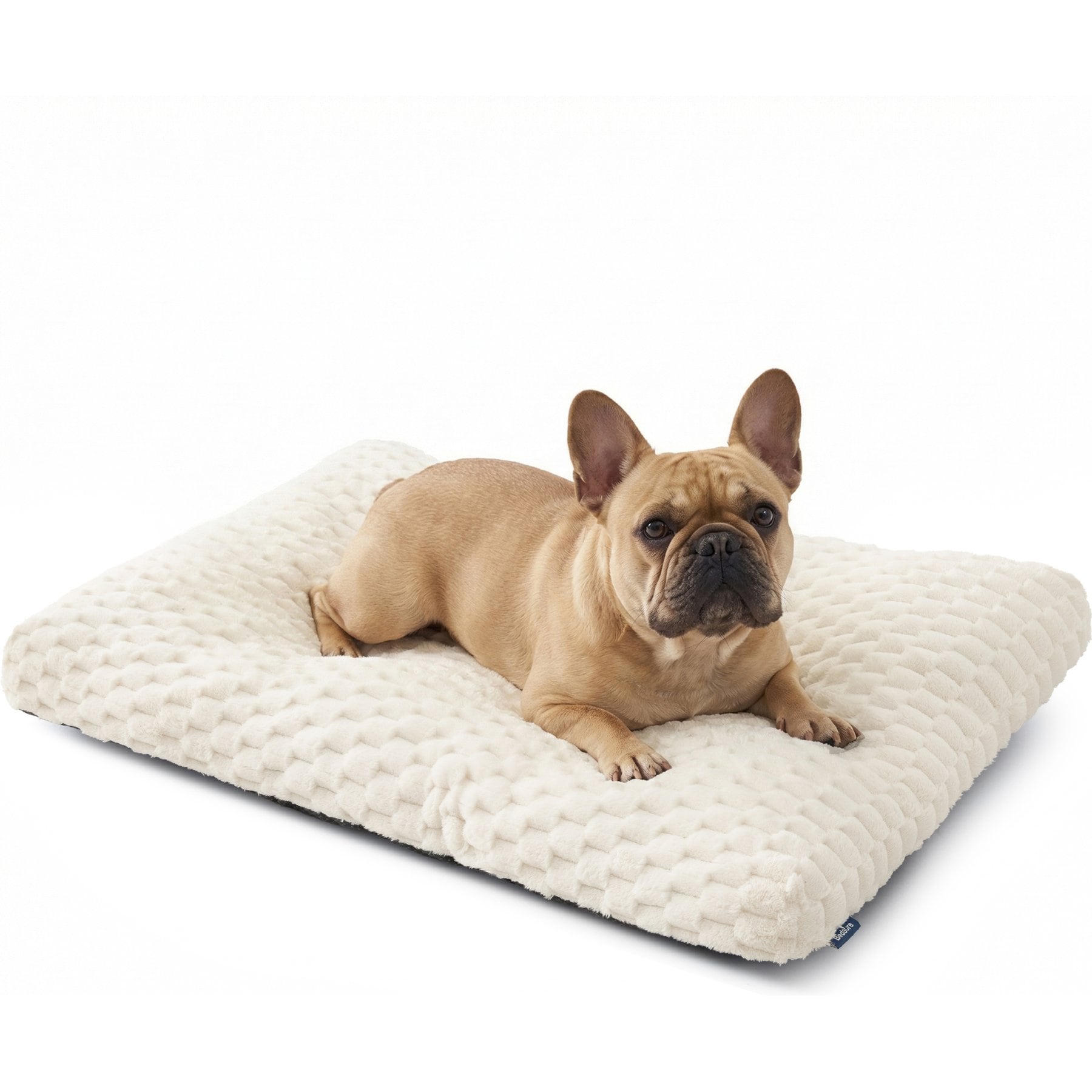
This bubble fleece mat has soft fill and, according to its listing, a grippy anti-slip bottom that keeps it in place on hardwood and tile. It is fully machine washable and can be tumble-dried on low.
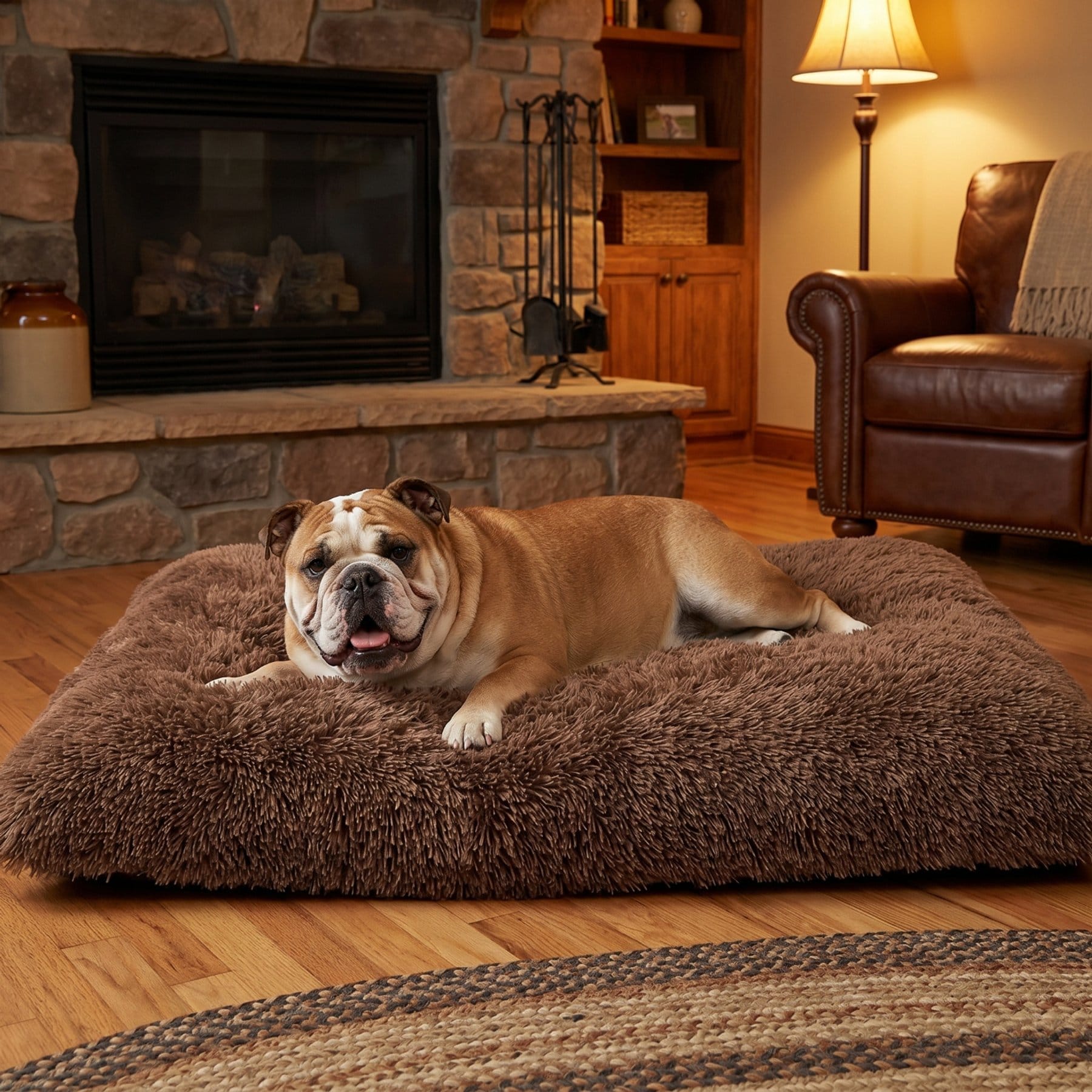
This faux fur mat has down-alternative filling and a nonslip bottom, and the whole mat is machine washable. The listing says it works in crates, on floors, in cars and on elevated beds. It arrives vacuum-compressed, so shake it out or tumble-dry on low to restore the loft.
The listing calls this mat calming. That is a marketing word, not a treatment for anxiety.
Self-warming beds
A self-warming bed has no cord or heating element. It holds in and reflects the dog's own body heat.
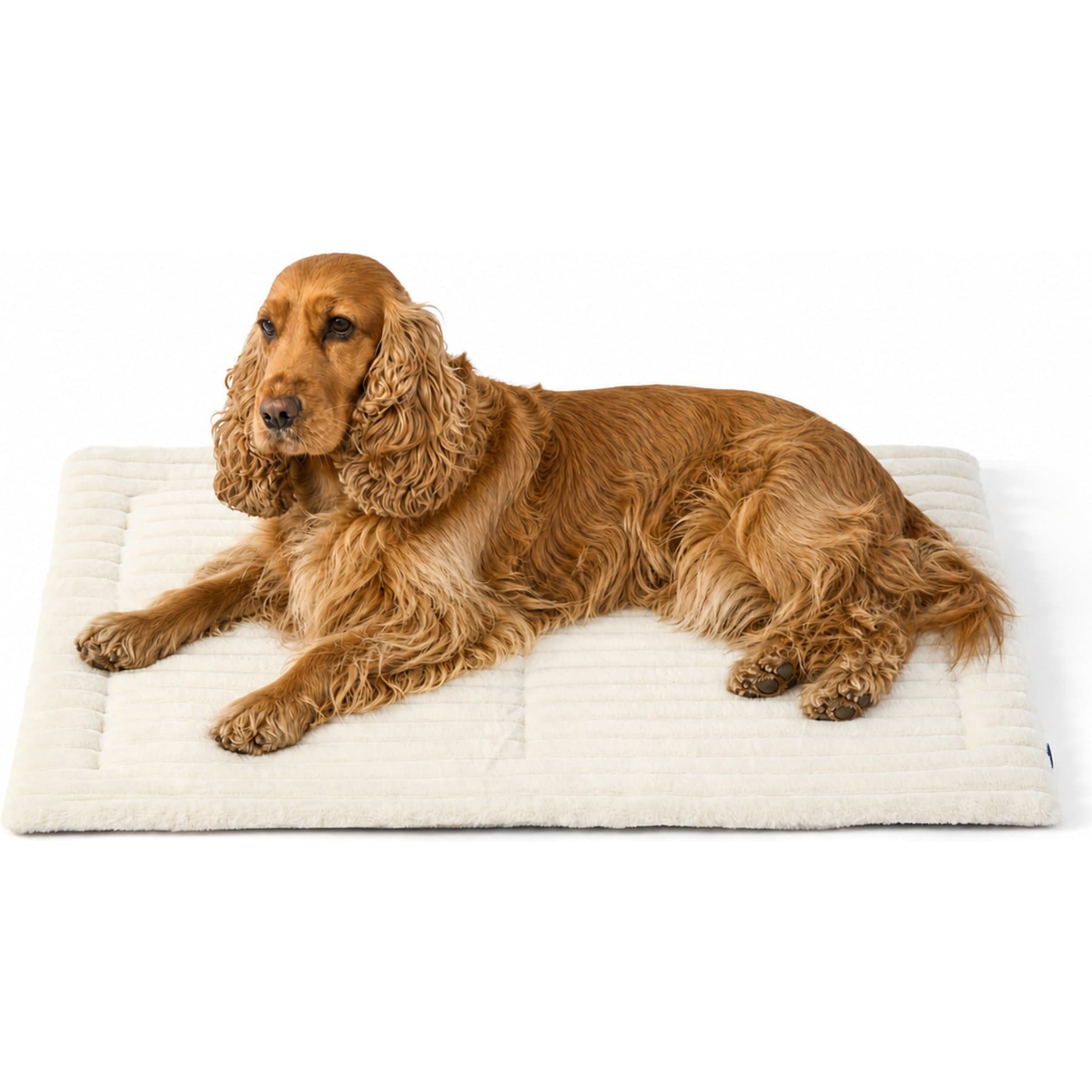
This faux fur mat is described by its maker as self-warming in exactly that way. It has a nonslip bottom and is machine washable. The listing asks you to measure for fit.
Because there is no heating element, a self-warming bed avoids the burn and chewed-cord risks of electric beds. For a dog that needs active heat, the American Kennel Club's winter safety tips suggest a heated bed made specifically for dogs, with an auto-shutoff. Our heated pet beds guide compares the two types.
Foam bolster beds for older dogs
Older and stiff dogs benefit from foam under them, not just fleece. Foam also adds more distance between the dog and a cold floor than a thin mat.
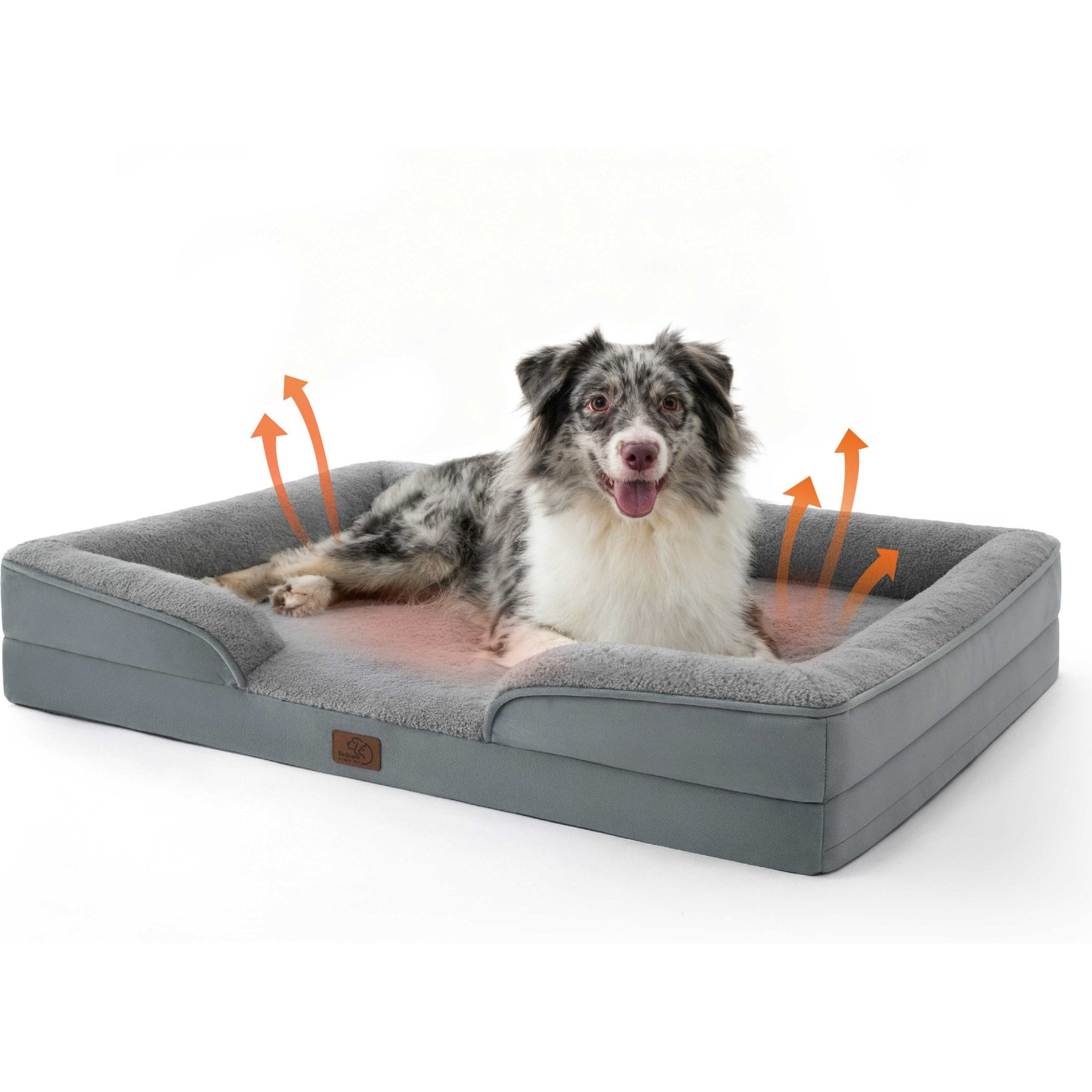
This bolster sofa bed uses egg-crate foam and has a four-sided bolster for head and neck support. The maker says it has a non-slip bottom, a waterproof liner over the foam, and a removable cover that goes in the washing machine. The listing title calls it self-warming.
Egg-crate foam is softer and thinner than a solid memory foam slab. For a large dog with advanced arthritis, our orthopedic dog beds guide explains what to check in a foam specification.
Elevated cots
An elevated cot lifts the dog off the floor entirely, so the dog is not lying on cold tile or a damp slab.
This steel-framed cot has a tight, breathable PVC-coated fabric surface and skid-resistant feet. The maker says the fabric keeps the dog cool and does not sag.
Air moves under a cot, which is why it feels cool in summer. In winter, add a fleece mat on top so the dog gets the lift without the chill.
How this goes wrong
| Bed type | Good for | Where it goes wrong |
|---|---|---|
| Fleece mat | Crates, kitchen corners | Thin; little support for stiff joints |
| Self-warming mat | Chilly dogs, no cord | No active heat for very cold rooms |
| Foam bolster bed | Older dogs, head and neck support | Egg-crate foam is thinner than solid foam |
| Elevated cot | Damp or cold slabs | Cool surface without a mat on top |
| Any bed without grip | Nothing on tile | Slides when a stiff dog steps on it |
Sizing the bed
Watch how your dog sleeps before you buy. A dog that curls tight suits a smaller mat or a bolster bed. A dog that sprawls needs a bed long enough for its full stretch, or its hips and elbows end up on the cold floor.
Measure the dog lying stretched out, from nose to the base of the tail, and add a few inches. Two of these listings ask buyers to measure for fit, and sizes vary between brands, so check the listed dimensions rather than the size name.
For a crate, measure the crate floor. A mat that bunches at the edges leaves gaps where the dog lies on bare plastic or wire. A mat that fits flat covers the whole floor and stays put.
Where to put the bed
Place the bed away from exterior doors, drafty windows and the path of cold air. VCA's advice to keep a dog with arthritis warm and dry applies to the bed's spot as much as the bed.
Put a non-skid rug on the route the dog walks to reach the bed. A stiff dog that slips on the way is less likely to use it.
For a basement or garage floor, check for damp. A waterproof liner or a cot helps where the floor sweats in cold weather.
Washing
Mats and covers that go in the washing machine are easier to keep clean. Our how often should I wash my pet's bed answer covers the schedule.
Dry fleece fully before putting it back on a cold floor. A damp mat on tile stays cold.
When a cold dog needs a veterinarian
A dog that shivers indoors, seeks heat constantly, or has new stiffness when getting up needs a checkup. Cold intolerance and stiffness can have medical causes that a bed will not fix.
A dog that cannot rise, cries when moving, or suddenly will not use stairs needs a veterinarian soon, not after a new bed arrives.
What to skip
- A bed with no grip on tile or hardwood. It slides under a stiff dog.
- Thin fleece alone for an arthritic dog. Add foam.
- Electric heat not made for dogs. The AKC suggests dog-specific heated beds with auto-shutoff.
- A bed by an exterior door. Move it out of the draft.
- Treating "calming" as a cure. It is a marketing term.
How to choose
Start with the dog. A healthy adult on a cool floor may only need a washable fleece mat. A chilly or thin-coated dog suits a self-warming mat. An older, stiff dog needs foam.
Check the floor next. Choose a non-slip bottom for tile and hardwood, and a cot or waterproof liner for damp slabs.
Place the bed out of drafts with a non-skid route to it. Call your veterinarian about new stiffness, constant shivering or trouble getting up.
FAQ
Frequently asked
What kind of dog bed is best for tile floors?
One with a non-slip bottom and a layer between the dog and the floor. A washable fleece mat suits a healthy dog, while an older or stiff dog does better on foam. VCA Animal Hospitals notes that slippery floors make it hard for dogs with osteoarthritis to walk and rise.
Do self-warming dog beds work?
A self-warming bed has no cord or heater. It holds in and reflects the dog's own body heat, which suits a chilly dog in a cool room. For more warmth, the American Kennel Club suggests a heated bed made for dogs with an auto-shutoff.
Is an elevated dog bed good for cold floors?
An elevated cot lifts the dog off cold tile or a damp slab. Because air moves underneath, it can feel cool, so add a fleece mat on top in winter.
What bed is best for an older dog on a cold floor?
A foam bed with a non-slip bottom, placed out of drafts. VCA Animal Hospitals suggests an orthopedic or memory foam bed for dogs with osteoarthritis and advises keeping them warm and dry.
When should I worry that my dog is cold all the time?
If your dog shivers indoors, constantly seeks heat, or is newly stiff when getting up, book a veterinary checkup. Trouble rising, crying when moving, or refusing stairs needs attention soon.
Featured in this guide
The picks referenced above—priced and in stock at time of publication.
Affiliate links. Prices and availability change—we filter unavailable items nightly, but the retailer's page is source of truth.
Keep reading
evergreen
Probiotics for Dogs: What the Evidence Supports, and What the Label Has to Say
evergreen
Scratching Posts Cats Actually Use: Tall, Heavy, Sisal, and in the Room You Live In
outdoor gear walks
Dog Carrier Backpacks for Hiking: Fit the Dog First, Then Plan for Heat and Rest Stops
new year basics
Dog Food Transition Guide: Four Days Suits Most Dogs, Sensitive Stomachs Need Longer
evergreen
Single-Ingredient Dog Treats: One Line on the Label, and What It Does Not Tell You
senior pet care
Low-Impact Toys for Older Dogs: Keep the Play, Lose the Landing
Discussion
Talk about Dog Beds for Cold Floors: A Layer Between Dog and Tile Does More Than Extra Fluff
Real questions from real pet owners. Add yours—signed-in members only, first three posts held for review.
Loading threads…