Orthopedic Dog Beds: An Unregulated Word and the Specification That Matters
Orthopedic means nothing in particular on a pet bed label. What actually matters is one measurable property, and most beds sold on the claim do not have it.
petsupplies.co earns a commission if you buy through the product links on this page, and the price you pay is the same either way.

Orthopedic is not a regulated term on a pet bed. No standard has to be met, no material specified, no test passed. A manufacturer can print it on a bag of loose polyester fiber and has every commercial reason to.
This matters because the beds are bought for dogs who genuinely need support (arthritic seniors, large breeds, dogs recovering from surgery), and the difference between a bed that supports a hip and a bed that merely says it does is invisible in a photograph and obvious to the dog.
There is one test that separates them, it takes three seconds, and it is worth more than any specification sheet. Everything else in this guide is detail around it.
The three-second test
Press the bed firmly with the heel of your hand, where the dog's hip would rest.
If you can compress it to the floor, so can a sleeping dog. That bed is a cushion, and the joint it was bought to protect is resting on your floorboards through a layer of decorative fabric. A supportive bed pushes back, and springs back when you let go.
Do this before you commit: in the shop, or on delivery before the tags come off. It is the only assessment that reliably predicts whether the bed does its job, and it cuts through the entire vocabulary of the category.
What passes the test is nearly always the same thing: a single solid piece of foam of adequate thickness. What fails is nearly always one of these:
- Loose polyester fill. Compresses flat within weeks and never recovers. The most common thing sold as orthopedic.
- Shredded foam offcuts. Feels promising in the shop, then migrates to the edges under a dog's weight and leaves a hollow precisely where the weight is.
- A thin foam sheet over a hollow base. Passes a gentle press, fails under an actual dog.
Thickness scales with the dog. A three-centimeter pad is fine under a terrier and irrelevant under a Labrador. If in doubt, thicker, and do the press test with the weight of your body behind your hand rather than your fingertips.
Size, and why arthritic dogs need more of it
The sizing mistake is specific and easy to make.
Young dogs curl up. Stiff, arthritic dogs largely cannot: extending is more comfortable than flexing a painful joint, so they sleep stretched out on their side. A bed sized for a curled dog therefore leaves a shoulder, a hip or a whole hind leg on the floor, which defeats the purpose of buying it.
Measure the dog while it is asleep and stretched out, nose to base of tail, and add a generous margin. Then check the usable interior rather than the exterior dimensions: bolstered beds lose a surprising amount of internal space to the walls, and the number on the box is the outside.
For dogs with mobility problems, the height of the edge matters too. A high bolster is a wall to climb over for a dog with weak hind legs, and dogs quietly stop using beds they find awkward to get into. Low or open-fronted is the safer choice as dogs age.
The flat pillow style is the default for exactly this reason: nothing to climb, the whole surface usable, easy to place anywhere.
Bolsters are not wrong: plenty of dogs like something to rest a head against, and a low bolster on three sides with an open front gives that without creating a barrier.
The waterproof layer nobody thinks about until they need it
This is the specification most people wish they had bought and did not.
Senior dogs leak. Some have age-related incontinence, some are on medication that increases thirst and urine output, some simply cannot get up quickly enough at three in the morning. Dogs recovering from surgery have the same problem for different reasons, and any dog can vomit on a bed.
A washable cover is not the same as a waterproof liner. Without the liner, one accident soaks into the foam, and foam that has absorbed urine never really recovers; it holds odor, it grows bacteria, and you will replace the whole bed rather than wash it.
So: removable machine-washable cover, plus a waterproof membrane between the cover and the foam. If a bed you like lacks the membrane, a separate waterproof foam protector costs a fraction of the bed and saves it.
Check the cover actually comes off completely: some are stitched shut on one side, which makes them awkward to wash and impossible to dry properly.
Placement, traction and warmth
Where the bed goes does as much work as what it is made of.
Warmth. Cold stiffens arthritic joints. A bed in a draft, on a tile floor, or under a window is a worse bed than the same one somewhere warm. For genuinely creaky seniors, a heated bed is worth a look, with the usual caution that a dog who cannot easily move away from a heat source should not be left on one unsupervised.
Traction around it. A supportive bed on a slippery floor creates a hazard at the moment the dog is least stable: getting up. Slipping is painful, and worse, the fear of slipping changes how a dog moves and accelerates muscle loss. A runner or a rug beside the bed is a cheap, immediate improvement.
Where the people are. Dogs are social sleepers. A bed in an empty room gets ignored while the dog lies on the hard floor near you, which is the most common way an expensive bed goes unused. Put it where the household is, and consider two cheaper beds in two rooms over one expensive one in the wrong room.
In the crate, if the dog uses one. A crate mat needs to be flat, correctly sized and washable rather than plush. See what size crate does my dog need and crate training.
This listing is no longer available.
For a second bed in another room, or for a smaller or lighter dog, convoluted foam gives real support at a lower price than solid memory foam.
This listing is no longer available.
How this goes wrong
| What gets bought | How it fails | What to do instead |
|---|---|---|
| Loose-fill bed labeled orthopedic | Flat within weeks; no support at any point | Do the press test before buying |
| Shredded foam fill | Migrates to the edges, hollow under the hips | Insist on a single solid foam piece |
| Bed sized to a curled dog | Stiff dog sleeps extended; limbs hang onto the floor | Measure the dog stretched out asleep |
| High bolster for a wobbly senior | Becomes a barrier; the dog quietly stops using it | Low sides or open front |
| Washable cover, no waterproof liner | One accident writes off the foam | Waterproof membrane, or a separate protector |
| Expensive bed in a spare room | Unused; dog sleeps on the floor near the family | Two cheaper beds where people actually are |
What to skip
- The word orthopedic, as a reason to buy. It is unregulated. The press test is not.
- Beds with only a decorative cover zip. If it does not come off completely, you will not wash it properly.
- Raised or elevated cot beds for arthritic dogs. Fine for cooling in summer, but they require a step up and offer no joint cushioning, which is backwards for this dog.
- Replacing the bed instead of treating the pain. A better bed helps a dog sleep. It does not manage osteoarthritis; that needs weight control, exercise and veterinary pain relief.
- Buying big and firm for a thin senior. Very firm foam under a dog with little muscle or fat can cause pressure sores. Supportive means it resists compression, not that it feels like a plank.
How to choose
Do the press test. If it goes to the floor, nothing else about the bed matters.
Buy solid foam, thick enough for the dog's weight, in a size that fits the dog stretched out on its side.
Insist on a waterproof liner under a fully removable washable cover, especially for a senior.
Keep the sides low, put it somewhere warm where the family is, and put a rug beside it.
And keep the bed in proportion to the rest of the plan. Weight, pain relief and traction do more for a stiff old dog than any mattress; see canine obesity, hip dysplasia and intervertebral disc disease for the conditions most often underneath the stiffness, and get a body condition score at the next visit.
FAQ
Frequently asked
Does orthopedic mean anything on a dog bed label?
Not in any regulated sense. There is no standard a manufacturer must meet before printing the word, and it appears on beds filled with loose polyester, shredded foam offcuts and thin foam sheets alike. Treat it as a marketing term and judge the bed on what it is made of and how it behaves under load, not on what the tag claims.
What is the single test for whether a bed is supportive?
Press it firmly with the heel of your hand where the dog's hip would rest. If you can compress it to the floor, so can a sleeping dog, and the bed is doing nothing for the joint it is supposed to protect. A supportive bed resists, then recovers its shape when you let go. Do this in the shop, or on delivery before you remove the tags.
How big should the bed be?
Big enough for the dog to lie fully extended on its side without any part hanging off. This matters more for arthritic dogs than for young ones: a stiff dog cannot comfortably curl up, so it sleeps stretched out, and a bed sized for a curled dog forces a joint onto a hard floor. Measure your dog nose to tail base while it is stretched out asleep and add a comfortable margin.
Memory foam or egg crate foam?
Solid memory foam distributes weight more evenly and holds up better under a heavy dog; convoluted egg crate foam is cheaper, lighter and gives usable support for smaller or lighter dogs. Either beats loose fill. What matters more than the type is that it is a single solid piece rather than shredded offcuts, which migrate to the edges and leave a hollow exactly where the dog's weight is.
Will an orthopedic bed help my dog's arthritis?
It improves comfort and sleep quality and reduces pressure on the joints and elbows, which is worth having. It does not treat the disease. Arthritis is managed with weight control, appropriate exercise and veterinary pain relief, and a bed is a supporting measure alongside those rather than an alternative to them.
Featured in this guide
The picks referenced above—priced and in stock at time of publication.
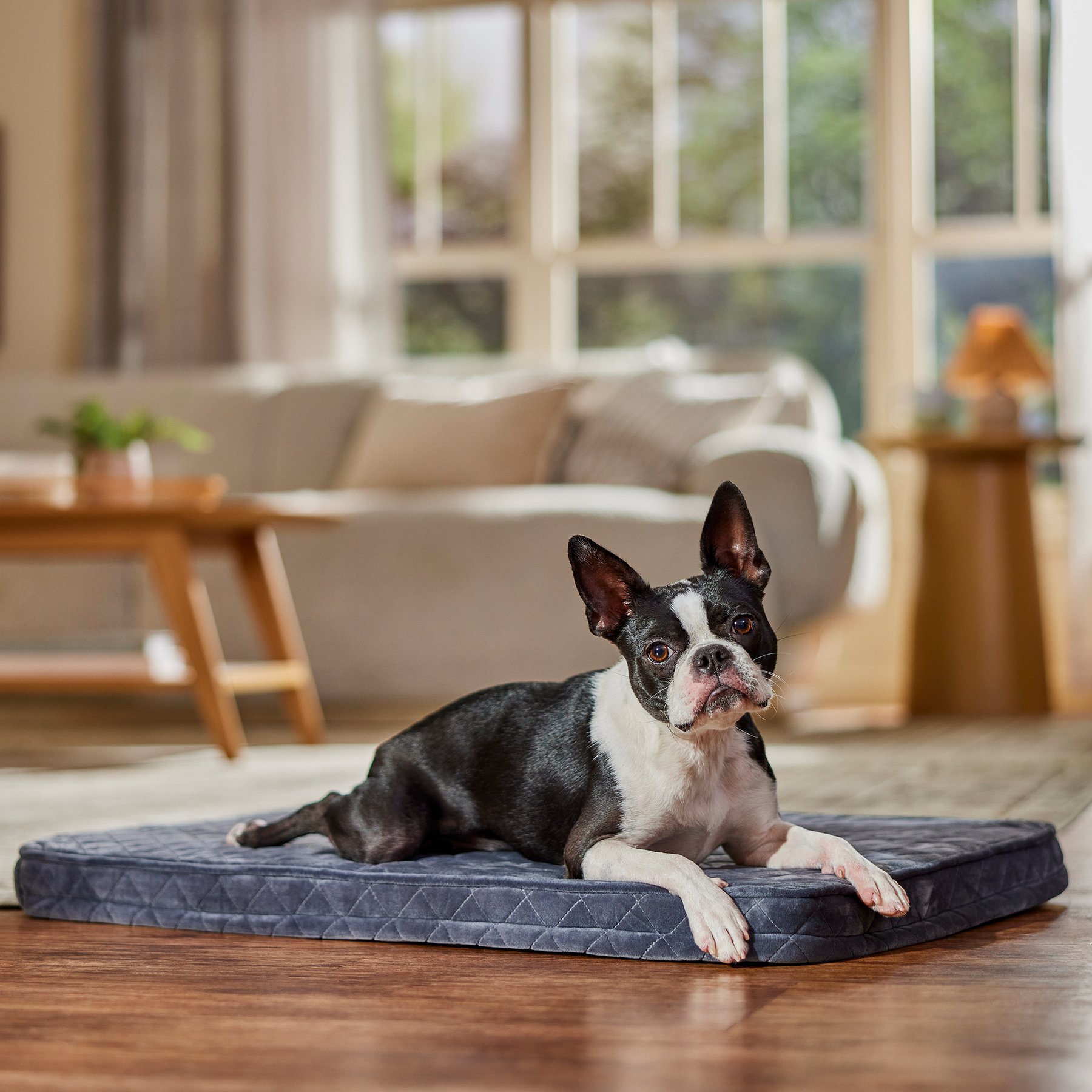
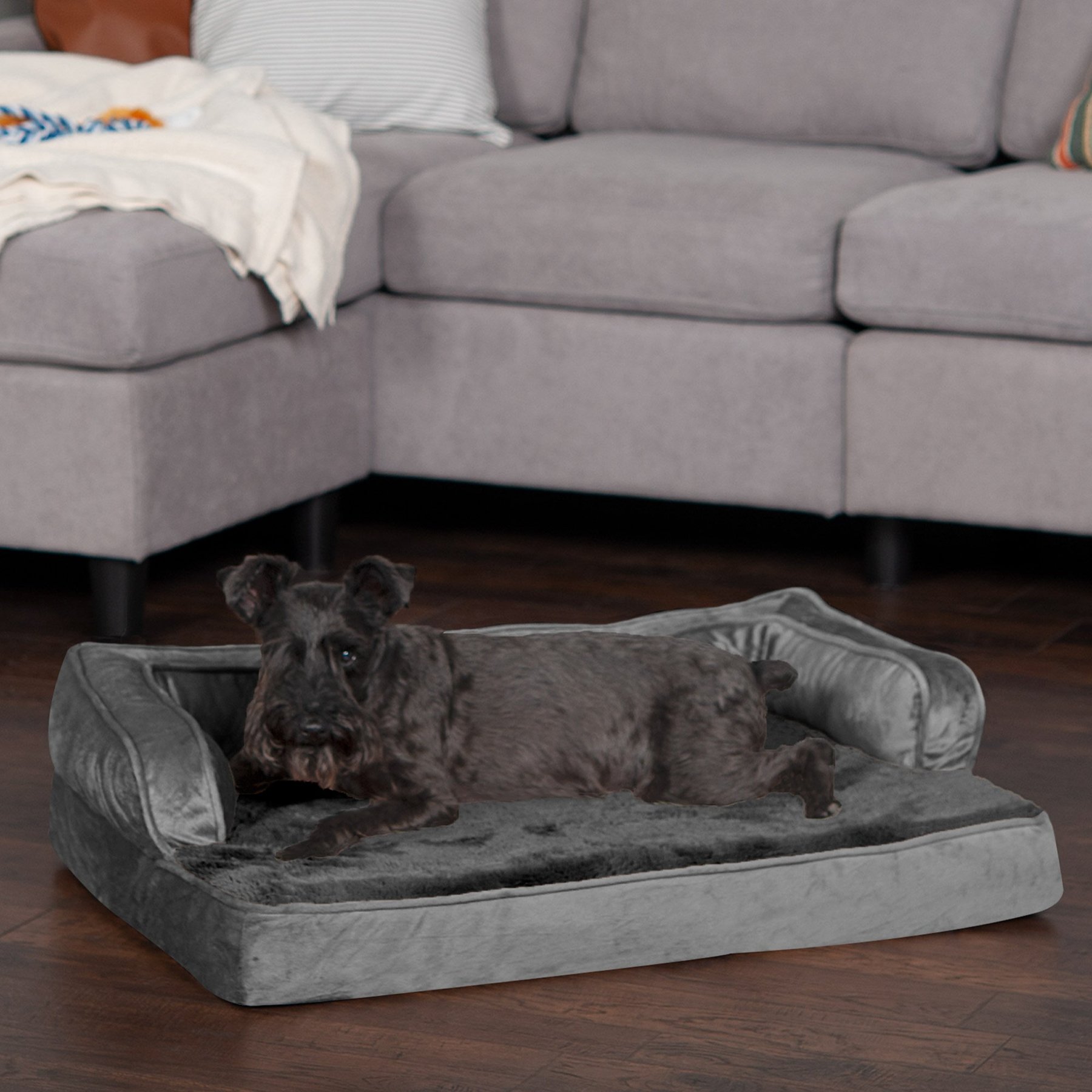
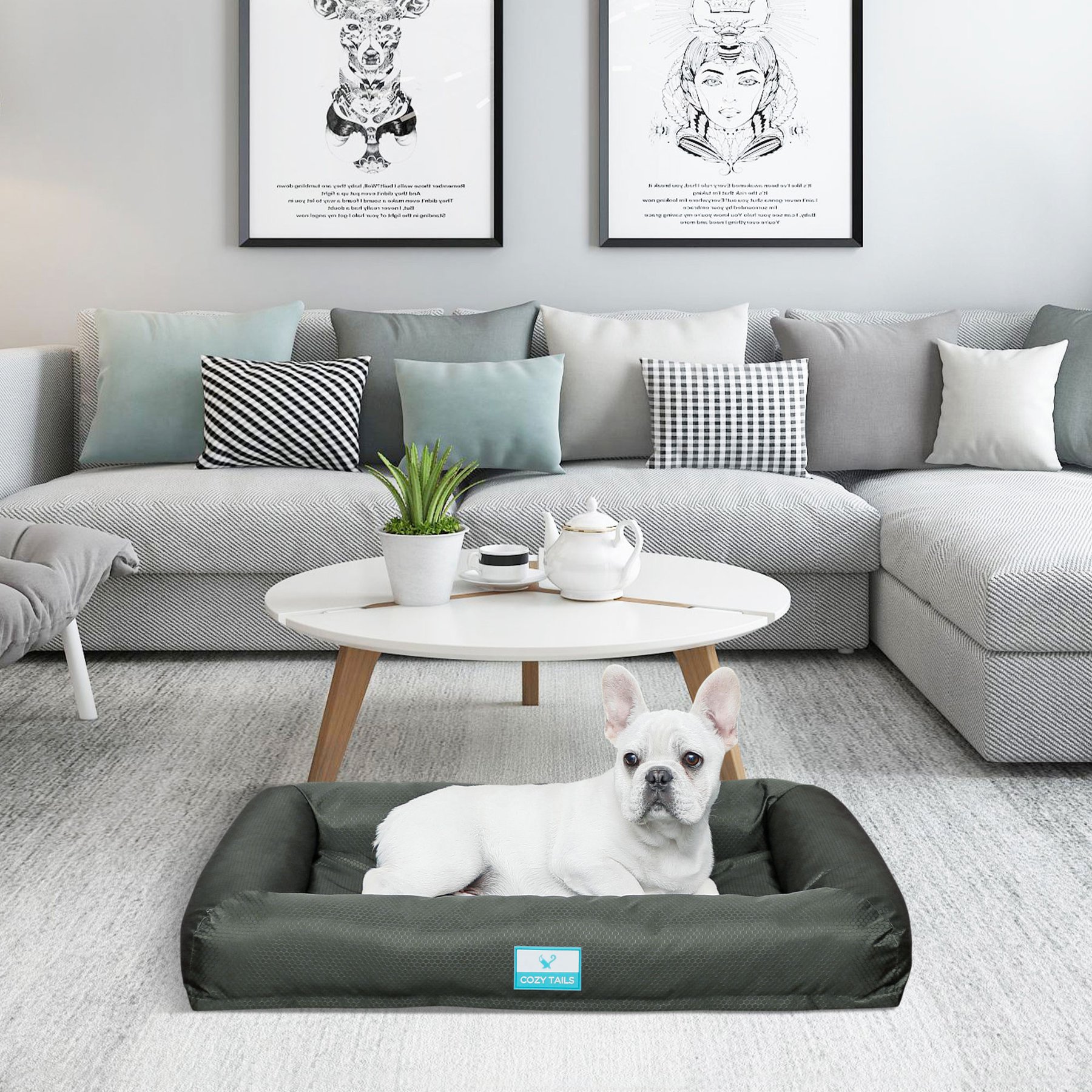
Affiliate links. Prices and availability change—we filter unavailable items nightly, but the retailer's page is source of truth.
Keep reading
senior pet care
Low-Impact Toys for Older Dogs: Keep the Play, Lose the Landing
senior pet care
Raised Feeders for Older Dogs: Right for a Few, Wrong for the Ones Most Often Given Them
senior pet care
Harnesses for Arthritic Dogs: A Walking Harness and a Lifting Harness Are Not the Same Thing
senior pet care
Water Fountains and Hydration for Senior Pets: Measure First, Then Buy
senior pet care
Joint Supplements for Senior Dogs: Which Ones Have Evidence Behind Them
senior pet care
Calming Aids for Senior Cats: In an Old Cat, Restlessness Is Usually Medical
Discussion
Talk about Orthopedic Dog Beds: An Unregulated Word and the Specification That Matters
Real questions from real pet owners. Add yours—signed-in members only, first three posts held for review.
Loading threads…