Water Fountains and Hydration for Senior Pets: Measure First, Then Buy
A fountain is a nudge, not a treatment, and a pet that has suddenly started drinking far more does not need a bigger bowl. What to measure, what it means, and which fountain is worth owning.
petsupplies.co earns a commission if you buy through the product links on this page, and the price you pay is the same either way.

Water fountains are sold on a single claim: cats prefer running water. It is partly true, individually variable, and beside the most important point.
For an older animal, water intake is not primarily a preference problem. It is a piece of clinical information. A senior pet that has started drinking noticeably more is telling you something, and a bigger or more appealing water source accommodates that message rather than reading it.
So the order matters here. Measure first. Interpret. Then, if the answer is simply that an old cat with early kidney changes could usefully drink a bit more, a fountain is a reasonable nudge.
Measure before you buy anything
This costs nothing and takes three days.
Fill the bowls with a measured amount each morning, measure what is left the next morning, and account for evaporation by leaving an identical bowl somewhere the animal cannot reach. In a multi-pet home you will only get a household total, which is still useful as a trend.
A commonly cited rough figure is roughly 0.8 to 0.9 fluid ounce per pound of bodyweight per day (50 to 60 milliliters per kilogram), from all sources including food. Treat it as a sanity check, not a target. The number that matters is your animal against its own normal.
What you are looking for is change. Two directions, both worth acting on:
Drinking much more: the more urgent finding. In an older animal the differential includes chronic kidney disease, diabetes mellitus, hyperthyroidism in cats, and Cushing's disease in dogs. In an unspayed female, sudden thirst with lethargy can mean pyometra, which is a surgical emergency. Several of these are very manageable caught early. Medication matters too: steroids and diuretics both increase thirst, and that is expected rather than alarming.
Drinking much less, often missed. It usually accompanies nausea, dental pain, or simply not being able to reach the bowl comfortably any more, and it compounds kidney disease and lower urinary tract disease.
Take the number to your vet rather than the impression. "He seems thirsty" and "she is drinking about 30 fluid ounces (900 milliliters) a day, up from about 14 fluid ounces (400 milliliters)" are different conversations.
What actually raises intake
If the goal is genuinely more water into an old cat, the fountain is not the biggest lever.
Wet food is. A cat eating predominantly wet food takes in most of its water with its meals, and will drink strikingly little from a bowl while being perfectly well hydrated. Switching some or all of a dry diet to wet does more for total intake than any fountain, and it is the intervention most often recommended for cats with kidney compromise. See wet versus dry and moisture.
More stations does more than better ones. Cats and dogs drink opportunistically. Several bowls in the places the animal already spends time will beat one impressive fountain in the kitchen, and for an arthritic animal it removes the trip entirely.
Separate water from food. Cats in particular tend to prefer drinking away from where they eat, and away from the litter box. The AAFP and ISFM feline environmental needs guidelines treat separated key resources as a pillar of a healthy environment, and this is a cheap application of it.
Wide and shallow. Whisker contact against the sides of a deep, narrow bowl is a genuine aversion for some cats and an old cat has less patience for it.
Reachable. A bowl upstairs is not a water source for a dog that finds stairs painful. See osteoarthritis.
Add water to food. A splash into wet food raises intake without asking the animal to change any behavior at all.
The WSAVA global nutrition guidelines put nutritional assessment (which includes water) into every routine examination for reasons like these.
Where a fountain genuinely helps
With expectations set, fountains do have a real case. Circulating water is cooler, better aerated and free of the surface dust that settles on a still bowl, and a proportion of cats visibly prefer it. For a cat with early kidney changes that will not eat wet food, that margin is worth having.
Run it as an experiment rather than a replacement. Set the fountain up alongside the existing bowls, leave both for two weeks, and see which gets used. Removing the still water to force the issue is the most reliable way to end up with an animal drinking less than it did before.
Three specifications decide whether it earns its place.
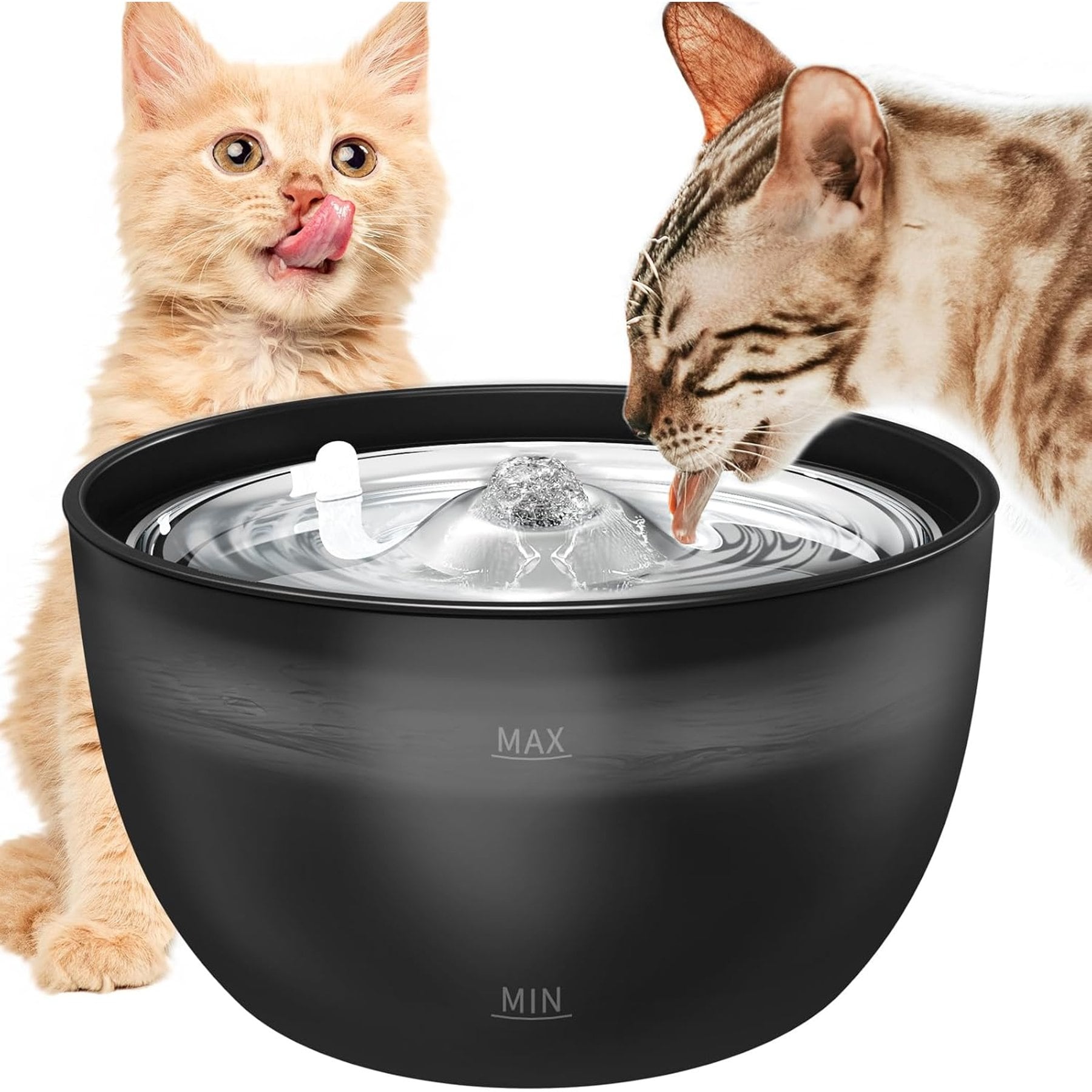
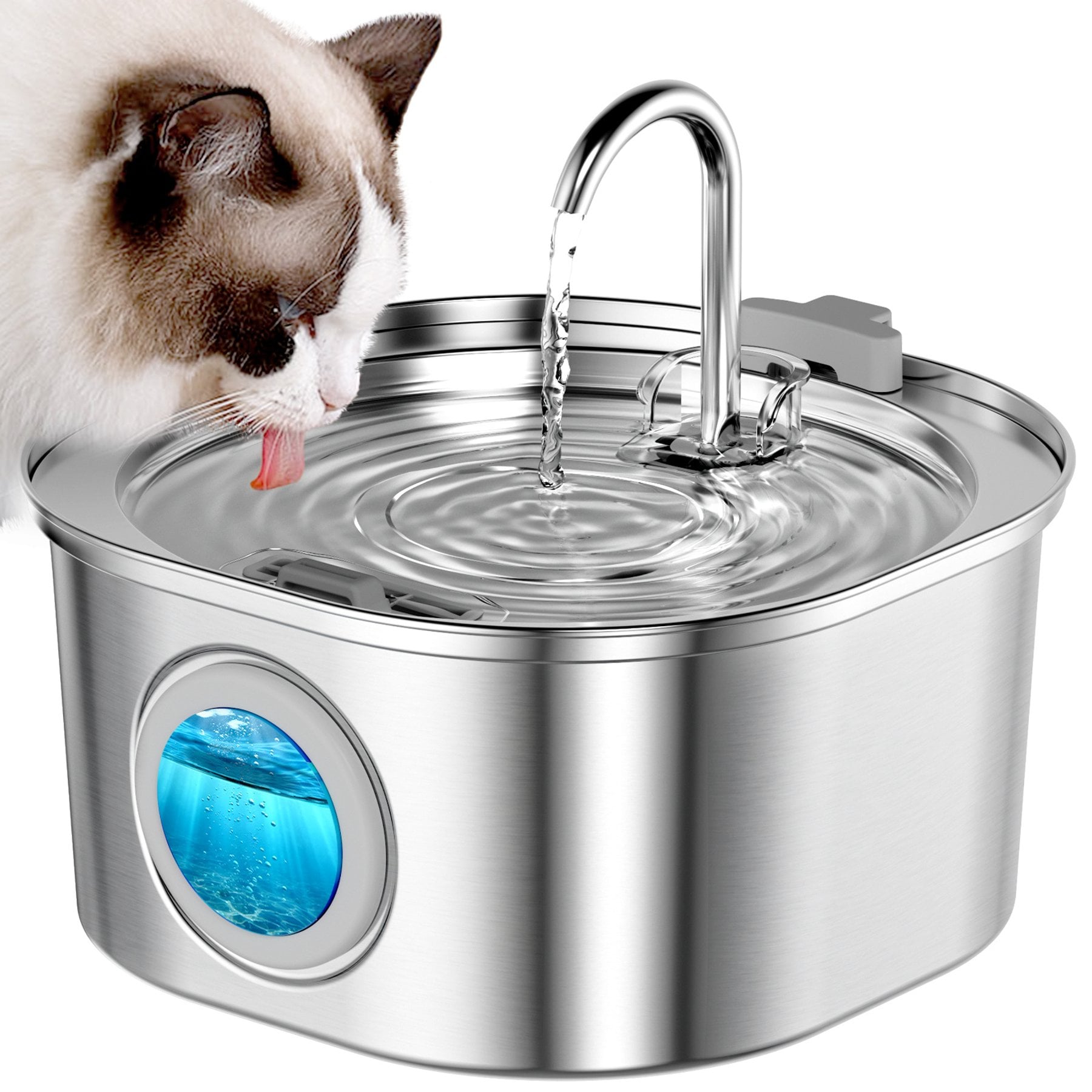
Material. Stainless steel or ceramic over plastic. Plastic scratches, scratched plastic holds biofilm you cannot scrub out, and plastic bowls carry a longstanding anecdotal association with feline chin acne.
Noise. A pump that hums or gurgles will put some cats off entirely, and an old cat with reduced hearing may be startled by an intermittent one. Quiet is a genuine feature, not marketing.
Ease of full disassembly. This is the one people regret. If it takes fifteen minutes to strip, you will not do it weekly. See water fountain for the short version.
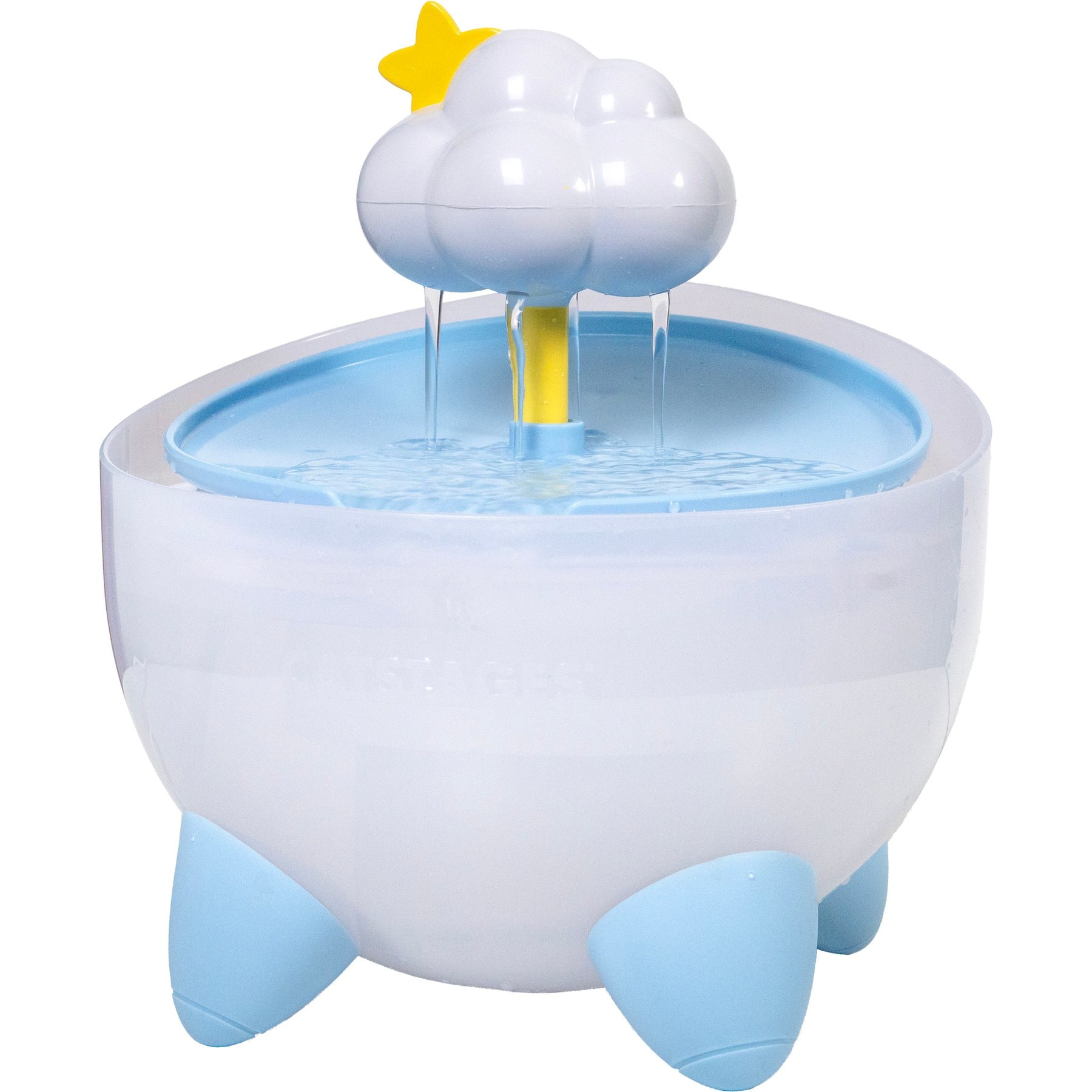
The budget plastic option is a reasonable way to test whether the cat cares at all before committing.
If the answer is yes, stainless is the material worth owning for the long run.
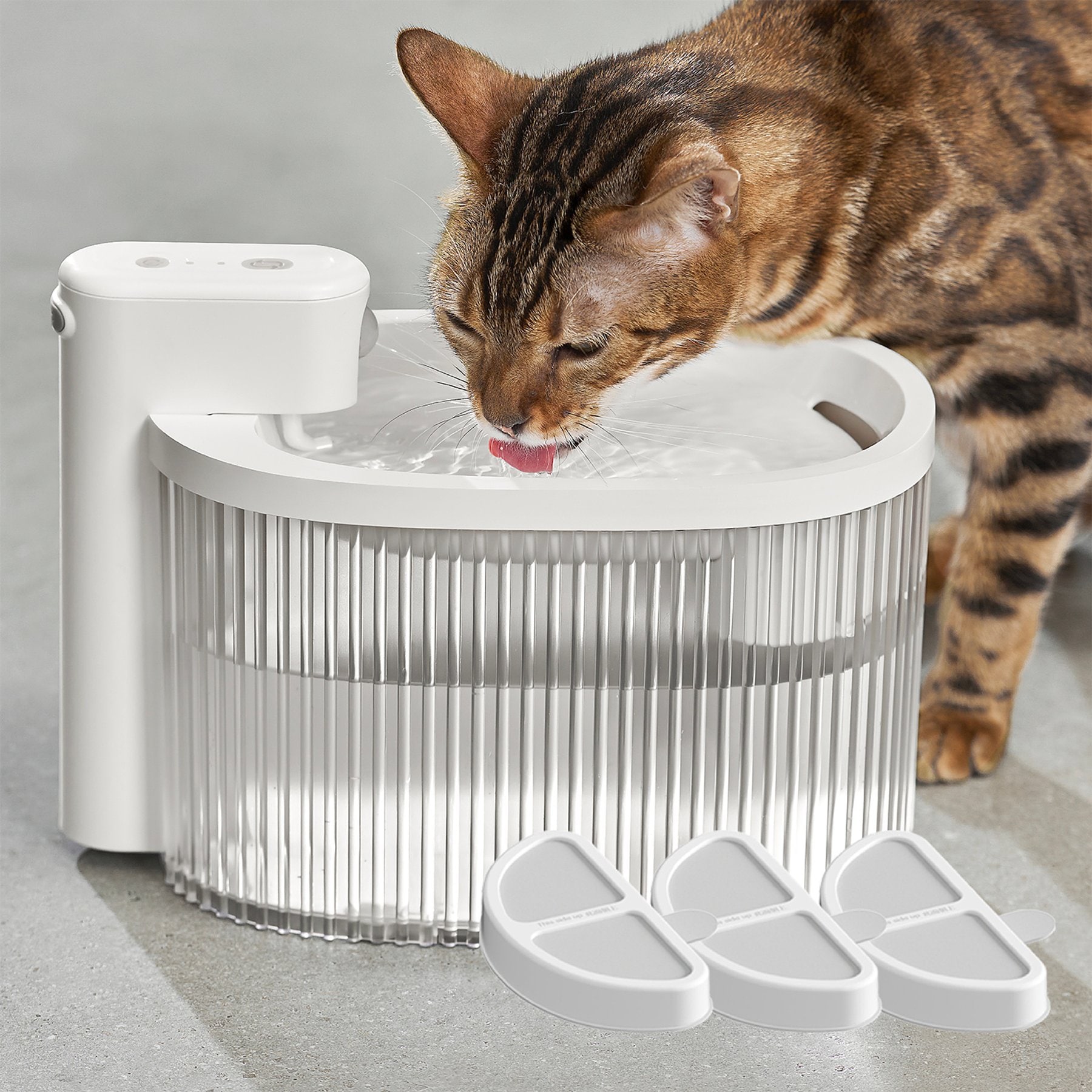
For a household where pump noise has been the sticking point, the quiet multi-stage designs are the ones to look at.
Placement usually beats specification, and a cordless unit lets you put water where the animal actually rests rather than where the socket is, which for a stiff old dog or cat is the whole point.
Fountains splash more than bowls, and a mat underneath is the difference between a fountain that stays where you want it and one that gets moved to the utility room.
The cleaning nobody budgets for
A fountain needs more cleaning than a bowl, not less, and this is where most of them quietly fail.
Warm, continuously circulating water over textured plastic is close to an ideal environment for biofilm: the slippery layer you can feel inside the reservoir. It makes the water less appealing, not more, and undoes the entire reason for buying the thing.
The routine: full disassembly and a scrub weekly, including the pump housing and the impeller, which is where the worst of it accumulates and which most people never open. Change filters at the manufacturer's interval. Rinse thoroughly: detergent residue is bitter and cats notice. And top it up daily, because running a pump dry kills it.
If that sounds like more than you will sustain, buy several wide ceramic bowls instead and wash them daily. A clean bowl beats a neglected fountain comfortably.
How this goes wrong
| What gets bought | Why it disappoints | What to do instead |
|---|---|---|
| A larger fountain for new excessive thirst | Accommodates a symptom; delays diagnosis | Measure intake, then bloodwork |
| Fountain replacing all still bowls | Some cats refuse it; intake falls | Run both for two weeks, let the cat choose |
| Plastic fountain, cleaned monthly | Scratches hold biofilm; water becomes less appealing | Stainless or ceramic, stripped weekly |
| Fountain in the kitchen only | Old arthritic animal will not travel to it | Several stations where the animal already rests |
| Water beside the food bowl | Many cats prefer them separated | Move it to another room |
| Fountain instead of wet food | Wet food is the far bigger lever for cats | Change the diet first, then consider a fountain |
What to skip
- Buying more water capacity in response to sudden thirst. The single most important thing on this page.
- Removing still bowls to force fountain use. Reliably backfires.
- Plastic, if you have the choice. Harder to keep clean, and scratches quickly.
- Any fountain you cannot fully take apart in a couple of minutes. You will stop cleaning it.
- Flavored water additives to encourage drinking. Most add calories or sugar, and a cat that dislikes the additive drinks less.
- Restricting water at night to reduce accidents. Dangerous in an animal with kidney disease, which is a likely candidate at this age, and it hides the very signal worth measuring. If night-time accidents are the problem, urinary tract infection is one of the things worth ruling out.
How to choose
Measure intake for three days first. If it has changed materially, that number is worth more than anything in this guide.
If your cat eats dry food and you want intake up, change some of the diet to wet before you buy hardware.
Add stations before you upgrade one. Reachable, away from food, wide and shallow.
If you do buy a fountain, buy stainless, buy quiet, and buy one you can strip in two minutes, then actually strip it weekly.
And keep the still bowls. The fountain has to earn its place with your particular animal, and two weeks of watching will tell you whether it has.
FAQ
Frequently asked
My old pet has started drinking a lot more. Should I get a bigger fountain?
No. Measure it and book an appointment. A genuine, sustained increase in thirst is one of the most useful early signals in senior medicine, and the usual causes are kidney disease, diabetes, hyperthyroidism in cats, Cushing's in dogs, and in unspayed females a uterine infection that is a surgical emergency. Accommodating the thirst with more water is kind and it does not address any of those. Measure what goes in over two or three days, write the number down, and take it to your vet.
How much water should a dog or cat drink?
A commonly used rough figure is roughly 0.8 to 0.9 fluid ounce per pound of bodyweight per day (50 to 60 milliliters per kilogram) from all sources combined, food included. Treat that as a sanity check rather than a target: the useful measurement is your own animal against its own baseline. A cat eating mostly wet food will drink strikingly little from a bowl and be perfectly well hydrated, which is why intake has to be judged alongside diet.
Do cats really prefer running water?
Some clearly do, some are indifferent, and a few are put off by the noise or the movement. It is an individual preference rather than a rule about cats, so treat a fountain as an experiment: set it up alongside the existing bowls rather than replacing them, and watch which one gets used over a week or two. Removing the still water to force the issue is the most common way to end up with a cat drinking less than before.
Are fountains hygienic?
Only if you clean them, and they need more cleaning than a bowl rather than less. A fountain is a warm, continuously circulating, textured environment, which is close to ideal conditions for growing biofilm: the slippery film you can feel inside the reservoir. Left alone it makes the water less appealing and less clean than the bowl it replaced. Full disassembly and a scrub weekly, plus filter changes at the interval the manufacturer specifies.
Stainless steel, ceramic or plastic?
Stainless or ceramic, if the choice is yours. Plastic scratches, and scratches hold biofilm that is difficult to scrub out; plastic bowls are also the ones associated anecdotally with feline chin acne. Neither material makes water more appealing on its own, but both are easier to get genuinely clean and stay that way, which is the part that matters over a year of daily use.
Featured in this guide
The picks referenced above—priced and in stock at time of publication.
Affiliate links. Prices and availability change—we filter unavailable items nightly, but the retailer's page is source of truth.
Keep reading
Discussion
Talk about Water Fountains and Hydration for Senior Pets: Measure First, Then Buy
Real questions from real pet owners. Add yours—signed-in members only, first three posts held for review.
Loading threads…