Dental Care for Older Pets: One Thing Works, and It Is Not a Chew
By the time a pet is old, dental disease is usually already established, and prevention and treatment are different jobs. What home care can honestly achieve, and the myth that keeps painful mouths untreated.
petsupplies.co earns a commission if you buy through the product links on this page, and the price you pay is the same either way.

Dental disease is the most common medical condition in adult dogs and cats, it is painful, and animals conceal it almost completely. A cat with a mouth that would have a human in an emergency dental chair will keep eating, keep purring, and give you nothing to work with.
There is one piece of home care with strong evidence behind it, and it is brushing. Everything else in the dental aisle is somewhere between a modest adjunct and decoration.
There is also a timing problem specific to older pets, and it is worth saying plainly at the top. Brushing prevents disease. It does not treat disease that already exists. By the time an animal is genuinely old, there is usually established periodontal disease below the gumline, and no amount of brushing, chewing or water additive will reverse it. At that point home care and treatment are two different jobs, and doing the first does not accomplish the second.
What is actually happening in the mouth
Plaque (a soft bacterial film) forms continuously. Within roughly two to three days it mineralizes into tartar, which is hard, firmly attached, and cannot be removed by brushing, chewing or any liquid.
The damage is not the visible brown material on the crown. It is what happens where the tooth meets the gum and below it: inflammation, then loss of the attachment holding the tooth in place, then bone loss, infection and pain. That is periodontal disease, and its important parts are invisible during a conscious examination.
Cats have an additional problem worth knowing about. Feline dental resorption progressively destroys tooth structure, is common, is painful, and frequently cannot be diagnosed without radiographs. A cat can have several resorptive lesions and a mouth that looks unremarkable when you lift the lip.
The daily-brushing window matters because of the two-to-three-day mineralization: brush inside it and you are removing plaque before it becomes something you cannot remove. Brush weekly and you are largely polishing tartar.
Brushing, and how to get there without a fight
Most attempts fail in the first week because the animal is restrained and the brush goes straight in. Done that way it becomes something to endure, and after a few rounds an animal that used to tolerate having its face touched will not let you near it.
Treat it as desensitization and counter-conditioning rather than a hygiene task, and take longer than feels necessary.
- Touch the muzzle, reward, stop. Several days. That is the entire session.
- Lift a lip briefly, reward, stop. Several more days.
- Let the animal lick toothpaste off your finger. It is flavored for exactly this reason.
- Rub a finger or finger brush along the outer surface of a few teeth. Reward, stop.
- Introduce the brush, outer surfaces only, a few teeth at a time, building to the full mouth.
The inner surfaces matter far less than the outer ones, and the large cheek teeth and canines matter most. Angle the bristles toward the gumline. Do not try to open the mouth: everything useful is reachable with the mouth closed and a lip lifted.
Use positive reinforcement throughout, and stop while the animal is still comfortable rather than when you have finished the mouth. A lick mat with something spread on it occupies a dog usefully during the first weeks. See also how do I brush my dog's teeth, and the ASPCA's general dog care and general cat care guidance for the wider routine.
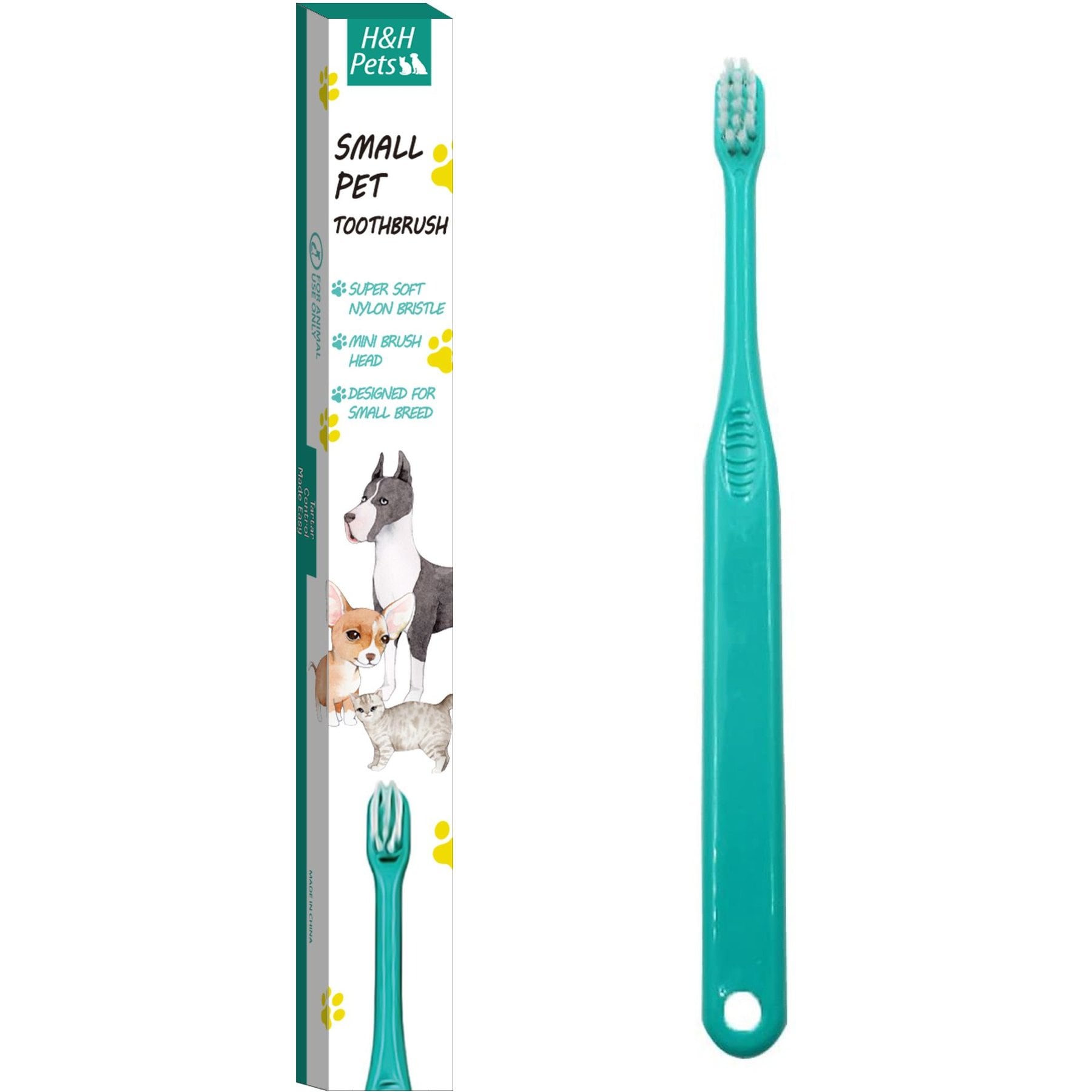
A small brush with a long handle suits cats and small dogs, where the constraint is reaching the back teeth in a small mouth.
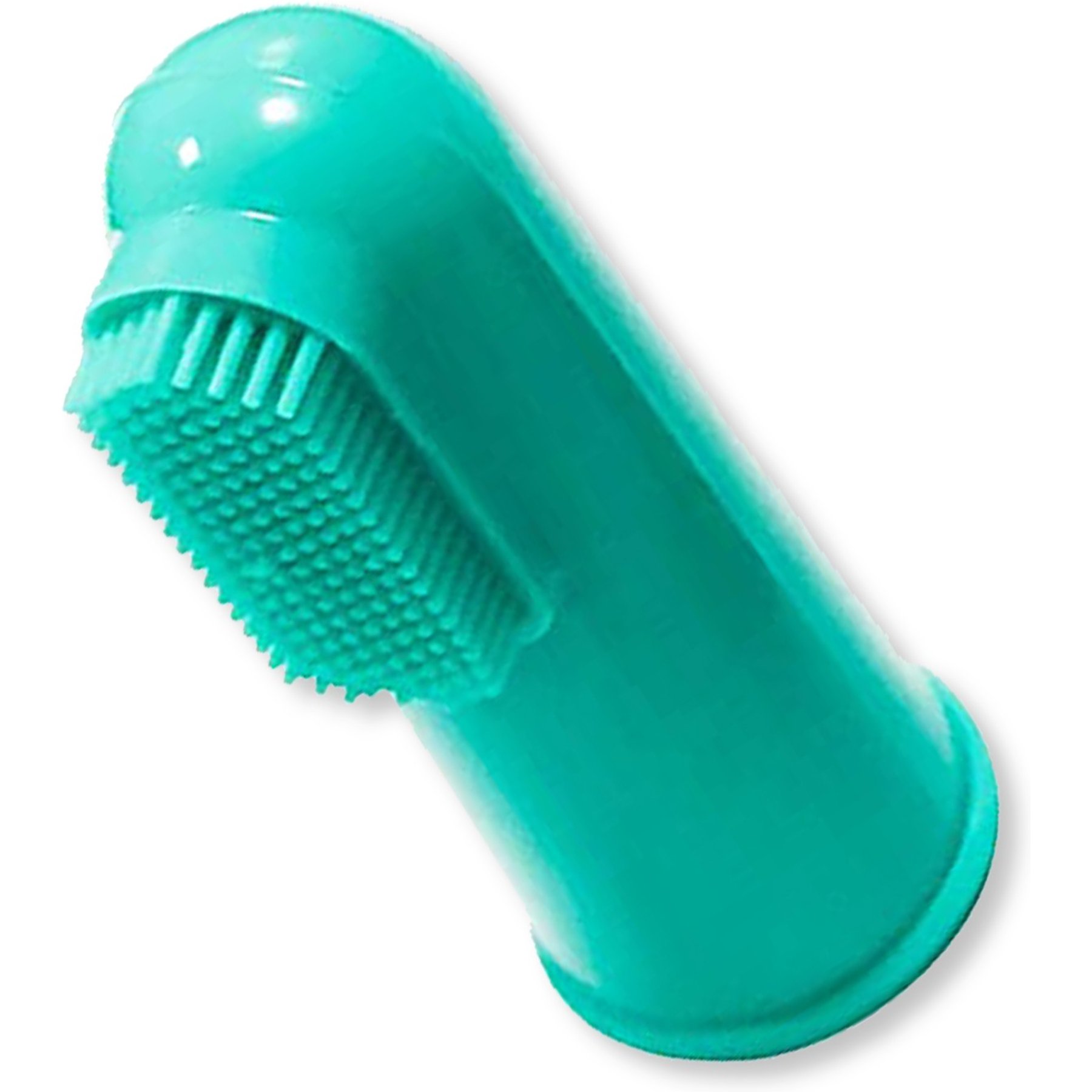
Finger brushes are the honest starting point for animals that will not accept a handle yet, and for owners who need more feedback about what they are touching. They are a stepping stone rather than a destination: the bristles are shorter and do less at the gumline.
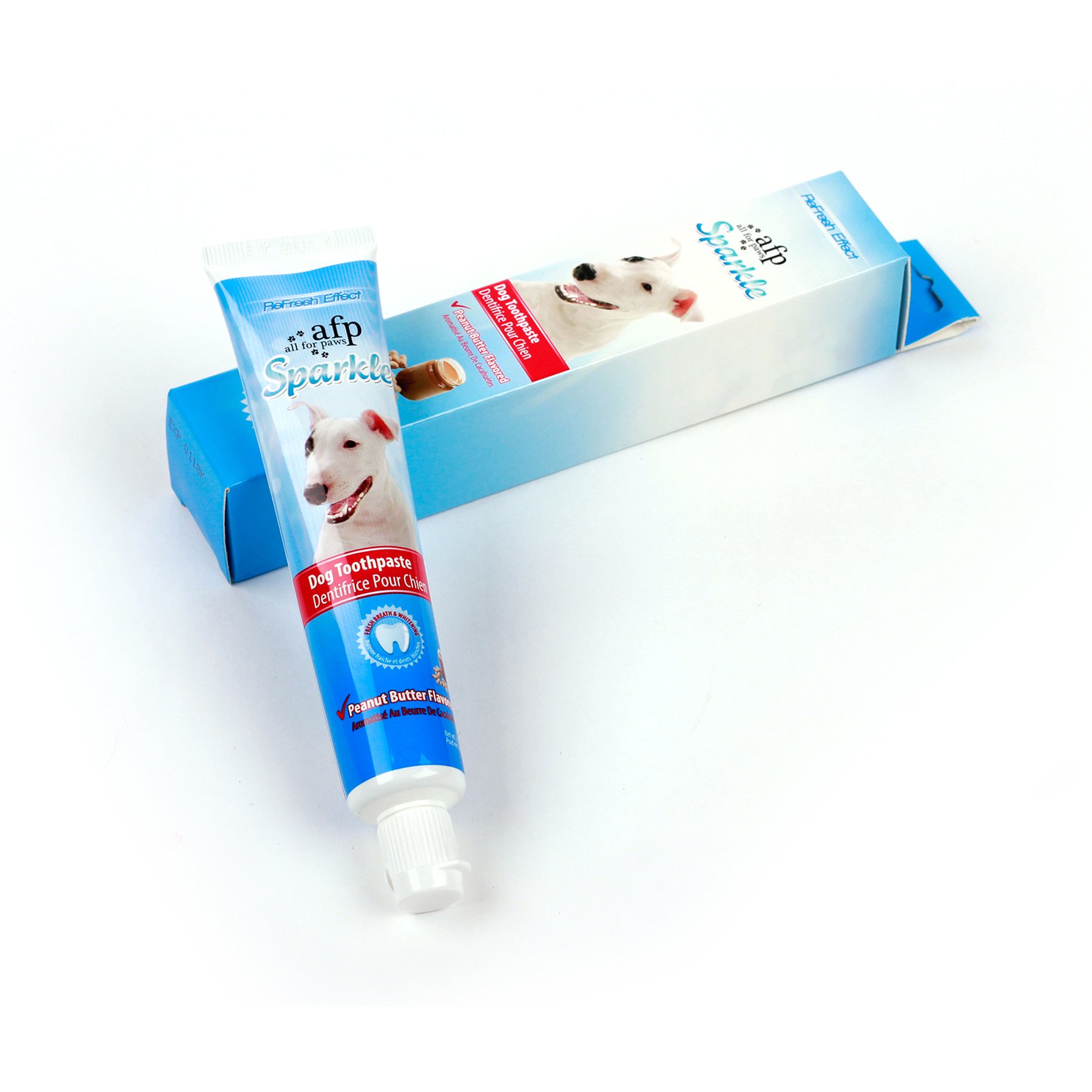
Pet toothpaste is not optional, and not because of what it cleans. It is flavored so the animal cooperates, and it is formulated to be swallowed. Human toothpaste is not: fluoride is not intended for ingestion, and xylitol in some brands is seriously toxic to dogs. See xylitol toxicity.
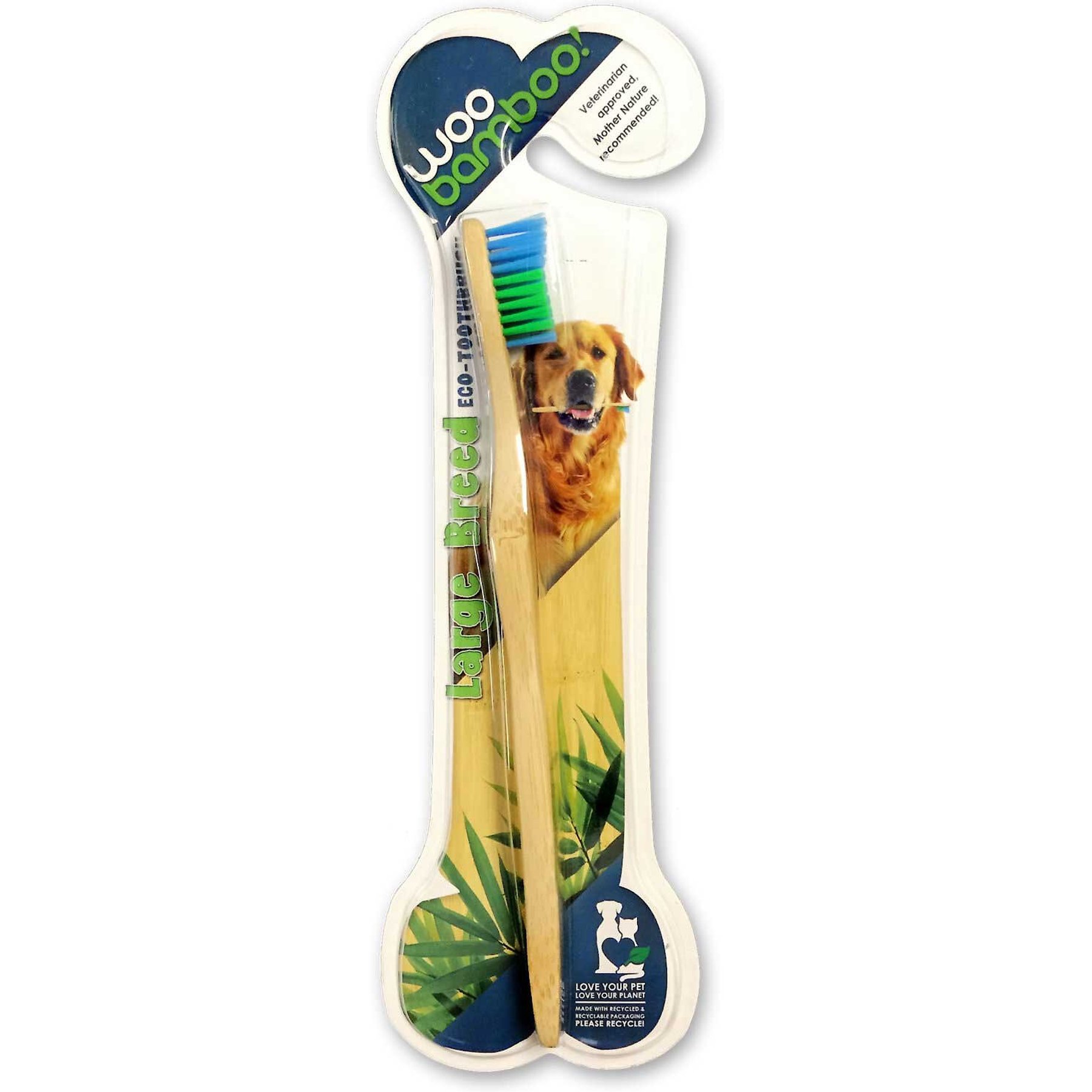
Larger dogs need a larger head and a handle with some length to reach the back of the arcade comfortably.
Chews, additives and the seal worth looking for
This part of the aisle is large, and most of it is sold on association rather than evidence.
The useful filter is the Veterinary Oral Health Council seal. Products carrying it have submitted data showing they reduce plaque or tartar accumulation to a defined standard. It does not mean the product replaces brushing: it means the claim has been tested rather than asserted. A chew without it is being sold on packaging.
Even the good ones have limits worth being clear about. They reduce accumulation on the surfaces the chew actually contacts, which tends to be the large cheek teeth and not the canines or incisors. They do nothing below the gumline. And they are food, so they count toward the daily ration: a dog getting a large daily dental chew on top of meals is on a slow weight-gain trajectory.
A word on hard chews, because this is where older dogs get hurt. Bones, antlers, hooves and very hard nylon are a common cause of slab fractures of the large cheek teeth, and a fractured tooth in an older dog is a painful problem requiring extraction or root canal. The usual rule of thumb: if you cannot make an indentation in it with a thumbnail, it is hard enough to break a tooth. See dental chew.
The professional cleaning, and the myth that prevents it
For an older animal with established disease, this is the part that actually treats the problem.
A proper dental involves general anesthesia, full-mouth radiographs, scaling above and below the gumline, probing every tooth, polishing, and extracting whatever cannot be saved. The radiographs are not an upsell; they are how resorptive lesions, root abscesses and bone loss are found, none of which are visible in a conscious mouth.
Two things get in the way, and both are worth confronting.
"He is too old for anesthesia." Age is not a disease. Risk is determined by the animal's actual health, which is what pre-anesthetic examination and bloodwork establish, and it is managed with individualized protocols, intravenous fluids, warming and continuous monitoring. The comparison is not anesthesia versus nothing; it is anesthesia versus leaving an infected and painful mouth in place for the remainder of the animal's life. Discuss the individual risk with your vet rather than deciding on the number.
"We will do the anesthesia-free version instead." This scrapes visible tartar from the crowns of the teeth in a conscious animal. It does not address the subgingival disease that causes the pain and tooth loss, it cannot include radiographs, and it produces a mouth that looks better while the disease continues underneath. The American Veterinary Dental College has a longstanding position against it for exactly these reasons.
The most common thing owners report after a long-overdue dental is that their old dog or cat became noticeably brighter, more playful and more interested in food. That is what chronic oral pain had been costing, quietly, for a long time.
How this goes wrong
| What gets bought | Why it disappoints | What to do instead |
|---|---|---|
| Dental chews as the whole plan | No subgingival effect; adds calories | Brushing daily; chews as an extra |
| Water additives alone | Modest at best; easy to over-rely on | Look for the VOHC seal, and still brush |
| Weekly brushing | Outside the plaque mineralization window | Daily, or accept more frequent professional cleanings |
| Human toothpaste | Not made to be swallowed; xylitol risk in some brands | Pet toothpaste, always |
| Antlers, bones and hard nylon | Slab fractures of the cheek teeth | The thumbnail test |
| Anesthesia-free cleaning | Cosmetic; misses the actual disease | A full dental with radiographs |
| Delaying because of age | Years of untreated pain | Bloodwork, then an informed decision |
What to skip
- Any product presented as a replacement for brushing. None of them are.
- Chews without a VOHC seal bought for dental benefit. Buy them as treats if you like them, but not as care.
- Hard chews that fail the thumbnail test. Fractured teeth are a common and avoidable senior problem.
- Anesthesia-free cleanings. Cosmetic, and they can delay real treatment.
- Waiting for the animal to show pain. Dogs and cats conceal oral pain almost completely. Waiting means waiting a long time.
How to choose
Buy a brush and pet toothpaste, and spend two weeks teaching your animal to enjoy the process before you expect to clean anything.
Brush daily if you possibly can. Several times a week beats nothing by a wide margin.
Add a VOHC-marked chew if it suits your animal, and take the calories out of the daily ration.
Book the examination. If your pet is old and has never had a dental, assume there is something below the gumline and find out what.
And if a vet recommends radiographs and extractions, that is not an upsell. It is the part that stops the pain.
FAQ
Frequently asked
Is my dog too old for a dental under anesthesia?
Age is not a disease, and it is not by itself a contraindication. What matters is the individual animal's health (organ function, heart, and any concurrent conditions), which is what pre-anesthetic examination and bloodwork are for. Modern protocols use individually chosen drugs, intravenous fluids, warming and continuous monitoring, and healthy older animals come through routine dentals every day. Weigh it against the alternative honestly: leaving an infected, painful mouth in place for the rest of the animal's life is not the safe option, it is just the one where nothing visibly happens.
Does anesthesia-free dental cleaning work?
Not for the disease that matters. Scraping visible tartar off the crown of a tooth in a conscious animal improves how the tooth looks and does nothing about what is happening below the gumline, which is where periodontal disease lives. It also cannot include dental radiographs, so the painful problems that are invisible above the gum go undetected. The American Veterinary Dental College has a longstanding position against it. It is a cosmetic procedure being sold as a medical one.
Do dental chews and water additives actually do anything?
Some do, modestly, as an addition to brushing rather than a replacement for it. The useful filter is the Veterinary Oral Health Council seal, which is awarded to products that have submitted evidence of reducing plaque or tartar to a defined standard. A chew without that seal is being sold on a claim rather than a result. Even the good ones reduce accumulation; none reverse existing disease.
How often does a dog or cat actually need its teeth brushed?
Daily is the target, because plaque begins mineralizing into tartar within a couple of days and tartar cannot be brushed off. Several times a week is meaningfully better than nothing. Once a week is close to decorative. If daily brushing is not going to happen in your household, it is better to know that and lean on professional cleanings at the right interval than to believe a weekly brush is covering it.
Can I use human toothpaste on my pet?
No. Pets cannot rinse and spit, so they swallow everything. Human toothpaste contains fluoride at levels not intended for ingestion, and some brands are sweetened with xylitol, which is seriously toxic to dogs even in small amounts. Use a toothpaste made for animals; they are formulated to be swallowed and flavored to make the process tolerable, which is half the battle.
Featured in this guide
The picks referenced above—priced and in stock at time of publication.
Affiliate links. Prices and availability change—we filter unavailable items nightly, but the retailer's page is source of truth.
Keep reading
Discussion
Talk about Dental Care for Older Pets: One Thing Works, and It Is Not a Chew
Real questions from real pet owners. Add yours—signed-in members only, first three posts held for review.
Loading threads…