Back-to-School Separation Anxiety in Dogs: A Vet-Backed Protocol and Kit
Your dog spent the summer with a full house. In three weeks the house empties for eight hours a day. Here is the desensitization protocol, the enrichment kit, and the mistakes that make it worse.
petsupplies.co earns a commission if you buy through the product links on this page, and the price you pay is the same either way.

Every August, veterinary behaviorists get the same wave of calls. Kids go back to school, the parent who worked from home starts commuting again, and a dog who was rarely alone for more than a bathroom break is suddenly staring at a closed door for eight hours a day. The chewed baseboards, the scratched door frame, the neighbor's complaint about the howling: those are the symptoms. The condition underneath is often preventable, and almost always treatable, if you start before the schedule change instead of after.
This guide sets out a protocol to prepare a household. It is not a substitute for a veterinary behaviorist for a severe case, but it is what the evidence says works for the mild-to-moderate separation-related behavior that most dogs show when routines shift.
What separation anxiety actually is (and is not)
The American Veterinary Medical Association defines separation anxiety as a set of distress behaviors that occur only when a dog is left alone or separated from a specific person. The ASPCA's clinical description lists the classic pattern: vocalization, destruction focused on exit points, house soiling in a house-trained dog, pacing, drooling, and escape attempts, all beginning within roughly the first thirty minutes of departure.
Two things this is not:
- Boredom. A bored dog chews the couch cushion. An anxious dog chews the doorframe. Boredom responds to enrichment. Anxiety responds to a training plan.
- Spite. Dogs do not urinate on your rug because you left. The behavior is a physiological stress response, not a moral one.
If your dog shows these signs specifically on your departure and stops within a few minutes of your return, you are looking at separation-related behavior. If they show them any time you are out of eye contact, even in the same house, that is a different problem (often generalized anxiety or hyper-attachment) and it is worth involving your vet earlier.
Why the schedule change hits so hard
Dogs are pattern learners. A summer of "someone is always here" is not neutral background; it is an active behavioral baseline. When that baseline drops overnight from sixteen hours of company to two, the dog does not gradually adjust. They flip states.
Puppies acquired during the pandemic, adolescent dogs (roughly six to eighteen months), rescues under two years in the home, and any dog with a prior history of shelter surrender or rehoming carry higher baseline risk. Brachycephalic breeds and toy breeds are over-represented in the clinical caseload, though the reasons are more about ownership patterns than airway anatomy.
The single strongest predictor of a rough back-to-school week is not breed or age. It is whether the dog has ever practiced being alone. A dog who has spent zero four-hour stretches by themselves in the last two months needs a runway.
The four-week runway
Start this protocol three to four weeks before the first day of school, work, or whatever the schedule shift is. If you already missed that window, start today and compress it; something is better than nothing.
Week 1: Baseline and boredom-proofing. Establish two structured alone-time sessions per day, thirty to forty-five minutes each, with the dog in the room they will spend school days in. Give them a stuffed frozen chew or a snuffle mat as they settle. You do not have to leave the house. The point is that alone-in-a-room becomes routine and predictable, not novel.
Week 2: Departure cue decoupling. Pick up your keys, put on your coat, open the door, then do not leave. Do it fifteen or twenty times a day, at random. The goal is to break the association between "the departure ritual starts" and "the human disappears." When your dog stops lifting their head at the sound of the jangle, the cue is decoupled.
Week 3: Short real absences. Leave for ninety seconds. Come back with no fanfare. Leave for three minutes. Come back with no fanfare. Build to twenty minutes across the week. Do not stack a long absence on top of a training day; the goal is a low-stress ceiling, not a personal best.
Week 4: Full-length rehearsals. Two full workday-length absences during the week, ideally on days when the routine matches the coming reality (leave at the same time, come back at the same time). Front-load the enrichment. Do not pity-load the greeting; a five-second hello is calmer than a two-minute celebration.
The AVSAB position on humane dog training is the standing consensus that reward-based, gradual exposure is the appropriate approach for anxiety-related behaviors, and that aversive tools (shock, prong, punishment for anxious behaviors) worsen outcomes. Skip the bark collar. It is the wrong tool for this problem.
The enrichment kit
Enrichment is not a substitute for the runway above, but it is the environmental scaffolding that makes an alone-day survivable. Three items cover most households.
1) A frozen stuffed chew (the long-burn anchor)
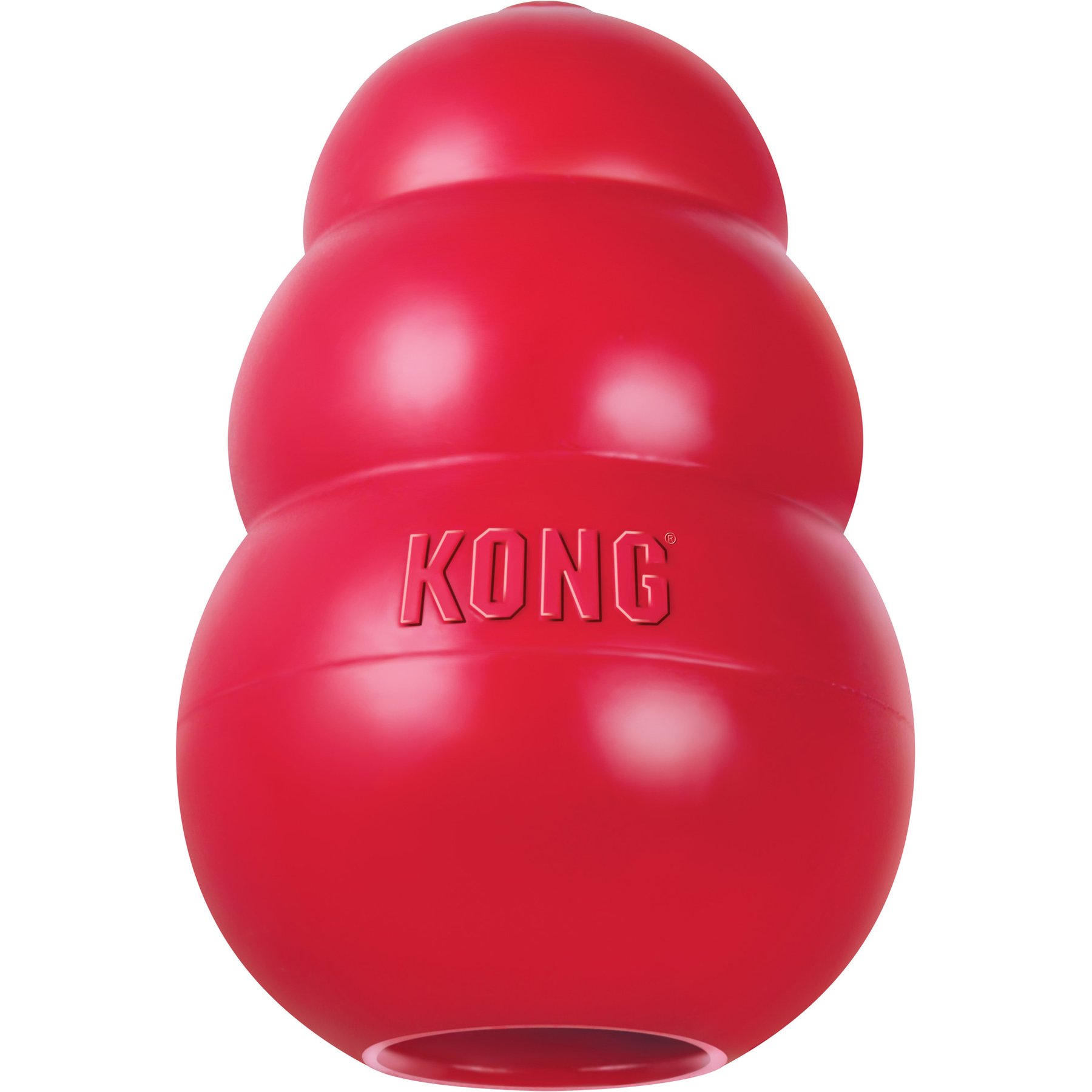
The KONG Classic is the reference product for a reason: the shape rejects most chunking-off failures, the rubber is durable enough to survive a real chewer, and it holds a stuffed-and-frozen fill for thirty to ninety minutes depending on size and dog. Frozen is the key word. A room-temperature stuffed toy is a snack; a frozen one is an activity.
Stuffing that works well: plain canned pumpkin, plain yogurt, wet food mixed with kibble, or a small amount of xylitol-free peanut butter as a plug. Freeze overnight and hand it over as you walk out the door.
2) A lick mat (the settling tool)
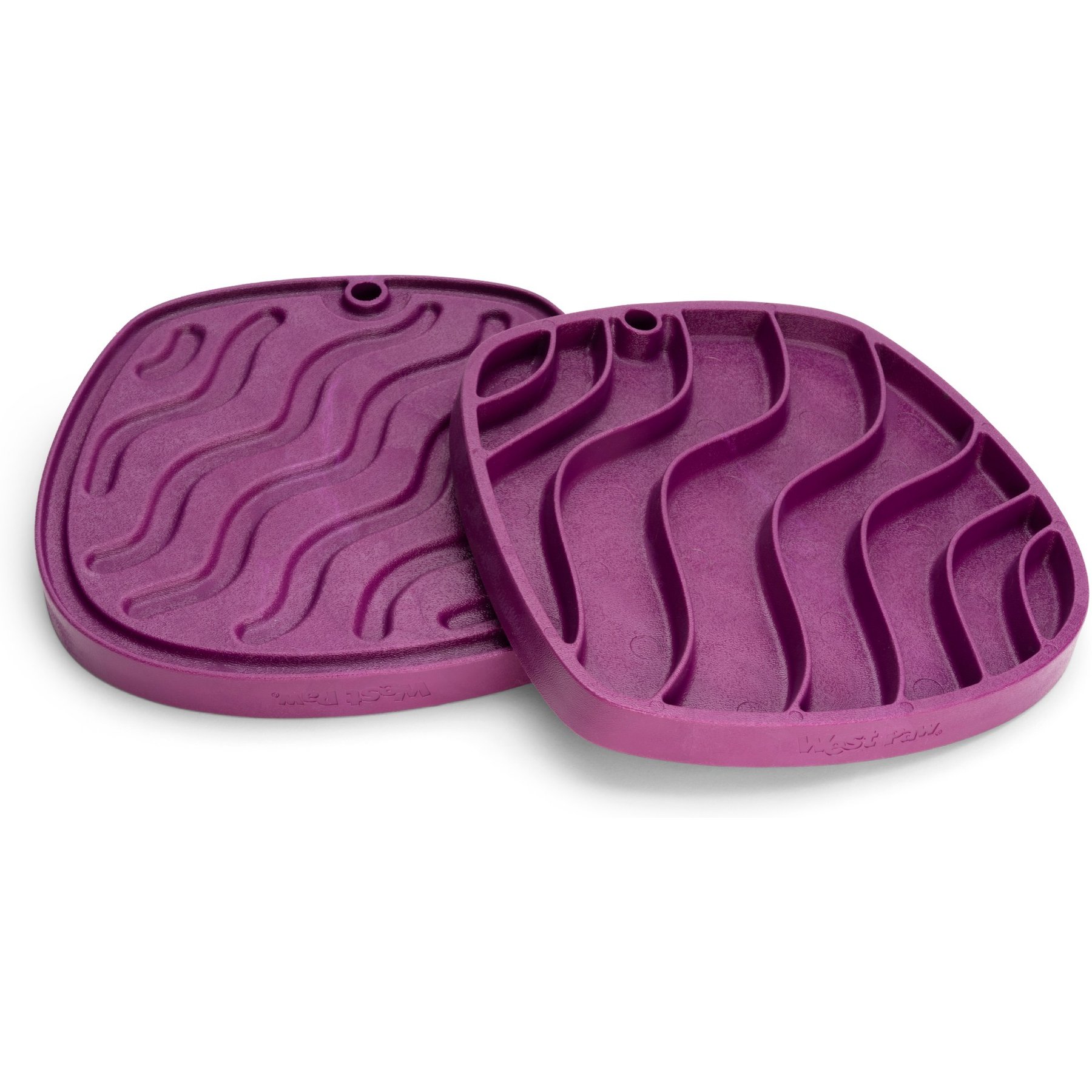
Licking is a self-soothing behavior. A silicone lick mat spread with a thin layer of the same wet toppings as above extends a two-minute snack into a fifteen-to-twenty-minute focused activity, and the repetitive motion helps down-regulate arousal. Non-skid mats stay put; suction-cup mats slide. Skip the ones that require the dog to hold the mat with their paws.
3) A snuffle mat (the foraging outlet)
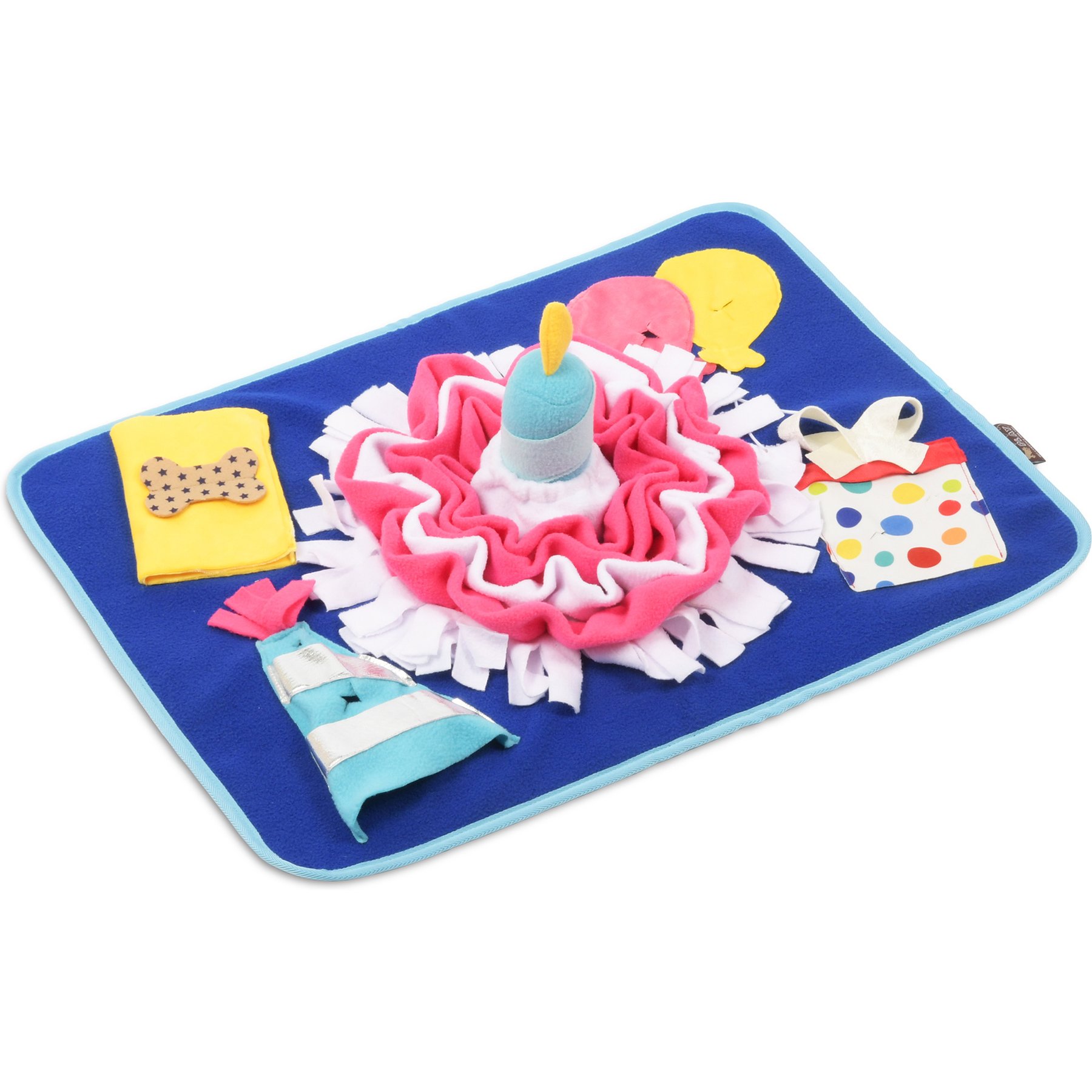
A snuffle mat converts a meal into a fifteen-minute nose-work session. For dogs whose default alone-time behavior is pacing, giving them a job that ends with success (finding all the kibble) is a productive replacement. Machine-washable models are worth the small extra cost; anything that goes on the floor of an entryway will need cleaning.
What to skip
- Bark collars. They punish the symptom of a stress response and increase the underlying anxiety.
- Over-the-counter calming supplements as a first-line fix. Some have modest evidence, most do not. If pharmacology is needed, that is a vet conversation, not a shelf pick.
- A second dog "for company." The clinical literature is clear that a companion animal does not resolve separation anxiety from a specific person. You end up with two dogs and the same problem.
- Crating a dog who panics in a crate. Confinement makes the panic worse and produces injuries. If your dog is not already crate-comfortable, a baby-gated room is safer.
Enrichment stack for a school day
The realistic morning:
| Time | What happens | Why it matters |
|---|---|---|
| 20 minutes before departure | Real walk or vigorous play | A tired dog settles faster; a wound-up one paces |
| 10 minutes before | Frozen stuffed chew handed over in the alone-time room | Departure becomes the cue for the best thing of the day |
| Departure | Leave without fanfare; no long goodbye | The ritual is the anxiety trigger; shrink it |
| ~2 hours in | (Optional) auto-feeder or camera-dispensed treat | Interrupts the mid-morning dip |
| Return | Five-second calm greeting; bathroom break; then attention | Big greetings train big departures |
A pet camera is a nice-to-have, not a requirement. Its real value is diagnostic: you can see whether the dog settles after ten minutes, or paces for the full eight hours. That distinction determines whether you need more time on the runway or a vet consult.
When to call your vet
Escalate to a veterinary consultation, and ask for a referral to a board-certified veterinary behaviorist (DACVB) if available, when any of these are true:
- The dog is injuring themselves (broken teeth, torn nails, bloodied paws at doors and windows)
- Destruction is escalating week over week despite the runway
- The dog will not eat, drink, or use enrichment tools when alone
- House soiling is happening in a fully house-trained adult dog
- You are getting complaints from neighbors and considering rehoming
For moderate-to-severe cases, medication (typically an SSRI or clomipramine) combined with a behavior plan produces meaningfully better outcomes than the behavior plan alone, and the current standard of care reflects that. This is discussed in the RSPCA's overview of separation-related behavior and in the broader small-animal behavior literature indexed on PubMed. The medication is not sedation; it lowers the anxiety floor so the training can actually take hold.
Related reading
- Separation anxiety condition overview
- Leaving a dog home alone for 8 hours
- Crate training a puppy without crying
- Fireworks and thunderstorm anxiety
- Calming products for car rides
If you build the runway and stock the kit before the schedule change, most households never see the destroyed-doorframe phase at all. The dogs who do develop clinical separation anxiety deserve the same investment humans get for anxiety disorders: a specific plan, the right tools, and, when the situation calls for it, medication that clears the runway for the training to work.
FAQ
Frequently asked
How early should I start preparing my dog for the back-to-school schedule?
Three to four weeks before the routine changes is ideal. Start with two structured alone-time sessions a day, decouple your departure cues in week two, build up real absences in week three, and rehearse full workday-length absences in week four. If you missed that window, start today and compress the plan; a shorter runway still beats none.
Is my dog anxious or just bored?
Location of destruction is the tell. A bored dog chews couch cushions, shoes, or a toy left within reach. An anxious dog focuses destruction on exit points, doorframes, windows, and crates, usually within the first thirty minutes of departure. Anxious dogs also often vocalize, pace, drool, or soil the house despite being fully house-trained. Enrichment fixes boredom; a training plan fixes anxiety.
Should I get a second dog to keep my dog company?
No. The clinical literature is clear that separation anxiety is usually directed at a specific person, not resolved by a companion animal. Adding a dog often gives you two dogs with the same problem and doubles the cost of the training plan you still need.
Do calming treats and supplements work?
Some have modest evidence, most do not, and none are a substitute for a runway and an enrichment plan. If the behavior is severe enough that supplements are on the table, that is the point to involve your vet, who may prescribe an SSRI or clomipramine. Prescription medication for separation anxiety is not sedation; it lowers the anxiety floor so behavior training can take effect.
Is it cruel to crate a dog who has separation anxiety?
It is cruel to crate a dog who panics in a crate. Confinement escalates a panic response and produces real injuries (broken teeth, torn nails, bloodied paws). If your dog is not already visibly comfortable in a crate before the runway starts, use a baby-gated room instead and address crate training separately.
When should I involve a veterinary behaviorist?
Escalate to your vet, and ask for a board-certified veterinary behaviorist referral, if your dog is injuring themselves, if destruction is escalating despite the runway, if they refuse food and enrichment when alone, if a fully house-trained adult is soiling, or if the household situation is at the point where rehoming is being considered.
Featured in this guide
The picks referenced above—priced and in stock at time of publication.
Affiliate links. Prices and availability change—we filter unavailable items nightly, but the retailer's page is source of truth.
Keep reading
summer
Freeze-Safe Dog Treat Recipes: Safe Ingredients, Smart Portions
new year basics
Puppy Starter Kit: Essential Items for New Owners
back to school routine
Enrichment for Working Owners: Redistributed Time, Not a Drawer of Toys
evergreen
Probiotics for Dogs: What the Evidence Supports, and What the Label Has to Say
holiday wellness planning
Dog Beds for Cold Floors: A Layer Between Dog and Tile Does More Than Extra Fluff
evergreen
Scratching Posts Cats Actually Use: Tall, Heavy, Sisal, and in the Room You Live In
Discussion
Talk about Back-to-School Separation Anxiety in Dogs: A Vet-Backed Protocol and Kit
Real questions from real pet owners. Add yours—signed-in members only, first three posts held for review.
Loading threads…