Incontinence in Senior Pets: Find Out Which Kind Before You Buy Anything
Leaking while asleep and urinating in the house are different problems with different causes, and one of them is often straightforwardly treatable. Management comes second.
petsupplies.co earns a commission if you buy through the product links on this page, and the price you pay is the same either way.

Before you buy a single pad, answer one question: whether the animal is aware it is urinating.
That distinction splits this problem into two conditions with almost entirely separate causes, and getting it wrong costs owners years of unnecessary laundry.
True incontinence is passive. The animal does not control it and often does not notice. The signature is a damp patch where the dog has been lying, or dribbling as it stands up, in an animal that is otherwise behaving completely normally and still asking to go outside.
Inappropriate urination is an aware, deliberate act: the animal postures and empties its bladder, just in the wrong place or at the wrong time.
The reason this matters so much is that the most common cause of true incontinence in dogs is also one of the most treatable things in this entire guide, and it is routinely mistaken for old age.
If your dog leaks in its sleep
Urethral sphincter mechanism incompetence is common in spayed female dogs, particularly medium and large breeds, and it usually responds well to prescribed medication. It presents exactly as most owners describe it: a middle-aged or older spayed female, wet bedding, no other symptoms, a dog that seems entirely herself.
A great many households manage this with towels for years without ever finding out it has a name and a treatment. If that description fits, the appointment is worth more than anything you can buy. See spay and neuter.
Other causes of genuine incontinence include bladder stones, prostatic disease in older males, spinal and neurological disease affecting bladder control, and anatomical abnormalities. All of them need a diagnosis rather than a pad.
If the animal is aware
This is the longer list, and almost all of it is diagnosable.
Drinking more than usual points strongly toward chronic kidney disease, diabetes mellitus or Cushing's disease. An animal producing far more urine than its bladder can hold overnight will have accidents no matter how well house-trained it is. Measure the water intake for a couple of days and tell your vet the number.
Urinary tract infection. Frequent small volumes, straining, sometimes blood. Common, uncomfortable, and easily treated once identified. See canine urinary tract infection and, in cats, feline lower urinary tract disease. A male cat straining unproductively is an emergency, not a house-training issue.
Mobility. Badly under-recognized. An arthritic dog that cannot get up quickly, or that finds the back step painful, will not always make it outside. An arthritic cat faces a high-sided litter box that has become a genuine climb. See osteoarthritis, litter box sizing and litter box aversion.
Cognitive change. Canine cognitive dysfunction (and its feline equivalent) can produce an animal that forgets the routine, becomes disoriented, or stands at the hinge side of the door. Often accompanied by night-time restlessness and altered sleep.
For cats specifically, why is my cat peeing outside the litter box covers the litter-side troubleshooting in more depth.
The welfare problem that is easy to miss
Urine scald deserves its own section because it is painful, common, and almost entirely preventable.
Urine sitting against skin causes inflammation, and inflamed skin becomes infected skin. In a long-coated or immobile animal it can progress quickly, and it hurts considerably more than the incontinence itself.
The routine is simple and needs to be consistent:
- Clean after episodes with warm water or a gentle pet-safe cleanser. Not human wipes with alcohol or fragrance.
- Dry thoroughly, including into skin folds and between the back legs.
- Clip the fur short around the perineum and inner thighs. Long fur holds urine against skin, and this one change makes the biggest difference.
- Ask your vet about a barrier ointment for animals having frequent episodes.
- Check the skin daily. Redness, a rash, or a sore smell means veterinary treatment now, not more washing.
For animals that cannot reposition themselves, the same vigilance applies to pressure points.
Managing the house
Once the medical side is underway, the practical job is protecting bedding and floors without making the animal feel wrong for something it cannot help.
The most useful single change is a waterproof layer on the bed: under the cover, not on top of it. Foam that absorbs urine does not recover, and this is how expensive beds get thrown away.
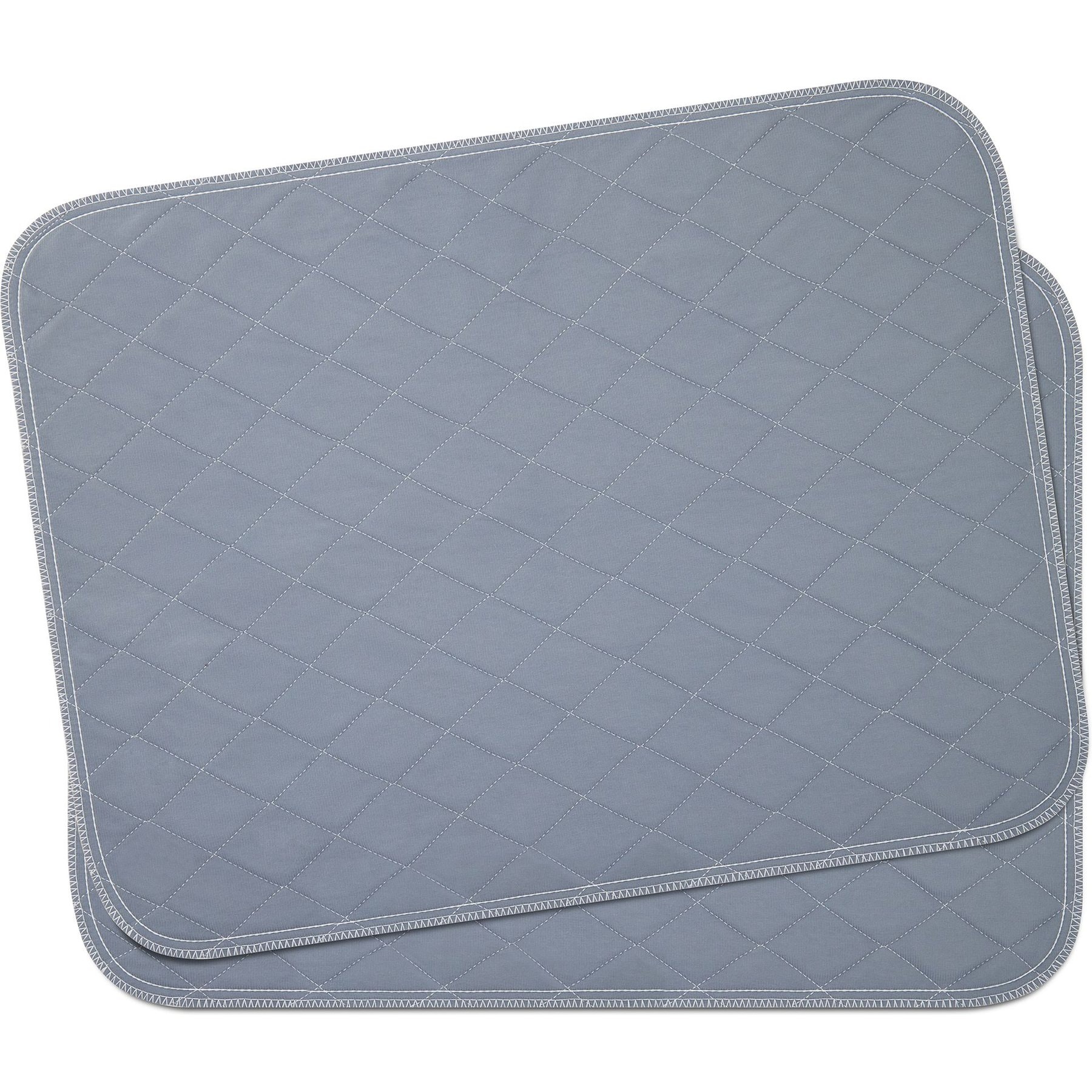
Beyond that, the pad decision is mostly washable versus disposable.
| Washable | Disposable | |
|---|---|---|
| Cost over time | Cheaper after the first few months | Adds up quickly with daily use |
| Best for | Predictable spots: under the bed, a favorite corner | Travel, crates, unpredictable locations, heavy nights |
| Effort | Laundry, and you need several in rotation | Trash it and move on |
| Grip | Usually backed to stay put | Slides on hard floors unless taped |
| Odor | Needs proper washing or it holds smell | Carbon-layer versions manage odor well |
For the predictable case (a dog that leaks where it sleeps), washable pads are the sensible economics, and buying several so there is always a dry one is the part people underestimate.
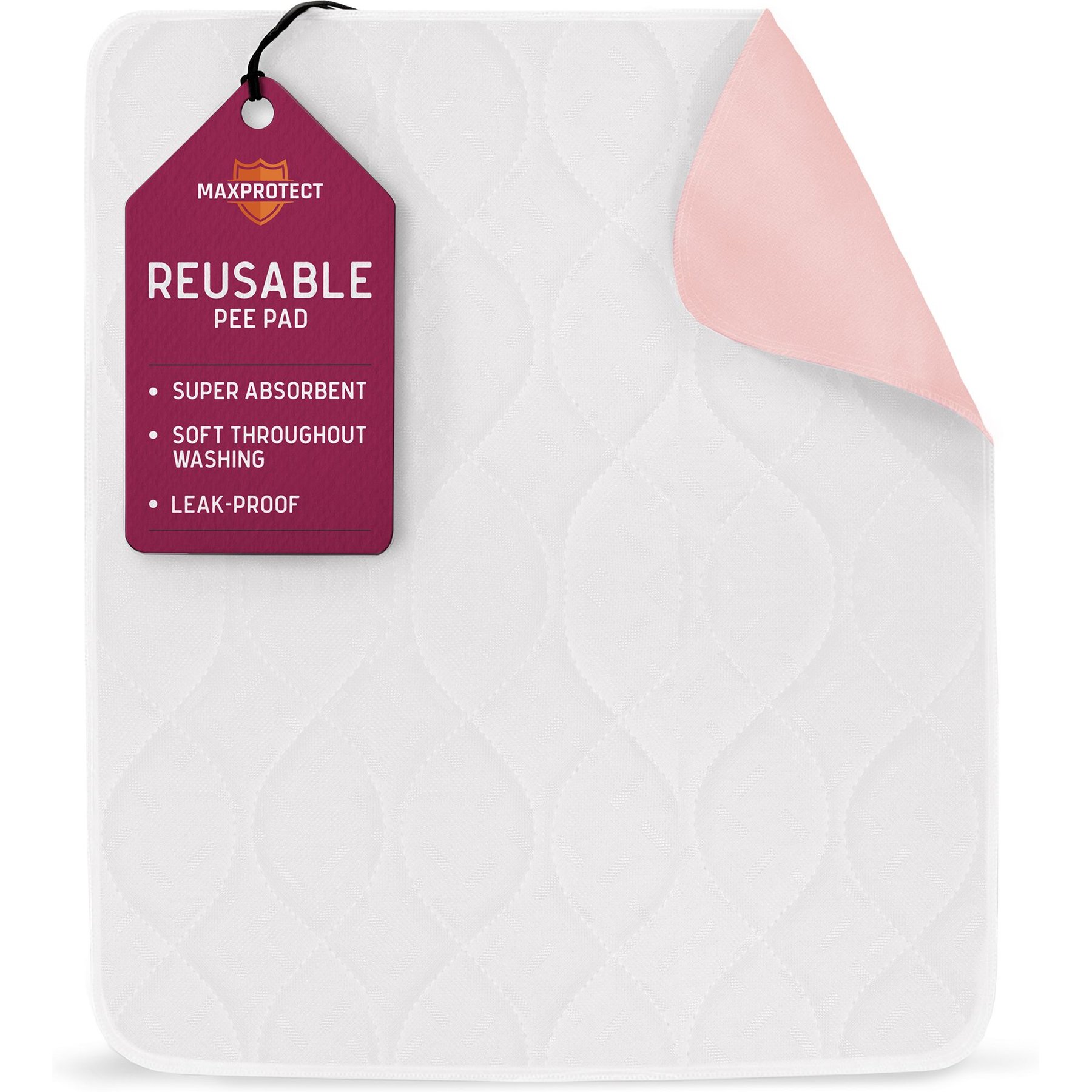
Larger washable pads cover a whole bed base or crate floor, which is usually a better arrangement than several small ones that shift apart overnight.
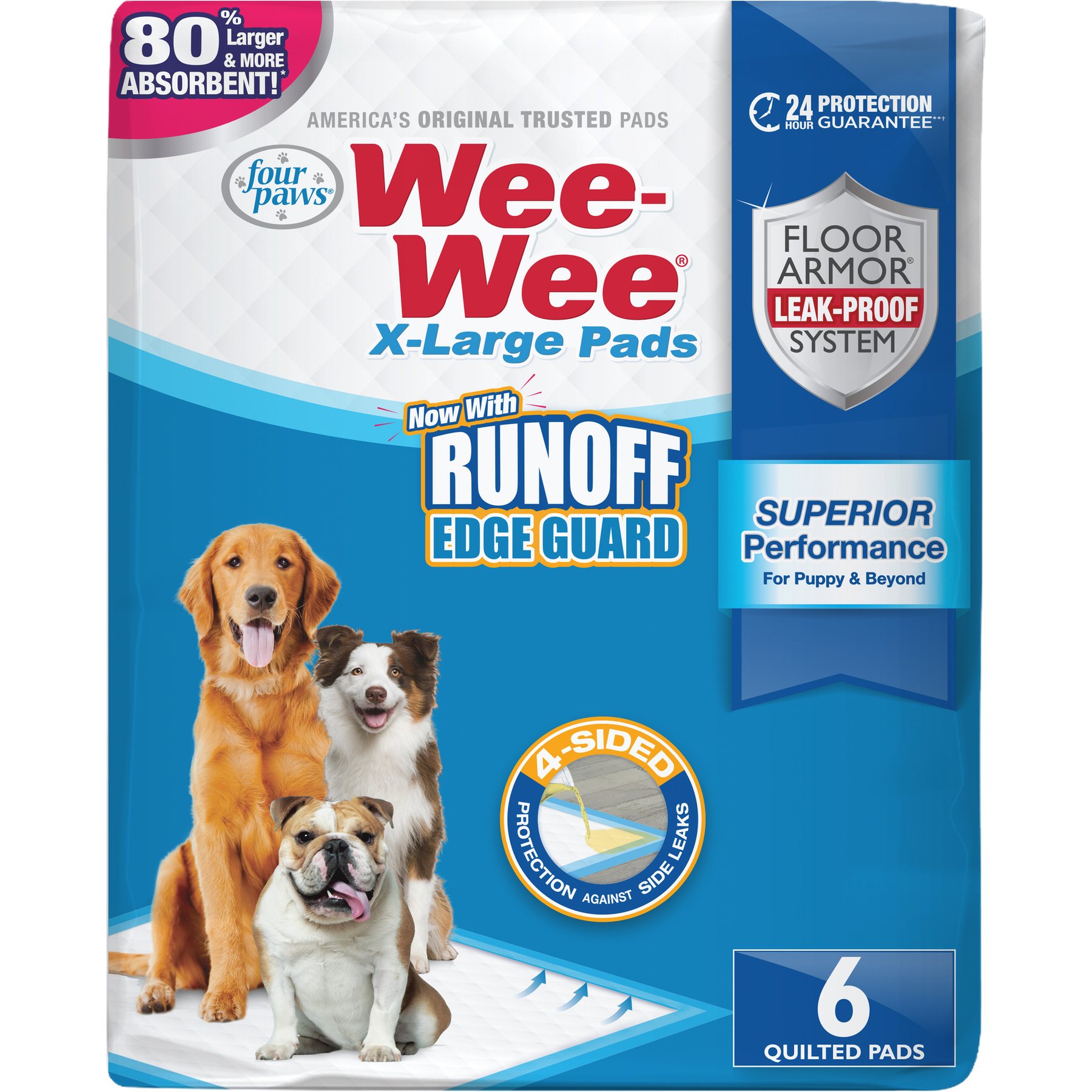
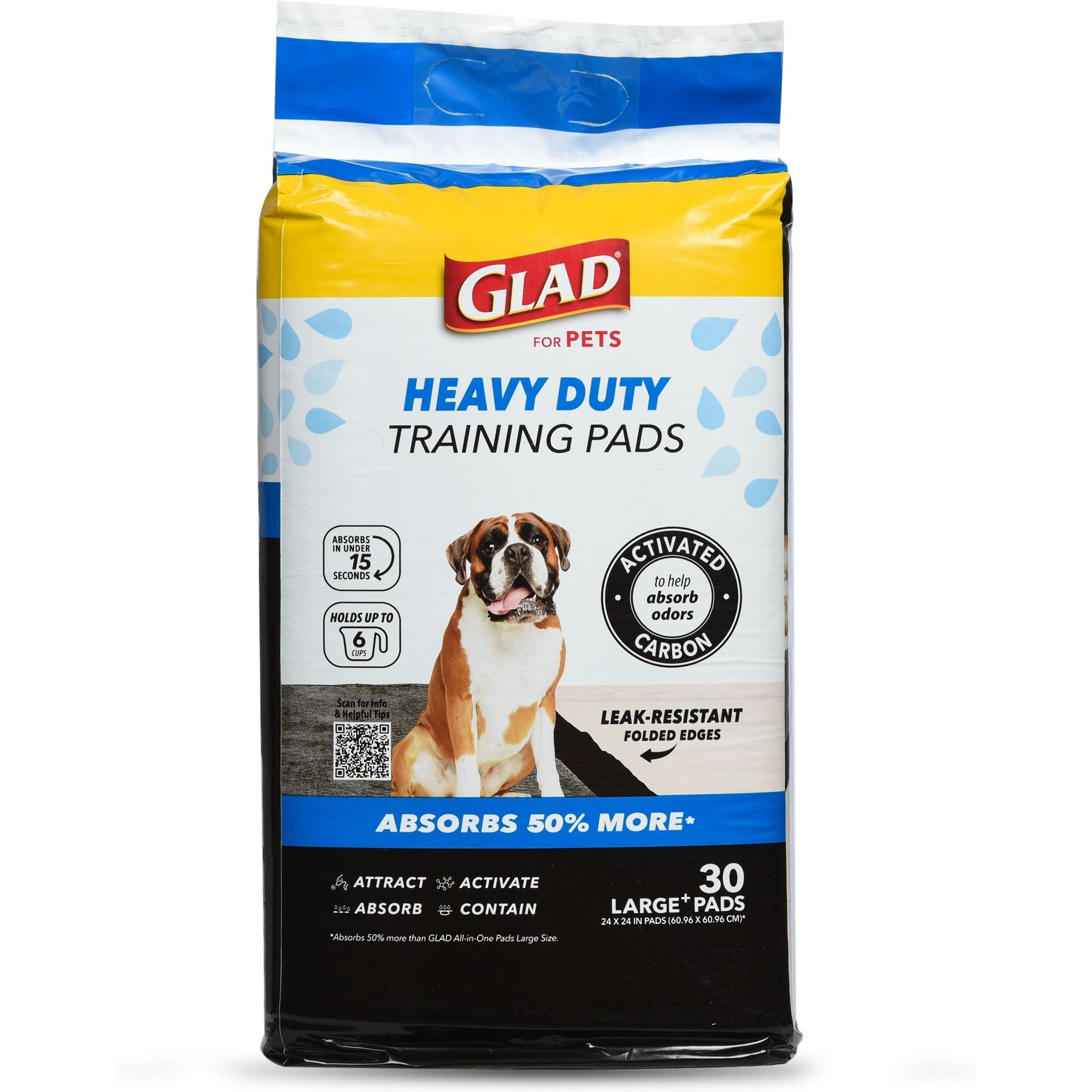
Disposables earn their place for heavier volumes and unpredictable locations, and the edge-guard designs matter more than they sound: most disposable-pad failures are runoff at the edges rather than saturation in the middle.
If odor in the room is the problem you are actually trying to solve, the activated-carbon layer is the feature worth paying for.
And for a large dog with a large bed, a single big reusable pad beats a mosaic of small ones.
Two more practical notes. Clean accidents with an enzymatic cleaner rather than a general-purpose one: ordinary detergents leave scent markers that invite repeat use in the same spot, and ammonia-based products actively make it worse. And more frequent, shorter opportunities to go outside do more than any product: an old dog that gets out every three hours has fewer accidents than one taken out twice a day, regardless of what is on the floor.
What to skip
- Restricting water. Dangerous, especially with kidney compromise, and it hides the diagnostic signal.
- Punishment of any kind. The animal either cannot control it or is unwell. Punishment adds anxiety to a medical problem.
- Ammonia-based cleaners. They smell like urine to the animal and encourage repeat use.
- Managing a spayed female's sleep leakage with towels indefinitely. It has a name and usually a treatment.
- Scented pads to cover odor. Some animals refuse them, and the odor source is the skin and bedding rather than the pad.
- A pad instead of a waterproof bed liner. The bed is the expensive thing to lose.
How to choose
Work out first whether the animal is aware. That single observation sends you down the right path.
If your dog leaks while asleep, book the appointment before you buy anything. It is often treatable.
If drinking has increased, measure it and take that number to the vet: it points at several specific diagnoses.
If your cat has started missing the box, try a low-entry box in an easier location and get a urine sample. Arthritis is a more common cause than most owners expect.
Then manage the house: waterproof the bed, washable pads where it is predictable, disposables where it is not, and a skin-care routine that runs daily.
And keep the animal comfortable rather than corrected. Most of them are as unhappy about it as you are.
FAQ
Frequently asked
What is the difference between incontinence and house-soiling?
Awareness. True incontinence is passive leakage the animal does not control and often does not notice: the classic sign is a damp patch where the dog has been lying, with the dog otherwise behaving normally. Inappropriate urination is an aware, postured, deliberate act of emptying the bladder in the wrong place. They have almost entirely different cause lists, so working out which one you are seeing is the single most useful thing you can do before spending anything.
My spayed female dog leaks in her sleep. Is that treatable?
Frequently, yes, and this is the most important thing on this page. Urethral sphincter mechanism incompetence is common in spayed female dogs, particularly medium and large breeds, and it typically responds well to medication prescribed by your vet. A great many owners manage this with towels for years without knowing it is a treatable condition. If your dog leaks while asleep or relaxed, book an appointment before you build a laundry routine around it.
Why is my old cat suddenly urinating outside the litter box?
In cats this is much more often a litter box or medical problem than true incontinence. Arthritis is a common and under-recognized cause: a high-sided box that was fine at five is a painful climb at fifteen. Also consider urinary tract disease, kidney disease, diabetes, hyperthyroidism and cognitive change. Try a box with a low entry in an easily reached spot, and get bloodwork and a urine sample.
Should I stop giving water to reduce accidents?
No. Restricting water is dangerous, particularly in an older animal with kidney compromise, and it can turn a manageable problem into an emergency. If increased drinking is part of the picture, that is diagnostic information: increased thirst and urine output point to kidney disease, diabetes, Cushing's and other conditions that need identifying. Tell your vet how much the animal is drinking; do not reduce it.
How do I stop urine scald?
Keep the skin clean and dry, and act early. Urine left on skin causes inflammation and then infection, and it is one of the more painful and avoidable complications of incontinence. Clean the area with warm water or a gentle pet-safe cleanser after episodes, dry thoroughly including into skin folds, keep the fur around the area clipped short so it does not hold moisture, and speak to your vet about a barrier ointment. Reddened or broken skin needs veterinary treatment rather than more washing.
Featured in this guide
The picks referenced above—priced and in stock at time of publication.
Affiliate links. Prices and availability change—we filter unavailable items nightly, but the retailer's page is source of truth.
Keep reading
senior pet care
Low-Impact Toys for Older Dogs: Keep the Play, Lose the Landing
senior pet care
Calming Aids for Senior Cats: In an Old Cat, Restlessness Is Usually Medical
senior pet care
Raised Feeders for Older Dogs: Right for a Few, Wrong for the Ones Most Often Given Them
senior pet care
Harnesses for Arthritic Dogs: A Walking Harness and a Lifting Harness Are Not the Same Thing
senior pet care
Grooming a Senior Pet: The Weekly Examination You Are Already Doing
senior pet care
Dental Care for Older Pets: One Thing Works, and It Is Not a Chew
Discussion
Talk about Incontinence in Senior Pets: Find Out Which Kind Before You Buy Anything
Real questions from real pet owners. Add yours—signed-in members only, first three posts held for review.
Loading threads…